

7 months 1 week ago
Every uneducated person is a caricature of himself.
▼
Source
source
"Selected Aphorisms from the Athenaeum (1798)", Dialogue on Poetry and Literary Aphorisms, Ernst Behler and Roman Struc, trans. (Pennsylvania University Press:1968) #63

8 months 1 week ago
Our words tend to conceal what is private and particular in our impressions, and to make us believe that different people live in a common world to a greater extent than is in fact the case.
▼
Source
source
An Outline of Philosophy Ch.15 The Nature of our Knowledge of Physics, 1927

8 months 1 week ago
This inner revolution is realistic because it maintains itself deliberately within the framework of existing institutions; the oppressed reckon with the real situation.
▼
Source
source
p. 66

6 months 3 weeks ago
Now he saw the problem with great clarity. If he lived here, life would be pleasant and safe. But it would also be predictable. A child could be born here, grow up here, die here, without ever experiencing the excitement of discovery. Why did Dona question him endlessly about his life in the burrow and his journey to the country of the ants? Because for her, it represented a world that was dangerous and full of fascinating possibilities. For the children of this underground city, life was a matter of repetition, of habit. And this, he suddenly realized, was the heart of the problem. Habit. Habit was a stifling, warm blanket that threatened you with suffocation and lulled the mind into a state of perpetual nagging dissatisfaction. Habit meant the inability to escape from yourself, to change and develop . . .
▼
Source
source
pp. 132-133
6 months 3 weeks ago
Nothing can well be imagined more painful than the present position of woman, unless, on the one hand, she renounces all outward activity and keeps herself within the magic sphere, the bubble of her dreams; or, on the other, surrendering all aspiration, she gives herself to her real life, soul and body. For those to whom it is possible, the latter is best; for out of activity may come thought, out of mere aspiration can come nothing.
4 months 2 days ago
One reason why mathematics enjoys special esteem, above all other sciences, is that its laws are absolutely certain and indisputable, while those of other sciences are to some extent debatable and in constant danger of being overthrown by newly discovered facts.
8 months 1 week ago
I wish to propose for the reader's favourable consideration a doctrine which may, I fear, appear wildly paradoxical and subversive. The doctrine in question is this: that it is undesirable to believe a proposition when there is no ground whatever for supposing it true.
▼
Source
source
Ch. 1: The Value of Scepticism

9 months 1 week ago
It belongs to the imperfection of everything human that man can only attain his desire by passing through its opposite.
8 months 2 weeks ago
My purpose is to explain, not the meaning of words, but the nature of things.
▼
Source
source
Part III, Def. XX

8 months 1 week ago
"I wish I had never been born," she said. "What are we born for?" "For infinite happiness," said the Spirit. "You can step out into it at any moment..."
▼
Source
source
Ch. 8
7 months 1 week ago
The Teutons believed that the only possible way to get rid of barbarism was to become Romans. The immigrants to what was formerly Roman soil became as Roman as they possibly could. But in their imagination the term "barbarous" soon acquired the secondary meaning of " common, plebeian, and loutish," and in this way "Roman," on the contrary, became synonymous with " distinguished."
▼
Source
source
Consequences of the Difference p. 81

4 months 3 weeks ago
Socrates is reported to have replied, when a certain person complained of having received no benefit from his travels: "It serves you right! You travelled in your own company!"
4 months 1 week ago
All pain is a punishment, and every punishment is inflicted for love as much as for justice.
▼
Source
source
"Fifth Dialogue," p. 149
9 months 1 week ago
An observer studying the Solar system dispassionately, and finding himself capable of bringing the four giant planets to his notice, could reasonably say that the Solar system consisted of one star, four planets, and some traces of debris.
8 months 2 weeks ago
Go into the London Stock Exchange - a more respectable place than many a court - and you will see representatives from all nations gathered together for the utility of men. Here Jew, Mohammedan and Christian deal with each other as though they were all of the same faith, and only apply the word infidel to people who go bankrupt. Here the Presbyterian trusts the Anabaptist and the Anglican accepts a promise from the Quaker.
▼
Source
source
Letters on England, letter 6, "On the Presbyterians" as quoted in Trust and Tolerance, Richard H. Dees, Routledge, London and New York, (2004) p. 92, published first in English in 1733.
8 months 2 days ago
Brave men were living before Agamemnon.
▼
Source
source
Book IV, ode ix, line 25
8 months 2 weeks ago
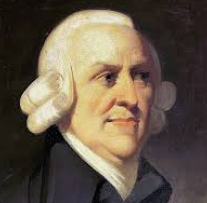
We rarely hear, it has been said, of the combinations of masters, though frequently of those of the workman. But whoever imagines, upon this account, that masters rarely combine, is as ignorant of the world as of the subject.
▼
Source
source
Chapter VIII, p. 80.
4 months 3 weeks ago
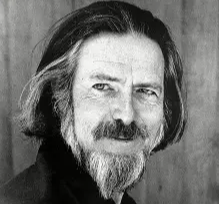
Underneath the superficial self, which pays attention to this and that, there is another self, more really us than I. And if you become aware of that unknown self, the more you become aware of it, the more you realize that it is inseparably connected with everything else that there is. That you are a function of this total galaxy, bounded by the Milky Way, and that furthermore, this galaxy is a function of all other galaxies. And that vast thing that you see far off, far off, far off with telescopes, and you look and look and look, one day you are going to wake up and say, why, that's me! And in knowing that, know, you see, that you never die. That you are the eternal thing that comes and goes, that appears now as John Jones, now as Mary Smith, now as Betty Brown, and so it goes forever and ever and ever.
▼
Source
source
Alan Watts, Man in Nature

7 months 1 week ago
Bach: a scale of tears upon which our desires for God ascend.

8 months 1 week ago
Means at our disposal should be regarded as a bulwark against the many evils and misfortunes that can occur. We should not regard such wealth as a permission or even an obligation to procure for ourselves the pleasures of the world.
▼
Source
source
E. Payne, trans. (1974) Vol. 1, p. 348
8 months 1 week ago
The past alone is truly real: the present is but a painful, struggling birth into the immutable being of what is no longer. Only the dead exist fully. The lives of the living are fragmentary, doubtful, and subject to change; but the lives of the dead are complete, free from the sway of Time, the all but omnipotent lord of the world. Their failures and successes, their hopes and fears, their joys and pains, have become eternal-our efforts cannot now abate one jot of them. Sorrows long buried in the grave, tragedies of which only a fading memory remains, loves immortalized by Death's hallowing touch these have a power, a magic, an untroubled calm, to which no present can attain. ...On the banks of the river of Time, the sad procession of human generations is marching slowly to the grave; in the quiet country of the Past, the march is ended, the tired wanderers rest, and the weeping is hushed.
▼
Source
source
On History, 1904
6 months ago
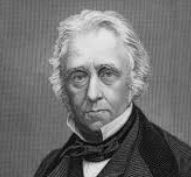
Hence it may be concluded that the happiest state of society is that in which supreme power resides in the whole body of a well-informed people. This is an imaginary, perhaps an unattainable, state of things. Yet, in some measure, we may approximate to it; and he alone deserves the name of a great statesman, whose principle it is to extend the power of the people in proportion to the extent of their knowledge, and to give them every facility for obtaining such a degree of knowledge as may render it safe to trust them with absolute power. In the mean time, it is dangerous to praise or condemn constitutions in the abstract; since, from the despotism of St. Petersburg to the democracy of Washington, there is scarcely a form of government which might not, at least in some hypothetical case, be the best possible.
▼
Source
source
pp. 161-162
6 months 3 weeks ago
One of the principal motifs of Nietzsche's work is that Kant had not carried out a true critique because he was not able to pose the problem of critique in terms of values.
▼
Source
source
p. 1

8 months 1 week ago
The soldier is applauded who refuses to serve in an unjust war by those who do not refuse to sustain the unjust government which makes the war; is applauded by those whose own act and authority he disregards and sets at naught; as if the state were penitent to that degree that it hired one to scourge it while it sinned, but not to that degree that it left off sinning for a moment.
9 months 2 weeks ago
I will make an attempt to attain freedom, the youthful soul says to itself; and is it to be hindered in this by the fact that two nations happen to hate and fight one another, or that two continents are separated by an ocean, or that all around it a religion is taught with did not yet exist a couple of thousand years ago. All that is not you, it says to itself.
1 year 1 week ago
First, [the bourgeoisie] must recognize his own impotence, his incapacity to believe in a sense of history, even if his reason leans towards the truth, the passions and prejudices produced by his class position, prevent him from accepting it. So he should not exert himself with proving the truth of the historical mission of the working class; rather, he should learn to subdue his petty bourgeois passions and prejudices. He should take lessons from those who were once as important as he is now but are ready to risk all for the revolutionary Cause.
7 months 5 days ago
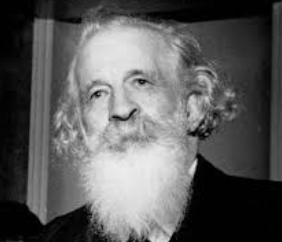
Words ... are little houses, each with its cellar and garret. Common sense lives on the ground floor, always ready to engage in 'foreign commerce' on the same level as the others, as the passers-by, who are never dreamers. To go upstairs in the word house is to withdraw step by step; while to go down to the cellar is to dream, it is losing oneself in the distant corridors of an obscure etymology, looking for treasures that cannot be found in words. To mount and descend in the words themselves-this is a poet's life. To mount too high or descend too low is allowed in the case of poets, who bring earth and sky together.
▼
Source
source
Ch. 6

8 months 1 week ago
Philosophy hasn't made any progress?-If someone scratches where it itches, do we have to see progress? Is it not genuine scratching otherwise, or genuine itching?
▼
Source
source
p. 98e
4 months 1 week ago
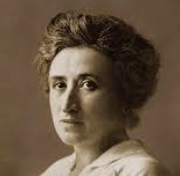
Legislative reform and revolution are not different methods of historic development that can be picked out at the pleasure from the counter of history, just as one chooses hot or cold sausages. Legislative reform and revolution are different factors in the development of class society. They condition and complement each other, and are at the same time reciprocally exclusive, as are the north and south poles, the bourgeoisie and proletariat.
▼
Source
source
Ch. 8

8 months 4 weeks ago
In order to understand the Scriptures, it is absolutely necessary to know the whole, complete Christ, that is, Head and members. For sometimes Christ speaks in the name of the Head alone, sometimes in the name of His body, which is the holy Church spread over the entire earth. And we are in His body, and we hear ourselves speaking in it, for the Apostle tells us: We are members of His body (Eph. 5:30). In many places does the Apostle tell us this.
▼
Source
source
p. 419
8 months 1 week ago
Too little liberty brings stagnation, and too much brings chaos.
▼
Source
source
Authority and the Individual (1949), p. 37

7 months 4 weeks ago
Thrasyllus the Cynic begged a drachm of Antigonus. "That," said he, "is too little for a king to give." "Why, then," said the other, "give me a talent." "And that," said he, "is too much for a Cynic (or, for a dog) to receive."
▼
Source
source
45 Antigonus I

7 months 2 weeks ago
All things are artificial, for nature is the Art of God.
▼
Source
source
Section 16

4 months 1 week ago
The ruling power within, when it is in its natural state, is so related to outer circumstances that it easily changes to accord with what can be done and what is given it to do.
▼
Source
source
IV, 1
4 months 4 weeks ago
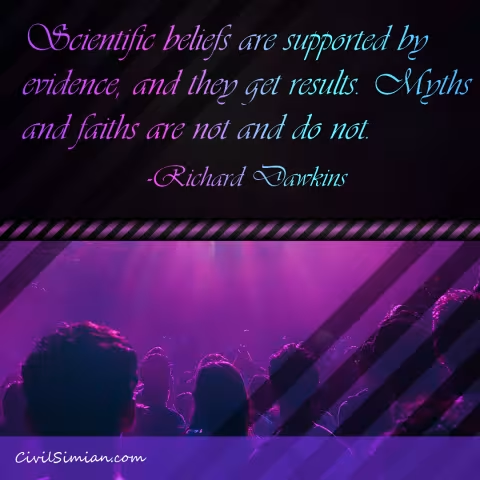
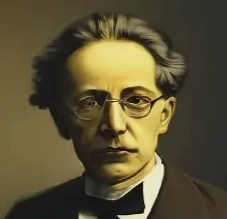
A people cannot be free otherwise than at the individual's expense; for it is not the individual that is the main point in this liberty, but the people. The freer the people, the more bound the individual; the Athenian people, precisely at its freest time, created ostracism, banished the atheists, poisoned the most honest thinker.
▼
Source
source
Cambridge 1995, p. 190
8 months 2 weeks ago
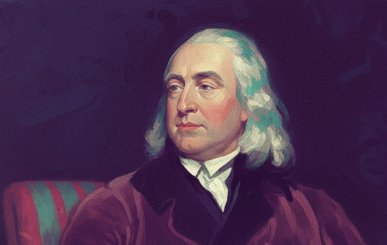
It is the principle of antipathy which leads us to speak of offences as deserving punishment. It is the corresponding principle of sympathy which leads us to speak of certain actions as meriting reward. This word merit can only lead to passion and error. It is effects good or bad which we ought alone to consider.
▼
Source
source
MSS 29, 32, University College Collection
8 months 1 week ago
It is the good children, Madame, who make the most terrible revolutionaries. They say nothing, they do not hide under the table, they eat only one sweet at a time, but later on, they make Society pay dearly for it!
▼
Source
source
Jessica, Act 3, sc. 1
8 months 1 week ago
The little honesty that exists among authors is discernible in the unconscionable way they misquote from the writings of others.
4 months 1 week ago
There is no nature which is inferior to art, the arts imitate the nature of things.
▼
Source
source
XI, 10

6 months 1 week ago
Whom Fortune wishes to destroy she first makes mad.
▼
Source
source
Maxim 911
8 months 1 week ago
Organic life, we are told, has developed gradually from the protozoon to the philosopher, and this development, we are assured, is indubitably an advance. Unfortunately it is the philosopher, not the protozoon, who gives us this assurance.
▼
Source
source
Ch. 6: On the Scientific Method in Philosophy

7 months 1 week ago
Do not block the way of inquiry.
▼
Source
source
Vol. I, par. 135
9 months 1 week ago
The tyrant dies and his rule is over; the martyr dies and his rule begins.

8 months 1 week ago
There is an almost universal tendency, perhaps an inborn tendency, to suspect the good faith of a man who holds opinions that differ from our own opinions. ... It obviously endangers the freedom and the objectivity of our discussion if we attack a person instead of attacking an opinion or, more precisely, a theory.
▼
Source
source
"The Importance of Critical Discussion" in On the Barricades: Religion and Free Inquiry in Conflict (1989) by Robert Basil
CivilSimian.com created by AxiomaticPanic, CivilSimian, Kalokagathia