

3 months 2 weeks ago
There is no idea so obscure that someone could not come to regard it as self-evident.
▼
Source
source
Chapter Seven, Pragmatism and Positivism, p. 156
6 months 4 weeks ago
The greatest thing in the world is to know how to belong to oneself.
▼
Source
source
Ch. 39
4 months 3 weeks ago
What should young people do with their lives today? Many things, obviously. But the most daring thing is to create stable communities in which the terrible disease of loneliness can be cured.
▼
Source
source
Commencement Address to Hobart and William Smith Colleges, May 26, 1974
4 months 5 days ago
There is a strong affinity between the forces of empire and a politics of hate that justifies policies of domination and exclusion. So long as people's attention is focused on fear and hatred of foreigners or members of a particular religious group, such as Muslims, they are distracted from organizing to deal with the system of institutional domination and exploitation that is the real source of their insecurity.

5 months 6 days ago
The pursuit of mathematics is a divine madness of the human spirit.
▼
Source
source
Ch. 2: "Mathematics as an Element in the History of Thought", p. 30
6 months 3 weeks ago
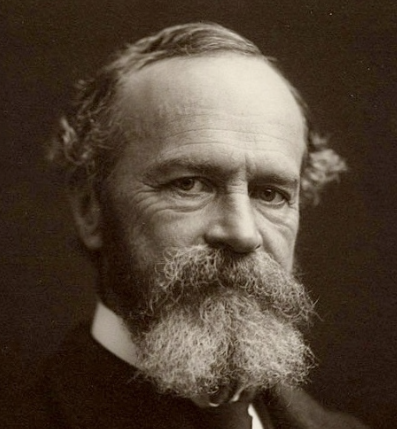
Possibilities that fail to get realized are, for determinism, pure illusions: they never were possibilities at all. There is nothing inchoate, it says, about this universe of ours, all that was or is or shall be actual having been from eternity virtually there. The cloud of alternatives our minds escort this mass of actuality withal is a cloud of sheer deceptions, to which 'impossibilities' is the only name that rightfully belongs.
▼
Source
source
The Dilemma of Determinism in "The Will to Believe" p. 151
4 months 1 week ago
Our reverence for the nobility of manhood will not be lessened by the knowledge, that Man, is in substance and in structure, one with the brutes; for, he alone possesses the marvellous endowment of intelligible and rational speech, whereby, in the secular period of his existence, he has slowly accumulated and organized the experience which is almost wholly lost with the cessation of every individual life in other animals; so that now he stands raised upon it as on a mountain top, far above the level of his humble fellows, and transfigured from his grosser nature by reflecting, here and there, a ray from the infinite source of truth.
▼
Source
source
Ch.2, p. 132
7 months 2 weeks ago
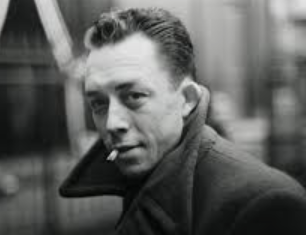
Homer tells us also that Sisyphus had put Death in chains. Pluto could not endure the sight of his deserted, silent empire. He dispatched the god of war, who liberated Death from the hands of her conqueror.

5 months 3 days ago
Religious men are and must be heretics now - for we must not pray, except in a "form" of words, made beforehand - or think of God but with a prearranged idea.

3 months 6 days ago
"You will have less money." Yes, and less trouble. "Less influence." Yes, and less envy.
3 months 2 days ago
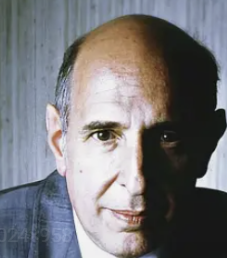
Students have powerful images of what a perfect body is and pursue it incessantly. But deprived of literary guidance, they no longer have any image of a perfect soul, and hence do not long to have one.
▼
Source
source
p. 67.

5 months 6 days ago
The universities are schools of education, and schools of research. But the primary reason for their existence is not to be found either in the mere knowledge conveyed to the students or in the mere opportunities for research afforded to the members of the faculty. Both these functions could be performed at a cheaper rate, apart from these very expensive institutions. Books are cheap, and the system of apprenticeship is well understood. So far as the mere imparting of information is concerned, no university has had any justification for existence since the popularization of printing in the fifteenth century. Yet the chief impetus to the foundation of universities came after that date, and in more recent times has even increased. The justification for a university is that it preserves the connection between knowledge and the zest of life, by uniting the young and the old in the imaginative consideration of learning.
5 months 2 weeks ago
Government in reality, as has abundantly appeared, is a question of force, and not of consent. It is desirable that a government should be made as agreeable as possible to the ideas and inclinations of its subjects and that they should be consulted, as extensively as may be, respecting its construction and regulations. But, at last, the best constituted government that can be formed particularly for a large community, will contain many provisions that, far from having obtained the consent of all its members, encounter even in their outset a strenuous, thought ineffectual opposition.
▼
Source
source
Book III, "Of Obedience"

6 months 2 weeks ago
The doctrine of the Second Coming teaches us that we do not and cannot know when the world drama will end. The curtain may be rung down at any moment: say, before you have finished reading this paragraph.
3 months 2 days ago
We have, as a result of two thousand years of Christianity, sex on the brain. Which isn't always the best place for it.

6 months 3 weeks ago
Children should not be suffer'd to lose the consideration of human nature in the shufflings of outward conditions. The more they have, the better humor'd they should be taught to be, and the more compassionate and gentle to those of their brethren who are placed lower, and have scantier portions. If they are suffer'd from their cradles to treat men ill and rudely, because, by their father's title, they think they have a little power over them, at best it is ill-bred; and if care be not taken, will by degrees nurse up their natural pride into an habitual contempt of those beneath them. And where will that probably end but in oppression and cruelty?
▼
Source
source
Sec. 117
3 months ago
For a long time there have been no true sovereigns, monarchs by divine right capable of wielding sword and scepter, and symbols of a higher human ideal. More than a century ago, Juan Donoso Cortés stated that no kings existed capable of proclaiming themselves as such except "by the will of the nation," adding that, even if any had existed, they would not have been recognized. The few monarchies still surviving are notoriously impotent and empty, while the traditional nobility has lost its essential character as a political class and any existential prestige and rank along with it. Its current representatives may still interest our contemporaries when put on the same plane as film actors and actresses, sport heroes and opera stars, and when through some private, sentimental, or scandalous chance, they serve as fodder for magazine articles.
▼
Source
source
p. 172

5 months 3 weeks ago
The territorial aristocracy of former ages was either bound by law, or thought itself bound by usage, to come to the relief of its serving-men and to relieve their distresses. But the manufacturing aristocracy of our age first impoverishes and debases the men who serve it and then abandons them to be supported by the charity of the public.
▼
Source
source
Book Two, Chapter XX.
2 months 2 weeks ago
Sovereign is he who decides on the exception.
▼
Source
source
p.5

5 months 2 weeks ago
Get thee hence, Satan: for it is written, Thou shalt worship the Lord thy God, and him only shalt thou serve.
▼
Source
source
4:10 (KJV) Said to Satan.
5 months 3 weeks ago
All life, Omnipotent Father, is thy life! and the eye of religion alone penetrates to the realms of truth and beauty. I am related to thee, and what I behold around me is related to me; all is full of animation, and looks towards me with bright spiritual eyes, and speaks with spirit voices to my heart.
▼
Source
source
Jane Sinnett, trans 1846 p.125
2 months 2 weeks ago
I don't know what the life of a rascal is like since I have never been one, but that of an honest man is abominable. How few men are there whose passage on this stupid planet has been marked by really good and useful acts! I prostrate myself before the one of which one can say: pertransivit bene faciendo; the one who had been able to instruct, console, and relieve his fellows; the one who made great sacrifices for charity; these heroes of silent charity who hide themselves and expect nothing in this world. But what is the ordinary man? And how many are there in a thousand who can ask themselves without terror: what have I done in this world? In what way have I advanced the common good and what will remain of me of good or evil?
▼
Source
source
Letter to chevalier de Saint-Réal, 21 December 1816, Œuvre critique, xiv, p. 10
3 months ago
The highest instrument of inner awakening of race is combat, and war is its highest expression. That pacifism and humanitarianism are phenomena closely linked to internationalism, democracy, cosmopolitanism and liberalism is perfectly logical - the same anti-racial instinct present in some, is reflected and confirmed in the others. The will towards sub-racial levelling inborn in internationalism finds its ally in pacifist humanitarianism, which has the function of preventing the heroic test from disrupting the game by galvanising the surviving forces of any still not completely deracinated peoples.
▼
Source
source
p. 67

2 months 2 weeks ago
And you can also commit injustice by doing nothing.
▼
Source
source
(Hays translation) IX, 5
6 months 2 weeks ago
The Prodigal Son at least walked home on his own feet. But who can duly adore that Love which will open the high gates to a prodigal who is brought in kicking, struggling, resentful, and darting his eyes in every direction for a chance of escape?

5 months 1 week ago
Science is a cemetery of dead ideas, even though life may issue from them.

4 months 2 weeks ago
The electronic age is a world in which causes and effects become almost interchangeable, as in music structures.
▼
Source
source
(p. 99)

6 months 3 weeks ago
To speak impartially, the best men that I know are not serene, a world in themselves. For the most part, they dwell in forms, and flatter and study effect only more finely than the rest. We select granite for the underpinning of our houses and barns; we build fences of stone; but we do not ourselves rest on an underpinning of granitic truth, the lowest primitive rock. Our sills are rotten.
▼
Source
source
p. 490
3 months 3 weeks ago
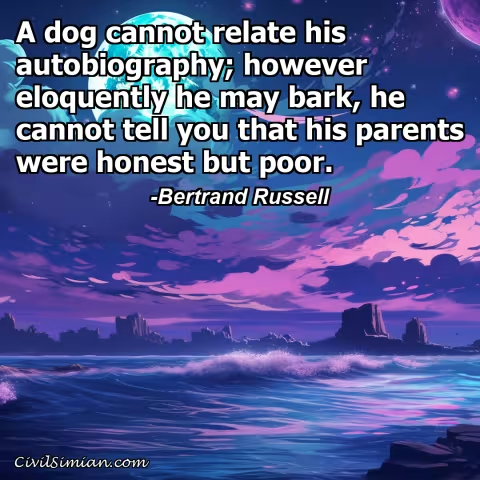
Of faith and morals, one cannot speak honestly for long without hurting feelings. Therefore, most people speak dishonestly of the most important subjects. Many recent philosophers prefer not to speak of them at all. But in some situations honesty is incompatible with silence.
7 months 1 day ago
For all knowledge and wonder (which is the seed of knowledge) is an impression of pleasure in itself.
▼
Source
source
Book I, i, 3

2 months 2 weeks ago
The human body is a machine which winds its own springs.

6 months 3 weeks ago
We are not so absurd as to propose that the teacher should not set forth his own opinions as the true ones and exert his utmost powers to exhibit their truth in the strongest light. To abstain from this would be to nourish the worst intellectual habit of all, that of not finding, and not looking for, certainty in any teacher. But the teacher himself should not be held to any creed; nor should the question be whether his own opinions are the true ones, but whether he is well instructed in those of other people, and, in enforcing his own, states the arguments for all conflicting opinions fairly.
▼
Source
source
"Civilization," London and Westminster Review, April 1836
6 months 3 weeks ago
The soldier is applauded who refuses to serve in an unjust war by those who do not refuse to sustain the unjust government which makes the war; is applauded by those whose own act and authority he disregards and sets at naught; as if the state were penitent to that degree that it hired one to scourge it while it sinned, but not to that degree that it left off sinning for a moment.
6 months 3 weeks ago
It is a serious question among them whether they [Africans] are descended from monkeys or whether the monkeys come from them. Our wise men have said that man was created in the image of God. Now here is a lovely image of the Divine Maker: a flat and black nose with little or hardly any intelligence. A time will doubtless come when these animals will know how to cultivate the land well, beautify their houses and gardens, and know the paths of the stars: one needs time for everything.
▼
Source
source
Les Lettres d'Amabed (1769): Septième Lettre d'Amabed
6 months 3 days ago
Above all things reverence thy Self.
▼
Source
source
Variant translations: Respect yourself above all. As quoted in Divine Harmony: The Life and Teachings of Pythagoras by John Strohmeier and Peter Westbrook. (1999) ISBN 0-9653774-5-8
2 months 3 weeks ago
Nothing is troublesome that we do willingly.

5 months 3 weeks ago
That Vulcan gave arrows unto Apollo and Diana the fourth day after their Nativities, according to Gentile Theology, may pass for no blind apprehension of the Creation of the Sun and Moon, in the work of the fourth day.
▼
Source
source
Opening lines of Ch. 1

3 months 1 week ago
A million blockheads looking authoritatively into one man of what you call genius, or noble sense, will make nothing but nonsense out of him and his qualities, and his virtues and defects, if they look till the end of time. He understands them, sees what they are; but that they should understand him, and see with rounded outline what his limits are,-this, which would mean that they are bigger than he, is forever denied them. Their one good understanding of him is that they at last should loyally say, "We do not quite understand thee; we perceive thee to be nobler and wiser and bigger than we, and will loyally follow thee."
3 months 1 week ago
All the problems that disturb us today-the cutting down of forests and the erosion of the soil; the emancipation of woman and the limitation of the family; the conservatism of the established, and the experimentalism of the unplaced, in morals, music, and government; the corruptions of politics and the perversions of conduct; the conflict of religion and science, and the weakening of the supernatural supports of morality; the war of the classes, the nations, and the continents; the revolutions of the poor against the economically powerful rich, and of the rich against the politically powerful poor; the struggle between democracy and dictatorship, between individualism and communism, between the East and the West-all these agitated, as if for our instruction, the brilliant and turbulent life of ancient Hellas. There is nothing in Greek civilization that does not illuminate our own.
▼
Source
source
Preface, P.18
6 months 3 weeks ago
I am thus one of the very few examples, in this country, of one who has, not thrown off religious belief, but never had it...
▼
Source
source
(p. 43)

5 months 3 weeks ago
Economy is a distributive virtue, and consists not in saving but selection. Parsimony requires no providence, no sagacity, no powers of combination, no comparison, no judgment.
2 months 3 weeks ago
To SEE and accept the boundaries of the human mind without vain rebellion, and in these severe limitations to work ceaselessly without protest - this is where man's first duty lies.
3 months ago
He who perceives death perceives a sense of the human comedy, and quickly becomes a poet.
▼
Source
source
pp. 39-40
7 months 3 weeks ago
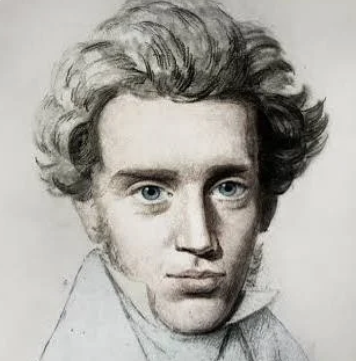
Above all do not forget your duty to love yourself; do not permit the fact that you have been set apart from life in a way, been prevented from participating actively in it, and that you are superflous in the obtruse eyes of a busy world, above all, do not permit this to deprive you of your idea of yourself, as if your life, if lived in inwardness, did not have just as much meaning and worth as that of any human being in the eyes of all-wise Governance, and considerably more than the busy, busiest haste of busy-ness - busy with wasting life and losing itself.
CivilSimian.com created by AxiomaticPanic, CivilSimian, Kalokagathia