



5 months 3 weeks ago
I believe Gandhi is the only person who knew about real democracy - not democracy as the right to go and buy what you want, but democracy as the responsibility to be accountable to everyone around you. Democracy begins with freedom from hunger, freedom from unemployment, freedom from fear, and freedom from hatred. To me, those are the real freedoms on the basis of which good human societies are based.
▼
Source
source
1998
8 months 2 days ago
Citizens of a Jeffersonian democracy can be as religious or irreligious as they please as long as they are not "fanatical." That is, they must abandon or modify opinion on matters of ultimate importance, the opinions that may hitherto have given sense and point to their lives, if these opinions entail public actions that cannot be justified to most of their fellow citizens.

8 months 1 week ago
No man treats a motorcar as foolishly as he treats another human being. When the car will not go, he does not attribute its annoying behaviour to sin; he does not say, "You are a wicked motorcar, and I shall not give you any more petrol until you go." He attempts to find out what is wrong and to set it right. An analogous way of treating human beings is, however, considered to be contrary to the truths of our holy religion.
▼
Source
source
"The Doctrine of Free Will"


9 months 1 week ago
I was assailed by memories of a life that wasn't mine anymore, but one in which I'd found the simplest and most lasting joys.
4 months 1 week ago
A definition of the political can be obtained only by discovering and defining the specifically political categories.
9 months 2 weeks ago
...and woe betide fateful curiosity should it ever succeed in peering through a crack in the chamber of consciousness, out and down into the depths, and thus gain an intimation of the fact that humanity, in the indifference of its ignorance, rests on the pitiless, the greedy, the insatiable, the murderous clinging in dreams, as it were, to the back of a tiger.
8 months 1 week ago
"Here is the chalk." This is a truth; and here and the now hereby characterize the chalk so that we emphasize by saying; the chalk, which means "this." We take a scrap of paper and we write the truth down: "Here is the chalk." We lay this written statement beside the thing of which it is the truth. After the lecture is finished both doors are opened, the classroom is aired, there will be a draft, and the scrap of paper, let us suppose, will flutter out into the corridor. A student finds it on his way to the cafeteria, reads the sentence. "Here is the chalk," and ascertains that this is not true at all. Through the draft the truth has become an untruth. Strange that a truth should depend on a gust of wind. ... We have made the truth about the chalk independent of us and entrusted it to a scrap of paper.
▼
Source
source
p. 29-30

8 months 1 week ago
Your questions refer to words; so I have to talk about words. You say: The point isn't the word, but its meaning, and you think of the meaning as a thing of the same kind as the word, though also different from the word. Here the word, there the meaning.
▼
Source
source
§ 120

4 months 3 weeks ago
Mucius might have accomplished something more successful in that camp, but never anything more brave.

5 months 2 weeks ago
The result of toppling tyranny in divided countries is usually civil war and ethnic cleansing.
▼
Source
source
The death of this crackpot creed is nothing to mourn, The Guardian

5 months 3 days ago
The Hero as Divinity, the Hero as Prophet, are productions of old ages; not to be repeated in the new. They presuppose a certain rudeness of conception, which the progress of mere scientific knowledge puts an end to. There needs to be, as it were, a world vacant, or almost vacant of scientific forms, if men in their loving wonder are to fancy their fellow-man either a god or one speaking with the voice of a god. Divinity and Prophet are past.

6 months 1 week ago
As Narcissus fell in love with an outering (projection, extension) of himself, man seems invariably to fall in love with the newest gadget or gimmick that is merely an extension of his own body.
4 months 3 weeks ago
Thus proletarian violence has become an essential factor in Marxism. Let us add once more that, if properly conducted, it will have the result of suppressing parliamentary socialism, which will no longer be able to pose as the leader of the working classes and as the guardian of order.
▼
Source
source
p. 79

8 months 1 week ago
"Then those people are right who say that Heaven and Hell are only states of mind?" "Hush," he said sternly. "Do not blaspheme. Hell is a state of mind - ye never said a truer word. And every state of mind, left to itself, every shutting up of the creature within the dungeon of its own mind - is, in the end, Hell. But Heaven is not a state of mind. Heaven is reality itself. All that is fully real is Heavenly."
▼
Source
source
Ch. 9
6 months 1 week ago
The world and the universe is an extremely beautiful place, and the more we understand about it the more beautiful does it appear. It is an immensely exciting experience to be born in the world, born in the universe, and look around you and realise that before you die you have the opportunity of understanding an immense amount about that world and about that universe and about life and about why we're here. We have the opportunity of understanding far, far more than any of our predecessors ever. That is such an exciting possibility, it would be such a shame to blow it and end your life not having understood what there is to understand.

8 months 3 weeks ago
A few rules include all that is necessary for the perfection of the definitions, the axioms, and the demonstrations, and consequently of the entire method of the geometrical proofs of the art of persuading.
6 months 3 weeks ago
In the dominant Western religious system, the love of God is essentially the same as the belief in God, in God's existence, God's justice, God's love. The love of God is essentially a thought experience. In the Eastern religions and in mysticism, the love of God is an intense feeling experience of oneness, inseparably linked with the expression of this love in every act of living.
▼
Source
source
Ch. 2
6 months 3 weeks ago
Schizophrenia is like love: there is no specifically schizophrenic phenomenon or entity; schizophrenia is the universe of productive and reproductive desiring machines, universal primary production as "the essential reality of man and nature".
▼
Source
source
The Desiring Machine

8 months 1 week ago
Thinking withdraws radically and for its own sake from this world and its evidential nature, whereas science profits from a possible withdrawal for the sake of specific results.
▼
Source
source
p. 56
5 months 3 days ago
A man of Intellect, of real and not sham Intellect, is by the nature of him likewise inevitably a man of nobleness, a man of courage, rectitude, pious strength; who, even because he is and has been loyal to the Laws of this Universe, is initiated into discernment of the same; to this hour a Missioned of Heaven; whom if men follow, it will be well with them; whom if men do not follow, it will not be well. Human Intellect, if you consider it well, is the exact summary of Human Worth; and the essence of all worth-ships and worships is reverence for that same.

7 months 2 weeks ago
Americans cleave to the things of this world as if assured that they will never die,... They clutch everything but hold nothing fast, and so lose grip as they hurry after some new delight. ... Death steps in in the end and stops him before he has grown tired of this futile pursuit of that complete felicity which always escapes him. At first sight there is something astonishing in this spectacle of so many lucky men restless in the midst of abundance. But it is a spectacle as old as the world; all that is new is to see a whole people performing in it.
▼
Source
source
Book Two, Chapter XIII.

8 months 1 week ago
Fine manners need the support of fine manners in others, and this is a gift interred only by the self.
▼
Source
source
Behavior
4 months 3 weeks ago
Defined from outside and quite empirically, complete civilization consists in realizing all possible progress in discovery and invention and in the arrangements of human society, and seeing that they work together for the spiritual perfecting of individuals, which is the real and final object of civilization. Reverence for life is in a position to complete this conception of civilization and to build its foundations on what lies at the core of our being. This it does by defining what is meant by the spiritual perfecting of man and making it consist in reaching the spirituality of an ever-deepening reverence for life.
▼
Source
source
quoted in Georg Feuerstein, Subhash Kak, and David Frawley. - In search of the cradle of civilization _ new light on ancient India-Quest Books

7 months 1 week ago
We want no foreign examples to rekindle in us the flame of liberty. The example of our own ancestors is abundantly sufficient to maintain the spirit of freedom in its full vigour, and to qualify it in all its exertions. The example of a wise, moral, well-natured, and well-tempered spirit of freedom, is that alone which can be useful to us, or in the least degree reputable or safe. Our fabric is so constituted; one part of it bears so much on the other, the parts, are so made for one another, and for nothing else, that to introduce any foreign matter into it, is to destroy it.
▼
Source
source
p. 471
4 months 3 weeks ago
Pain he endures, death he awaits.
8 months 1 week ago
Certain forms of sex which do not lead to children are at present punished by the criminal law: this is purely superstitious, since the matter is one which affects no one except the parties directly concerned... The peculiar importance attached, at present, to adultery is quite irrational... Moral rules ought not to be such as to make instinctive happiness impossible.
6 months 2 weeks ago
To me, believing that some correspondence intrinsically just is reference (not as a result of our operational and theoretical constraints, or our intentions, but as an ultimate metaphysical fact) amounts to a magical theory of reference. Reference itself becomes what Locke called a 'substantial form' (an entity which intrinsically belongs with a certain name) on such a view. Even if one is willing to contemplate such unexplainable metaphysical facts, the epistemological problems that accompany such a metaphysical view seem insuperable. For, assuming a world of mind- independent, discourse-independent entities (this is the presupposition of the view we are discussing), there are, as we have seen, many different 'correspondences' which represent possible or candidate reference relations (infinitely many, in fact, if there are infinitely many things in the universe).
▼
Source
source
Chap. 2 : A problem about reference

6 months 1 week ago
Do not resist the evil-doer and take no part in doing so, either in the violent deeds of the administration, in the law courts, the collection of taxes, or above all in soldiering, and no one in the world will be able to enslave you.
▼
Source
source
V. "Do not resist the evil-doer" is an allusion to the words of Jesus Christ in Matthew 5:39.
7 months 2 weeks ago
So many of my thoughts and feelings are shared by the English that England has turned into a second native land of the mind for me.
▼
Source
source
Journeys to England and Ireland, 1835.
4 months 1 week ago
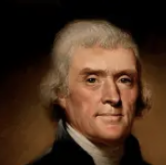
Necessity, as well as patriotism and confidence, will make us all eager to receive treasury notes, if founded on specific taxes. Congress may borrow of the public, and without interest, all the money they may want, to the amount of a competent circulation, by merely issuing their own promissory notes, of proper denominations for the larger purposes of circulation, but not for the small. Leave that door open for the entrance of metallic money.
▼
Source
source
Letter to Thomas Cooper, 1814. ME 14:189

6 months 4 weeks ago
Although people seem to be unaware of it today, the development of the faculty of attention forms the real object and almost the sole interest of studies.
5 months 1 week ago
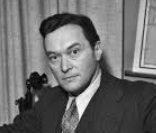
The newspaper is in all its literalness the bible of democracy, the book out of which a people determines its conduct.
▼
Source
source
What Modern Liberty Means, p. 47. Essay first published in The Atlantic (November 1919).

8 months 1 week ago
The church is a sort of hospital for men's souls, and as full of quackery as the hospital for their bodies. Those who are taken into it live like pensioners in their Retreat or Sailors' Snug Harbor, where you may see a row of religious cripples sitting outside in sunny weather.
▼
Source
source
Pearls of Thought (1881) p. 43
8 months 2 weeks ago
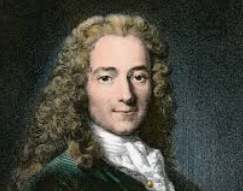
One always speaks badly when one has nothing to say.
▼
Source
source
1827
6 months 2 weeks ago
Even though the model referred to satisfies the theory, etc., it is 'unintended'; and we recognize that it is unintended from the description through which it is given (as in the intuitionist case). Models are not lost noumenal waifs looking for someone to name them; they are constructions within our theory itself. and they have names from birth.
▼
Source
source
Models and Reality
5 months 3 weeks ago
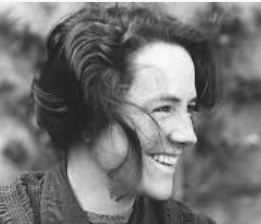
Life itself is always pulling you away from the understanding of life.

8 months 1 week ago
To choose this or that is to affirm at the same time the value of what we choose, because we can never choose evil. We always choose the good, and nothing can be good for us without being good for all.
▼
Source
source
Existentialism and Human Emotions
6 months 3 weeks ago
Optimism is an alienated form of faith, pessimism an alienated form of despair. If one truly responds to man and his future, ie, concernedly and "responsibly." one can respond only by faith or by despair. Rational faith as well as rational despair are based on the most thorough, critical knowledge of all the factors that are relevant for the survival of man.
▼
Source
source
p. 483

7 months 2 weeks ago
A little water makes a sea, a small puff of wind a Tempest.
6 months 4 weeks ago
If people were told: what makes carnal desire imperious in you is not its pure carnal element. It is the fact that you put into it the essential part of yourself-the need for Unity, the need for God - they wouldn't believe it. To them it seems obvious that the quality of imperious need belongs to the carnal desire as such. In the same way it seems obvious to the miser that the quality of desirability belongs to gold as such, and not to its exchange value.

4 months 1 week ago
No thefts of free will reported.
▼
Source
source
(Hays translation) XI, 36


8 months 2 weeks ago
For the history of the centuries that have passed since the birth of Christ nowhere reveals conditions like those of the present. There has never been such building and planting in the world. There has never been such gluttonous and varied eating and drinking as now. Wearing apparel has reached its limit in costliness. Who has ever heard of such commerce as now encircles the earth? There have arisen all kinds of art and sculpture, embroidery and engraving, the like of which has not been seen during the whole Christian era. In addition men are so delving into the mysteries of things that today a boy of twenty knows more than twenty doctors formerly knew.
▼
Source
source
Sermon for the Second Sunday in Advent, Luke 21:25-36 (1522), as translated in The Precious and Sacred Writings of Martin Luther (1905) edited by John Nicholas Lenker
CivilSimian.com created by AxiomaticPanic, CivilSimian, Kalokagathia