


8 months 2 weeks ago
When Scipio became consul and was keen on getting the province of Africa, promising that Carthage should be completely destroyed, and the senate would not agree to this because Fabius Maximus was against it, he threatened to appeal to the people, for he knew full well how pleasing such projects are to the populace.
▼
Source
source
Book 1, Ch. 53 (as translated by LJ Walker and B Crick)
8 months 1 week ago
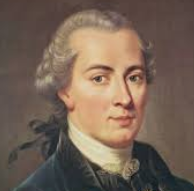
The light dove, cleaving the air in her free flight, and feeling its resistance, might imagine that its flight would be still easier in empty space.
▼
Source
source
B 8
8 months 1 week ago
Is it reasonable to assume a purposiveness in all the parts of nature and to deny it to the whole?
▼
Source
source
Seventh Thesis

6 months 3 weeks ago
My own book Women, Race and Class was one of many that were published during that era, including, to name only a few, This Bridge Called My Back, edited by Gloria Anzaldúa and Cherrie Moraga, the work of bell hooks and Michelle Wallace, and the anthology All the Women Are White, All the Blacks Are Men, but Some of Us Are Brave: Black Women's Studies. So behind this concept of intersectionality is a rich history of struggle. A history of conversations among activists within movement formations, and with and among academics as well.
▼
Source
source
Angela Davis Freedom Is a Constant Struggle: Ferguson, Palestine, and the Foundations of a Movement (2015) p 19

8 months 1 week ago
Instinctively we divide mankind into friends and foes - friends, towards whom we have the morality of co-operation; foes, towards whom we have that of competition. But this division is constantly changing; at one moment a man hates his business competitor, at another, when both are threatened by Socialism or by an external enemy, he suddenly begins to view him as a brother. Always when we pass beyond the limits of the family it is the external enemy which supplies the cohesive force. In times of safety we can afford to hate our neighbour, but in times of danger we must love him.
▼
Source
source
Authority and the Individual, 1949

7 months 2 weeks ago
There is no road or ready way to virtue.
▼
Source
source
Section 55
9 months 1 week ago
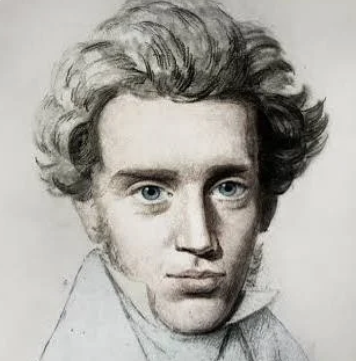
Let others complain that the age is wicked; my complaint is that it is paltry; for it lacks passion. Men's thoughts are thin and flimsy like lace, they are themselves pitiable like the lacemakers. The thoughts of their hearts are too paltry to be sinful. For a worm it might be regarded as a sin to harbor such thoughts, but not for a being made in the image of God. Their lusts are dull and sluggish, their passions sleepy. They do their duty, these shopkeeping souls, but they clip the coin a trifle, like the Jews; they think that even if the Lord keeps ever so careful a set of books, they may still cheat Him a little. Out upon them! This is the reason my soul always turns back to the Old Testament and to Shakespeare. I feel that those who speak there are at least human beings; they hate, they love, they murder their enemies, and curse their descendants throughout all generations, they sin.

7 months 1 week ago
No passion so effectually robs the mind of all its powers of acting and reasoning as fear.
▼
Source
source
Part II Section II


7 months 3 weeks ago
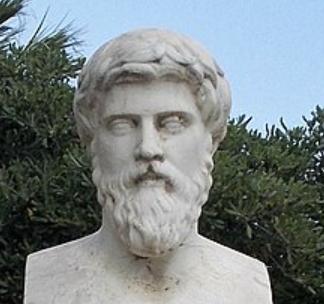
Once when Phocion had delivered an opinion which pleased the people,... he turned to his friend and said, "Have I not unawares spoken some mischievous thing or other?"
▼
Source
source
55 Phocion
5 months 3 weeks ago
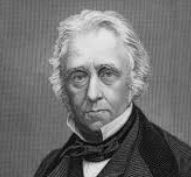
We hardly know any instance of the strength and weakness of human nature so striking, and so grotesque, as the character of this haughty, vigilant, resolute, sagacious blue-stocking, half Mithridates and half Trissotin, bearing up against a world in arms, with an ounce of poison in one pocket and a quire of bad verses in the other.
▼
Source
source
'Frederic the Great', The Edinburgh Review (April 1842), quoted in T. B. Macaulay, Critical and Historical Essays Contributed to The Edinburgh Review: A New Edition (1852), p. 802

6 months 3 weeks ago
If you have had your attention directed to the novelties in thought in your own lifetime, you will have observed that almost all really new ideas have a certain aspect of foolishness when they are first produced.
▼
Source
source
Ch. 3: "The Century of Genius", pp. 67-68

8 months 1 week ago
What point of morals, of manners, of economy, of philosophy, of religion, of taste, of the conduct of life, has he not settled? What mystery has he not signified his knowledge of? What office, or function, or district of man's work, has he not remembered? What king has he not taught state, as Talma taught Napoleon? What maiden has not found him finer than her delicacy? What lover has he not outloved? What sage has he not outseen? What gentleman has he not instructed in the rudeness of his behavior?
▼
Source
source
Shakespeare; or, The Poet

8 months 1 week ago
God will look to every soul like its first love because He is its first love.


4 months 4 weeks ago
There is an irrepressible tendency in every man to develop himself according to the magnitude which Nature has made him of; to speak out, to act out, what nature has laid in him. This is proper, fit, inevitable; nay it is a duty, and even the summary of duties for a man. The meaning of life here on earth might be defined as consisting in this: To unfold your self, to work what thing you have the faculty for.
7 months 6 days ago
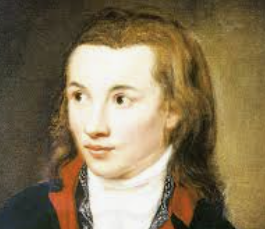
The world must be romanticized. In this way the originary meaning may be found again.
▼
Source
source
As quoted in The Experience of the Foreign : Culture and Translation in Romantic Germany (1992) by Antoine Berman Variant translation: Romanticize the world.
8 months 1 week ago
Formerly, it was held by philosophers and mathematicians alike that the proofs in Geometry depended on the figure; nowadays, this is known to be false. In the best books there are no figures at all. The reasoning proceeds by the strict rules of formal logic from a set of axioms laid down to begin with.
▼
Source
source
Ch. 5: Mathematics and the Metaphysicians

4 months 1 week ago
Commerce with all nations, alliance with none, should be our motto.
▼
Source
source
Letter to Thomas Lomax
4 months 2 weeks ago
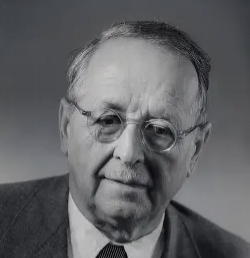
This letter, if judged by the novelty and profundity of ideas it contains, is perhaps the most substantial piece of writing in the whole literature of mankind.
▼
Source
source
Symmetry (1952), quote on p. 138; referring to a letter by Évariste Galois to Auguste Chevalier from May 29, 1832, two days before Galois' death, containing a testamentary summary of Galois' discoveries
7 months 2 weeks ago
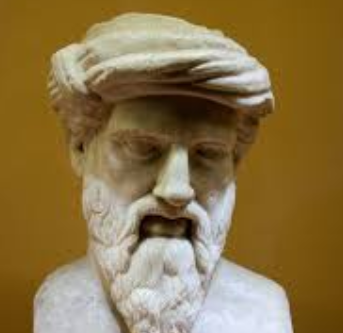
Practice justice in word and deed, and do not get in the habit of acting thoughtlessly about anything.
▼
Source
source
As quoted in Divine Harmony: The Life and Teachings of Pythagoras by John Strohmeier and Peter Westbrook.

4 months 3 weeks ago
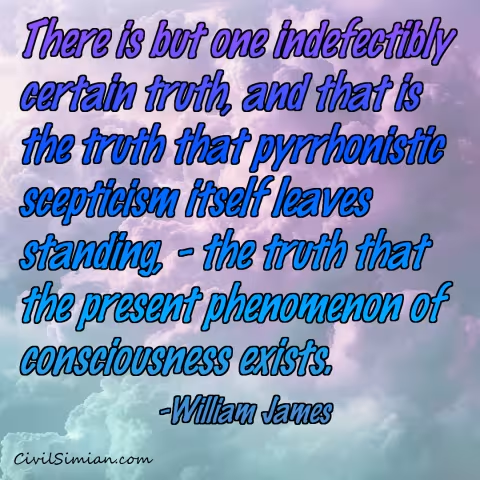
"What progress, you ask, have I made? I have begun to be a friend to myself." That was indeed a great benefit; such a person can never be alone. You may be sure that such a man is a friend to all mankind.
▼
Source
source
Seneca is quoting Hecato.
7 months 1 week ago
Bad laws are the worst sort of tyranny.
▼
Source
source
Speech at Bristol Previous to the Election (6 September 1780), quoted in The Works of the Right Honourable Edmund Burke, Vol. II (1855), p. 148

8 months 3 weeks ago
The first-beginnings of things cannot be seen by the eyes.
▼
Source
source
Book I, line 268 (tr. Munro)

9 months 6 days ago
Just you think first, and don't bother to speak afterward, either.

8 months 3 days ago
Beneath the humanization of the penalties, what one finds are all those rules that authorize, or rather demand, 'leniency', as a calculated economy of the powder to punish. But they also provoke a shift in the point of application of this power: it is no longer the body, with the ritual play of excessive pains, spectacular branding in the ritual of the public execution; it is the mind or rather a play of representations and sings circulating discreetly but necessarily and evidently in the minds of all. It is no longer the body, but the soul, said Mably. And we see very clearly what he meant by this term: the correlative of a technique of power. Old 'anatomies' of punishment are abandoned, But have we really entered the age of non-corporal punishment?
▼
Source
source
Chapter Two, Generalized Punishment, pp. 101
8 months 1 week ago
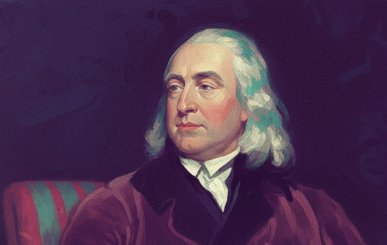
Liberty therefore not being more fit than other words in some of the instances in which it has been used, and not so fit in others, the less the use that is made of it the better. I would no more use the word liberty in my conversation when I could get another that would answer the purpose, than I would brandy in my diet, if my physician did not order me: both cloud the understanding and inflame the passions.
▼
Source
source
Jeremy Bentham, quoted in P. J. Kelly, Utilitarianism and Distributive Justice: Jeremy Bentham and the Civil Law, Oxford, 1990, p. 96

4 months 5 days ago
I consist of a little body and a soul.
▼
Source
source
VI, 32
4 months 1 week ago
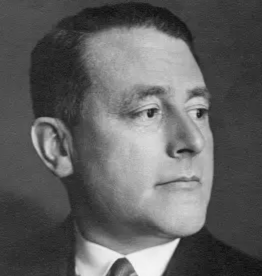
The concept of humanity is an especially useful ideological instrument of imperialist expansion, and in its ethical-humanitarian form it is a specific vehicle of economic imperialism.

7 months 1 day ago
A naturall foole that could never learn by heart the order of numerall words, as one, two, and three, may observe every stroak of the Clock, and nod to it, or say one, one, one; but can never know what houre it strikes.
▼
Source
source
The First Part, Chapter 4, p. 14
3 months 4 weeks ago
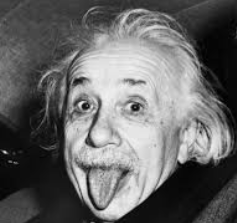
As an eminent pioneer in the realm of high frequency currents... I congratulate you on the great successes of your life's work.
▼
Source
source
[http://www.teslasociety.com/einsteinletter.jpg Einstein's letter] to Nikola Tesla for Tesla's 75th birthday (1931)
7 months 4 days ago
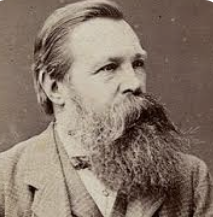
Big industry, competition and generally the individualistic organization of production have become a fetter which it must and will shatter.
8 months 1 week ago
No nation was ever so virtuous as each believes itself, and none was ever so wicked as each believes the other.
▼
Source
source
Justice in War-Time (1916), p. 70
3 months 4 weeks ago
I am a determinist. As such, I do not believe in free will. The Jews believe in free will. They believe that man shapes his own life. I reject that doctrine philosophically. In that respect, I am not a Jew.
▼
Source
source
Quoted in [http://books.google.com/books?id=dJMpQagbz_gC&lpg=PP1&pg=PA387#v=onepage&q&f=false Einstein: His Life and Universe] by Walter Isaacson, p. 387
8 months 1 week ago
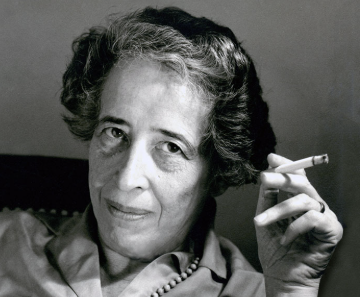
Metaphysical fallacies contain the only clues we have to what thinking means to those who engage in it.
▼
Source
source
p. 12
7 months 6 days ago
The best thing about the sciences is their philosophical ingredient, like life for an organic body. If one dephilosophizes the sciences, what remains left? Earth, air, and water.
▼
Source
source
Fragment No. 62
4 months 5 days ago
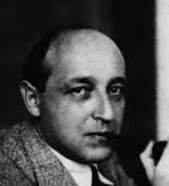
In order to be transmuted into knowledge, every perception is and must be ordered and organized into categories. The extent, however, to which we can organize and express our experience in such conceptual forms is, in turn, dependent upon the frames of reference which happen to be available at a given historical moment. The concepts which we have and the universe of discourse in which we move, together with the directions in which they tend to elaborate themselves, are dependent largely upon the historical-social situation of the intellectually active and responsible members of the group.

8 months 1 week ago
Life is a business that does not cover the costs.
▼
Source
source
Vol II "On the Vanity and Suffering of Life"

8 months 1 week ago
Lord, you have cursed Cain and Cain's children: thy will be done. You have allowed men's hearts to be corrupted, that their intentions be rotten, that their actions putrefy and stink: thy will be done.
▼
Source
source
Act 1
4 months 3 weeks ago
Who can be forced has not learned how to die.
▼
Source
source
line 426; (Megara). Alternate translation: Who can be compelled does not know how to die.

7 months 1 week ago
Corrupt influence, which is itself the perennial spring of all prodigality, and of all disorder; which loads us, more than millions of debt; which takes away vigor from our arms, wisdom from our councils, and every shadow of authority and credit from the most venerable parts of our constitution.

8 months 1 week ago
There are other letters for the child to learn than those which Cadmus invented.
8 months 1 week ago
Most of the luxuries, and many of the so-called comforts of life, are not only not indispensable, but positive hindrances to the elevation of mankind.
▼
Source
source
p. 18

7 months 4 days ago
At the edge of life you feel that you are no longer master of the life within you, that subjectivity is an illusion, and that uncontrollable forces are seething inside you, evolving with no relation to a personal center or a definite, individual rhythm.
▼
Source
source
essay 2 - On not wanting to live
7 months 2 weeks ago
The created World is but a small Parenthesis in Eternity.
▼
Source
source
Part III, Section XXIX
4 months 4 weeks ago
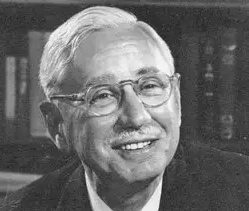
[on Epicurus] His starting point is a conviction that apathy is impossible, and that pleasure - though not necessarily sensual pleasure - is the only conceivable, and quite legitimate, end of life and action. "Nature leads every organism to prefer its own good to every other good" - even the stoic finds a subtle pleasure in renunciation. "We must not avoid pleasures, but we must select them". Epicurus, then, is no epicurean, he exalts the joys of intellect rather than those of sense; he warns against pleasures that excite and disturb the soul which they should rather quite and appease. In the end he proposes to seek not pleasure in its usual sense, but ataraxia - tranquility, equaninimity, repose of mind; all of which trembles on the verge of Zeno's "Apathy"
8 months 1 week ago
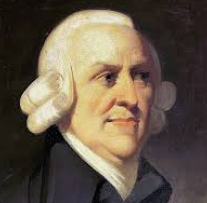
It cannot be very difficult to determine who have been the contrivers of this whole mercantile system; not the consumers, we may believe, whose interest has been entirely neglected; but the producers, whose interests has been so carefully attended to; and among this later class our merchants and manufactures have been by far the principal architects. In the mercantile regulations, which have been taken notice of in this chapter, the interest of our manufacturers has been most peculiarly attended to;and the interest, not so much of the consumers, as that of some other sets of producers, has been sacrificed to it.
▼
Source
source
Chapter VIII, p. 721.
CivilSimian.com created by AxiomaticPanic, CivilSimian, Kalokagathia