

8 months 3 weeks ago
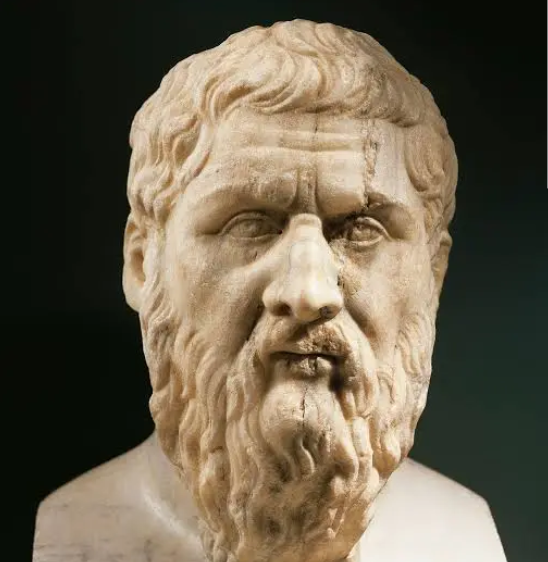
Beholding beauty with the eye of the mind, he will be enabled to bring forth, not images of beauty, but realities (for he has hold not of an image but of a reality), and bringing forth and nourishing true virtue to become the friend of God and be immortal, if mortal man may.
6 months 2 weeks ago
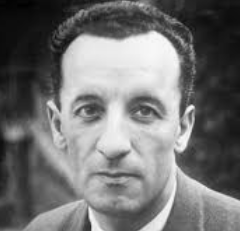
By becoming the pure subject who knows the world objectively, man ultimately realizes that absolute consciousness with respect to which the body and individual existence are no longer anything but objects; death is deprived of meaning. Reduced to the status of object of consciousness, the body could not be conceived as an intermediary between "things" and the consciousness which knows them.
▼
Source
source
p. 204
6 months 2 weeks ago
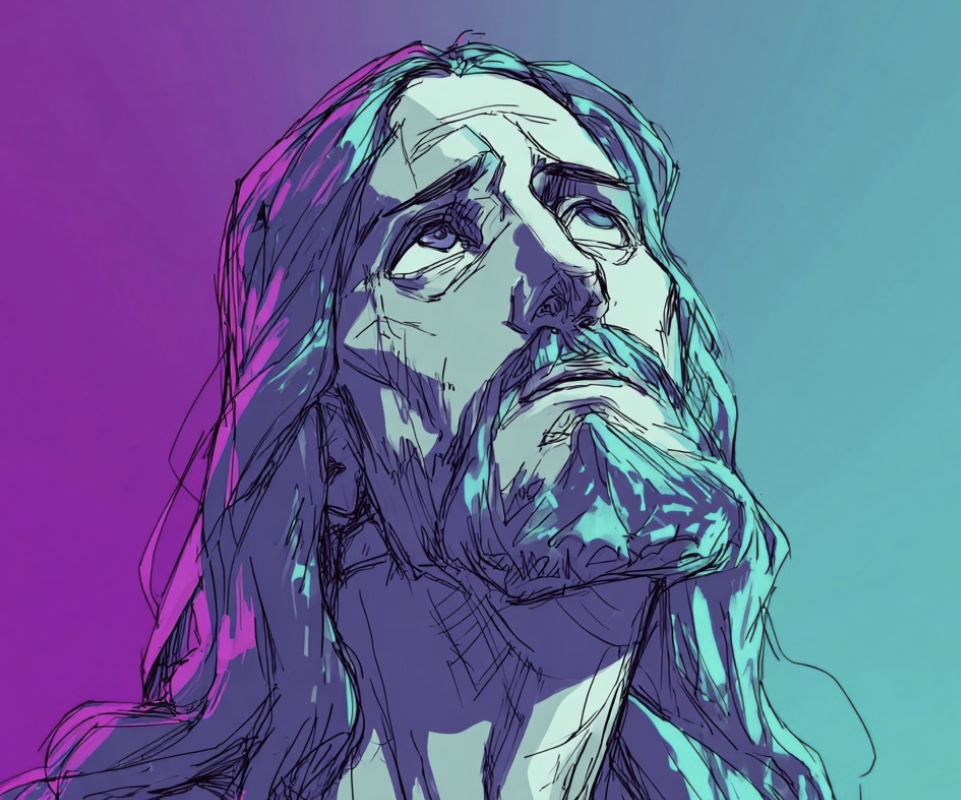
If those who lead you say, 'See, the Kingdom is in the sky,' then the birds of the sky will precede you. If they say to you, 'It is in the sea,' then the fish will precede you. Rather, the Kingdom is inside of you, and it is outside of you. When you come to know yourselves, then you will become known, and you will realize that it is you who are the sons of the living Father. But if you will not know yourselves, you dwell in poverty and it is you who are that poverty. (3) And when he was demanded of the Pharisees, when the kingdom of God should come, he answered them and said, The kingdom of God cometh not with observation: Neither shall they say, Lo here! or, lo there! for, behold, the kingdom of God is within you.
▼
Source
source
(Luke 17:21)

4 months 1 day ago
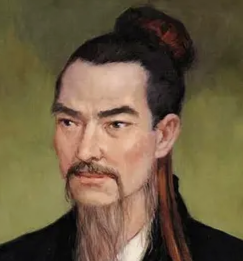
The purpose of the magnanimous is to be found in procuring benefits for the world and eliminating its calamities. ... Mutual attacks among states, mutual usurpation among houses, mutual injuries among individuals; the lack of grace and loyalty between ruler and ruled, the lack of affection and filial piety between father and son, the lack of harmony between elder and younger brothers - these are the major calamities in the world.
▼
Source
source
Book 4; Universal Love II
7 months 3 weeks ago
How can I, who was not able to retain my own past, hope to save that of another?

6 months 2 weeks ago
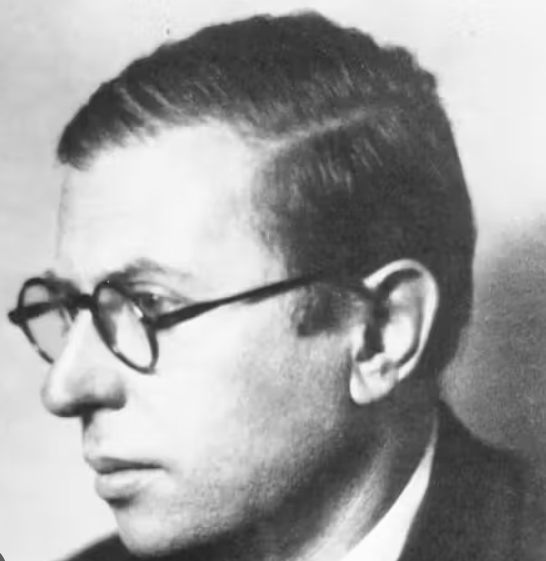
So it is that after each night, facing a new day, the impossible necessity of dealing with it fills us with dread; exiled in light as if the world had just started, inventing the sun, we flee from tears-just one of which would be enough to wash us out of time.
3 months 2 weeks ago
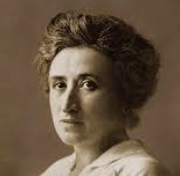
Violated, dishonored, wading in blood, dripping filth - there stands bourgeois society. This is it [in reality]. Not all spic and span and moral, with pretense to culture, philosophy, ethics, order, peace, and the rule of law - but the ravening beast, the witches' sabbath of anarchy, a plague to culture and humanity. Thus it reveals itself in its true, its naked form.
▼
Source
source
Ch. 1

8 months 6 days ago
This right which you have, is not founded any more than his upon any quality or any merit in yourself which renders you worthy of it. Your soul and your body are, of themselves, indifferent to the state of boatman or that of duke; and there is no natural bond that attaches them to one condition rather than to another.
4 months 1 day ago
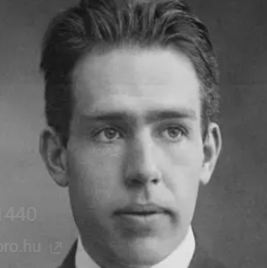
However far the phenomena transcend the scope of classical physical explanation, the account of all evidence must be expressed in classical terms. The argument is that simply by the word "experiment" we refer to a situation where we can tell others what we have done and what we have learned and that, therefore, the account of the experimental arrangement and of the results of the observations must be expressed in unambiguous language with suitable application of the terminology of classical physics.
▼
Source
source
Niels Bohr, "Discussions with Einstein on Epistemological Problems in Atomic Physics," in Paul Arthur Schilpp, Albert Einstein: Philosopher Scientist (1949) pp. 199-241.
3 months 3 weeks ago
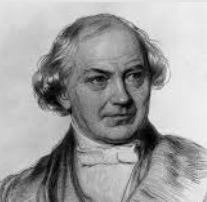
Truths obtained by Induction are made compact and permanent by being expressed in 'Technical Terms'.

7 months ago
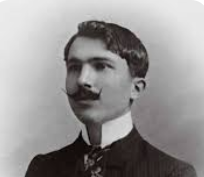
Perchance you who pronounce my sentence are in greater fear than I who receive it.
▼
Source
source
His famous response to his judges upon his conviction as a heretic, prior to his transfer to the civil authorities for execution. (16 February 1600); as quoted by Gaspar Schopp of Breslau in a letter to Conrad Rittershausen
3 months 3 weeks ago
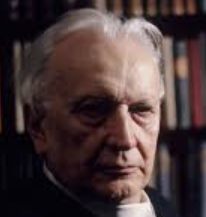
From every joy and pain a hope leaps out eternally to escape this pain and to widen joy. And again the ascent begins - which is pain - and joy is reborn and new hope springs up once more. The circle never closes. It is not a circle, but a spiral which ascends eternally, ever widening, enfolding and unfolding the triune struggle.
6 months 2 weeks ago
The general fellowship of our human situation has been rendered even more dubious than before, inasmuch as, though the old ties of caste have been loosened, a new restriction of the individual to some prescribed status in society is manifest. Less than ever, perhaps, is it possible for a man to transcend the limitations imposed by his social origins.
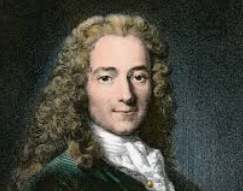
7 months 3 weeks ago
One always speaks badly when one has nothing to say.
▼
Source
source
1827
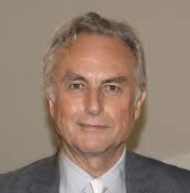
5 months 2 weeks ago
The wheel may be one of those cases where the engineering solution can be seen in plain view, yet be unattainable in evolution because it lies on the other side of a deep valley, cutting unbridgeably across the massif of Mount Improbable.
▼
Source
source
Dawkins, Richard (24 November 1996). "Why don't animals have wheels?". The Sunday Times. Retrieved on 29 October 2008.
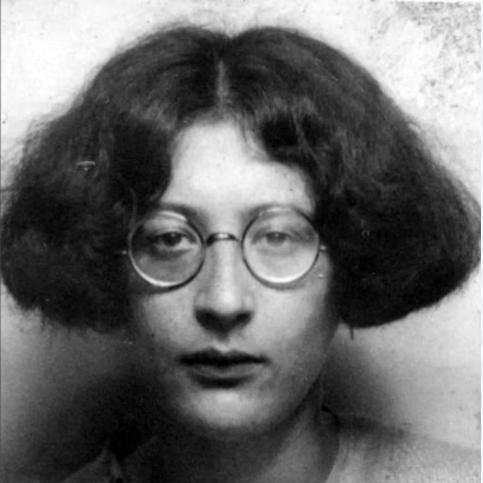
6 months 1 week ago
There is a certain kind of morality which is even more alien to good and evil than amorality is.
▼
Source
source
"The responsibility of writers," p. 169
6 months 2 weeks ago
Knowledge, having irritated and stimulated our appetite for power, will lead us inexorably to our ruin.
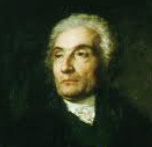
3 months 3 weeks ago
The return to order will not be painful, because it will be natural and because it will be favoured by a secret force whose action is wholly creative. We will see precisely the opposite of what we have seen. Instead of these violent commotions, painful divisions, and perpetual and desperate oscillations, a certain stability, and indefinable peace, a universal well-being will announce the presence of sovereignty. There will be no shocks, no violence, no punishment even, except those which the true nation will approve. Even crime and usurpation will be treated with a measured severity, with a calm justice that belongs to legitimate power only. The king will bind up the wounds of the state with a gentle and paternal hand. In conclusion, this is the great truth with which the French cannot be too greatly impressed: the restoration of the monarchy, what they call the counter-revolution, will be not a contrary revolution, but the contrary of revolution.
▼
Source
source
Chapter X, p. 105
6 months 3 days ago
If all else fails, the character of a man can be recognized by nothing so surely as by a jest which he takes badly.
▼
Source
source
K 46 Variant translation: A person reveals his character by nothing so clearly as the joke he resents.

7 months 3 weeks ago
I should as soon think of swimming across Charles River when I wish to go to Boston, as of reading all my books in originals when I have them rendered for me in my mother tongue.
▼
Source
source
Books
6 months 2 weeks ago
The terrifying experience and obsession of death, when preserved in consciousness, becomes ruinous. If you talk about death, you save part of yourself. But at the same time, something of your real self dies, because objectified meanings lose the actuality they have in consciousness.
5 months 2 weeks ago
Writers, poets, painters, musicians, philosophers, political thinkers, to name only a few of the categories affected, must woo their readers, viewers, listeners, from distraction. To this we must add, for simple realism demands it, that these same writers, painters, etc., are themselves the children of distraction. As such, they are peculiarly qualified to approach the distracted multitudes. They will have experienced the seductions as well as the destructiveness of the forces we have been considering here. This is the destructive element in which we do not need to be summoned to immerse ourselves, for we were born to it.
▼
Source
source
The Distracted Public (1990), p. 167
7 months 3 weeks ago
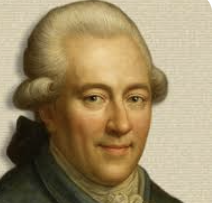
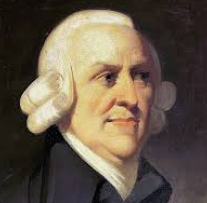
The man who barely abstains from violating either the person, or the estate, or the reputation of his neighbours, has surely very little positive merit. He fulfils, however, all the rules of what is peculiarly called justice, and does every thing which his equals can with propriety force him to do, or which they can punish him for not doing. We may often fulfil all the rules of justice by sitting still and doing nothing.
▼
Source
source
Section II, Chap. I.

7 months 3 weeks ago
No production without a need. But consumption reproduces the need.
▼
Source
source
Introduction, p. 12.

7 months 3 weeks ago
In the old dramas it was love that had to be sacrificed to painful duty. In the modern instance the sacrifice is at the shrine of what William James called "the Bitch Goddess, Success." Love is to be abandoned for the stern pursuit of newspaper notoriety and dollars.
▼
Source
source
"Silence is Golden," p. 61
3 months 1 week ago
It is easy to follow in the sacred writings of the Jewish people the development of the religion of fear into the moral religion, which is carried further in the New Testament. The religions of all civilized peoples, especially those of the Orient, are principally moral religions. An important advance in the life of a people is the transformation of the religion of fear into the moral religion. But one must avoid the prejudice that regards the religions of primitive peoples as pure fear religions and those of the civilized races as pure moral religions. All are mixed forms, though the moral element predominates in the higher levels of social life.
6 months 3 weeks ago
Better to be despised for too anxious apprehensions, than ruined by too confident a security.

7 months 3 weeks ago
The "social contract," in the only sense in which it is not completely mythical, is a contract among conquerors, which loses its raison d'être if they are deprived of the benefits of conquest.
▼
Source
source
Ch. 12: Powers and forms of governments
7 months 3 weeks ago
But capitalist production begets,with the inexorability of a law of Nature,its own negation. It is the negation of negation.
▼
Source
source
Vol. I, Ch. 32, p. 837.
7 months 3 weeks ago
The act of navigation is not favourable to foreign commerce, or to the growth of that opulence which can arise from it. ... As defence, however, is of much more importance than opulence, the act of navigation is, perhaps, the wisest of all the commercial regulations of England.
▼
Source
source
Chapter II
4 months 2 days ago
The trial that begins Awards to him who wins The fairest prize to-day. And lo, the hour is here And summons you. Appear! Ye may no more delay. Come hear the herald's call Ye princes one and all. Many tribes of men Submissive to you then! How keen in war your swords! But now 'tis wisdom's turn; Now let your rivals learn How keen can be your words.
7 months 5 days ago
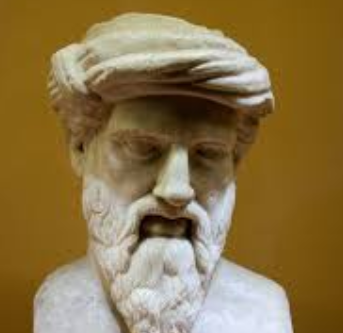
Remind yourself that all men assert that wisdom is the greatest good, but that there are few who strenuously seek out that greatest good.
▼
Source
source
Pythagorean Ethical Sentences From Stobæus
3 months 3 weeks ago
Having seen that I was not capable of using all my resources in political action, I returned to my literary activity. There lay the battlefield suited to my temperament. I wanted to make my novels the extension of my own father's struggle for liberty. But gradually, as I kept deepening my responsibility as a writer, the human problem came to overshadow political and social questions. All the political, social, and economic improvements, all the technical progress cannot have any regenerating significance, so long as our inner life remains as it is at present. The more the intelligence unveils and violates the secrets of Nature, the more the danger increases and the heart shrinks.
▼
Source
source
As quoted in Nikos Kazantzakis (1968) by Helen Kazantzakis, p. 529
5 months 2 weeks ago
Atheists have the intellectual courage to accept reality for what it is: wonderfully and shockingly explicable. As an atheist, you have the moral courage to live to the full the only life you're ever going to get: to fully inhabit reality, rejoice in it, and do your best finally to leave it better than you found it.
▼
Source
source
The Intellectual and Moral Courage of Atheism
7 months 3 weeks ago
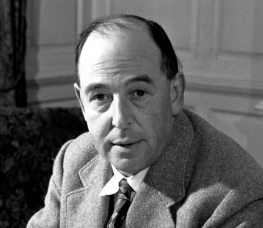
The heart of Christianity is a myth which is also a fact.
▼
Source
source
"Myth Became Fact", 1944
6 months 2 weeks ago
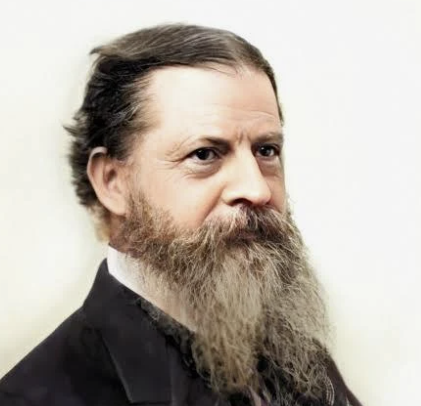
We are accustomed to speak of ideas as reproduced, as passed from mind to mind, as similar or dissimilar to one another, and, in short, as if they were substantial things; nor can any reasonable objection be raised to such expressions. But taking the word "idea" in the sense of an event in an individual consciousness, it is clear that an idea once past is gone forever, and any supposed recurrence of it is another idea. These two ideas are not present in the same state of consciousness, and therefore cannot possibly be compared.
3 months 3 weeks ago
The idea of living beings as subject to 'disease' includes a recognition of a Final Cause in organization; for disease is a state in which the vital forces do not attain their 'proper ends'.

4 months 3 days ago
In ignoring the important fundamental contribution of the followers of Marx, and by insisting exclusively on the phenomenon of superficial adaptation and variation, Sorel passed in silence over all that was healthy, live and fruitful in the Marxist doctrine.
▼
Source
source
Lucien Laurat, Marxism and Democracy, 1940, published by the Left Book Club, Victor Gollancz Ltd, London; translated by Edward Fitzgerald. Text online at the Marxists Internet Archive.
5 months ago
Talk of secularism is meaningful when it refers to the weakness of traditional religious belief or the lack of power of churches and other religious bodies. That is what is meant when we say Britain is a more secular country than the United States, and in this sense secularism is an achievable condition. But if it means a type of society in which religion is absent, secularism is a kind of contradiction, for it is defined by what it excludes. Post-Christian secular societies are formed by the beliefs they reject, whereas a society that had truly left Christianity behind would lack the concepts that shaped secular thought.
▼
Source
source
Post-Apocalypse: After Secularism (pp. 267-8)
8 months 2 days ago
Another argument of hope may be drawn from this - that some of the inventions already known are such as before they were discovered it could hardly have entered any man's head to think of; they would have been simply set aside as impossible. For in conjecturing what may be men set before them the example of what has been, and divine of the new with an imagination preoccupied and colored by the old; which way of forming opinions is very fallacious, for streams that are drawn from the springheads of nature do not always run in the old channels.
▼
Source
source
Aphorism 109
3 months 3 weeks ago
A definition of the political can be obtained only by discovering and defining the specifically political categories.
6 months 2 weeks ago
Basically-I speak of life as it is and not of abstract philosophical constructs-life is only bearable because one does not go to the end; doing something is only possible when one has particular illusions and that holds also for friendships, for everything.
6 months 3 weeks ago
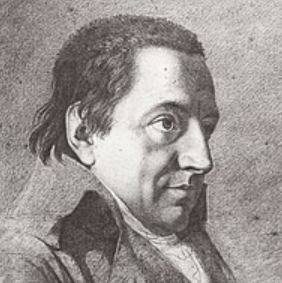
The subject must distinguish itself through opposition from the rational being, which it has assumed outside of itself. The subject has posited itself as one, which contains in itself the last ground of something that is in it, (for this is the condition of Egohood, or of Rationality generally;) but it has also posited a being outside of itself, as the last ground of this something in it. It is to have the power of distinguishing itself from this other being; and this is, under our presupposition, possible only, if the subject can distinguish in that given something how far the ground of this something lies in itself and how far it lies outside of itself.
▼
Source
source
P. 63
3 months 3 weeks ago
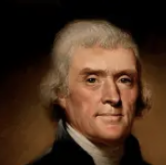
We might as well say that the Newtonian system of philosophy is a part of the common law, as that the Christian religion is. The truth is that Christianity and Newtonianism being reason and verity itself, in the opinion of all but infidels and Cartesians, they are protected under the wings of the common law from the dominion of other sects, but not erected into dominion over them.
▼
Source
source
To Dr. Thomas Cooper Monticello, February 10, 1814
CivilSimian.com created by AxiomaticPanic, CivilSimian, Kalokagathia