The original hustle culture bro....



Blessed is the healthy nature; it is the coherent, sweetly co-operative, not incoherent, self-distracting, self-destructive one!

The State is always, whatever be its form - primitive, ancient, medieval, modern - an invitation issued by one group of men to other human groups to carry out some enterprise in common. That enterprise, be its intermediate processes what they may, consists in the long run in the organisation of a certain type of common life. ... [As Renan says,] "To have common glories in the past, a common will in the present; to have done great things together; to wish to do greater; these are the essential conditions which make up a people.... In the past, an inheritance of glories and regrets; in the future, one and the same programme to carry out.... The existence of a nation is a daily plebiscite."

There are always two parties, the party of the Past and the party of the Future: the Establishment and the Movement. At times the resistance is reanimated, the schism runs under the world and appears in Literature, Philosophy, Church, State and social customs.
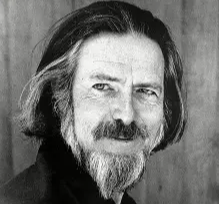
Underneath the superficial self, which pays attention to this and that, there is another self, more really us than I. And if you become aware of that unknown self, the more you become aware of it, the more you realize that it is inseparably connected with everything else that there is. That you are a function of this total galaxy, bounded by the Milky Way, and that furthermore, this galaxy is a function of all other galaxies. And that vast thing that you see far off, far off, far off with telescopes, and you look and look and look, one day you are going to wake up and say, why, that's me! And in knowing that, know, you see, that you never die. That you are the eternal thing that comes and goes, that appears now as John Jones, now as Mary Smith, now as Betty Brown, and so it goes forever and ever and ever.
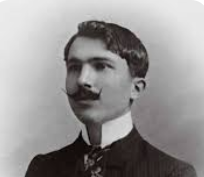
I possess no weapon but love. With that I have come to do battle. Help me!

People are entirely too disbelieving of coincidence. They are far too ready to dismiss it and to build arcane structures of extremely rickety substance in order to avoid it. I, on the other hand, see coincidence everywhere as an inevitable consequence of the laws of probability, according to which having no unusual coincidence is far more unusual than any coincidence could possibly be.
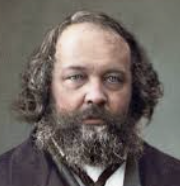
In a word, we reject all legislation, all authority, and all privileged, licensed, official, and legal influence, even though arising from universal suffrage, convinced that it can turn only to the advantage of a dominant minority of exploiters against the interest of the immense majority in subjection to them. This is the sense in which we are really Anarchists.
People seem not to see that their opinion of the world is also a confession of character.
Private profit is often hidden under a careful coating of great patriotism.
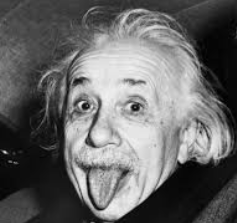
I have only two rules which I regard as principles of conduct. The first is: Have no rules. The second is: Be independent of the opinion of others.
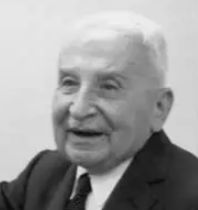
No social co-operation under the division of labour is possible when some people or unions of people are granted the right to prevent by violence and the threat of violence other people from working. When enforced by violence, a strike in vital branches of production or a general strike are tantamount to a revolutionary destruction of society.

No man has ever been so far advanced by Fortune that she did not threaten him as greatly as she had previously indulged him.

For as children tremble and fear everything in the blind darkness, so we in the light sometimes fear what is no more to be feared than the things that children in the dark hold in terror and imagine will come true. This terror, therefore, and darkness of mind must be dispelled not by the rays of the sun and glittering shafts of daylight, but by the aspect and law of nature.
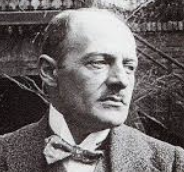
Ressentiment must therefore be strongest in a society like ours, where approximately equal rights (political and otherwise) or formal social equality, publicly recognized, go hand in hand with wide factual differences in power, property, and education.

There is no more lovely, friendly and charming relationship, communion or company than a good marriage.
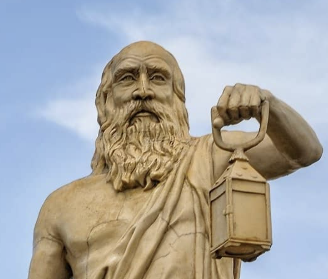
To one who asked what was the proper time for lunch, he said, "If a rich man, when you will; if a poor man, when you can."

One disgust, then another - to the point of losing the use of speech and even of the mind...The greatest exploit of my life is to be still alive.

All mathematical laws which we find in Nature are always suspect to me, in spite of their beauty. They give me no pleasure. They are merely auxiliaries. At close range it is all not true.

And what is it in us that is mellowed by civilization? All it does, I'd say, is to develop in man a capacity to feel a greater variety of sensations. And nothing, absolutely nothing else. And through this development, man will yet learn how to enjoy bloodshed. Why, it has already happened....Civilization has made man, if not always more bloodthirsty, at least more viciously, more horribly bloodthirsty.

Don't hold yourselves cheap, seeing that the creator of all things and of you estimates your value so high, so dear, that he pours out for you every day the most precious blood of his only-begotten Son.

Although it is commonly supposed that war making is the specific activity of nations, the blind rage that motivates war destroys the very social bonds that make nations possible. Of course, it can fortify the nationalism of a nation, producing a provisional coherence bolstered by war and enmity, but it also erodes the social relations that make politics possible. The power of destruction unleashed by war breaks social ties and produces anger, revenge, and distrust ("embitterment") such that it becomes unclear whether reparation is possible, undermining not only those relations that may have been built in the past, but also the future possibility of peaceful coexistence.
We are reformers in spring and summer; in autumn and winter we stand by the old - reformers in the morning, conservatives at night. Reform is affirmative, conservatism is negative; conservatism goes for comfort, reform for truth.
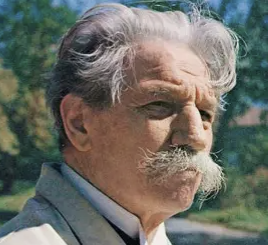
There slowly grew up in me an unshakable conviction that we have no right to inflict suffering and death on another living creature unless there is some unavoidable necessity for it, and that we ought all of us to feel what a horrible thing it is to cause suffering and death out of mere thoughtlessness. And this conviction has influenced me only more and more strongly with time. I have grown more and more certain that at the bottom of our heart we all think this, and that we fail to acknowledge it because we are afraid of being laughed at by other people as sentimentalists, though partly also because we allow our best feelings to get blunted. But I vowed that I would never let my feelings get blunted, and that I would never be afraid of the reproach of sentimentalism.

The more one presupposes that his own power will suffice him to realize what he desires the more practical is that desire. When I treat a man contemptuously, I can inspire him with no practical desire to appreciate my grounds of truth. When I treat any one as worthless, I can inspire him with no desire to do right.

Feeling does not succeed in converting consolation into truth, nor does reason succeed in converting truth into consolation.
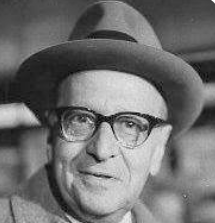
We cannot credit our enjoyment of a flower or of the atmosphere of a room to an autonomous esthetic instinct. Man's esthetic responsiveness relates in its prehistory to various forms of idolatry; his belief in the goodness or sacredness of a thing precedes his enjoyment of its beauty. The applies no less to such concepts as freedom and humanity.

Wipe out the imagination. Stop pulling the strings. Confine thyself to the present. ...Divide and distribute every object into the causal [formal] and the material. ...Let the wrong which is done by a man stay there where the wrong was done.

To attain this end we must secure a preponderance of virtue over vice and must endeavor to secure that the honest man may, even in this world, receive a lasting reward for his virtue. But in these great endeavors we are gravely hampered by the political institutions of today. What is to be done in these circumstances? To favor revolutions, overthrow everything, repel force by force?... No! We are very far from that. Every violent reform deserves censure, for it quite fails to remedy evil while men remain what they are, and also because wisdom needs no violence.

So long as men worship the Caesars and Napoleons, Caesars and Napoleons will duly rise and make them miserable.
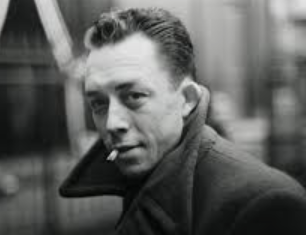
No human being, even the most passionately loved and passionately loving, is ever in our possession.
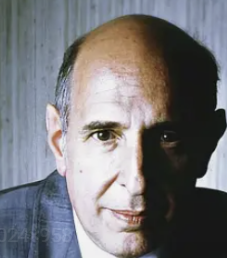
Students have powerful images of what a perfect body is and pursue it incessantly. But deprived of literary guidance, they no longer have any image of a perfect soul, and hence do not long to have one.
Opinion is the companion of probability within the medieval epistemology.
The old dualistic notion of mind and matter, so prominent in Cartesianism, as two radically different kinds of substance, will hardly find defenders to-day. Rejecting this, we are driven to some form of hylopathy, otherwise called monism.
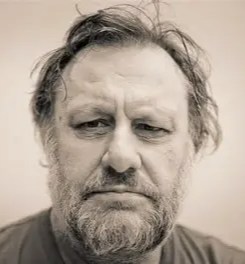
They are trying as directly as possible to sell you experiences, i.e. what you are able to do with the car, not the car as a product itself. An extreme example of this is this existing economic marketing concept, which basically evaluates the value of you as a potential consumer of your own life. Like how much are you worth, in the sense of all you will spend to buy back your own life as a certain quality life. You will spend so much in doctors, so much in beauty, so much in transcendental meditation, so much for music, and so on. What you are buying is a certain image and practice of your life. So what is your market potential, as a buyer of your own life in this sense?

The typical Westerner wishes to be the cause of as many changes as possible in his environment; the typical Chinaman wishes to enjoy as much and as delicately as possible.

The way for a person to develop a [writing] style is (a) to know exactly what he wants to say, and (b) to be sure he is saying exactly that. The reader, we must remember, does not start by knowing what we mean. If our words are ambiguous, our meaning will escape him. I sometimes think that writing is like driving sheep down a road. If there is any gate open to the left or the right the readers will most certainly go into it.

My aim is: to teach you to pass from a piece of disguised nonsense to something that is patent nonsense.
A witty saying proves nothing.
CivilSimian.com created by AxiomaticPanic, CivilSimian, Kalokagathia