

4 months 1 week ago
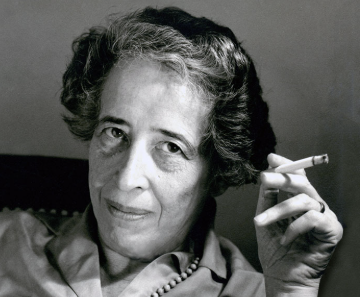
In an ever-changing, incomprehensible world the masses had reached the point where they would, at the same time, believe everything and nothing, think that everything was possible and that nothing was true. [...] under such conditions, one could make people believe the most fantastic statements one day, and trust that if the next day they were given irrefutable proof of their falsehood, they would take refuge in cynicism; instead of deserting the leaders who had lied to them, they would protest that they had known all along that the statement was a lie and would admire the leaders for their superior tactical cleverness.

4 weeks 1 day ago
Imagine that nature is saying to us: "Those things of which you complain are the same for all. I cannot give anything easier to any man, but whoever wishes will make things easier for himself." In what way? By equanimity. You must suffer pain, and thirst, and hunger, and old age too, if a longer stay among men shall be granted you; you must be sick, and you must suffer loss and death.
4 months 1 week ago
Man's urge for change and his need for stability have always balanced and checked each other, and our current vocabulary, which distinguishes between two factions, the progressives and the conservatives, indicates a state of affairs in which this balance has been thrown out of order. No civilization - the man-made artifact to house successive generations - would ever have been possible without a framework of stability, to provide the wherein for the flux of change. Foremost among the stabilizing factors, more enduring than customs, manners and traditions, are the legal systems that regulate our life in the world and our daily affairs with each other.
▼
Source
source
"Civil Disobedience"

5 months 1 week ago
There is no mystery in humans creation. Will performs this miracle. But at least there is no true creation without a secret.
1 month 6 days ago
The way of learning is none other than finding the lost mind.
▼
Source
source
6A:11, as translated by Wing-tsit Chan in A Source Book in Chinese Philosophy (1963), p. 58
3 months 1 week ago
Anarchy, in its own nature, is an evil of short duration. The more horrible are the mischiefs it inflicts, the more does it hasten to a close.
▼
Source
source
Book 7, Ch. 5

4 months 3 weeks ago
What does it mean to have a god? or, what is God? Answer: A god means that from which we are to expect all good and to which we are to take refuge in all distress, so that to have a God is nothing else than to trust and believe Him from the [whole] heart; as I have often said that the confidence and faith of the heart alone make both God and an idol. If your faith and trust be right, then is your god also true; and, on the other hand, if your trust be false and wrong, then you have not the true God; for these two belong together faith and God. That now, I say, upon which you set your heart and put your trust is properly your god.
▼
Source
source
Large Catechism 1.1-3, F. Bente and W.H.T. Dau, tr. Triglot Concordia: The Symbolical Books of the Ev. Lutheran Church(St. Louis: Concordia Publishing House, 1921), 565.

3 months 2 weeks ago
...out of the tomb of the murdered Monarchy in France, has arisen a vast, tremendous, unformed spectre, in a far more terrific guise than any which ever yet have overpowered the imagination and subdued the fortitude of man.
▼
Source
source
p. 7
5 months 1 week ago
One does not decide the truth of a thought according to whether it is right-wing or left-wing.


5 months 1 week ago
We certainly must contend by every argument against him who does away with knowledge or reason or mind and then makes any dogmatic assertion about anything. The philosopher, who pays the highest honor to these things, must necessarily, as it seems, because of them refuse to accept the theory of those who say the universe is at rest, whether as a unity or in many forms, and must also refuse utterly to listen to those who say that being is universal motion; he must say that being and the universe consist of both.
3 months ago
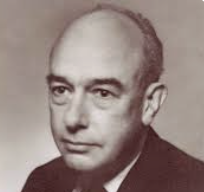
Tactically, conceptualism is no doubt the strongest position of the three; for the tired nominalist can lapse into conceptualism and still allay his puritanic conscience with the reflection that he has not quite taken to eating lotus with the Platonists.
▼
Source
source
"Logic and the Reification of Universals"
3 months 1 week ago
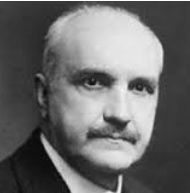
Liberalism has merely cleared a field in which every soul and every corporate interest may fight with every other for domination. Whoever is victorious in this struggle will make an end of liberalism; and the new order, which will deem itself saved, will have to defend itself in the following age against a new crop of rebels.
▼
Source
source
"The Irony of Liberalism"

2 months 1 week ago
To know what you prefer, instead of humbly saying Amen to what the world tells you you ought to prefer, is to have kept your soul alive.
▼
Source
source
An Inland Voyage (1878), Ch. III, "The Royal Sport Nautique".

4 months 2 weeks ago
What is there in 'Paradise Lost' to elevate and astonish like Herschel or Somerville?
▼
Source
source
Quoted in Robert D. Richardson, Jr., Emerson, the Mind On Fire (Univ. of Calif Press 1995), p. 124


2 weeks ago
Northward of the Chesapeak you may find here and there an opponent to your doctrine as you may find here and there a robber and a murderer, but in no greater number. In that part of America, there being but few slaves, they can easily disencumber themselves of them, and emancipation is put into such a train that in a few years there will be no slaves Northward of Maryland. In Maryland I do not find such a disposition to begin the redress of this enormity as in Virginia. This is the next state to which we may turn our eyes for the interesting spectacle of justice in conflict with avarice and oppression: a conflict wherein the sacred side is gaining daily recruits from the influx into office of young men grown and growing up. These have sucked in the principles of liberty as it were with their mother's milk, and it is to them I look with anxiety to turn the fate of this question.
▼
Source
source
Wade, ibid.
2 months 1 week ago
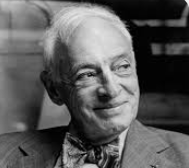
Writers, poets, painters, musicians, philosophers, political thinkers, to name only a few of the categories affected, must woo their readers, viewers, listeners, from distraction. To this we must add, for simple realism demands it, that these same writers, painters, etc., are themselves the children of distraction. As such, they are peculiarly qualified to approach the distracted multitudes. They will have experienced the seductions as well as the destructiveness of the forces we have been considering here. This is the destructive element in which we do not need to be summoned to immerse ourselves, for we were born to it.
▼
Source
source
The Distracted Public (1990), p. 167
2 months 3 weeks ago
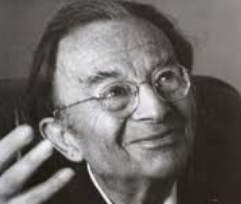
The kind of relatedness to the world may be noble or trivial, but even being related to the basest kind of pattern is immensely preferable to being alone.
▼
Source
source
Ch. 1
2 months 2 weeks ago
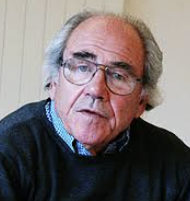
We will never know if an advertisement or opinion poll has had a real influence on individual or collective wills, but we will never know either what would have happened if there had been no opinion poll or advertisement.
2 weeks 1 day ago
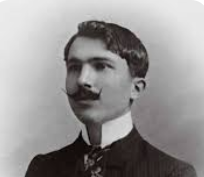
Look upon men and pity them. Look at yourself amid all men and pity yourself. In the obscure dusk of life we touch and fumble at each other, we ask questions, we listen, we shout for help.

2 months 3 weeks ago
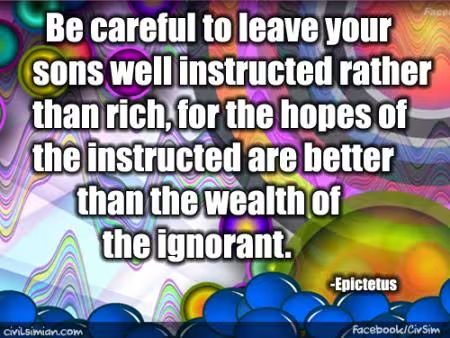
It is characteristic of theistic "tolerance" that no one really cares what the people believe in, just so they believe or pretend to believe.
4 months 2 weeks ago
Thought is all light, and publishes itself to the universe. It will speak, though you were dumb, by its own miraculous organ. It will flow out of your actions, your manners, and your face. It will bring you friendships. It will impledge you to truth by the love and expectation of generous minds. By virtue of the laws of that Nature, which is one and perfect, it shall yield every sincere good that is in the soul, to the scholar beloved of earth and heaven.
1 week 4 days ago
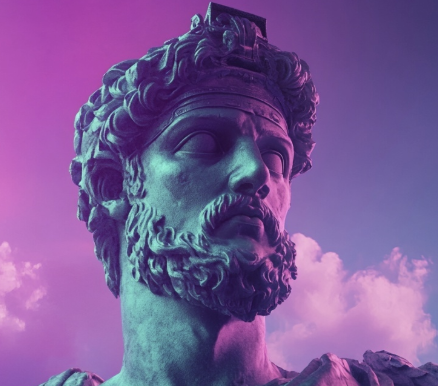
If thou canst see sharp, look and judge wisely, says the philosopher.
▼
Source
source
VIII, 38

4 months 2 weeks ago
He thought human life a poor thing at best, after the freshness of youth and of unsatisfied curiosity had gone by. This was a topic on which he did not often speak, especially, it may be supposed, in the presence of young persons: but when he did, it was with an air of settled and profound conviction. He would sometimes say, that if life were made what it might be, by good government and good education, it would be worth having: but he never spoke with anything like enthusiasm even of that possibility.
▼
Source
source
(p. 48)
4 months 2 weeks ago
We assert then that nothing has been accomplished without interest on the part of the actors; and - if interest be called passion, inasmuch as the whole individuality, to the neglect of all other actual or possible interests and claims, is devoted to an object with every fibre of volition, concentrating all its desires and powers upon it - we may affirm absolutely that nothing great in the World has been accomplished without passion. Often abbreviated to: Nothing great in the World has been accomplished without passion. Variant translation: We may affirm absolutely that nothing great in the world has ever been accomplished without enthusiasm.

3 months 3 weeks ago
In anger we should refrain both from speech and action.
▼
Source
source
As quoted in Lives and Opinions of Eminent Philosophers, "Pythagoras", Sect. 23-24, as translated in Dictionary of Quotations (1906) by Thomas Benfield Harbottle, p. 370

4 months 2 weeks ago
The mass of men lead lives of quiet desperation. What is called resignation is confirmed desperation.
▼
Source
source
p. 10
2 months 2 weeks ago
There is no aphrodisiac like innocence.
▼
Source
source
Chapter 5


4 months 5 days ago
A righteous government is of all the most to be wished for,Bearing of blessing and good fortune in the highest.Guided by the law of Truth, supported by dedication and zeal,It blossoms into the Best of Order, a Kingdom of Heaven!To effect this I shall work now and ever more.
▼
Source
source
Vohu-Khshathra Gatha; Yasna 51, 1.

2 months 3 weeks ago
To do the opposite of something is also a form of imitation, namely an imitation of its opposite.
▼
Source
source
D 96 Variant translation: To do just the opposite is also a form of imitation.
2 months 3 days ago
We know no spectacle so ridiculous as the British public in one of its periodical fits of morality.
▼
Source
source
p. 315

3 months 1 week ago
Nothing deserves to be undone, doubtless because nothing deserved to be done.
3 months 1 week ago
Life inspires more dread than death - it is life which is the great unknown.
3 months 3 weeks ago
Those alone are dear to Divinity who are hostile to injustice.
▼
Source
source
Pythagorean Ethical Sentences From Stobæus
3 months 1 week ago
I have taken pains to make my distinction of icons, indices, and tokens clear, in order to enunciate this proposition: in a perfect system of logical notation signs of these several kinds must all be employed. Without tokens there would be no generality in the statements, for they are the only general signs; and generality is essential to reasoning. ... But tokens alone do not state what is the subject of discourse ; and this can, in fact, not be described in general terms ; it can only be indicated. The actual world cannot be distinguished from a world of imagination by any description. Hence the need of pronoun and indices, and the more complicated the subject the greater the need of them.
1 week 4 days ago
One man prays thus: How shall I be able to lie with that woman? Do thou pray thus: How shall I not desire to lie with her? Another prays: How shall I be released from this? Another prays: How shall I not desire to be released? Another thus: How shall I not lose my little son? Thou thus: How shall I not be afraid to lose him? In fine, turn thy prayers this way, and see what comes.
▼
Source
source
IX, 40

4 months 2 weeks ago
When communist workmen associate with one another, theory, propaganda, etc., is their first end. But at the same time, as a result of this association, they acquire a new need - the need for society - and what appears as a means becomes an end. You can observe this practical processing its most splendid results whenever you see French socialist workers together. Such things as smoking, drinking, eating, etc., are no longer means of contact or means that bring together. Company, association, and conversation, which again has society as its end, are enough for them; the brotherhood of man is on mere phase with them, but a fact of life, and the nobility of man shines upon us from their work-hardened bodies.
▼
Source
source
"The Meaning of Human Requirements" p.99-100,The Marx-Engels Reader

2 months 1 week ago
Faith is the great cop-out, the great excuse to evade the need to think and evaluate evidence. Faith is belief in spite of, even perhaps because of, the lack of evidence.
▼
Source
source
From speech at the Edinburgh International Science Festival, 1992-04-15.
3 months 1 week ago
But no mental action seems necessary or invariable in its character. In whatever manner the mind has reacted under a given sensation, in that manner it is the more likely to react again; were this, however, an absolute necessity, habits would become wooden and ineradicable, and no room being left for the formulation of new habits, intellectual life would come to a speedy close. Thus, the uncertainty of the mental law is no mere defect of it, but is on the contrary of its essence. The truth is, the mind is not subject to "law," in the same rigid sense that matter is. It only experiences gentle forces which merely render it more likely to act a given way than it otherwise would be. There always remains a certain amount of arbitrary spontaneity in its action, without which it would be dead.
1 week 4 days ago
External things are not the problem. It's your assessment of them. Which you can erase right now.
▼
Source
source
(Hays translation) VIII, 47
1 month 6 days ago
Those who are humane achieve glory. Those who are inhumane suffer disgrace.
▼
Source
source
2A:4
3 months ago
Creatures inveterately wrong in their inductions have a pathetic but praiseworthy tendency to die before reproducing their kind.
▼
Source
source
"Natural Kinds", in Ontological Relativity and Other Essays (1969), p. 126

2 months ago
Life cannot exist without a certain conformity to the surrounding universe - that conformity involves a certain amount of happiness in excess of pain. In short, as we live we are paid for living.
2 months 1 week ago
The first cause cannot have been an intelligence, let alone an intelligence that answers prayers and enjoys being worshiped. Intelligent, creative, complex, statistically improbable things come late into the universe, as the product of evolution or some other process of gradual escalation from simple beginnings. They come late into the universe and therefore cannot be responsible for designing it. "Why There Almost Certainly Is No God", The Huffington Post, 23/10/2006
4 months 2 weeks ago
Gentlemen, there is a sublime and friendly Destiny by which the human race is guided, - the race never dying, the individual never spared, - to results affecting masses and ages. Men are narrow and selfish, but the Genius or Destiny is not narrow, but beneficent. It is not discovered in their calculated and voluntary activity, but in what befalls, with or without their design. Only what is inevitable interests us, and it turns out that love and good are inevitable, and in the course of things. That Genius has infused itself into nature. It indicates itself by a small excess of good, a small balance in brute facts always favorable to the side of reason.
CivilSimian.com created by AxiomaticPanic, CivilSimian, Kalokagathia