


4 months 1 week ago
In order to be able to meet a general combination of the banks against us in a critical emergency, could we not make a beginning towards an independent use of our own money, towards holding our own bank in all the deposits where it is received, and letting the treasurer give his draft or note for payment at any particular place, which, in a well-conducted government, ought to have as much credit as any private draft or bank note or bill, and would give us the same facilities which we derive from the banks?
▼
Source
source
Letter to Albert Gallatin, 1803. ME 10:439

7 months 2 weeks ago
There is no road or ready way to virtue.
▼
Source
source
Section 55



8 months 1 week ago
The charlatan takes very different shapes according to circumstances; but at bottom he is a man who cares nothing about knowledge for its own sake, and only strives to gain the semblance of it that he may use it for his own personal ends, which are always selfish and material.
▼
Source
source
"Similes, Parables and Fables" Parerga and Paralipomena, vol. 2, § 394
8 months 2 weeks ago
Lands for the purposes of pleasure and magnificence, parks, gardens, public walks, &c. possessions which are every where considered as causes of expence, not as sources of revenue, seem to be the only lands which, in a great and civilized monarchy, ought to belong the crown.
▼
Source
source
Chapter II, Part I, p. 891.

8 months 1 week ago
The philosophy of Plotinus has the defect of encouraging men to look within rather than to look without: when we look within we see nous, which is divine, while when we look without we see the imperfections of the sensible world. This kind of subjectivity was a gradual growth; it is to be found in the doctrines of Protagoras, Socrates, and Plato, as well as in the Stoics and Epicureans. But at first it was only doctrinal, not temperamental; for a long time it failed to kill scientific curiosity. [...] Plotinus is both an end and a beginning-an end as regards the Greeks, a beginning as regards Christendom.
▼
Source
source
Russell, Bertrand (2008). History of Western Philosophy. Simon and Schuster. pp. 296-297. ISBN 978-1-4165-9915-9.
7 months 2 days ago
Whoever desires to live among men has to obey their laws-this is what the secular morality of Western civilization comes down to. ... Rationality in the form of such obedience swallows up everything, even the freedom to think.
▼
Source
source
p. 29.
7 months 3 days ago
Stuart was not dismayed by his sexual feelings about the boy.
▼
Source
source
The Good Apprentice (1985), p. 247.
8 months 1 week ago
If the ability to tell right from wrong should turn out to have anything to do with the ability to think, then we must be able to "demand" its exercise from every sane person, no matter how erudite or ignorant, intelligent or stupid, he may happen to be. Kant-in this respect almost alone among the philosophers-was much bothered by the common opinion that philosophy is only for the few, precisely because of its moral implications.
▼
Source
source
p. 13
9 months 1 week ago
"What on earth prompted you to take a hand in this?""I don't know. My... my code of morals, perhaps.""Your code of morals. What code, if I may ask?" "Comprehension."
6 months 2 weeks ago
For nothing can be greater than seduction itself, not even the order that destroys it.
▼
Source
source
Seduction
7 months 3 weeks ago
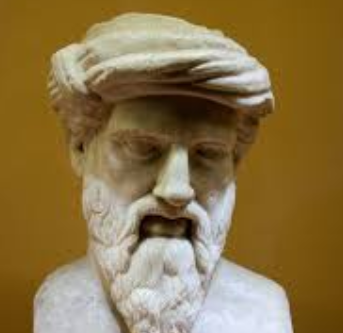
True and perfect Friendship is, to make one heart and mind of many hearts and bodies.
4 months 3 weeks ago
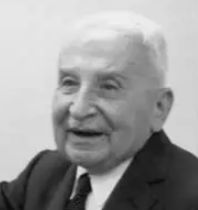
You have the courage to tell the masses what no politician told them: you are inferior and all the improvements in your conditions which you simply take for granted you owe to the effort of men who are better than you. If this be arrogance, as some of your critics observed, it is still the truth that had to said in the age of the Welfare State.
▼
Source
source
Mises' letter to Ayn Rand praising Atlas Shrugged,(23 January 1958), quoted in Mises: The Last Knight of Liberalism (2007).

6 months 1 week ago
Too much straightforwardness is foolish against a shameless person.
▼
Source
source
Maxim 123


8 months 2 weeks ago
I shall not have it judged by any man, not even by any angel. For since I am certain of it, I shall be your judge and even the angels' judge through this teaching (as St. Paul says [1 Cor. 6:3]) so that whoever does not accept my teaching may not be saved - for it is God's teaching and not mine.
▼
Source
source
Against the Spiritual Estate of the Pope and the Bishops Falsely So Called, July 1522. Luther's Works, Church and Ministry I, Eric W. Gritsch, Helmut T. Lehman eds., Concordia Publishing House, 1986, ISBN 0800603397, ISBN 9780800603397, vol. 39, p. 249.
8 months 2 weeks ago
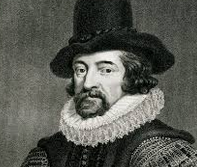
Silence is the virtue of a fool.
▼
Source
source
Book VI, xxxi
8 months 2 weeks ago
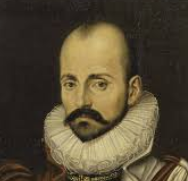
Let us give Nature a chance; she knows her business better than we do.
▼
Source
source
Ch. 13

7 months 1 week ago
Impossible for me to know whether or not I take myself seriously. The drama of detachment is that we cannot measure its progress. We advance into a desert, and we never know where we are in it.

7 months 2 weeks ago
General ideas are no proof of the strength, but rather of the insufficiency of the human intellect.
▼
Source
source
Book One, Chapter III.
9 months 1 week ago
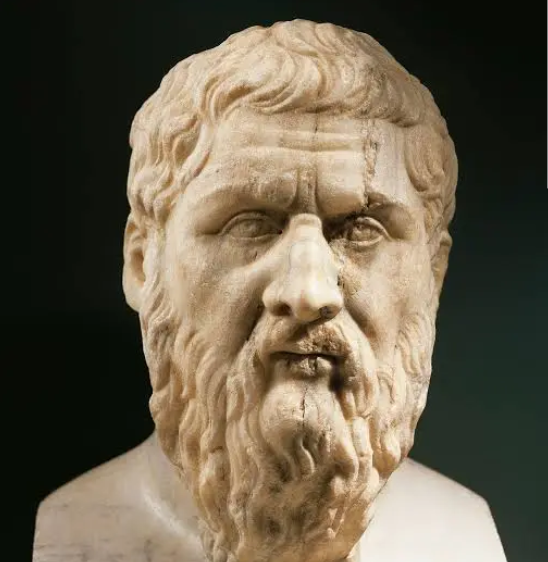
Now in this island of Atlantis there was a great and wonderful empire which had rule over the whole island and several others, and over parts of the continent and, furthermore, the men of Atlantis had subjected the parts of Libya within the columns of Heracles as far as Egypt, and of Europe as far as Tyrrhenia. This vast power, gathered into one, endeavored to subdue at a blow our country and yours and the whole of the region within the straits, and then, Solon, your country shone forth, in the excellence of her virtue and strength, among all mankind.
6 months 4 days ago
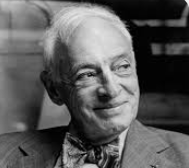
There is simply too much to think about. It is hopeless - too many kinds of special preparation are required. In electronics, in economics, in social analysis, in history, in psychology, in international politics, most of us are, given the oceanic proliferating complexity of things, paralyzed by the very suggestion that we assume responsibility for so much. This is what makes packaged opinion so attractive.
▼
Source
source
There Is Simply Too Much to Think About (1992), pp. 173-174

6 months 1 week ago
There is no single speech nor article in which it is not said that the purpose of all these orgies is the peace of Europe. At a dinner given by the representatives of French literature, all breathe of peace. M. Zola, who, a short time previously, had written that war was inevitable, and even serviceable; M. de Vogue, who more than once has stated the same in print, say, neither of them, a word as to war, but speak only of peace. The sessions of Parliament open with speeches upon the past festivities; the speakers mention that such festivities are an assurance of peace to Europe. It is as if a man should come into a peaceful company, and commence energetically to assure everyone present that he has not the least intention to knock out anyone's teeth, blacken their eyes, or break their arms, but has only the most peaceful ideas for passing the evening.
▼
Source
source
Ch. 1
6 months 4 weeks ago
If one only wished to be Sad, this could be horrible for the rest of civilisation; but we wish to be happier than other people, and this is always difficult, for we believe others to be happier than they are.
▼
Source
source
As quoted in A Dictionary of Thoughts : Being a Cyclopedia of Laconic Quotations from the Best Authors, Both Ancient and Modern (1891) edited by Tryon Edwards.

8 months 1 week ago
Science may be described as the art of systematic over-simplification - the art of discerning what we may with advantage omit.
▼
Source
source
The Open Universe : An Argument for Indeterminism (1992), p. 44
8 months 2 days ago
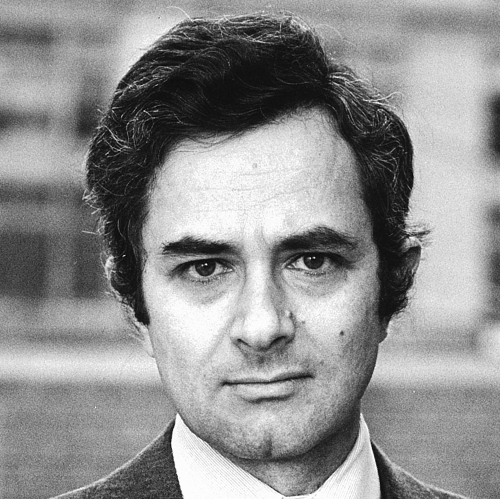
The distance between oneself and other persons and other species can fall anywhere on a continuum. Even for other persons the understanding of what it is like to be them is only partial, and when one moves to species very different from oneself, a lesser degree of partial understanding may still be available. The imagination is remarkably flexible. My point, however, is not that we cannot know what it is like to be a bat. I am not raising that epistemological problem. My point is rather that even to form a conception of what it is like to be a bat and a fortiori to know what it is like to be a bat, one must take up the bat's point of view.
▼
Source
source
p. 172, note 8.
8 months 1 week ago
Lead, follow, or get out of the way.
▼
Source
source
George S. Patton: "Lead me, follow me, or get out of my way", as quoted in Pocket Patriot: Quotes from American Heroes (2005) edited by Kelly Nickell, p. 157
6 months 2 weeks ago
To require that all of these must be reducible to a single version is to make the mistake of supposing that 'Which are the real objects?' is a question that makes sense independently of our choice of concepts.
▼
Source
source
Lecture I: Is There Still Anything to Say about Reality and Truth?
7 months 2 weeks ago
As for me, I am deeply a democrat; this is why I am in no way a socialist. Democracy and socialism cannot go together. You can't have it both ways.
▼
Source
source
Notes for a Speech on Socialism (1848).
8 months 1 week ago
We have to learn to think in a new way. We have to learn to ask ourselves, not what steps can be taken to give military victory to whatever group we prefer, for there no longer are such steps; the question we have to ask ourselves is: what steps can be taken to prevent a military contest of which the issue must be disastrous to all parties?
8 months 1 week ago
Science may set limits to knowledge, but should not set limits to imagination.
8 months 1 day ago
Brave men were living before Agamemnon.
▼
Source
source
Book IV, ode ix, line 25
4 months 3 weeks ago
The world is in an extremely dangerous situation, and serious diseases often require the risk of a dangerous cure - like the Pasteur serum for rabies.
▼
Source
source
Inside Information p. 4


5 months 2 days ago
There is no heroic poem in the world but is at bottom a biography, the life of a man; also, it may be said, there is no life of a man, faithfully recorded, but is a heroic poem of its sort, rhymed or unrhymed.
7 months 1 week ago
Chaos is rejecting all you have learned. Chaos is being yourself.
6 months 1 week ago
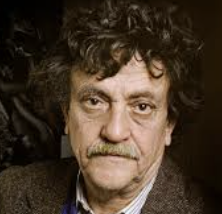
We're terrible animals. I think that the Earth's immune system is trying to get rid of us, as well it should.
▼
Source
source
On humans, interviewed by Jon Stewart, The Daily Show

4 months 1 week ago
To imply by the word "terrorism" that this sort of terror is the work exclusively of "terrorists" is misleading. The "legitimate" warfare of technologically advanced nations likewise is premeditated, politically motivated violence perpetrated against innocents. The distinction between the intention to perpetrate violence against innocents, as in "terrorism," and the willingness to do so, as in "war," is not a source of comfort.
5 months 2 days ago
Every toiling Manchester, its smoke and soot all burnt, ought it not, among so many world-wide conquests, to have a hundred acres or so of free greenfield, with trees on it, conquered, for its little children to disport in; for its all-conquering workers to take a breath of twilight air in? You would say so! A willing Legislature could say so with effect. A willing Legislature could say very many things! And to whatsoever 'vested interest,' or such like, stood up, gainsaying merely, "I shall lose profits,"-the willing Legislature would answer, "Yes, but my sons and daughters will gain health, and life, and a soul."-

4 months 3 weeks ago
Very often the things that cost nothing cost us the most heavily; I can show you many objects the quest and acquisition of which have wrested freedom from our hands.


4 months 1 week ago
The happiness and unhappiness of the rational, social animal depends not on what he feels but on what he does; just as his virtue and vice consist not in feeling but in doing.
▼
Source
source
IX, 16
4 months 1 week ago
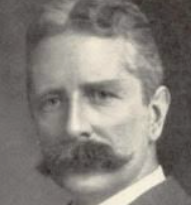
Faith is nothing else than reason grown courageous - reason raised to its highest power, expanded to its widest vision.
▼
Source
source
"Religious Perplexities" (1922), his Hibbert Lecture.
8 months 1 week ago
This idea of weapons of mass extermination is utterly horrible and is something which no one with one spark of humanity can tolerate. I will not pretend to obey a government which is organising a mass massacre of mankind.
▼
Source
source
Speech in Birmingham, England encouraging civil disobedience in support of nuclear disarmament, 4/15/1961
5 months 2 days ago
Cash Payment the sole nexus; and there are so many things which cash will not pay! Cash is a great miracle; yet it has not all power in Heaven, nor even on Earth. 'Supply and demand' we will honour also; and yet how many 'demands' are there, entirely indispensable, which have to go elsewhere than to the shops, and produce quite other than cash, before they can get their supply? On the whole, what astonishing payments does cash make in this world!
▼
Source
source
Ch. 7, Not Laissez-Faire.
6 months 4 days ago
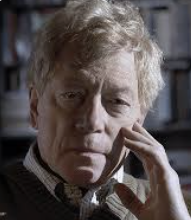
In 1970s Britain, conservative philosophy was the preoccupation of a few half-mad recluses.
▼
Source
source
"Why I became a conservative," The New Criterion
4 months 2 weeks ago
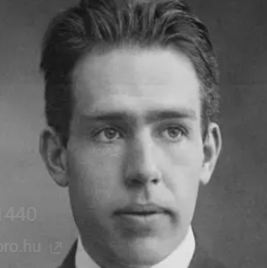
However far the phenomena transcend the scope of classical physical explanation, the account of all evidence must be expressed in classical terms. The argument is that simply by the word "experiment" we refer to a situation where we can tell others what we have done and what we have learned and that, therefore, the account of the experimental arrangement and of the results of the observations must be expressed in unambiguous language with suitable application of the terminology of classical physics.
▼
Source
source
Niels Bohr, "Discussions with Einstein on Epistemological Problems in Atomic Physics," in Paul Arthur Schilpp, Albert Einstein: Philosopher Scientist (1949) pp. 199-241.
CivilSimian.com created by AxiomaticPanic, CivilSimian, Kalokagathia