


4 months 2 weeks ago
Granted that any practice causes more pain to animals than it gives pleasure to man; is that practice moral or immoral? And if, exactly in proportion as human beings raise their heads out of the slough of selfishness, they do not with one voice answer 'immoral,' let the morality of the principle of utility be for ever condemned.
▼
Source
source
Dr. Whewell on Moral Philosophy (1852), in Dissertations and Discussions: Political, Philosophical, and Historical, vol. 2, London: John W. Parker and son, 1859, p. 485

1 month 5 days ago
A mystic bond of brotherhood makes all men one.
▼
Source
source
Essays, Goethe's Works.

2 months 4 weeks ago
Indeed much of the literature written about black folks in the post-civil rights era emphasized the need for jobs. Material advancement was deemed the pressing agenda. Mental health concerns were not a high priority.

3 months 1 day ago
I would say that teleology is theology, and that God is not a "because," but rather an "in order to."
1 month 3 weeks ago
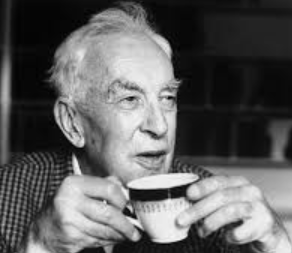
Compared with the life-span of a human being the time-span of a civilization is so vast that a human observer cannot hope to take the measure of its curve unless he is in a position to view it in a distant perspective; and he can only obtain this perspective vis-a-vis some society that is extinct. He can never stand back sufficiently far from the history of the society in which he himself lives and moves and has his being. In other words, to assert of any living society, at any moment in its life, that it is the consummation of human history is to hazard a guess which is intrinsically unsusceptible of immediate verification. When we find that a majority of the members of all societies at all times make this assertion about their own civilizations, it becomes evident that their guesses have really nothing to do with any objective calculation of probabilities but are pure expressions of the egocentric illusion.
▼
Source
source
Vol. 1

4 months 4 days ago
Sweet exists by convention, bitter by convention, colour by convention; atoms and Void [alone] exist in reality.
▼
Source
source
(trans. Freeman 1948), p. 92.
3 months 5 days ago
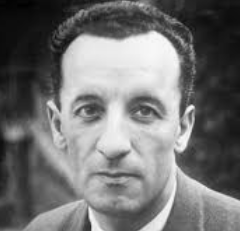
The world is nothing but 'world-as-meaning.'
▼
Source
source
p. xi
3 months 1 day ago
If a philosopher is not a man, he is anything but a philosopher; he is above all a pedant, and a pedant is a caricature of a man. The cultivation of any branch of science - of chemistry, of physics, of geometry, of philology - may be a work of differentiated specialization, and even so, only within very narrow limits and restrictions; but philosophy, like poetry, is a work of integration and synthesis, or else it is merely pseudo-philosophical erudition.
1 week 4 days ago
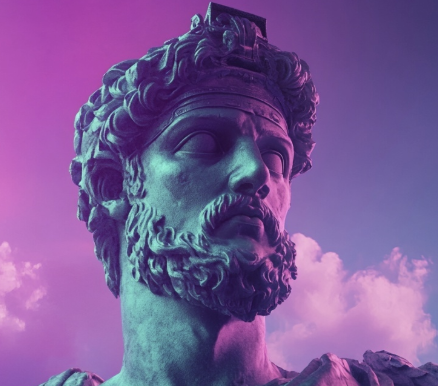
Be straightforward. Look at things like a man, like a human being, like a citizen, like a mortal.
▼
Source
source
(Hays translation) IV, 4

4 months 1 week ago
"We may ignore, but we can nowhere evade, the presence of God. The world is crowded with Him. He walks everywhere incognito."

4 months 2 weeks ago
We thus have a kind of see-saw: first, pure persuasion leading to the conversion of a minority; then force exerted to secure that the rest of the community shall be exposed to the right propaganda; and finally a genuine belief on the part of the great majority, which makes the use of force again unnecessary.
▼
Source
source
Ch. 9: Power over opinion

2 months 3 weeks ago
Has not authority from time immemorial stamped every step of progress as treasonable?

2 weeks ago
Let us have the candor to acknowledge that what we call "the economy" or "the free market" is less and less distinguishable from warfare. For about half of the last century, we worried about world conquest by international communism. Now with less worry (so far) we are witnessing world conquest by international capitalism. Though its political means are milder (so far) than those of communism, this newly internationalized capitalism may prove even more destructive of human cultures and communities, of freedom, and of nature. Its tendency is just as much toward total dominance and control.
2 months 3 weeks ago
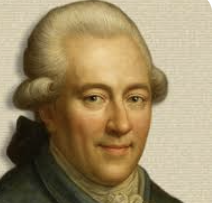
If an angel were ever to tell us anything of his philosophy I believe many propositions would sound like 2 times 2 equals 13.
▼
Source
source
B 44

4 months 1 week ago
We must plan for freedom, and not only for security, if for no other reason than that only freedom can make security secure.
▼
Source
source
Vol. 2, Ch. 21 "An Evaluation of the Prophecy"

4 months 2 weeks ago
Virtue supposes liberty, as the carrying of a burden supposes active force. Under coercion there is no virtue, and without virtue there is no religion. Make a slave of me, and I shall be no better for it. Even the sovereign has no right to use coercion to lead men to religion, which by its nature supposes choice and liberty. My thought is no more subject to authority than is sickness or health.
▼
Source
source
"Canon Law: Ecclesiastical Ministry", 1771
4 months 2 weeks ago
Every philosophical problem, when it is subjected to the necessary analysis and justification, is found either to be not really philosophical at all, or else to be, in the sense in which we are using the word, logical.
▼
Source
source
p. 33

4 months 2 weeks ago
In reality, during the continuance of any one regulated proportion, between the respective values of the different values of the different metals in the coin, the value of the most precious metal regulates the value of the whole coin.
▼
Source
source
Chapter V, p. 50.

3 months 1 week ago
When I happen to be satisfied with everything, even God and myself, I immediately react like the man who, on a brilliant day, torments himself because the sun is bound to explode in a few billion years.

3 months 2 weeks ago
Nothing is quite so wretchedly corrupt as an aristocracy which has lost its power but kept its wealth and which still has endless leisure to devote to nothing but banal enjoyments. All its great thoughts and passionate energy are things of the past, and nothing but a host of petty, gnawing vices now cling to it like worms to a corpse.
▼
Source
source
Book Three, Chapter XI.
5 months 2 days ago
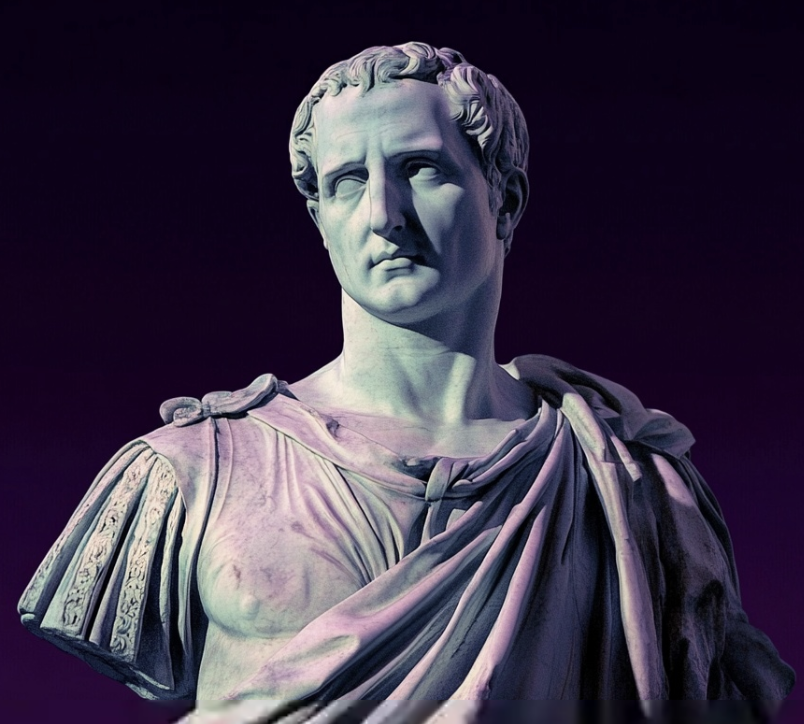
Do not blame Caesar, blame the people of Rome who have so enthusiastically acclaimed and adored him and rejoiced in their loss of freedom and danced in his path and gave him triumphal processions. Blame the people who hail him when he speaks in the Forum of the 'new, wonderful good society' which shall now be Rome, interpreted to mean 'more money, more ease, more security, more living fatly at the expense of the industrious.
▼
Source
source
This is also from the 1965 essay by Justice Millard Caldwell. It is not clear if this is based in any specific dialogue.
4 months 2 weeks ago
Self-respect will keep a man from being abject when he is in the power of enemies, and will enable him to feel that he may be in the right when the world is against him.
▼
Source
source
Authority and the Individual (1949), p. 59
2 weeks 1 day ago
We come from a dark abyss, we end in a dark abyss, and we call the luminous interval life. As soon as we are born the return begins, at once the setting forth and the coming back; we die in every moment. Because of this many have cried out: The goal of life is death! But as soon as we are born we begin the struggle to create, to compose, to turn matter into life; we are born in every moment. Because of this many have cried out: The goal of ephemeral life is immortality! In the temporary living organism these two streams collide ... both opposing forces are holy. It is our duty, therefore, to grasp that vision which can embrace and harmonize these two enormous, timeless, and indestructible forces, and with this vision to modulate our thinking and our action.
4 months 1 week ago
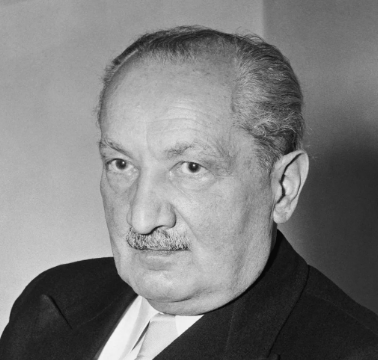
Kant speaks of the "thing-in-itself" (Ding an sich) in order to distinguish it from the "thing-for-us" (Ding fur uns), that is, as a "phenomenon." A thing-in-itself is that which is not approachable through experience as are the rocks, plants, and animals. Every thing-for-us is as a thing and also a thing-in-itself, which means that it is recognized absolutely withing the absolute knowledge of God. But not every thing-in-itself is also a thing-for-us: God, for instance, is a thing-in-itself, as Kant uses the word, according to the meaning of Christian theology.
▼
Source
source
p. 5

4 months 2 weeks ago
Let me never fall into the vulgar mistake of dreaming that I am persecuted whenever I am contradicted.
▼
Source
source
November 8, 1838

1 month 1 week ago
That's... the crisis. The number of liberal democracies measured by... Freedom House in its annual survey of freedom around the world has been in decline for 16 straight years, and the biggest declines recently have been in the two biggest liberal democracies, India and the United States. So... we're dealing with a big global problem.
▼
Source
source
7:18

2 months 5 days ago
Any ethics that needs religion is bad ethics, and any religion that tries to do so is bad religion. Of course, there are plenty of both around.
3 months 1 week ago
To try curing someone of a "vice," of what is the deepest thing he has, is to attack his very being, and this is indeed how he himself understands it, since he will never forgive you for wanting him to destroy himself in your way and not his.

1 week 4 days ago
Let us not limit the resources of nature; they are infinite, especially when reinforced by great art.
2 months 5 days ago
However long Jewish, Christian and Muslim theologians struggle to find multiple meanings in this text, the dominant seems to be this: Abraham's unquestioning willingness to heed gods command to sacrifice the thing he loved most is what qualified him to become the father of what are called still the Abrahamic faiths.


2 weeks 1 day ago
I hate all virtues based on food and bloated bellies;though food and drink are good, I'm better slaked and fedby that inhuman flame which burns in our black bowels.I like to name that flame which burns within me God!
▼
Source
source
Odysseus, Book XI, line 840
3 months 2 weeks ago
The Age of Empty Freedom ... does not know that man must first through labour, industry, and art, learn how to know; but it has a certain fixed standard for all conceptions, and an established Common Sense of Mankind always ready and at hand, innate within itself and there present without trouble on its part;-and those conceptions and this Common Sense are to it the measure of the efficient and the real. It has this great advantage over the Age of Science, that it knows all things without having learned anything; and can pass judgment upon whatever comes before it at once and without hesitation,-without needing any preliminary evidence:-'That which I do not immediately comprehend by the conceptions which dwell within me, is nothing,'-says Empty Freedom.
▼
Source
source
p. 20
2 months 3 weeks ago
Reason now gazes above the realm of the dark but warm feelings as the Alpine peaks do above the clouds. They behold the sun more clearly and distinctly, but they are cold and unfruitful.
▼
Source
source
L 50

5 months 2 weeks ago
A friend is one soul abiding in two bodies. p. 188; also reported in various sources as:Friendship is a single soul dwelling in two bodies. A true friend is one soul in two bodies. Love is composed of a single soul inhabiting two bodies. What is a friend? A single soul dwelling in two bodies.

4 months 2 weeks ago
Lincoln's place in the history of the United States and of mankind will, nevertheless, be next to that of Washington!
1 week 4 days ago
As the nature of the universal has given to every rational being all the powers that it has, so we have received from it this power also. For as the universal nature converts and fixes in its predestined place everything which stands in the way and opposes it, and makes such things a part of itself, so also the rational animal is able to make every hindrance its own material, and to use it for such purpose as it may have designed.
▼
Source
source
VIII, 35
4 months 2 weeks ago
The young men were born with knives in their brain, a tendency to introversion, self-dissection, anatomizing of motives.
▼
Source
source
p. 530, col. 2
4 months 2 weeks ago
If you want good laws, burn those you have and make new ones.
▼
Source
source
"Laws", 1765
4 months 4 days ago
And yet it will be obvious that it is difficult to really know of what sort each thing is.

4 months 2 weeks ago
In any race between human numbers and natural resources, time is against us.
▼
Source
source
Chapter 12 (p. 113)
4 months 2 weeks ago
When I endeavour to examine my own conduct, when I endeavour to pass sentence upon it, and either to approve or condemn it, it is evident that, in all such cases, I divide myself, as it were, into two persons; and that I, the examiner and judge, represent a different character from that other I, the person whose conduct is examined into and judged of.
▼
Source
source
Chap. I.
2 months 1 week ago
Contrary to earlier prejudices, there is nothing inherently progressive about evolution.
▼
Source
source
Chapter 7 "Constructive Evolution" (p. 178)
3 months 1 week ago
I used to ask myself, over a coffin: "What good did it do the occupant to be born?," I now put the same question about anyone alive.

4 months 3 weeks ago
Saying is one thing and doing is another.
▼
Source
source
Ch. 31

4 weeks 1 day ago
Thus no fortune, no external circumstance, can shut off the wise man from action. For the very thing which engages his attention prevents him from attending to other things. He is ready for either outcome: if it brings goods, he controls them; if evils, he conquers them.
4 months 2 weeks ago
Justice, however, never was in reality administered gratis in any country. Lawyers and attornies, at least, must always be paid by the parties; and, if they were not, they would perform their duty still worse than they actually perform it.
▼
Source
source
Chapter I, Part II, p. 778.
4 months 2 weeks ago
The need of a constantly expanding market for its products chases the bourgeoisie over the whole surface of the globe. It must nestle everywhere, settle everywhere, establish connections everywhere.
▼
Source
source
Section 1, paragraph 19
1 month 5 days ago
Our "Theories of Taste," as they are called, wherein the deep, infinite, unspeakable Love of Wisdom and Beauty, which dwells in all men, is "explained," made mechanically visible, from "Association" and the like, ...
CivilSimian.com created by AxiomaticPanic, CivilSimian, Kalokagathia