


6 months 1 week ago
There are many who know many things, yet are lacking in wisdom.

6 months 3 weeks ago
Art, I suppose, is only for beginners, or else for those resolute dead-enders, who have made up their minds to be content with the ersatz of Suchness, with symbols rather than with what they signify, with the elegantly composed recipe in lieu of actual dinner.

6 months 3 weeks ago
The question of "unreality," which confronts us at this point, is a very important one. Misled by grammar, the great majority of those logicians who have dealt with this question have dealt with it on mistaken lines. They have regarded grammatical form as a surer guide in analysis than, in fact, it is. And they have not known what differences in grammatical form are important.
▼
Source
source
Ch. 16: Descriptions
5 months 3 weeks ago
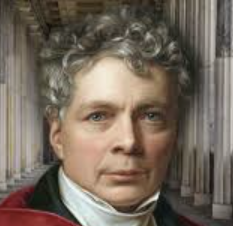
On its pass through finitude, the being-for-itself of the counter-image expresses itself most potently as ""I-ness", as self-identical individuality. Just as a planet in its orbit no sooner reaches its farthest distance from the center than it returns to its closest proximity, so the point of the farthest distance from God, the I-ness, is also the moment of its return to the Absolute, of the re-absorption into the ideal.
▼
Source
source
P. 30
5 months 1 week ago
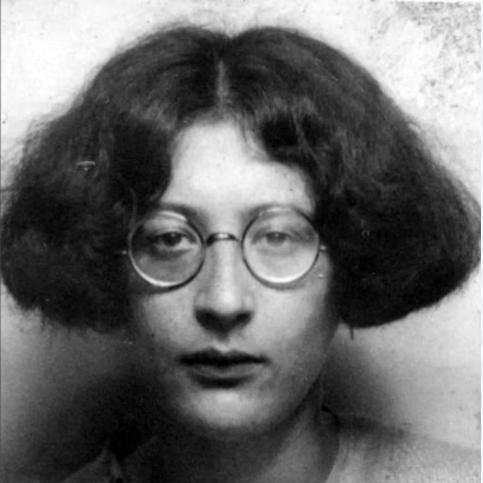
The human soul has need of consented obedience and of liberty. Consented obedience is what one concedes to an authority because one judges it to be legitimate. It is not possible in relation to a political power established by conquest or coup d'etat nor to an economic power based upon money. Liberty is the power of choice within the latitude left between the direct constraint of natural forces and the authority accepted as legitimate. The latitude should be sufficiently wide for liberty to be more than a fiction, but it should include only what is innocent and should never be wide enough to permit certain kinds of crime.
5 months 2 weeks ago
The evil of marriage, as is it practiced in the European countries, extends further than we have yet described. The method is for a thoughtless and romantic youth of each sex, to come together, to see each other, for a few times, and under circumstances full of delusion and then to vow eternal attachment. What is the consequence of this? In almost every instance they find themselves deceived. They are reduced to make the best of an irretrievable mistake. They are led to conceive it their wiser policy, to shut their eyes upon realities, happy, if by any perversion of intellect, they can persuade themselves that they were right in their first crude opinion of each other. Thus the institution of marriage is made a system of fraud; and men who carefully mislead their judgement in the daily affair of their life, must be expected to have a crippled judgement in every other concern.
4 months 2 weeks ago
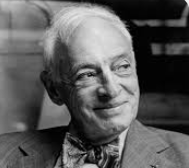
In an age of enormities, the emotions are naturally weakened. We are continually called upon to have feelings - about genocide, for instance, or about famine or the blowing up of passenger planes - and we are all aware that we are incapable of reacting appropriately. A guilty consciousness of emotional inadequacy or impotence makes people doubt their own human weight.
▼
Source
source
"The Distracted Public" (1990), p. 156

5 months 2 weeks ago
Since the only things we remember are humiliations and defeats, what is the use of all the rest?

2 months 2 weeks ago
Consider thyself to be dead, and to have completed thy life up to the present time; and live according to nature the remainder which is allowed thee. Variant: Think of yourself as dead. You have lived your life. Now, take what's left and live it properly.
▼
Source
source
VII, 56
4 months ago
To say that all philosophy is writing is, minimally, to say that it is never the transparent expression of thought.
▼
Source
source
Chapter 3, Deconstruction and Criticism, p. 46



2 months 3 weeks ago
The ability to speak exactly is intimately related to the ability to know exactly.
▼
Source
source
Imagination in Place

5 months 1 week ago
All which a man loves, for which he leaves everything else but that, is his god, thus the glutton and drunkard has for his idol his own flesh, the fornicator has for his idol the harlot and the greedy has for his idol silver and gold, and so the same for every other sinner.
▼
Source
source
Ch. 33

5 months 3 weeks ago
Abstract liberty, like other mere abstractions, is not to be found.
6 months 4 weeks ago
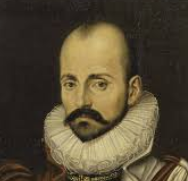
The souls of emperors and cobblers are cast in the same mold...The same reason that makes us wrangle with a neighbor creates a war betwixt princes.
▼
Source
source
Ch. 12, tr. Cotton, rev. W. Carew Hazlitt, 1877
4 months 1 week ago
The sceptics end in the infidelity which asserts the problem to be insoluble, or in the atheism which denies the existence of any orderly progress and governance of things: the men of genius propound solutions which grow into systems of Theology or of Philosophy, or veiled in musical language which suggests more than it asserts, take the shape of the Poetry of an epoch.
▼
Source
source
Ch.2, p. 72
4 months 2 weeks ago
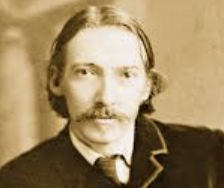
For my part, I travel not to go anywhere, but to go. I travel for travel's sake. The great affair is to move.
▼
Source
source
Travels with a Donkey in the Cévennes (1878).


5 months 4 days ago
The chief impression left by a study of Crowley's life and works is that he wasted an immense amount of time and energy trying to shock everyone he came into contact with, and his dislike of orthodoxy turned him into an unconsciously comic figure, like Don Quixote.
▼
Source
source
pp. 153-154


5 months 3 weeks ago
If you are penitent, you love. And if you love you are of God. All things are atoned for, all things are saved by love. If I, a sinner even as you are, am tender with you and have pity on you, how much more will God have pity upon you. Love is such a priceless treasure that you can redeem the whole world by it, and cleanse not only your own sins but the sins of others.
▼
Source
source
Book II, Chapter 3 (trans. Constance Garnett) The Elder Zossima, speaking to a devout widow afraid of death

6 months 2 weeks ago
The new governmental reason does not deal with what I would call the things in themselves of governmentality, such as individuals, things, wealth, and land. It no longer deals with these things in themselves. It deals with the phenomena of politics, that is to say, interests, which precisely constitute politics and its stakes; it deals with interests, or that respect in which a given individual, thing, wealth, and so on interests other individuals or the collective body of individuals. ... In the new regime, government is basically no longer to be exercised over subjects and other things subjected through these subjects. Government is now to be exercised over what we could call the phenomenal republic of interests. The fundamental question of liberalism is: What is the utility value of government and all actions of government in a society where exchange determines the value of things?
▼
Source
source
Lecture 2, January 17, 1979, pp. 45-46
4 months 3 weeks ago
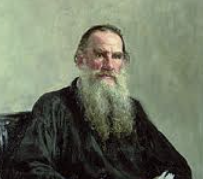
The man is making preparations for a year, and does not know that he will die before evening. And I remembered God's second saying, "Learn what is not given to man." 'What dwells in man" I already knew. Now I learnt what is not given him. It is not given to man to know his own needs.
▼
Source
source
Ch. XI
6 months 2 weeks ago
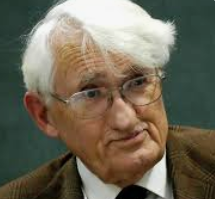
The interpretation of a case is corroborated only by the successful continuation of a self-formative process, that is by the completion of self-reflection, and not in any unmistakable way by what the patient says or how he behaves.
▼
Source
source
p. 266
5 months 3 weeks ago
Tyrants seldom want pretexts.
2 months 3 weeks ago
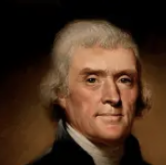
You will recollect that before the Revolution, Coke Littleton was the universal elementary book of law students, and a sounder Whig never wrote, nor of profounder learning in the orthodox doctrines of the British constitution, or in what were called English liberties. You remember also that our lawyers were then all Whigs. But when his black-letter text, and uncouth, but cunning learning got out of fashion, and the honeyed Mansfieldism of Blackstone became the students' hornbook, from that moment, that profession (the nursery of our Congress) began to slide into toryism, and nearly all the young brood of lawyers now are of that hue. They suppose themselves, indeed, to be Whigs, because they no longer know what Whigism or republicanism means.
▼
Source
source
Letter to James Madison (February 17, 1826), quoted in The Writings of Thomas Jefferson, Vol. XVI (1905; 1907), p. 156
6 months 3 weeks ago
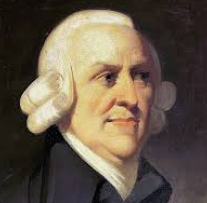
Upstart greatness is everywhere less respected than ancient greatness.
▼
Source
source
Chapter I, Part II, p. 773.

7 months 6 days ago
And these were the dishes wherein to me, hunger-starven for thee, they served up the sun and the moon.
▼
Source
source
III, 6
5 months 2 weeks ago
Let us speak plainly: everything which keeps us from self-dissolution, every lie which protects us against our unbreathable certitudes is religious.

6 months 3 weeks ago
A man's body and the needs of his body are now everywhere treated with a tender indulgence. Is the thinking mind then, to be the only thing that is never to obtain the slightest measure of consideration or protection, to say nothing of respect?
▼
Source
source
"On Noise"
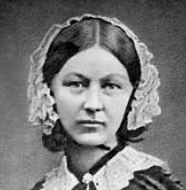
5 months 3 days ago
Perhaps it is not true to speak of God as a judge at all, or of his judgements. There does not seem to be really any evidence that His worlds are places of trial but rather schools, place of training, or that He is a judge but rather a Teacher, a Trainer, not in the imperfect sense in which men are teachers, but in the sense of His contriving and adapting His whole universe for one purpose of training every intelligent being to be perfect. ... I think God would not be the Almighty, the All-Wise, the All-Good, if he were the judge, in the sense that the evangelical and Roman Catholic Christians impute judgement to him. ... Our business is, I think, to understand, not to judge. What He does, as far as we know, to rule by law down to the most infinitesimally small portion of His universe, not to judge.
▼
Source
source
As quoted in Florence Nightingale's Theology: Collected Works of Florence Nightingale (2002) by Lynn McDonald, pps. 177-179
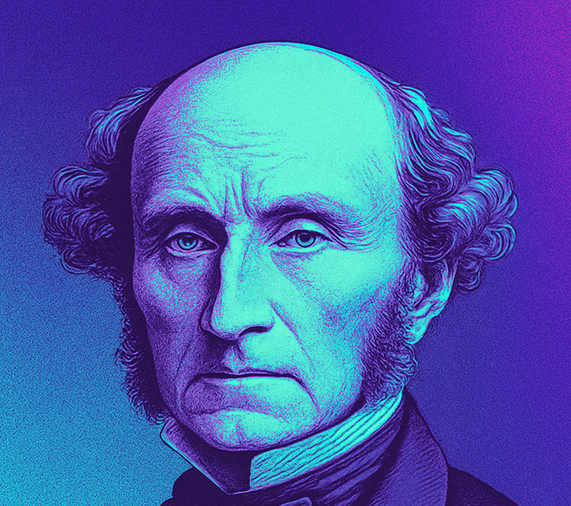
6 months 3 weeks ago
I remember the very place in Hyde Park where, in my fourteenth year, on the eve of leaving my father's house for a long absence, he told me that I should find, as I got acquainted with new people, that I had been taught many things which youths of my age did not commonly know; and that many persons would be disposed to talk to me of this, and to compliment me upon it. What other things he said on this topic I remember very imperfectly; but he wound up by saying, that whatever I knew more than others, could not be ascribed to any merit in me, but to the very unusual advantage which had fallen to my lot.
▼
Source
source
(p. 34)

3 months 6 days ago
All vices sink into our whole being, if we do not crush them before they gain a footing; and in like manner these sad, pitiable, and discordant feelings end by feeding upon their own bitterness, until the unhappy mind takes a sort of morbid delight in grief... In like manner, wounds heal easily when the blood is fresh upon them: they can then be cleared out and brought to the surface, and admit of being probed by the finger: when disease has turned them into malignant ulcers, their cure is more difficult.
5 months 1 week ago
Let him who seeks continue seeking until he finds. When he finds, he will become troubled. When he becomes troubled, he will be astonished, and he will rule over the All.
▼
Source
source
-2
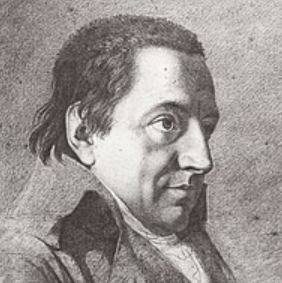
5 months 3 weeks ago
The true Christian knows no Covenant or Mediation with God, but only the Old, Eternal, and Unchangeable Relation, that in Him we live, and move, and have our being; and he asks not who has said this, but only what has been said;-even the book wherein this may be written is nothing to him as a proof, but only as a means of culture; he bears the proof in his own breast. This is my view of the matter...
▼
Source
source
p. 105
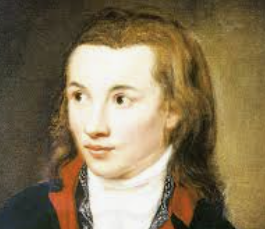
5 months 2 weeks ago
There are ideal series of events which run parallel with the real ones. They rarely coincide. Men and circumstances generally modify the ideal train of events, so that it seems imperfect, and its consequences are equally imperfect. Thus with the Reformation; instead of Protestantism came Lutheranism.
▼
Source
source
Epigraph, "The Mystery Of Marie Rogêt" (1842) by Edgar Allan Poe, adapted from Fragments from German Prose Writers (1841) by Sarah Austin
3 months 2 days ago
This dogma had first to be shattered before men could once more go out in quest of the historical Jesus, before they could even grasp the thought of His existence. That the historic Jesus is something different from the Jesus Christ of the doctrine of the Two Natures seems to us now self-evident. We can, at the present day, scarcely imagine the long agony in which the historical view of the life of Jesus came to birth. And even when He was once more recalled to life. He was still, like Lazarus of old, bound hand and foot with grave-clothes - the grave-clothes of the dogma of the Dual Nature.
▼
Source
source
p. 3
7 months ago
I dare affirm in knowledge of nature, that a little natural philosophy, and the first entrance into it, doth dispose the opinion to atheism; but on the other side, much natural philosophy and wading deep into it, will bring about men's minds to religion; wherefore atheism every way seems to be combined with folly and ignorance, seeing nothing can can be more justly allotted to be the saying of fools than this, "There is no God" Of Atheism.

3 months 2 weeks ago
Beginning in the 1970s, however, the techniques and organizational form of industrial production shifted toward smaller and more mobile labor units and more flexible structures of production, a shift often labeled as a move from Fordist to post-Fordist production.
▼
Source
source
82

6 months 4 weeks ago
Who loves not woman, wine, and song / Remains a fool his whole life long.
▼
Source
source
As quoted by Anonymous, "On Luther's Love for and Knowledge of Music" in The Musical World. Vol VII, No. 83 (Oct 13, 1837).
4 months 2 weeks ago
Even when the wound is healed, the scar remains.
▼
Source
source
Maxim 236


6 months 2 weeks ago
Admit it, it is your youth that you regret, more even than your crime; it is my youth you hate, even more than my innocence.
▼
Source
source
Electra to her mother Clytemnestra, Act 1

5 months 1 week ago
The present stage redefines the possibilities of man and nature in accordance with the new means available for their realization.
▼
Source
source
p. 65
2 months 4 weeks ago
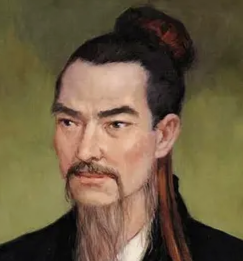
If every one in the world will love universally; states not attacking one another; houses not disturbing one another; thieves and robbers becoming extinct; emperor and ministers, fathers and sons, all being affectionate and filial -- if all this comes to pass the world will be orderly. Therefore, how can the wise man who has charge of governing the empire fail to restrain hate and encourage love? So, when there is universal love in the world it will be orderly, and when there is mutual hate in the world it will be disorderly.
▼
Source
source
Book 4; Universal Love I

5 months 3 weeks ago
I can cure the gout or stone in some, sooner than Divinity, Pride, or Avarice in others.
▼
Source
source
Section 9
7 months 2 weeks ago
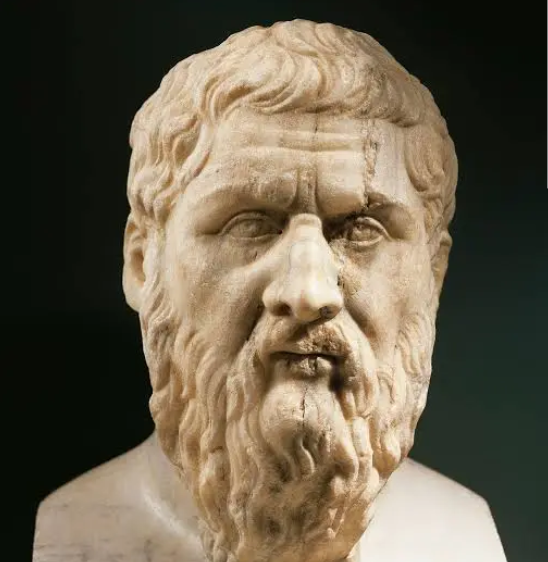
Then the case is the same in all the other arts for the orator and his rhetoric; there is no need to know the truth of the actual matters, but one merely needs to have discovered some device of persuasion which will make one appear to those who do not know to know better than those who know.

5 months 3 weeks ago
I am far from denying that newspapers in democratic countries lead citizens to do very ill-considered things in common; but without newspapers there would be hardly any common action at all. So they mend many more ills than they cause.
▼
Source
source
Book Two, Chapter VI.
2 months 4 weeks ago
Heinrich Himmler's political tendencies were philo-monarchist and Right-wing conservative, inherited from his father who had been the loyalist instructor of Heinrich, hereditary prince of Bavaria. He was especially fascinated by the ideal of the Order of Teutonic Knights, which we spoke of earlier. He wanted to make the SS a corps that would perform the same function of the state's central nucleus that the nobility had played with its unquestioning loyalty to the regime, but in a new form. For the formation of a man of the SS, he considered a blend of Spartan spirit and Prussian discipline. But he also had in view the order of Jesuits (Hitler jokingly used to call Himmler 'my Ignatius of Loyola').
CivilSimian.com created by AxiomaticPanic, CivilSimian, Kalokagathia