

5 months 2 weeks ago
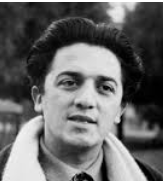
Hype is the awkward and desperate attempt to convince journalists that what you've made is worth the misery of having to review it.
▼
Source
source
"Hype"
4 months 1 week ago
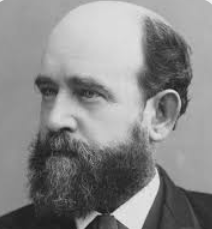
I propose in this inquiry to take nothing for granted, but to bring even accepted theories to the test of first principles, and should they not stand the test, freshly to interrogate facts in the endeavor to discover their law. I propose to beg no question, to shrink from no conclusion, but to follow truth wherever it may lead. Upon us is the responsibility of seeking the law, for in the very heart of our civilization to-day women faint and little children moan. But what that law may prove to be is not our affair. If the conclusions that we reach run counter to our prejudices, let us not flinch; if they challenge institutions that have long been deemed wise and natural, let us not turn back.
▼
Source
source
Introductory : The Problem
5 months 1 week ago
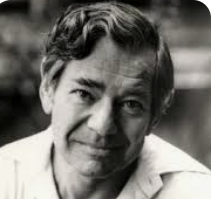
Of faith and morals, one cannot speak honestly for long without hurting feelings. Therefore, most people speak dishonestly of the most important subjects. Many recent philosophers prefer not to speak of them at all. But in some situations honesty is incompatible with silence.

8 months 1 week ago
In the vaunted works of Art The master stroke is Nature's part.
▼
Source
source
Art
6 months ago
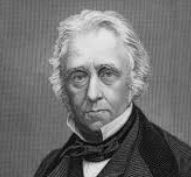
Perhaps no person can be a poet, or even enjoy poetry, without a certain unsoundness of mind.
▼
Source
source
p. 7

7 months 4 days ago
The same, without such opinion, DESPAIRE.
▼
Source
source
The First Part, Chapter 6, p. 25
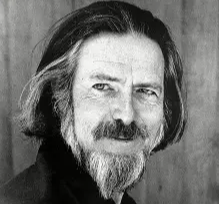
4 months 3 weeks ago
For several years I have referred to this, hitherto, rare and inaccessible work as the I-told-you-so-book, because it has often been implied that I have invented my explanations of Buddhism out of thin air, thus falsifying its authentic teachings... Yet, despite the occultist flavor of its title, The Secret Oral Teachings in the Tibetan Buddhist Sects is the most direct, no-nonsense, and down-to-earth explanation of Mahayana Buddhism which has thus far been written.
▼
Source
source
Watts' Foreward to The Secret Oral Teachings in the Tibetan Buddhist Sects (1964)], by Alexandra David Neel
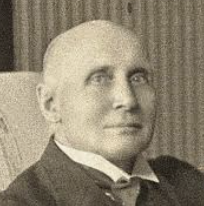
6 months 3 weeks ago
If you have had your attention directed to the novelties in thought in your own lifetime, you will have observed that almost all really new ideas have a certain aspect of foolishness when they are first produced.
▼
Source
source
Ch. 3: "The Century of Genius", pp. 67-68
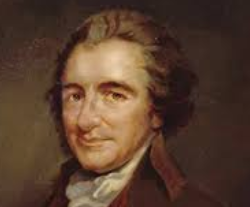
8 months 1 week ago
Despotic government supports itself by abject civilization, in which debasement of the human mind, and wretchedness in the mass of the people, are the chief criterions. Such governments consider man merely as an animal; that the exercise of intellectual faculty is not his privilege; that he has nothing to do with the laws but to obey them; and they politically depend more upon breaking the spirit of the people by poverty, than they fear enraging it by desperation.
▼
Source
source
Means by Which the Fund Is to Be Created
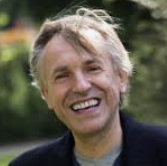
5 months 2 weeks ago
If we want eternal life, then we'll need to rewrite our bug-ridden genetic code and become god-like. "May all that have life be delivered from suffering", said Gautama Buddha. It's a wonderful sentiment. Sadly, only hi-tech solutions can ever eradicate suffering from the living world. Compassion alone is not enough.
▼
Source
source
Interview with Nick Bostrom and David Pearce, Dec. 2007

8 months 1 week ago
All sources of energy upon which industry depends are wasted when they are employed; and industry is expending them at a continually increasing rate. Already coal has been largely replaced by oil, and oil is being used up so fast that East and West alike conceive it necessary to their own prosperity to destroy the industry of the other. And what is true of oil is equally true of other natural resources. Every day, many square miles of forest are turned into newspaper, but there is no known process by which newspaper can be turned into forest. You will say that this need not worry us, since newspapers will be replaced by radio, but radio requires electricity, electricity requires power, and power depends upon raw materials.
▼
Source
source
Part I: Man and Nature, Ch. 4: The Limits of Human Power, p. 30
7 months 4 weeks ago
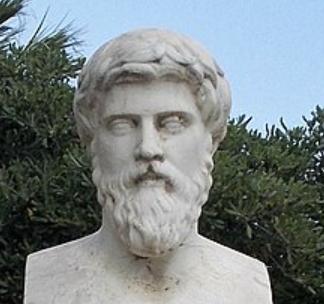
He preferred an honest man that wooed his daughter, before a rich man. "I would rather," said Themistocles, "have a man that wants money than money that wants a man."
▼
Source
source
49 Themistocles

7 months 1 week ago
Dead of night. No one, nothing but the society of the moments. Each pretends to keep us company, then escapes - desertion after desertion.

5 months 2 days ago
This great maxim of philosophy he had gathered by the teaching of nature alone - that man was created to work, not to speculate or feel or dream. Accordingly, he set his whole heart thitherwards. He did work wisely and unweariedly, and perhaps performed more with the tools he had than any man I now know.

7 months 2 weeks ago
Nothing is quite so wretchedly corrupt as an aristocracy which has lost its power but kept its wealth and which still has endless leisure to devote to nothing but banal enjoyments. All its great thoughts and passionate energy are things of the past, and nothing but a host of petty, gnawing vices now cling to it like worms to a corpse.
▼
Source
source
Book Three, Chapter XI.

8 months 2 weeks ago
There is no wish more natural than the wish to know.
▼
Source
source
Ch. 13


7 months 1 week ago
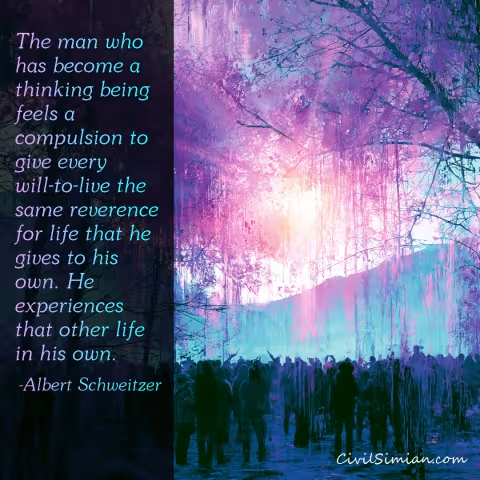
All nature abounds in proofs of other influences than merely mechanical action, even in the physical world. They crowd in upon us at the rate of several every minute. And my observation of men has led me to this little generalization. Speaking only of men who really think for themselves and not of mere reporters, I have not found that it is the men whose lives are mostly passed within the four walls of a physical laboratory who are most inclined to be satisfied with a purely mechanical metaphysics. On the contrary, the more clearly they understand how physical forces work the more incredible it seems to them that such action should explain what happens out of doors. A larger proportion of materialists and agnostics is to be found among the thinking physiologists and other naturalists, and the largest proportion of all among those who derive their ideas of physical science from reading popular books.
▼
Source
source
Lecture II : The Universal Categories, §3. Laws: Nominalism, CP 5.65
7 months 1 week ago
Labour is the source of all wealth, the political economists assert. And it really is the source -- next to nature, which supplies it with the material that it converts into wealth. But it is even infinitely more than this. It is the prime basic condition for all human existence, and this to such an extent that, in a sense, we have to say that labour created man himself.
▼
Source
source
The Part Played by Labour in the Transition from Ape to Man

8 months 1 week ago
No man with a genius for legislation has appeared in America. They are rare in the history of the world. There are orators, politicians, and eloquent men, by the thousand; but the speaker has not yet opened his mouth to speak who is capable of settling the much-vexed questions of the day.
8 months 2 weeks ago
As soon as we have contrived to give our pupil an idea of the word "Useful," we have got an additional means of controlling him, for this word makes a great impression on him, provided that its meaning for him is a meaning relative to his own age, and provided he clearly sees its relation to his own well-being. This word makes no impression on your scholars because you have taken no pains to give it a meaning they can understand, and because other people always undertake to supply their needs so that they never require to think for themselves, and do not know what utility is. "What is the use of that?"


8 months 2 weeks ago
Goods can serve many other purposes besides purchasing money, but money can serve no other purpose besides purchasing goods.
▼
Source
source
Chapter I, p. 471.
6 months 3 weeks ago
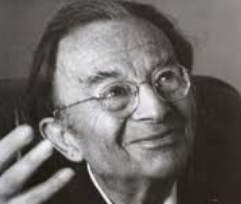
Immature love says: "I love you because I need you." Mature love says: "I need you because I love you."
▼
Source
source
Ch. 2
7 months 4 days ago
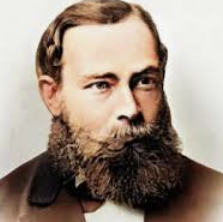
A judgment, for me is not the mere grasping of a thought, but the admission of its truth.
▼
Source
source
Gottlob Frege (1892). On Sense and Reference, note 7.

4 months 3 weeks ago
Socrates was ennobled by the hemlock draught. Wrench from Cato's hand his sword, the vindicator of liberty, and you deprive him of the greatest share of his glory.
9 months 2 weeks ago
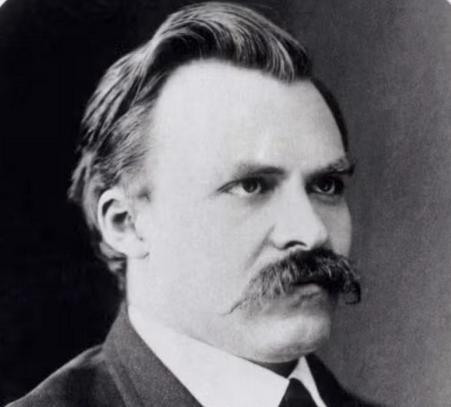
For those who need consolation no means of consolation is so effective as the assertion that in their case no consolation is possible: it implies so great a degree of distinction that they at once hold up their heads again.
5 months 2 days ago
No Dilettantism in this Mahomet; it is a business of Reprobation and Salvation with him, of Time and Eternity: he is in deadly earnest about it! Dilettantism, hypothesis, speculation, a kind of amateur-search for Truth, toying and coquetting with Truth: this is the sorest sin. The root of all other imaginable sins. It consists in the heart and soul of the man never having been open to Truth; - "living in a vain show." Such a man not only utters and produces falsehoods, but is himself a falsehood. The rational moral principle, spark of the Divinity, is sunk deep in him, in quiet paralysis of life-death.


8 months 1 week ago
We do not count a man's years until he has nothing else to count.
▼
Source
source
Old Age
8 months 1 week ago
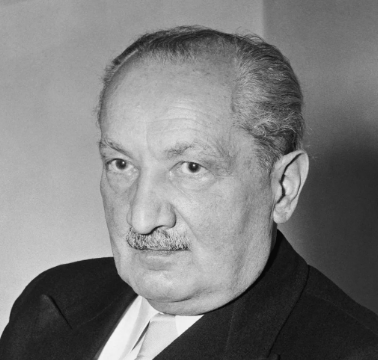
"What is a thing?" is historical, because every report of the past, that is of the preliminaries to the question about the thing, is concerned with something static. This kind of historical reporting is an explicit shutting down of history, whereas it is, after all, a happening. We question historically if we ask what is still happening even if it seems to be past. We ask what is still happening and whether we remain equal to this happening so that it can really develop.
▼
Source
source
p. 43

6 months 4 weeks ago
And yet there is nothing so badly imagined: nature seems to have provided, that the follies of men should be transient, but they by writing books render them permanent. A fool ought to content himself with having wearied those who lived with him: but he is for tormenting future generations; he is desirous that his folly should triumph over oblivion, which he ought to have enjoyed as well as his grave; he is desirous that posterity should be informed that he lived, and that it should be known for ever that he was a fool. Commonly paraphrased as "An author is a fool who, not content with having bored those who have lived with him, insists on boring future generations".
▼
Source
source
No. 66. (Rica writing to * * *)

7 months 1 week ago
'No one but you and one 'jade' I have fallen in love with, to my ruin. But being in love doesn't mean loving. You may be in love with a woman and yet hate her.
8 months 2 weeks ago
There is as much difference between us and ourselves as between us and others.
▼
Source
source
Ch. 1. Of the Inconstancy of Our Actions, tr. Cotton, rev. W. Carew Hazlitt, 1877

4 months 1 week ago
An art that heals and protects its subject is a geography of scars.
▼
Source
source
Damage

7 months 2 days ago
When all these things are lacking there is no culture; there is in the strictest sense of the word, barbarism. And let us not deceive ourselves, this is what is beginning to appear in Europe under the progressive rebellion of the masses. The traveller who arrives in a barbarous country knows that in that territory there are no ruling principles to which it is possible to appeal. Properly speaking, there are no barbarian standards. Barbarism is the absence of standards to which appeal can be made.
▼
Source
source
Chap. VIII: The Masses Intervene In Everything, And Why Their Intervention Is Solely By Violence
8 months 1 week ago
To Americans. That some desperate wretches should be willing to steal and enslave men by violence and murder for gain, is rather lamentable than strange. But that many civilized, nay, christianized people should approve, and be concerned in the savage practice, is surprising; and still persist, though it has been so often proved contrary to the light of nature, to every principle of Justice and Humanity, and even good policy, by a succession of eminent men, and several late publications.
8 months 2 weeks ago
Every tax, however, is to the person who pays it a badge, not of slavery but of liberty. It denotes that he is a subject to government, indeed, but that, as he has some property, he cannot himself be the property of a master.
▼
Source
source
Chapter II, Part II, p. 927.

7 months 3 weeks ago
The Pythagoreans made kindness to beasts a training in humanity and pity.
▼
Source
source
3, 20, 7

7 months 1 week ago
Hypocrisy, of course, delights in the most sublime speculations; for, never intending to go beyond speculation, it costs nothing to have it magnificent.

4 months 1 week ago
With respect to modern languages, French, as I have before observed, is indispensible. Next to this the Spanish is most important to an American. Our connection with Spain is already important and will become daily more so. Besides this the antient part of American history is written chiefly in Spanish.

8 months 1 week ago
As the brain-changes are continuous, so do all these consciousnesses melt into each other like dissolving views. Properly they are but one protracted consciousness, one unbroken stream.
▼
Source
source
Ch. 9
8 months 1 week ago
All is riddle, and the key to a riddle is another riddle.
▼
Source
source
Illusions
7 months 2 days ago
In ressentiment morality, love for the "small," the "poor," the "weak," and the "oppressed" is really disguised hatred, repressed envy, an impulse to detract, etc., directed against the opposite phenomena: "wealth," "strength," "power," "largesse." When hatred does not dare to come out into the open, it can be easily expressed in the form of ostensible love-love for something which has features that are the opposite of those of the hated object. This can happen in such a way that the hatred remains secret. When we hear that falsely pious, unctuous tone (it is the tone of a certain "socially-minded" type of priest), sermonizing that love for the "small" is our first duty, love for the "humble" inspirit, since God gives "grace" to them, then it is often only hatred posing as Christian love.
▼
Source
source
L. Coser, trans. (1961), pp. 96-97
CivilSimian.com created by AxiomaticPanic, CivilSimian, Kalokagathia