

6 months 2 weeks ago
In cloning, the Father and the Mother have disappeared, not in the service of an aleatory liberty of the subject, but in the service of a matrix called code.
▼
Source
source
"Clone Story," p. 96

6 months 4 weeks ago
We must needs believe in the other life, in the eternal life beyond the grave. ...And we must needs believe in that other life, perhaps, in order that we may deserve it, in order that we may obtain it, for it may be that he neither deserves it nor will obtain it who does not passionately desire it above reason and, if need be, against reason.
4 months 3 weeks ago
This mysterious something has been called God, the Absolute, Nature, Substance, Energy, Space, Ether, Mind, Being, the Void, the Infinite-names and ideas which shift in popularity and respectabilitywith the winds of intellectual fashion, of considering the universe intelligent or stupid, superhuman or subhuman, specific or vague. All of them might be dismissed as nonsense-noises if the notion of an underlying Ground of Being were no more than a product of intellectual speculation. But these names are often used to designate the content of a vivid and almost sensorily concrete experience-the "unitive" experience of the mystic, which, with secondary variations, is found in almost all cultures at all times. This experience is the transformed sense of self which I was discussing in the previous chapter, though in "naturalistic" terms, purified of all hocus-pocus about mind, soul, spirit, and other intellectually gaseous words.
▼
Source
source
p. 104-105

7 months 4 days ago
From the same it proceedeth,that men gives different names, to one and the same thing, from the difference of their own passions: As they that approve a private opinion, call it Opinion; but they that mislike it, Haeresie: and yet haeresie signifies no more than private opinion; but has only agreater tincture of choler.
▼
Source
source
The First Part, Chapter 11, p. 50

4 months 1 week ago
Of Fronto, to how much envy and fraud and hypocrisy the state of a tyrannous king is subject unto, and how they who are commonly called [Eupatridas Gk.], i.e. nobly born, are in some sort incapable, or void of natural affection.
▼
Source
source
I, 8

6 months 3 weeks ago
If you say to someone who has ears to hear: "What you are doing to me is not just," you may touch and awaken at its source the spirit of attention and love. But it is not the same with words like, "I have the right..." or "you have no right to..." They evoke a latent war and awaken the spirit of contention.
▼
Source
source
p. 63

7 months 1 week ago
What place do we occupy in the "universe"? A point, if that! Why reproach ourselves when we are evidently so insignificant? Once we make this observation, we grow calm at once: henceforth, no more bother, no more frenzy, metaphysical or otherwise. And then that point dilates, swells, substitutes itself for space. And everything begins all over again.
5 months 3 weeks ago
As if to demonstrate, by a striking example, the impossibility of erecting any cerebral barrier between man and the apes, Nature has provided us, in the latter animals, with an almost complete series of gradations from brains little higher than that of a Rodent, to brains little lower than that of Man.
▼
Source
source
Ch.2, p. 115
4 months 1 week ago
We have no right to believe a thing true because everybody says so unless there are good grounds for believing that some one person at least has the means of knowing what is true, and is speaking the truth so far as he knows it. However many nations and generations of men are brought into the witness-box they cannot testify to anything which they do not know. Every man who has accepted the statement from somebody else, without himself testing and verifying it, is out of court; his word is worth nothing at all. And when we get back at last to the true birth and beginning of the statement, two serious questions must be disposed of in regard to him who first made it: was he mistaken in thinking that he knew about this matter, or was he lying?

7 months 2 weeks ago
We vainly accuse the fury of guns, and the new inventions of death; it is in the power of every hand to destroy us, and we are beholden unto every one we meet he doth not kill us.
▼
Source
source
Section 44

8 months 6 days ago
A critique is not a matter of saying that things are not right as they are. It is a matter of pointing out on what kinds of assumptions, what kinds of familiar, unchallenged, unconsidered modes of thought the practices that we accept rest.
▼
Source
source
"Practicing criticism, or, is it really important to think?", interview by Didier Eribon, May 30-31, 1981, in Politics, Philosophy, Culture, ed. L. Kriztman (1988), p. 155
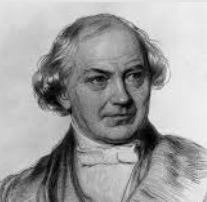
4 months 1 week ago
We perceive by 'means' of a medium and 'by means' of impressions on the nerves: but we do not (by our senses,) perceive either the medium or the impressions on the nerves.
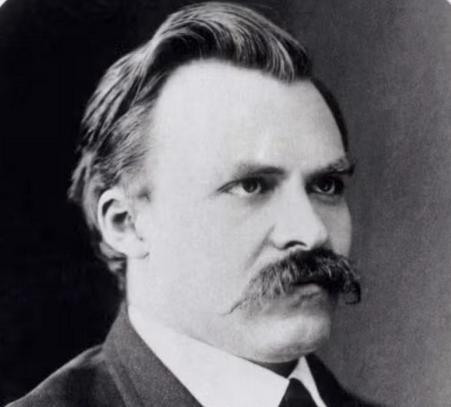
9 months 2 weeks ago
We believe that we know something about the things themselves when we speak of trees, colors, snow, and flowers; and yet we possess nothing but metaphors for things, metaphors which correspond in no way to the original entities.

6 months 3 weeks ago
There is no such thing as data-driven thinking.
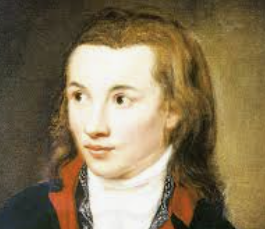
7 months 1 week ago
Our life is no dream, but it should and perhaps will become one.
▼
Source
source
Fragmente I, Magische Philosophie Variant: "Our life is no dream; but it ought to become one, and perhaps will." George MacDonald, Phantastes, epigraph to Chapter XXV

8 months 2 weeks ago
I will first discuss images according to the Law of Moses, and then according to the gospel. And I say at the outset that according to the Law of Moses no other images are forbidden than an image of God which one worships. A crucifix, on the other hand, or any other holy image is not forbidden. Heigh now! you breakers of images, I defy you to prove the opposite!
▼
Source
source
pp. 85-86
6 months 2 weeks ago
The very ideology of "cultural production" is antithetical to all culture, as is that of visibility and of the polyvalent space: culture is a site of the secret, of seduction, of initiation, of a restrained and highly ritualized symbolic exchange.
▼
Source
source
"The Beaubourg Effect," p. 64
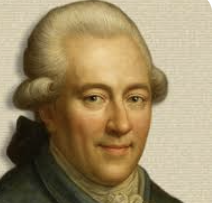
6 months 3 weeks ago
A schoolteacher or professor cannot educate individuals, he educates only species.
▼
Source
source
J 10

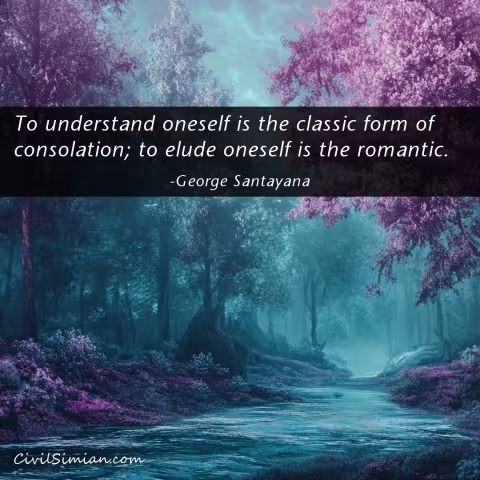

8 months 1 week ago
A great myth is relevant as long as the predicament of humanity lasts; as long as humanity lasts. It will always work, on those who can receive it, the same catharsis.
▼
Source
source
"Haggard Rides Again", in Time and Tide, Vol. XLI, 9/3/1960

5 months 2 days ago
Oceans of horse-hair, continents of parchment, and learned-sergeant eloquence, were it continued till the learned tongue wore itself small in the indefatigable learned mouth, cannot make unjust just.

8 months 2 weeks ago
In living bodies, how all the various limbs harmonize, and mutually combine, for common defence against injury! What can be more heterogeneous, and unlike, than the body and the soul? and yet with what strong bonds nature has united them, is evident from the pang of separation. As life itself is nothing else but the concordant union of body and soul, so is health the harmonious cooperation of all the parts and functions of the body.
5 months 1 week ago
Of course, not everything old is beautiful, any more than everything black, or everything white, or everything young. But the notion that old means ugly is every bit as harmful as the prejudice that black is ugly. In one way it is even more pernicious. The notion that only what is new and young is beautiful poisons our relationship to the past and to our own future. It keeps us from understanding our roots and the greatest works of our culture and other cultures. It also makes us dread what lies ahead of us and leads many to shirk reality.
▼
Source
source
Time is an Artist (1978) Epilogue : Old is Beautiful

8 months 1 week ago
Beating is the worst, and therefore the last means to be us'd in the correction of children, and that only in the cases of extremity, after all gently ways have been try'd, and proved unsuccessful; which, if well observ'd, there will very seldom be any need of blows.
▼
Source
source
Sec. 84

4 months 1 week ago
The rule, acknowledged or not, seems to be that if we have great power we must use it. We would use a steam shovel to pick up a dime. We have experts who can prove there is no other way to do it.
▼
Source
source
The Loss of the Future
6 months 1 week ago
Even a single hair casts its shadow.
▼
Source
source
Maxim 228
8 months 2 weeks ago
In our reasonings concerning matter of fact, there are all imaginable degrees of assurance, from the highest certainty to the lowest species of moral evidence. A wise man, therefore, proportions his belief to the evidence.
▼
Source
source
Section X: Of Miracles; Part I. 87

6 months 1 week ago
Bless advertising art for its pictorial vitality and verbal creativity.
▼
Source
source
(p. 18)

6 months 3 weeks ago
He alone is aware of the truth, and if all men were aware of it, there would be an end of life. In the country of the blind, the one-eyed man is king. But his kingship is kingship over nothing. It brings no powers and privileges, only loss of faith and exhaustion of the power to act. Its world is a world without values.
▼
Source
source
Chapter one, The Country of the Blind, referencing a quote by Desiderius Erasmus.

6 months 3 weeks ago
I feel sure that the police are helping us more than I could do in ten years. They are making more anarchists than the most prominent people connected with the anarchist cause could make in ten years. If they will only continue I shall be very grateful; they will save me lots of work.
▼
Source
source
As quoted in "Arrest in Chicago of Emma Goldman, Preacher of Anarchy", The San Francisco Call
4 months 1 week ago
Poverty is a crime. I do not mean that it is a crime to be poor. Murder is a crime; but it is not a crime to be murdered; and a man who is in poverty, I look upon, not as a criminal in himself, so much as the victim of a crime for which others, as well perhaps as himself, are responsible.
▼
Source
source
The Crime of Poverty, 1885
8 months 1 week ago
Most of what happens actually is forgotten.
▼
Source
source
Ch. 16
4 months 3 weeks ago
Unbelievably, there is still here [in Los Angeles] one of my most favorite places-the home of Henry and Ruth Denison at the very top of the hill, at the end of a road going nowhere, hanging above a reservoir-lake surrounded with pines. They have a sundeck under a eucalyptus tree where I have slept some memorably deep sleeps, and awakened very early in the morning, before sunrise, with stars still showing through the branches. In this house I have made some of my greatest friendships, so much so that I cannot think of it without that curious pleasure-pain which the Japanese call aware-the sense of echoes in the courtyards of the mind after the sun has left and the people have gone their ways forever.
▼
Source
source
p. 224
4 months 1 week ago
Novelty is a new kind of loneliness.
▼
Source
source
Healing
8 months 1 week ago
Society can and does execute its own mandates: and if it issues wrong mandates instead of right, or any mandates at all in things with which it ought not to meddle, it practises a social tyranny more formidable than many kinds of political oppression, since, though not usually upheld by such extreme penalties, it leaves fewer means of escape, penetrating much more deeply into the details of life, and enslaving the soul itself. Protection, therefore, against the tyranny of the magistrate is not enough: there needs protection also against the tyranny of the prevailing opinion and feeling; against the tendency of society to impose, by other means than civil penalties, its own ideas and practices as rules of conduct on those who dissent from them; to fetter the development, and, if possible, prevent the formation, of any individuality not in harmony with its ways, and compel all characters to fashion themselves upon the model of its own.
▼
Source
source
Ch. 1: Introductory

6 months 3 weeks ago
Systems, scientific and philosophic, come and go. Each method of limited understanding is at length exhausted. In its prime each system is a triumphant success: in its decay it is an obstructive nuisance.
▼
Source
source
p. 203.
5 months 3 days ago
He who outrages benevolence is called a ruffian: he who outrages righteousness is called a villain. I have heard of the cutting off of the villain Chow, but I have not heard of the putting of a ruler to death.
▼
Source
source
1B:8, In relation to righteousness and the overthrow of the tyrannous King Zhou of Shang, as translated by Sir Robert Kennaway Douglas, China (1904), p. 8


8 months 1 week ago
Bold ideas, unjustified anticipations, and speculative thought, are our only means for interpreting nature: our only organon, our only instrument, for grasping her. And we must hazard them to win our prize. Those among us who are unwilling to expose their ideas to the hazard of refutation do not take part in the scientific game.
▼
Source
source
Ch. 10 "Corroboration, or How a Theory Stands up to Tests", section 85: The Path of Science, p. 280.

6 months 1 week ago
Man is a creature who lives not upon bread alone, but principally by catchwords; and the little rift between the sexes is astonishingly widened by simply teaching one set of catchwords to the girls and another to the boys.
▼
Source
source
Virginibus Puerisque, Ch. 2.

6 months 1 week ago
If the slave-owner of our times has no slave, John, whom he can send to the cesspool, he has five shillings, of which hundreds of such Johns are in such need that the slave-owner of our times may choose any one out of hundreds of Johns and be a benefactor to him by giving him the preference, and allowing him, rather than another, to climb down into the cesspool.
▼
Source
source
Chapter 8: Slavery Exists Among Us
8 months 2 weeks ago
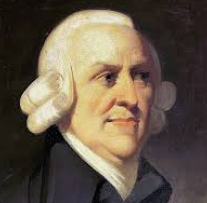
The education of the common people requires, perhaps, in a civilized and commercial society, the attention of the public more than that of people of some rank and fortune.
▼
Source
source
Chapter I, Part III, p. 845.
9 months 1 day ago
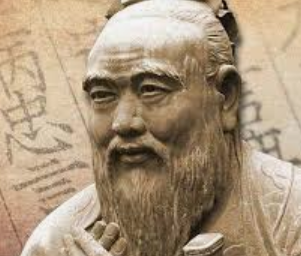
The superior man accords with the course of the Mean. Though he may be all unknown, unregarded by the world, he feels no regret. It is only the sage who is able for this.
8 months 2 weeks ago
A constant element of enjoyment must be mingled with our studies, so that we think of learning as a game rather than a form of drudgery, for no activity can be continued for long if it does not to some extent afford pleasure to the participant.
▼
Source
source
Letter to Christian Northoff (1497), as translated in Collected Works of Erasmus (1974), p. 114
6 months 1 week ago
In former times the chief method of justifying the use of violence and thereby infringing the law of love was by claiming a divine right for the rulers: the Tsars, Sultans, Rajahs, Shahs, and other heads of states. But the longer humanity lived the weaker grew the belief in this peculiar, God-given right of the ruler. That belief withered in the same way and almost simultaneously in the Christian and the Brahman world, as well as in Buddhist and Confucian spheres, and in recent times it has so faded away as to prevail no longer against man's reasonable understanding and the true religious feeling. People saw more and more clearly, and now the majority see quite clearly, the senselessness and immorality of subordinating their wills to those of other people just like themselves, when they are bidden to do what is contrary not only to their interests but also to their moral sense.
▼
Source
source
III
CivilSimian.com created by AxiomaticPanic, CivilSimian, Kalokagathia