


4 months 5 days ago
Nevertheless, among all the temptations I will have to resist today. There would be the temptation of memory: to recount what was for me, and for those of my generation who shared it during a whole lifetime. The experience of Marxism. The quasi-paternal figure of Marx, the way it fought in us with other filiations, the reading of texts and the interpretation of a world in which the Marxist inheritance was-and still remains, and so it will remain-absolutely and thoroughly determinate. One need not be a Marxist or a communist in order to accept this obvious fact. We all live in a world, some would say a culture, that still bears, at an incalculable depth, the mark of this inheritance, whether in a directly visible fashion or not.
▼
Source
source
Injunctions of Marx

4 months 1 week ago
In fact of course, this 'productive' worker cares as much about the crappy shit he has to make as does the capitalist himself who employs him, and who also couldn't give a damn for the junk.
▼
Source
source
Notebook II, The Chapter on Capital, p. 193.

4 months 6 days ago
Certainly it is correct to say: Conscience is the voice of God.
▼
Source
source
p. 75

3 months 1 week ago
The discussion of the sexual problem is only a somewhat crude prelude to a far deeper question, and that is the question of the psychological relationship between the sexes. In comparison with this the other pales into insignificance, and with it we enter the real domain of woman. Woman's psychology is founded on the principle of Eros, the great binder and loosener, whereas from ancient times the ruling principle ascribed to man is Logos.
▼
Source
source
P.254
2 months 2 weeks ago
Before we can establish any immutable 'principles' of administration, we must be able to describe, in words, exactly how an administrative organization looks and exactly how it works.
▼
Source
source
p. xiv.
3 months 1 week ago
Allow me, Gentlemen, to pose this question in a more serious manner. Do I need to tell you that it is not a question at first of the natural, physiological, ethnographic difference that exists between individuals, but of the social difference, that is produced by the economic organization of society? Give to all the children, from their birth, the same means of maintenance, education, and instruction; give then to all the men thus raised the same social milieu, the same means of earning their living by their own labor, and you will see then that many of these differences, that we believe to be natural differences, will disappear because they are nothing but the effect of an unequal division of the conditions of intellectual and physical development - of the conditions of life.
4 months 6 days ago
This Europe, which in its ruinous blindness is forever on the point of cutting its own throat, lies today in a great pincers, squeezed between Russia on one side and America on the other. From a metaphysical point of view, Russia and America are the same: the same dreary technological frenzy, the same unrestricted organization of the average man...
3 weeks 5 days ago
Might is a fine thing, and useful for many purposes; for 'one goes further with a handful of might than with a bagful of right'. You long for freedom? You fools! If you took might, freedom would come of itself. See, he who has might 'stands above the law'. How does this prospect taste to you, you 'law-abiding' people? But you have no taste!
▼
Source
source
Cambridge 1995, p. 151

3 weeks 4 days ago
Just as an enemy is more dangerous to a retreating army, so every trouble that fortune brings attacks us all the harder if we yield and turn our backs.
2 months 2 weeks ago
Philosophy was never just ontotheology, and even when philosophers were concerned with ontotheology, they were concerned with much more than that. That is the first reason that the idea of a fundamental "crisis" in philosophy and of the "end of philosophy" is deeply mistaken. And if the questions of philosophy are indeed "unsettleable," in the sense that they will always be with us, that is a wonderful thing, not something to be regretted.
▼
Source
source
Science and Philosophy

4 months 1 week ago
Remorse sleeps during a prosperous period but wakes up in adversity.
▼
Source
source
Variant translations: Remorse sleeps during prosperity but awakes bitter consciousness during adversity. Remorse goes to sleep during a prosperous period and wakes up in adversity.
3 months 2 days ago
In the late eighteenth and the greater part of the nineteenth centuries appeared the first marked cultural shift in the attitude taken toward change. Under the names of indefinite perfectibility, progress, and evolution, the movement of things in the universe itself and of the universe as a whole began to take on a beneficent instead of hateful aspect.
3 months 3 days ago
Why did we obey? The question hardly occurred to us. We had formed the habit of deferring to our parents and teachers. All the same we knew very well that it was because they were our parents, because they were our teachers. Therefore, in our eyes, their authority came less from themselves than from their status in relation to us.
▼
Source
source
Chapter I: Moral Obligation

4 months 1 week ago
It is precisely in knowing its limits that philosophy consists.
▼
Source
source
A 727, B 755

4 months 5 days ago
The appearance in nineteenth-century psychiatry, jurisprudence, and literature of a whole series of discourses on the species and subspecies of homosexuality, inversion, pederasty, and "psychic hermaphroditism" made possible a strong advance of social controls into this area of "perversity"; but it also made possible the formation of a "reverse" discourse: homosexuality began to speak in its own behalf, to demand that its legitimacy or "naturality" be acknowledged, often in the same vocabulary, using the same categories by which it was medically disqualified.
▼
Source
source
Vol. I, p. 101

3 months 1 week ago
Men are qualified for civil liberty in exact proportion to their disposition to put moral chains upon their own appetites, - in proportion as their love to justice is above their rapacity, - in proportion as their soundness and sobriety of understanding is above their vanity and presumption, - in proportion as they are more disposed to listen to the counsels of the wise and good, in preference to the flattery of knaves. Society cannot exist, unless a controlling power upon will and appetite be placed somewhere; and the less of it there is within, the more there must be without. It is ordained in the eternal constitution of things, that men of intemperate minds cannot be free. Their passions forge their fetters.



1 month 1 day ago
The spoken Word, the written Poem, is said to be an epitome of the man; how much more the done Work. Whatsoever of morality and of intelligence; what of patience, perseverance, faithfulness, of method, insight, ingenuity, energy; in a word, whatsoever of Strength the man had in him will lie written in the Work he does. To work: why, it is to try himself against Nature, and her everlasting unerring Laws; these will tell a true verdict as to the man.
4 months 1 week ago
The use of the intellect in the sciences whose primitive concepts as well as axioms are given by sensuous intuition is only logical, that is, by it we only subordinate cognitions to one another according to their relative universality conformably to the principle of contradiction, phenomena to more general phenomena, and consequences of pure intuition to intuitive axioms. But in pure philosophy, such as metaphysics, in which the use of the intellect in respect to principles is real, that is to say, where the primary concept of things and relations and the very axioms are given originally by the pure intellect itself, and not being intuitions do not enjoy immunity from error, the method precedes the whole science, and whatever is attempted before its precepts are thoroughly discussed and firmly established is looked upon as rashly conceived and to be rejected among vain instances of mental playfulness.
4 months 1 week ago
An intuitionist conception of justice is, one might say, but half a conception.
▼
Source
source
Chapter I, Section 8, pg. 41

2 months 3 weeks ago
There are pretenses which are very sincere, and marriage is their school.
▼
Source
source
Tres novelas ejemplares y un prólogo [Three Exemplary Novels and a Prologue] (1920); Two Mothers

4 months 2 weeks ago
Many have been deceived by outward appearances and have proceeded to write and teach about good works and how they justify without even mentioning faith. ... Wearying themselves with many works, they never come to righteousness.
▼
Source
source
p. 75

3 months 3 weeks ago
I think that when friendship and perception of kinship ruled everything, no one killed any creature, because people thought the other animals were related to them.
▼
Source
source
2, 22, 1
3 months 1 week ago
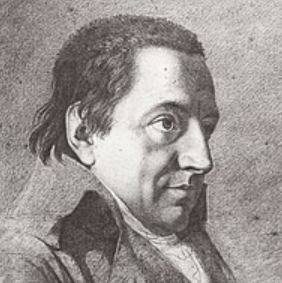
Instinct is blind;-a consciousness without insight. Freedom, as the opposite of Instinct, is thus seeing, and clearly conscious of the grounds of its activity.
▼
Source
source
p. 7

4 months 2 weeks ago
As to love our neighbour as we love ourselves is the great law of Christianity, so it is the great precept of nature to love ourselves only as we love our neighbour, or what comes to the same thing, as our neighbour is capable of loving us. Section I, Chap. V.

4 months 3 weeks ago
The first and most necessary topic in philosophy is that of the use of moral theorems, such as, "We ought not to lie;" the second is that of demonstrations, such as, "What is the origin of our obligation not to lie;" the third gives strength and articulation to the other two, such as, "What is the origin of this is a demonstration." For what is demonstration? What is consequence? What contradiction? What truth? What falsehood? The third topic, then, is necessary on the account of the second, and the second on the account of the first. But the most necessary, and that whereon we ought to rest, is the first. But we act just on the contrary. For we spend all our time on the third topic, and employ all our diligence about that, and entirely neglect the first.
▼
Source
source
(51).

2 months 3 weeks ago
We need to recognize the destructive role played by the media in fanning the flames of the "Black-Jewish Conflict." Cornel West, bell hooks, Richard Green, Barbara Christian, Henry Louis Gates, Marian Wright Edelman, Nell Painter, Albert Raby....Why are these names not as well known outside the African American community as the names of Louis Farrakhan or Leonard Jeffries? Are they, in their diversity and dynamism, less representative of the African American community?
▼
Source
source
Melanie Kaye/Kantrowitz "Jews, Class, Color, and the Cost of Whiteness" in The Issue is Power

5 months 1 week ago
Just you think first, and don't bother to speak afterward, either.
3 months 3 days ago
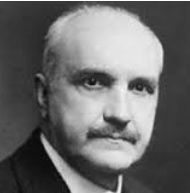
When Socrates and his two great disciples composed a system of rational ethics they were hardly proposing practical legislation for mankind...They were merely writing an eloquent epitaph for their country.

2 months 3 weeks ago
The collective is the object of all idolatry, this it is which chains us to the earth. In the case of avarice: gold is of the social order. In the case of ambition: power is of the social order. Science and art are full of the social element also. And love? Love is more or less of an exception: that is why we can go to God through love, not through avarice and ambition.
▼
Source
source
p. 121

3 months 6 days ago
Glory - once achieved, what is it worth?

3 months 1 week ago
Nor is there any embarrassment in the fact that we're ridiculous, isn't it true? For it's actually so, we are ridiculous, light-minded, with bad habits, we're bored, we don't know how to look, how to understand, we're all like that, all, you, and I, and they! Now, you're not offended when I tell you to your face that you're ridiculous? And if so, aren't you material? You know, in my opinion it's sometimes even good to be ridiculous, if not better: we can the sooner forgive each other, the sooner humble ourselves; we can't understand everything at once, we can't start right out with perfection! To achieve perfection, one must first begin by not understanding many things! And if we understand too quickly, we may not understand well. This I tell you, you, who have already been able to understand. .. and not understand ... so much. I'm not afraid for you now.
▼
Source
source
Part 4, Chapter ?

3 months 1 week ago
I write in a hurry, because the little one, who has been sleeping a long time, begins to call for me. Poor thing! when I am sad, I lament that all my affections grow on me, till they become too strong for my peace, though they all afford me snatches of exquisite enjoyment.
▼
Source
source
Letter to Gilbert Imlay
4 months 1 week ago
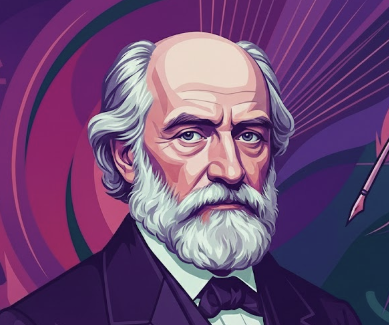
Consider the Koran... this wretched book was sufficient to start a world-religion, to satisfy the metaphysical need of countless millions for twelve hundred years, to become the basis of their morality and of a remarkable contempt for death, and also to inspire them to bloody wars and the most extensive conquests. In this book we find the saddest and poorest form of theism. Much may be lost in translation, but I have not been able to discover in it one single idea of value.
▼
Source
source
E. Payne, trans., Vol. II, Ch. XVII: On Man's Need for Metaphysics

2 months 3 weeks ago
Asceticism is the trifling of an enthusiast with his power, a puerile coquetting with his selfishness or his vanity, in the absence of any sufficiently great object to employ the first or overcome the last.
▼
Source
source
Letter (5 September 1857), quoted in The Life of Florence Nightingale (1913) by Edward Tyas Cook, p. 369
1 month 4 weeks ago
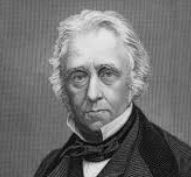
Many evils, no doubt, were produced by the civil war. They were the price of our liberty.
▼
Source
source
p. 39

4 months 1 week ago
And now, at half-past ten o'clock, I hear the cockerels crow in Hubbard's barns, and morning is already anticipated. It is the feathered, wakeful thought in us that anticipates the following day.
▼
Source
source
July 11, 1851
4 months 1 week ago
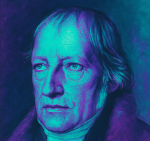
To be independent of public opinion is the first formal condition of achieving anything great or rational whether in life or in science. Great achievement is assured, however, of subsequent recognition and grateful acceptance by public opinion, which in due course will make it one of its own prejudices.
▼
Source
source
Sect. 318, as translated by T. M. Knox,, 1952
3 weeks ago
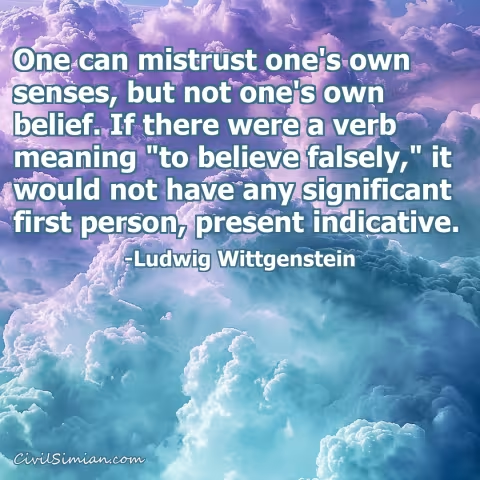
As the State formerly played a most important part in the revolutions that abolished the old economic systems, so it must again be the State that should abolish capitalism.
▼
Source
source
p. 170
4 months 2 weeks ago
In this consists the difference between the character of a miser and that of a person of exact economy and assiduity. The one is anxious about small matters for their own sake; the other attends to them only in consequence of the scheme of life which he has laid down to himself.
▼
Source
source
Chap. VI.
Just now
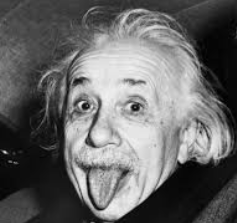
By a clock we understand anything characterized by a phenomenon passing periodically through identical phases so that we must assume, by the principle of sufficient reason, that all that happens in a given period is identical with all that happens in an arbitrary period.
3 months 1 week ago
I take as my example the three notorious words, Humanity, Popularity, and Liberality. When these words are used in speaking to a German who has learnt no language but his own they are to him nothing but a meaningless noise, which has no relationship of sound to remind him of anything he knows already and so takes him completely out of his circle of observation and beyond any observation possible to him. ... Further, if in speaking to the German, instead of the words Popularity [Popularitdt] and Liberality [Liberalitat], I should use the expressions, " striving for favour with the great mob," and " not having the mind of a slave," which is how they must be literally translated, he would, to begin with, not even obtain a clear and vivid sense-image such as was certainly obtained by a Roman of old.
▼
Source
source
The Chief Difference Between The Germans And The Other Peoples Of Teutonic Descent p. 64

4 months 2 weeks ago
The world thought well of my schoolmaster guardian, because he was neither a liar, nor a scamp, nor a gambler; but he was coarse, avaricious, and ignorant; he knew nothing beyond the confused lessons which he taught to his classes. He imagined that in forcing a youth to become a monk he would be offering a sacrifice acceptable to God. He used to boast of the many victims which he devoted annually to Dominic and Francis and Benedict.
▼
Source
source
As quoted in Life and Letters of Erasmus: Lectures Delivered at Oxford 1893-4 (1899) by James Anthony Froude
2 months 3 weeks ago
And above all, we must feel and act as if an endless continuation of our earthly life awaited us after death; and if it be that nothingness is the fate that awaits us we must not, in the words of Obermann, so act that it shall be a just fate.

1 month 2 weeks ago
The evidence of science and history is that humans are only ever partly and intermittently rational, but for modern humanists the solution is simple: human beings must in future be more reasonable. These enthusiasts for reason have not noticed that the idea that humans may one day be more rational requires a greater leap of faith than anything in religion. Since it requires a miraculous breach in the order of things, the idea that Jesus returned from the dead is not as contrary to reason as the notion that human beings will in future be different from how they have always been.
▼
Source
source
An Old Chaos: Humanism and Flying Saucers (p. 75)

2 months 1 week ago
How do we account for the current paranormal vogue in the popular media? Perhaps it has something to do with the millennium - in which case it's depressing to realise that the millennium is still three years away.
2 months 1 week ago
When Fortune is on our side, popular favor bears her company.
▼
Source
source
Maxim 275
1 week 3 days ago
'Natural History' ought to form a part of intellectual education, in order to correct certain prejudices which arise from cultivating the intellect by means of mathematics alone and in order to lead the student to see that the division of things into kinds, and the attribution and use of names, are processes susceptible of great precision.

3 months 3 days ago
I have said these things to you so that by means of me you may have peace. In the world you will have tribulation, but take courage! I have conquered the world.
▼
Source
source
16:33, NWT
CivilSimian.com created by AxiomaticPanic, CivilSimian, Kalokagathia