

5 months 3 days ago
The Superior Man has nothing to compete for. But if he must compete, he does it in an archery match, wherein he ascends to his position, bowing in deference. Descending, he drinks (or has [the winner] drink) the ritual cup. Note: Bowing is a courtesy for the host who invites him as well drinking a cup.

3 months 2 weeks ago
The zealous never fail to draw political inferences from religious tenets, by which they interest the magistrate in the dispute; and then to the heat of a religious fervour is added the fury of a party zeal. All intercourse is cut off between the parties. They lose all knowledge of each other, tho' countrymen and neighbours, and are therefore easily imposed upon with the most absurd stories concerning each other's opinions and practices. They judge of the hatred of the adverse side by their own. Then fear is added to their hatred; and preventive injuries arise from their fear. The remembrance of the past, the dread of the future, the present ill, will join together to urge them forward to the most violent courses.Such is the manner of proceeding of religious parties towards each other.
▼
Source
source
Volume II, p. 147
3 months 1 week ago
The ordinary logic has a great deal to say about genera and species, or in our nineteeth century dialect, about classes. Now a class is a set of objects comprising all that stand to one another in a special relation of similarity. But where ordinary logic talks of classes the logic of relatives talks of systems. A system is a set of objects comprising all that stands to one another in a group of connected relations. Induction according to ordinary logic rises from the contemplation of a sample of a class to that of a whole class; but according to the logic of relatives it rises from the comtemplation of a fragment of a system to the envisagement of the complete system.
▼
Source
source
Vol. IV, par. 5
3 weeks 3 days ago
Everyone has a religion, whether admitted or not, because it is impossible to be human without having some basic assumptions (or intuitions) about existence and the good life.
▼
Source
source
p. 123
3 months 2 weeks ago
Freedom and not servitude is the cure of anarchy; as religion, and not atheism, is the true remedy for superstition.
3 months 1 week ago
The world must be romanticized. In this way the originary meaning may be found again.
▼
Source
source
As quoted in The Experience of the Foreign : Culture and Translation in Romantic Germany (1992) by Antoine Berman Variant translation: Romanticize the world.

4 months 2 weeks ago
We are, like Nebuchadnezzar, dethroned, bereft of reason, and eating grass like an ox.
▼
Source
source
Prospects


2 months 3 weeks ago
A handful of soldiers is always better than a mouthful of arguments.
▼
Source
source
E 19

4 months 1 week ago
Music is an ocean, but the repertory is hardly even a lake; it is a pond.
▼
Source
source
Interview, Time magazine, December 1957
5 months 1 day ago
It would be better if they [rulers] compelled the Jews to work for their living, as they do in parts of Italy, than that, living without occupation, they can grow rich only by usury .
▼
Source
source
art. 2

4 months 3 weeks ago
All the opinions of the world agree in this, that pleasure is our end.
▼
Source
source
Ch. 20. Of the Force of Imagination, tr. Cotton, rev. W. Carew Hazlitt, 1877
4 months 2 weeks ago
Every man is a divinity in disguise, a god playing the fool. It seems as if heaven had sent its insane angels into our world as to an asylum. And here they will break out into their native music, and utter at intervals the words they have heard in heaven; then the mad fit returns, and they mope and wallow like dogs!
▼
Source
source
p. 165
2 months 1 week ago
[Asked "Do you still favour English independence?"] No, I don't think I've ever really favoured English independence. My view is that if the Scots want to be independent then we should aim for the same thing. Scottish independence, I don't think the Welsh want independence, the Northern Irish certainly don't. The Scottish desire for independence is, to some extent, a fabrication. They want to identify themselves as Scots but still to be part of a,[sic] to enjoy the subsidy they get from being part of the kingdom. I can see there are Scottish nationalists who envision something more than that, but if that becomes a real political force then yeah, we should try for independence too. As it is, as you know, the Scots have two votes: they can vote for their own parliament and vote to put their people into our parliament, who come to our parliament with no interest in Scotland but an interest in bullying us.

1 month 4 days ago
The true University of these days is a Collection of Books.

3 months 1 week ago
Nothing surpasses the pleasures of idleness: even if the end of the world were to come, I would not leave my bed at an ungodly hour.
2 months 4 weeks ago
We cannot think any true thought unless we want the true. Thinking is itself an aspect of practice.
▼
Source
source
p. 45
3 months 1 week ago
No one can enjoy freedom without trembling.

2 months 1 week ago
Literate man, civilized man, tends to restrict and to separate functions, whereas tribal man has freely extended the form of his body to include the universe.
▼
Source
source
(p. 117)
1 month 4 days ago
Literature, the strange entity so called,-that indeed is here. If Literature continue to be the haven of expatriated spiritualisms, and have its Johnsons, Goethes and true Archbishops of the World, to show for itself as heretofore, there may be hope in Literature. If Literature dwindle, as is probable, into mere merry-andrewism, windy twaddle, and feats of spiritual legerdemain, analogous to rope-dancing, opera-dancing, and street-fiddling with a hat carried round for halfpence, or for guineas, there will be no hope in Literature.
3 months 2 weeks ago
To live classically and to realize antiquity practically within oneself is the summit and goal of philology.
▼
Source
source
Philosophical Fragments, P. Firchow, trans. (1991) § 147
1 month 3 weeks ago
So dazzling was the spread of constellations that it had the impact of a vision, of some hidden insight. I drove home saying to myself: The dead, too, are like this, blazing within us - invisibly.
▼
Source
source
As quoted in No More Words : A Journal of My Mother, Anne Morrow Lindbergh (2001) by Reeve Lindbergh, p. 41
2 months 2 weeks ago
If the immutable character of sex is contested, perhaps this construct called 'sex' is as culturally constructed as gender; indeed, perhaps it was always already gender, with the consequence that the distinction between sex and gender turns out to be no distinction at all.
▼
Source
source
Gender Trouble: Feminism and the Subversion of Identity
3 weeks 2 days ago
The visible world has, as I have said, subsisted around him from all eternity: and the Light also which surrounds the world has also its place from all eternity, not intermittently, nor in different degrees at different times, but constantly and in an equable manner. But whosoever will attempt to estimate, as far as thought goes, this external Nature, by the measure of Time, he will very easily discover respecting the Sun, Sovereign of all things, of how many blessings he is, from all eternity, the author to the world.
3 months 2 weeks ago
Justice is the first virtue of those who command, and stops the complaints of those who obey.
▼
Source
source
As quoted in The Golden Treasury of Thought : A Gathering of Quotations from the Best Ancient and Modern Authors (1873) by Theodore Taylor, p. 227
1 month 4 days ago
To reconcile Despotism with Freedom:-well, is that such a mystery? Do you not already know the way? It is to make your Despotism just. Rigorous as Destiny; but just too, as Destiny and its Laws. The Laws of God: all men obey these, and have no 'Freedom' at all but in obeying them. The way is already known, part of the way;-and courage and some qualities are needed for walking on it!
5 months 2 weeks ago
But as more arts were invented, and some were directed to the necessities of life, others to recreation, the inventors of the latter were naturally always regarded as wiser than the inventors of the former, because their branches of knowledge did not aim at utility. ... This is why the mathematical arts were founded in Egypt; for there the priestly caste was allowed to be at leisure.
1 month 3 days ago
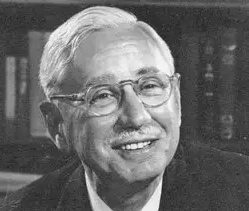
It is true that even across the Himalayan barrier India has sent to the west, such gifts as grammar and logic, philosophy and fables, hypnotism and chess, and above all numerals and the decimal system.
4 months 2 weeks ago
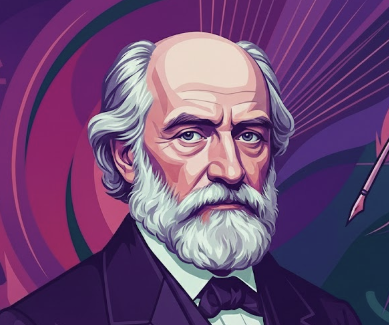
Every true thinker for himself is so far like a monarch; he is absolute, and recognises nobody above him. His judgments, like the decrees of a monarch, spring from his own sovereign power and proceed directly from himself. He takes as little notice of authority as a monarch does of a command; nothing is valid unless he has himself authorised it. On the other hand, those of vulgar minds, who are swayed by all kinds of current opinions, authorities, and prejudices, are like the people which in silence obey the law and commands.
▼
Source
source
"Thinking for Oneself," H. Dirks, trans.
3 months 6 days ago
They [the wise spirits of antiquity in the first circle of Dante's Inferno] are condemned, Dante tells us, to no other penalty than to live in desire without hope, a fate appropriate to noble souls with a clear vision of life.
▼
Source
source
Obiter Scripta
2 months 1 week ago
Dialectic functions by converting everything it touches into figure but metaphor is a means of perceiving one thing in terms of another.
▼
Source
source
(p. 298)
4 months 2 weeks ago
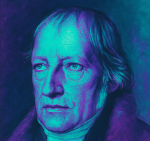
The destiny of the spiritual World, and, - since this is the substantial World, while the physical remains subordinate to it, or, in the language of speculation, has no truth as against the spiritual, - the final cause of the World at large, we allege to be the consciousness of its own freedom on the part of Spirit, and ipso facto, the reality of that freedom.

3 months 2 weeks ago
General ideas are no proof of the strength, but rather of the insufficiency of the human intellect.
▼
Source
source
Book One, Chapter III.
1 week 3 days ago
Search men's governing principles, and consider the wise, what they shun and what they cleave to.
▼
Source
source
IV, 38

4 months 1 week ago
The process of being brought up, however well it is done, cannot fail to offend.

3 months 6 days ago
Foxes have their dens and birds have their nests, but human beings have no place to lay down and rest.
5 months 2 weeks ago
Since the science of nature is conversant with magnitudes, motion, and time, each of which must necessarily be either infinite or finite...[we] should speculate the infinite, and consider whether it is or not; and if it is what it is. ...[A]ll those who appear to have touched on a philosophy of this kind... consider it as a certain principle of beings. Some, indeed, as the Pythagoreans and Plato, consider it, per se, not as being an accident to any thing else, but as having an essential subsistence... the Pythagoreans... consider the infinite as subsisting in sensibles; for they do not make number to be separate; and they assert that what is beyond the heavens is infinite; but Plato says that beyond the heavens there is not any body, nor ideas, because these are no where: he affirms, however, that the infinite is both in sensibles, and in ideas. ...Plato establishes two infinities, viz. the great and the small.

4 months 1 week ago
Truth lives, in fact, for the most part on a credit system. Our thoughts and beliefs 'pass,' so long as nothing challenges them, just as bank-notes pass so long as nobody refuses them.
▼
Source
source
Lecture VI, Pragmatism's Conception of Truth
4 months 2 weeks ago
We do not count a man's years until he has nothing else to count.
▼
Source
source
Old Age
4 months 4 weeks ago
If you believe what you like in the gospels, and reject what you don't like, it is not the gospel you believe, but yourself.
▼
Source
source
Earliest attribution found in Who Said That?: More than 2,500 Usable Quotes and Illustrations (1995) by George Sweeting. Online sources always attribute the quote to Augustine, but never specify in which of his works it is to be found.
5 months 1 week ago
"My field," said Goethe, "is time." That is indeed the absurd speech. What, in fact, is the Absurd Man? He who, without negating it, does nothing for the eternal. Not that nostalgia is foreign to him. But he prefers his courage and his reasoning. The first teaches him to live without appeal and to get along with what he has; the second informs him of his limits. Assured of his temporally limited freedom, of his revolt devoid of future, and of his mortal consciousness, he lives out his adventure within the span of his lifetime.

4 months 1 week ago
At the end of the Middle Ages, leprosy disappeared from the Western world. In the margins of the community, at the gates of cities, there stretched wastelands which sickness had ceased to haunt but had left sterile and long uninhabitable. For centuries, these reaches would belong to the non-human. From the fourteenth to the seventeenth century, they would wait, soliciting with strange incantations a new incarnation of disease, another grimace of terror, renewed rites of purification and exclusion.
▼
Source
source
Part One: 1. Stultifera Navis

4 months 2 weeks ago
In the United States of North America, every independent movement of the workers was paralysed so long as slavery disfigured a part of the Republic. Labour cannot emancipate itself in the white skin where in the black it is branded.
▼
Source
source
Vol. I, Ch. 10, Section 7, pg. 329.
3 weeks 3 days ago
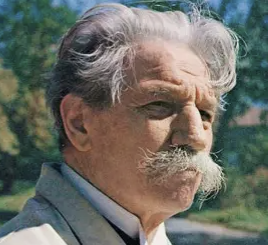
The only originality I claim is that for me this truth goes hand in hand with the intellectual certainty that the human spirit is capable of creating in our time a new mentality, an ethical mentality. Inspired by this certainty, I too proclaim this truth in the hope that my testimony may help to prevent its rejection as an admirable sentiment but a practical impossibility. Many a truth has lain unnoticed for a long time, ignored simply because no one perceived its potential for becoming reality.

2 months 4 weeks ago
We must wish either for that which actually exists or for that which cannot in any way exist - or, still better, for both. That which is and that which cannot be are both outside the realm of becoming.
▼
Source
source
p. 154
3 months 1 week ago
There was a time when time did not yet exist. ... The rejection of birth is nothing but the nostalgia for this time before time.
5 months 1 week ago
Such was the vast power which the god settled in the lost island of Atlantis; and this he afterwards directed against our land for the following reasons, as tradition tells: For many generations, as long as the divine nature lasted in them, they were obedient to the laws, and well-affectioned towards the god, whose seed they were; for they possessed true and in every way great spirits, uniting gentleness with wisdom in the various chances of life, and in their intercourse with one another.
CivilSimian.com created by AxiomaticPanic, CivilSimian, Kalokagathia