


8 months 1 week ago
What the rest of us see only under the influence of mescalin, the artist is congenitally equipped to see all the time. His perception is not limited to what is biologically or socially useful.
▼
Source
source
Page 168

8 months 1 week ago
For what are they all in their high conceit, When man in the bush with God may meet?
▼
Source
source
Good-bye, st. 4

7 months 2 days ago
The mass-man sees in the State an anonymous power, and feeling himself, like it, anonymous, he believes that the State is something of his own. Suppose that in the public life of a country some difficulty, conflict, or problem presents itself, the mass-man will tend to demand that the State intervene immediately and undertake a solution directly with its immense and unassailable resources. This is the gravest danger that to-day threatens civilisation: State intervention; the absorption of all spontaneous social effort by the State.
▼
Source
source
Chapter XIII: The Greatest Danger, The State

5 months 2 days ago
The Philosopher of this age is not a Socrates, a Plato, a Hooker, or Taylor, who inculcates on men the necessity and infinite worth of moral goodness, the great truth that our happiness depends on the mind which is within us, and not on the circumstances which are without us; but a Smith, a De Lolme, a Bentham, who chiefly inculcates the reverse of this,-that our happiness depends entirely on external circumstances; nay, that the strength and dignity of the mind within us is itself the creature and consequence of these. Were the laws, the government, in good order, all were well with us; the rest would care for itself! Dissentients from this opinion, expressed or implied, are now rarely to be met with; widely and angrily as men differ in its application, the principle is admitted by all.

6 months 4 weeks ago
In the root of the word "faith" itself... there is implicit the idea of confidence, of surrender to the will of another, to a person. Confidence is placed only in persons. We trust in Providence, which we perceive as something personal and conscious, not in Fate, which is something impersonal. And thus it is in the person who tells us the truth, in the person that gives us hope, that we believe, not directly or immediately in truth itself or in hope itself.

8 months 1 week ago
I... believe in the rationalist tradition of a commonwealth of learning, and in the urgent need to preserve this tradition.
4 months 3 weeks ago
One sees that all explicit opposites are implicit allies-correlative in the sense that they "gowith" each other and cannot exist apart. This, rather than any miasmic absorption of differences into acontinuum of ultimate goo, is the metaphysical unity underlying the world. For this unity is not mere one-ness as opposed to multiplicity, since these two terms are themselves polar. The unity, or inseparability, of one and many is therefore referred to in Vedanta philosophy as "nonduality" (advaita) to distinguish it from simple uniformity.
▼
Source
source
p. 107-108

9 months 1 week ago
For well-being and health, again, the homestead should be airy in summer, and sunny in winter. A homestead possessing these qualities would be longer than it is deep; and its main front would face the south.

7 months 4 days ago
The Kingdom is like a wise fisherman who cast his net into the sea and drew it up from the sea full of small fish. Among them the wise fisherman found a fine large fish. He threw all the small fish back into the sea and chose the large fish without difficulty. Whoever has ears to hear, let him hear.
4 months 3 weeks ago
I was convinced - and I am so still - that the fundamental principles of Christianity have to be proved true by reasoning, and by no other method. Reason, I said to myself, is given us that we may bring everything within the range of its action, even the most exalted ideas of religion. And this certainty filled me with joy.

7 months 4 days ago
Loren von Stein thus turned the dialectic into an ensemble of objective laws calling for social reform as the adequate solution of all contradictions and neutralized the critical elements of the dialectic.
▼
Source
source
P. 388


5 months 2 weeks ago
Might there not be a connection between the attempt to eradicate religion and the loss of freedom? It is unlikely that Mao, who launched his assault on the people and culture of Tibet with the slogan "Religion is poison," would have agreed that his atheist world-view had no bearing on his policies.
8 months 2 weeks ago
The community is a fictitious body, composed of the individual persons who are considered as constituting as it were its members. The interest of the community then is what? The sum of the interests of the several members who compose it.
▼
Source
source
Ch. 1: Of the Principle of Utility

7 months 1 week ago
...the French business is no light or trivial thing, or such as has commonly occurd in the course of political Events. At present the whole political State of Europe hinges upon it. On the Continent there is little doubt; every thing will take is future shape and colour from the good or ill success of the Duke of Brunswick. In my opinion, it is the most important crisis that ever existed in the World. ... My poor opinion is, that these principles...cannot possibly be realized in practice in France, without an absolute certainty and that at no remote period, of overturning the whole fabrick of the British Constitution.
▼
Source
source
Letter to the Foreign Secretary, Lord Grenville (19 September 1792), quoted in P. J. Marshall and John A. Woods (eds.), The Correspondence of Edmund Burke, Volume VII: January 1792-August 1794 (1968), pp. 218-219
7 months 1 week ago
The anarchists put the thing upside down. They declare that the proletarian revolution must begin by doing away with the political organisation of the state. But after its victory the sole organisation which the proletariat finds already in existence is precisely the state. This state may require very considerable alterations before it can fulfil its new functions. But to destroy it at such a moment would be to destroy the only organism by means of which the victorious proletariat can assert its newly-conquered power, hold down its capitalist adversaries and carry out that economic revolution of society without which the whole victory must end in a new defeat and in a mass slaughter of the workers similar to those after the Paris Commune.
▼
Source
source
Letter to Philipp Van Patten
8 months 1 week ago
Characters and talents are complemental and suppletory. The world stands by balanced antagonisms. The more the peculiarities are pressed the better the result. The air would rot without lightning; and without the violence of direction that men have, without bigots, without men of the fixed idea, no excitement, no efficiency. The novelist should not make any character act absurdly, but only absurdly as seen by others. For it is so in life. Nonsense will not keep its unreason if you come into the humorist's point of view, but unhappily we find it is fast becoming sense, and we must flee again into the distance if we would laugh.
▼
Source
source
"The Natural History of Intellect", p. 45
8 months 1 week ago
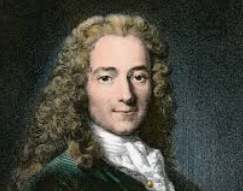
Fools admire everything in an author of reputation.

8 months 1 week ago
The problems are dissolved in the actual sense of the word - like a lump of sugar in water.
▼
Source
source
Ch. 9 : Philosophy, p. 183
8 months 1 day ago
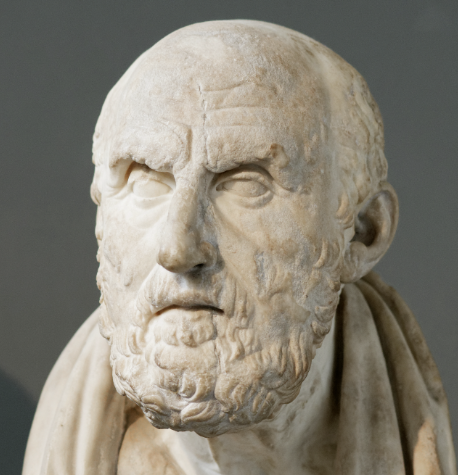
The universe itself is God and the universal outpouring of its soul.
▼
Source
source
As quoted in De Natura Deorum by Cicero, i. 15.

4 months 1 week ago
..If you are troubled by external circumstances, it is not the circumstances that trouble you, but your own perception of them - and they are in your power to change at any time.
8 months 2 weeks ago
The origin of our passions, the root and spring of all the rest, the only one which is born with man, which never leaves him as long as he lives, is self-love; this passion is primitive, instinctive, it precedes all the rest, which are in a sense only modifications of it. In this sense, if you like, they are all natural. But most of these modifications are the result of external influences, without which they would never occur, and such modifications, far from being advantageous to us, are harmful. They change the original purpose and work against its end; then it is that man finds himself outside nature and at strife with himself.

8 months 1 week ago
He that knows anything, knows this, in the first place, that he need not seek long for instances of his ignorance.
▼
Source
source
Book IV, Ch. 3, sec. 22
6 months 2 weeks ago
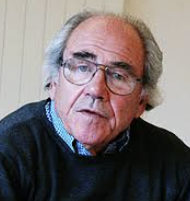
And so one can imagine that in amorous seduction the other is the locus of your secret - the other unknowingly holds that which you will never have the chance to know.
▼
Source
source
(p. 65)

7 months 2 weeks ago
From fanaticism to barbarism is only one step.
▼
Source
source
Essai sur le Mérite de la Vertu (1745)
8 months 1 week ago
Philosophers are often like little children, who first scribble random lines on a piece of paper with their pencils, and now ask an adult "What is that?"
▼
Source
source
Ch. 9 : Philosophy, p. 193
9 months 1 day ago
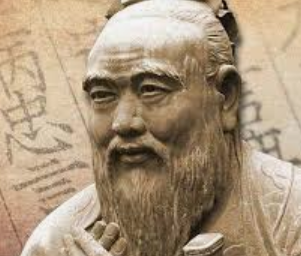
The Master said, "Hard is it to deal with him, who will stuff himself with food the whole day, without applying his mind to anything good! Are there not gamesters and chess players? To be one of these would still be better than doing nothing at all.
4 months 2 weeks ago
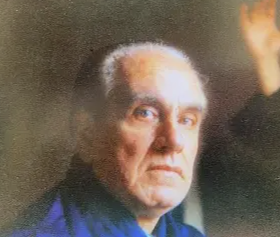
We cannot ask ourselves whether 'woman' is superior or inferior to 'man' any more than we can ask ourselves whether water is superior or inferior to fire. There can be no doubt that a woman who is perfectly woman is superior to a man who is imperfectly man, just as a farmer who is faithful to his land and performs his work perfectly is superior to a king who cannot do his own work.
▼
Source
source
Eros and the Mysteries of Love: The Metaphysics of Sex
6 months 2 weeks ago
Nothing is wholly obvious without becoming enigmatic. Reality itself is too obvious to be true.
5 months 5 days ago
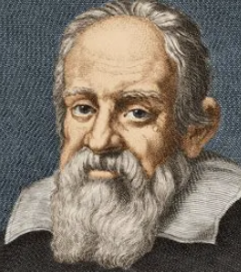
Names and attributes must be accommodated to the essence of things, and not the essence to the names, since things come first and names afterwards.
▼
Source
source
As quoted in Discoveries and Opinions of Galileo (1957) by Stillman Drake, p. 92

8 months 1 week ago
We may define "faith" as a firm belief in something for which there is no evidence. Where there is evidence, no one speaks of "faith". We do not speak of faith that two and two are four or that the earth is round. We only speak of faith when we wish to substitute emotion for evidence. The substitution of emotion for evidence is apt to lead to strife, since different groups substitute different emotions.
▼
Source
source
p. 215

8 months 2 weeks ago
The mad mob does not ask how it could be better, only that it be different. And when it then becomes worse, it must change again. Thus they get bees for flies, and at last hornets for bees. Whether Soldiers Can Also Be in a State of Grace
▼
Source
source
1526
7 months 3 days ago
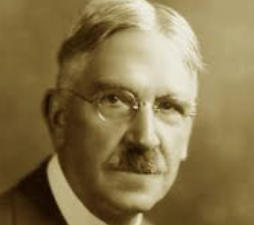
Equally there is no rhythm when variations are not placed. There is a wealth of suggestions in the phrase "takes place". The change not only comes but it belongs; it had its definite place in a larger whole.
▼
Source
source
p. 160
7 months 1 week ago
A great revolution is on the point of being accomplished. It is a revolution not in human affairs, but in man himself.
▼
Source
source
p. 2
7 months 4 days ago
Foxes have their dens and birds have their nests, but human beings have no place to lay down and rest.
6 months 3 weeks ago
An absolute power would be one that never becomes apparent, never pointed to itself, one that rather blended completely into what goes without saying. Power shines in its own absence.

8 months 1 week ago
I conceive that the description so often given of a Benthamite, as a mere reasoning machine, though extremely inapplicable to most of those who have been designated by that title, was during two or three years of my life not altogether untrue of me. ...There is nothing very extraordinary in this fact: no youth of the age I then was, can be expected to be more than one thing, and this was the thing I happened to be. Ambition and desire of distinction, I had in abundance; and zeal for what I thought the good of mankind was my strongest sentiment, mixing with and colouring all others. But my zeal was as yet little else, at that period of my life, than zeal for speculative opinions. It had not its root in genuine benevolence, or sympathy with mankind; though these qualities held their due place in my ethical standard. Nor was it connected with any high enthusiasm for ideal nobleness.
▼
Source
source
(pp. 109-110)
8 months 1 week ago
He needs no library, for he has not done thinking; no church, for he is himself a prophet; no statute book, for he hath the Lawgiver; no money, for he is value itself; no road, for he is at home where he is.
▼
Source
source
December 26, 1839

5 months 6 days ago
We need a good alternative to Trumpism. There is a majority in favor of that, but... the other party is really not providing that alternative in a very clear way.
▼
Source
source
46:46:00
9 months 1 week ago
The Bible and science agree in being unable to say anything certainly about what happened before the beginning. There is this difference. The Bible will never be able to tell us. It has reached its final form, and it simply doesn't say. Science, on the other hand, is still developing, and the time may come when it can answer questions that, at present, it cannot.
5 months 3 days ago
The virtues are not poured into us, they are natural. Seek, and you will find them: neglect, and you will lose them.
▼
Source
source
Uses and Sanctions, no. 22
6 months 3 weeks ago
The successful revolutionary is a statesman, the unsuccessful one a criminal.
▼
Source
source
Ch. 7
4 months 1 week ago
It is hardly in human nature that a man should quite accurately gauge the limits of his own insight; but it is the duty of those who profit by his work to consider carefully where he may have been carried beyond it. If we must needs embalm his possible errors along with his solid achievements, and use his authority as an excuse for believing what he cannot have known, we make of his goodness an occasion to sin.
7 months 1 week ago
I would rather sleep in the southern corner of a little country churchyard, than in the tombs of the Capulets.
▼
Source
source
Letter to Matthew Smith
4 months 3 weeks ago
Adeimantus, in what amounts to an accusation of Socrates, asserts that the philosophers appear to be either useless or vicious. Plato, as I have suggested, teaches that ultimately this is an appearance that cannot be reversed, and this insures the philosophers' permanent marginality. They appear as useless because they are. They are neither artisans, nor statesmen, nor rhetoricians. They are idlers who contribute nothing to security or posterity. Their peculiar contemplative pleasures are not accessible to the majority of mankind, and they do not provide for the popular pleasures as do the poets.
▼
Source
source
Commerce and Culture, p. 285.

6 months 3 weeks ago
The first thing that we know about ourselves is our imperfection.
CivilSimian.com created by AxiomaticPanic, CivilSimian, Kalokagathia