


4 months 2 weeks ago
Not to be a proud and haughty person, you have to follow the old proverb and "know thyself." That is to say, you must regard your special talents, whatever beauty or fame you have, as gifts from God, and not as things you earned for yourself. Whatever is low and mean is not God's doing, however. Here you can only blame yourself. Remember the squalor of your birth and how naked and poor you were when you crawled into the light of day like a little animal.
▼
Source
source
p.154

1 month 1 day ago
Friend!-Will the ballot-box raise the Noblest to the chief place; does any sane man deliberately believe such a thing?

3 weeks 4 days ago
Things that were hard to bear are sweet to remember.
▼
Source
source
lines 656-657;
3 weeks 4 days ago
It is indeed foolish to be unhappy now because you may be unhappy at some future time.

3 months 1 week ago
For socialism is not merely the labour question, it is before all things the atheistic question, the question of the form taken by atheism to-day, the question of the tower of Babel built without God, not to mount to heaven from earth but to set up heaven on earth.

3 months 6 days ago
It has been a long time since philosophers have read men's souls. It is not their task, we are told. Perhaps. But we must not be surprised if they no longer matter much to us.

4 months 1 week ago
In how many churches, by how many prophets, tell me, is man made sensible that he is an infinite Soul; that the earth and heavens are passing into his mind; that he is drinking forever the soul of God?
▼
Source
source
p. 18
3 weeks 4 days ago
No one ever saw Cato change, no matter how often the state changed: he kept himself the same in all circumstances-in the praetorship, in defeat, under accusation, in his province, on the platform, in the army, in death.

5 months ago
Cornered vessel without corners, strange cornered vessel, strange cornered vessel.

2 months 3 weeks ago
I have always observed that to succeed in the world one should appear like a fool but be wise.

4 months 1 week ago
We are not so absurd as to propose that the teacher should not set forth his own opinions as the true ones and exert his utmost powers to exhibit their truth in the strongest light. To abstain from this would be to nourish the worst intellectual habit of all, that of not finding, and not looking for, certainty in any teacher. But the teacher himself should not be held to any creed; nor should the question be whether his own opinions are the true ones, but whether he is well instructed in those of other people, and, in enforcing his own, states the arguments for all conflicting opinions fairly.
▼
Source
source
"Civilization," London and Westminster Review, April 1836
2 months 1 week ago
What froze me was the fact that I had absolutely no reason to move in any direction. What had made me move through so many dead and pointless years was curiosity. Now even that flickered out.
Just now
Everything should be made simple as possible but no simpler.

4 months 6 days ago
What is troubling us is the tendency to believe that the mind is like a little man within.
▼
Source
source
Remarks to John Wisdom, quoted in Zen and the Work of WIttgenstein by Paul Weinpaul in The Chicago Review Vol. 12, (1958), p. 70
3 months 2 days ago
The notion that one can discover large patterns or regularities in the procession of historical events is naturally attractive to those who are impressed by the success of the natural sciences in classifying, correlating, and above all predicting.
4 months 1 week ago
He blamed as severely what he thought a bad action, when the motive was a feeling of duty, as if the agents had been consciously evil doers. He would not have accepted as a plea in mitigation for inquisitors, that they sincerely believed burning heretics to be an obligation of conscience. But though he did not allow honesty of purpose to soften his disapprobation of actions, it had its full effect on his estimation of characters. No one prized conscientiousness and rectitude of intention more highly, or was more incapable of valuing any person in whom he did not feel assurance of it.
▼
Source
source
(pp. 49-50)

4 months 1 week ago
If you can speak what you will never hear, if you can write what you will never read, you have done rare things.

2 months 3 weeks ago
God functions like a stabilizer of time.

1 week ago
Remember that neither the future nor the past pains thee, but only the present. But this is reduced to a very little, if thou only circumscribest it, and chidest thy mind, if it is unable to hold out against even this.
▼
Source
source
VIII, 36
4 months 1 week ago
The only purpose for which power can be rightfully exercised over any member of a civilized community, against his will, is to prevent harm to others. His own good, either physical or moral, is not a sufficient warrant.
▼
Source
source
Ch. 1: Introductory

3 months 1 week ago
Neither the few nor the many have a right to act merely by their will, in any matter connected with duty, trust, engagement, or obligation.
▼
Source
source
p. 440

3 months 3 days ago
Go into the village over against you, and straightway ye shall find an ass tied, and a colt with her: loose them, and bring them unto me. And if any man say ought unto you, ye shall say, The Lord hath need of them; and straightway he will send them. All this was done, that it might be fulfilled which was spoken by the prophet, saying, Tell ye the daughter of Sion, Behold, thy King cometh unto thee, meek, and sitting upon an ass, and a colt the foal of an ass.
▼
Source
source
21:2-5 (KJV)

4 months 3 weeks ago
So potent was Religion in persuading to do wrong.
▼
Source
source
Book I, line 101 (tr. Alicia Stallings) H. A. J. Munro's translation: So great the evils to which religion could prompt! W. H. D. Rouse's translation: So potent was Superstition in persuading to evil deeds.

1 week 3 days ago
The doctrines of Jesus are simple, and tend all to the happiness of man.

4 months 1 week ago
All who are not lunatics are agreed about certain things. That it is better to be alive than dead, better to be adequately fed than starved, better to be free than a slave. Many people desire those things only for themselves and their friends; they are quite content that their enemies should suffer. These people can only be refuted by science: Humankind has become so much one family that we cannot ensure our own prosperity except by ensuring that of everyone else. If you wish to be happy yourself, you must resign yourself to seeing others also happy.
▼
Source
source
"The Science to Save Us from Science," The New York Times Magazine, 3/19/1950
3 months 1 day ago
If the result of a war is to change nothing, but only to destroy, with the mere result that a group of human beings who do not differ notably from the conquered acquires preponderant advantages for the future, there is lacking the affective strength of an existence that has inspired faith, of an existence whose destiny would have been decided by the war.

2 months 3 weeks ago
We never know, believe me, when we have succeeded best.
▼
Source
source
Essays and Soliloquies

4 months 1 week ago
An army of principles will penetrate where an army of soldiers cannot; it will succeed where diplomatic management would fall: it is neither the Rhine, the Channel, nor the ocean that can arrest its progress: it will march on the horizon of the world, and it will conquer.
▼
Source
source
Means by Which the Fund Is to Be Created
1 month 1 day ago
Let us honor all honest human power of contrivance in its degree. The beaver intellect, so long as it steadfastly refuses to be vulpine, and answers the tempter pointing out short routes to it with an honest "No, no," is truly respectable to me; and many a highflying speaker and singer whom I have known, has appeared to me much less of a developed man than certain of my mill-owning, agricultural, commercial, mechanical, or otherwise industrial friends, who have held their peace all their days and gone on in the silent state. If a man can keep his intellect silent, and make it even into honest beaverism, several very manful moralities, in danger of wreck on other courses, may comport well with that, and give it a genuine and partly human character; and I will tell him, in these days he may do far worse with himself and his intellect than change it into beaverism, and make honest money with it.
2 months 6 days ago
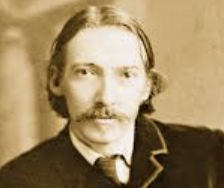
For my part, I travel not to go anywhere, but to go. I travel for travel's sake. The great affair is to move.
▼
Source
source
Travels with a Donkey in the Cévennes (1878).
3 months 1 week ago
I gave up caring about anything, and all the problems disappeared. And it was after that that I found out the truth. I learnt the truth last November - on the third of November, to be precise - and I remember every instant since.
1 month 1 week ago
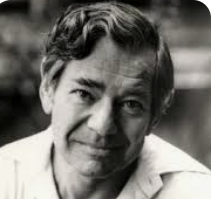
Of course, not everything old is beautiful, any more than everything black, or everything white, or everything young. But the notion that old means ugly is every bit as harmful as the prejudice that black is ugly. In one way it is even more pernicious. The notion that only what is new and young is beautiful poisons our relationship to the past and to our own future. It keeps us from understanding our roots and the greatest works of our culture and other cultures. It also makes us dread what lies ahead of us and leads many to shirk reality.
▼
Source
source
Time is an Artist (1978) Epilogue : Old is Beautiful
Just now
In the temple of science are many mansions, and various indeed are they that dwell therein and the motives that have led them thither. Many take to science out of a joyful sense of superior intellectual power; science is their own special sport to which they look for vivid experience and the satisfaction of ambition; many others are to be found in the temple who have offered the products of their brains on this altar for purely utilitarian purposes. Were an angel of the Lord to come and drive all the people belonging to these two categories out of the temple, the assemblage would be seriously depleted, but there would still be some men, of both present and past times, left inside. Our Planck is one of them, and that is why we love him. I am quite aware that we have just now lightheartedly expelled in imagination many excellent men who are largely, perhaps chiefly, responsible for the buildings of the temple of science; and in many cases, our angel would find it a pretty ticklish job to decide. But of one thing I feel sure: if the types we have just expelled were the only types there were, the temple would never have come to be, any more than a forest can grow which consists of nothing but creepers. For these people any sphere of human activity will do if it comes to a point; whether they become engineers, officers, tradesmen, or scientists depends on circumstances.Now let us have another look at those who have found favor with the angel. Most of them are somewhat odd, uncommunicative, solitary fellows, really less like each other, in spite of these common characteristics, than the hosts of the rejected. What has brought them to the temple? That is a difficult question and no single answer will cover it.
1 week 3 days ago
It is a palpable falsehood to say we can have specie for our paper whenever demanded. Instead, then, of yielding to the cries of scarcity of medium set up by speculators, projectors and commercial gamblers, no endeavors should be spared to begin the work of reducing it by such gradual means as may give time to private fortunes to preserve their poise, and settle down with the subsiding medium; and that, for this purpose, the States should be urged to concede to the General Government, with a saving of chartered rights, the exclusive power of establishing banks of discount for paper.
▼
Source
source
6 November 1813, ME 13:431: The Writings of Thomas Jefferson "Memorial Edition" (20 Vols., 1903-04) edited by Andrew A. Lipscomb and Albert Ellery Bergh, Vol. 13, p. 431
2 months 2 weeks ago
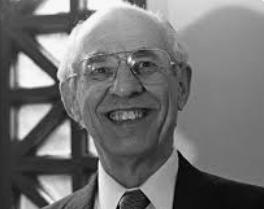
In summary, then, the set theoretic 'needs' of physics are surprisingly similar to the set theoretic needs of pure logic. Both disciplines need some set theory to function at all. Both disciplines can 'live' - but live badly - on the meager diet of only predicative sets. Both can live extremely happily on the rich diet of impredicative sets. Insofar, then, as the indispensability of quantification over sets is any argument for their existence - and we will discuss why it is in the next section - we may say that it is a strong argument for the existence of at least predicative sets, and a pretty strong, but not as strong, argument for the existence of impredicative sets.
▼
Source
source
Philosophy of Logic
3 months 6 days ago
I believe in the salvation of humanity, in the future of cyanide . . .
4 months 1 week ago
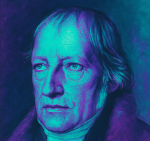
The possession of self-conscious reason, which belongs to us of the present world, did not arise suddenly, nor did it grow only from the soil of the present. This possession must be regarded as previously present, as an inheritance, and as the result of labour - the labour of all past generations of men.
▼
Source
source
Introduction p. 2 Ibid

1 month 5 days ago
While Trump is not going to be president, Trumpism is going to survive. ...The Democrats need to look very very carefully at those election results because ...the Republicans did well not necessarily because people love what they represent, but because they don't like what the Democrats represent... Unless they sort out what that is, they are going to continue to lose elections.
▼
Source
source
28:52:00



3 months 1 week ago
In the present state of society it appears necessary to go back to first principles in search of the most simple truths, and to dispute with some prevailing prejudice every inch of ground. To clear my way, I must be allowed to ask some plain questions, and the answers will probably appear as unequivocal as the axioms on which reasoning is built; though, when entangled with various motives of action, they are formally contradicted either by the words or conduct of men.
▼
Source
source
Ch. 1, opening
1 week 3 days ago
Whether we and our politicians know it or not, Nature is party to all our deals and decisions, and she has more votes, a longer memory, and a sterner sense of justice than we do.
▼
Source
source
Part of an endorsement statement for The Dying of the Trees (1997) by Charles E. Little
2 weeks 4 days ago
A good traveler is one who does not know where he is going to, and a perfect traveler does not know where he came from.
▼
Source
source
p. 332
4 months 1 week ago
I call upon you, young men, to obey your heart, and be the nobility of this land. In every age of the world, there has been a leading nation, one of a more generous sentiment, whose eminent citizens were willing to stand for the interests of general justice and humanity, at the risk of being called, by the men of the moment, chimerical and fantastic. Which should be that nation but these States? Which should lead that movement, if not New England? Who should lead the leaders, but the Young American?
3 months 4 weeks ago
When he was wounded with an arrow in the ankle, and many ran to him that were wont to call him a god, he said smiling, "That is blood, as you see, and not, as Homer saith, 'such humour as distils from blessed gods.'"
▼
Source
source
43 Alexander
5 months ago
Virtue (or the man of virtue) is not left to stand alone. He who practices it will have neighbors.
3 months 3 days ago
He also said to them, "You completely invalidate God's command in order to maintain your tradition! For Moses said: Honor your father and your mother; and, Whoever speaks evil of father or mother must be put to death.
▼
Source
source
7:9-10
2 months 1 week ago
He who is bent on doing evil can never want occasion.
▼
Source
source
Maxim 459
3 months 1 day ago
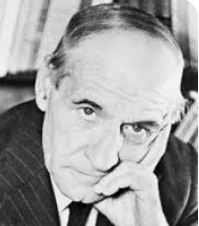
[I]t would be a piece of ingenuousness to accuse the man of to-day of his lack of moral code. The accusation would leave him cold, or rather, would flatter him. Immoralism has become a commonplace, and anybody and everybody boasts of practising it.
▼
Source
source
Chapter XV: We Arrive At The Real Question
Just now
The meaning of relativity has been widely misunderstood. Philosophers play with the word, like a child with a doll. Relativity, as I see it, merely denotes that certain physical and mechanical facts, which have been regarded as positive and permanent, are relative with regard to certain other facts in the sphere of physics and mechanics. It does not mean that everything in life is relative and that we have the right to turn the whole world mischievously topsy-turvy.
4 months 1 week ago
No man with a genius for legislation has appeared in America. They are rare in the history of the world. There are orators, politicians, and eloquent men, by the thousand; but the speaker has not yet opened his mouth to speak who is capable of settling the much-vexed questions of the day.
CivilSimian.com created by AxiomaticPanic, CivilSimian, Kalokagathia