


7 months 1 week ago
Pass by us, and forgive us our happiness.
▼
Source
source
Part 4, Chapter 5

6 months 1 day ago
Any ethics that needs religion is bad ethics, and any religion that tries to do so is bad religion. Of course, there are plenty of both around.
8 months 1 week ago
This final aim is God's purpose with the world; but God is the absolutely perfect Being, and can, therefore, will nothing but himself.

6 months 3 weeks ago
The needs of a human being are sacred. Their satisfaction cannot be subordinated either to reasons of state, or to any consideration of money, nationality, race, or colour, or to the moral or other value attributed to the human being in question, or to any consideration whatsoever. There is no legitimate limit to the satisfaction of the needs of a human being except as imposed by necessity and by the needs of other human beings. The limit is only legitimate if the needs of all human beings receive an equal degree of attention.
8 months 1 week ago
Romeo wants Juliet as the filings want the magnet; and if no obstacles intervene he moves towards her by as straight a line as they. But Romeo and Juliet, if a wall be built between them, do not remain idiotically pressing their faces against its opposite sides like the magnet and the filings with the card. Romeo soon finds a circuitous way, by scaling the wall or otherwise, of touching Juliet's lips directly. With the filings the path is fixed; whether it reaches the end depends on accidents. With the lover it is the end which is fixed, the path may be modified indefinitely.
▼
Source
source
Ch. 1 : The Scope of Psychology

8 months 1 week ago
Thus parents, by humouring and cockering them when little, corrupt the principles of nature in their children, and wonder afterwards to taste the bitter waters, when they themselves have poison'd the fountain.
▼
Source
source
Sec. 35
6 months 2 weeks ago
The Marxist critique is only a critique of capital, a critique coming from the heart of the middle and petit bourgeois classes, for which Marxism has served for a century as a latent ideology.... The Marxist seeks a good use of economy. Marxism is therefore only a limited petit bourgeois critique, one more step in the banalization of life toward the "good use" of the social!
▼
Source
source
Canadian Journal of Political and Social Theory 15 (1987) "When Bataille Attacked the Metaphysical Principle of Economy"
7 months 2 days ago
Movement in direct experience is alteration in the qualities of objects, and space as experienced is an aspect of this qualitative change. Up and down, back and front, to and fro, this side and that- or right and left- here and there, feel differently. The reason they do is that they are not static points in something itself static, but objects in movement, qualitative changes of value. For "back" is short for backwards and front for forwards. So with velocity. Mathematically there are no such things as fast and slow. They mark simply greater and less on a number scale. As experienced they are qualitatively as unlike as noise and silence, heat and cold, black and white. To be forced to wait a long time for an important event to happen is a length very different from that measured by the movements of the hands of a clock. It is something qualitative.
8 months 2 weeks ago
We are wont to call that human reasoning which we apply to Nature the anticipation of Nature (as being rash and premature) and that which is properly deduced from things the interpretation of Nature.

6 months 3 weeks ago
The martyr sacrifices herself (himself in a few instances) entirely in vain. Or rather not in vain; for she (or he) makes the selfish more selfish, the lazy more lazy, the narrow narrower.
▼
Source
source
As quoted in Forever Yours (1990) by Martha Vicinus and Bea Nergaard , p. 275. Letter, c. 1867, to the scholar Benjamin Jowett.


8 months 1 week ago
If there is anything in the world that can really be called a man's property, it is surely that which is the result of his mental activity.
▼
Source
source
Unverified attribution noted in Respectfully Quoted: A Dictionary of Quotations (1993), ed. Suzy Platt, Library of Congress, p. 227

8 months 1 week ago
Most men do not feel in themselves the competence required for leading their group to victory, and therefore seek out a captain who appears to possess the courage and sagacity necessary for the achievement of supremacy. Even in religion this impulse appears. Nietzsche accused Christianity of inculcating a slave-morality, but ultimate triumph was always the goal. "Blessed are the meek, for they shall inherit the earth."
▼
Source
source
Ch. 2: Leaders and Followers
4 months 1 week ago
Riemann has shewn that as there are different kinds of lines and surfaces, so there are different kinds of space of three dimensions; and that we can only find out by experience to which of these kinds the space in which we live belongs. In particular, the axioms of plane geometry are true within the limits of experiment on the surface of a sheet of paper, and yet we know that the sheet is really covered with a number of small ridges and furrows, upon which (the total curvature not being zero) these axioms are not true. Similarly, he says although the axioms of solid geometry are true within the limits of experiment for finite portions of our space, yet we have no reason to conclude that they are true for very small portions; and if any help can be got thereby for the explanation of physical phenomena, we may have reason to conclude that they are not true for very small portions of space.
▼
Source
source
Abstract

8 months 1 week ago
The adjective is the enemy of the substantive.
▼
Source
source
Variants: The adjective is the enemy of the noun. Quote attributed in Arthur Schopenhauer (translated by Mrs Rudolf Dircks), Essays of Schopenhauer (2004), Kessinger Publishing, p. 31
8 months 1 week ago
A thing, moderately good, is not so good as it ought to be. Moderation in temper, is always a virtue; but moderation in principle, is a species of vice.
6 months 1 week ago
No matter how corrupt, greedy, and heartless our government, our corporations, our media, and our religious and charitable institutions may become, the music will still be wonderful. If I should ever die, God forbid, let this be my epitaph:THE ONLY PROOF HE NEEDEDFOR THE EXISTENCE OF GOD WAS MUSIC. Now, during our catastrophically idiotic war in Vietnam, the music kept getting better and better and better. We lost that war, by the way. Order couldn't be restored in Indochina until the people kicked us out. That war only made billionaires out of millionaires. Today's war is making trillionaires out of billionaires. Now I call that progress.
▼
Source
source
As quoted in "Vonnegut's Blues For America" Sunday Herald

7 months 2 weeks ago
The best laws cannot make a constitution work in spite of morals; morals can turn the worst laws to advantage. That is a commonplace truth, but one to which my studies are always bringing me back. It is the central point in my conception. I see it at the end of all my reflections.
▼
Source
source
De la supériorité des mœurs sur les lois (1831) Oeuvres complètes, vol. VIII, p. 286.
8 months 1 week ago
Because people have no thoughts to deal in, they deal cards, and try and win one another's money. Idiots!
6 months 5 days ago
Is it not the interest of the human race, that every one should be so taught and placed, that he would find his highest enjoyment to arise from the continued practice of doing all in his power to promote the well-being, and happiness, of every man, woman, and child, without regard to their class, sect, party, country or colour?
▼
Source
source
Paper Dedicated to the Governments of Great Britain, Austria, Russia, France, Prussia and the United States of America (1841) 17th of "20 Questions to the Human Race"
4 months 3 weeks ago
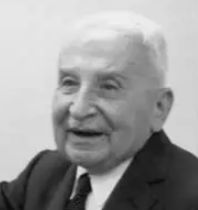
It is a double-edged makeshift to entrust an individual or a group of individuals with the authority to resort to violence. The enticement implied is too tempting for a human being. The men who are to protect the community against violent aggression easily turn into the most dangerous aggressors. They transgress their mandate. They misuse their power for the oppression of those whom they were expected to defend against oppression. The main political problem is how to prevent the police power from becoming tyrannical. This is the meaning of all the struggles for liberty.
▼
Source
source
Chapter 5: On Some Popular Errors Concerning the Scope and Method of Economics, § 10 : The Concept of a Perfect System of Government
8 months 1 day ago
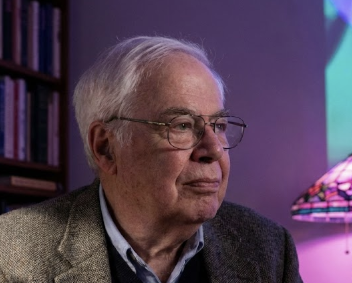
Rather, we heirs of Enlightenment think of enemies of liberal democracy like Nietzsche or Loyola as, to use Rawls's word, "mad." We do so because there is no way to see them as fellow citizens of our constitutional democracy, people whose life plans might, given ingenuity and good will, be fitted in with those of other citizens. They are crazy because the limits of sanity are set by what we can take seriously. This, in turn, is determined by our upbringing, our historical situation.
6 months 1 week ago
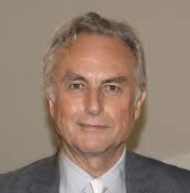
Orb webs in real life do their business largely in two dimensions. If the mesh is too coarse, flies pass straight through. If the mesh is too fine, rival spiders will achieve nearly the same result at less cost in silk, and will therefore leave behind more progeny to carry on their economically more prudent genes. Natural selection finds the efficient compromise.
▼
Source
source
Chapter 2, "Silken Fetters" (p. 58)
5 months 5 days ago
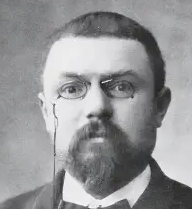
If... it be supposed that another way of measuring time is adopted... enunciation of the law would be... translated into another language... much less simple. So that the definition implicitly adopted by the astronomers may be summed up..: Time should be so defined that the equations of mechanics may be as simple as possible... [i.e.,] there is not one way of measuring time more true... only more convenient.
6 months 3 weeks ago
I now come to the second reason for the modern fading of interest in religion. Religion is the reaction of human nature to its search for God. The presentation of God under the aspect of power awakens every modern instinct of critical reaction. This is fatal; for religion collapses unless its main positions command immediacy of assent. In this respect the old phraseology is at variance with the psychology of modern civilisations. This change in psychology is largely due to science, and is one of the chief ways in which the advance of science has weakened the hold of the old religious forms of expression.
▼
Source
source
Ch. 12: "Religion and Science", pp. 266-267

7 months 1 week ago
The only minds which seduce us are the minds which have destroyed themselves trying to give their life a meaning.
8 months 1 week ago
Why in any case, this glorification of man? How about lions and tigers? They destroy fewer animals or human lives than we do, and they are much more beautiful than we are. How about ants? They manage the Corporate State much better than any Fascist. Would not a world of nightingales and larks and deer be better than our human world of cruelty and injustice and war? The believers in Cosmic Purpose make much of our supposed intelligence, but their writings make one doubt it. If I were granted omnipotence, and millions of years to experiment in, I should not think Man much to boast of as the final result of all my efforts.
▼
Source
source
Religion and Science, 1935

7 months 2 weeks ago
Are we not madder than those first inhabitants of the plain of Sennar? We know that the distance separating the earth from the sky is infinite, and yet we do not stop building our tower.
▼
Source
source
No. 4
9 months 1 week ago
For anyone who is alone, without God and without a master, the weight of days is dreadful. Hence one must choose a master, God being out of style.

5 months 2 weeks ago
Is there really someone who, searching for a group of wise and sensitive persons to regulate him for his own good, would choose that group of people that constitute the membership of both houses of Congress?
▼
Source
source
Ch. 2 : The State of Nature; Protective Associations, p. 14
8 months 1 week ago
A life without adventure is likely to be unsatisfying, but a life in which adventure is allowed to take whatever form it will is sure to be short.
▼
Source
source
Authority and the Individual, 1949
7 months 1 day ago
Philosophy is in history, and is never independent of historical discourse. But for the tacit symbolism of life it substitutes, in principle, a conscious symbolism; for a latent meaning, one that is manifest. It is never content to accept its historical situation. It changes this situation by revealing it to itself.
▼
Source
source
p. 57

5 months 2 days ago
There is endless merit in a man's knowing when to have done.
▼
Source
source
Dr. Francia (1845).

8 months 1 week ago
The law will never make men free; it is men who have got to make the law free.
▼
Source
source
"Slavery in Massachusetts", 1854
9 months 1 week ago
There is nothing so eternally adhesive as the memory of power.
5 months 3 weeks ago
Religion holds the solution to all problems of human relationship, whether they are between parents and children or nation and nation. Sooner or later, man has always had to decide whether he worships his own power or the power of God. When threats force him to look at the limitations of his human power, he's often ready to seek his spiritual one. What we need is patience and awe of God's plan in human history!
▼
Source
source
In Quote: The Weekly Digest, vol. 38, no. 19 (8 November 1959) p. 13
8 months 2 weeks ago
I perfectly agree with your Lordship too, that to crush the Industry of so great and so fine a province of the empire, in order to favour the monopoly of some particular towns in Scotland or England, is equally unjust and impolitic. The general opulence and improvement of Ireland might certainly, under proper management, afford much greater resources to the Government, than can ever be drawn from a few mercantile or manufacturing towns.
▼
Source
source
Letter to Henry Dundas (1 November 1779), quoted in Adam Smith, The Correspondence of Adam Smith, eds. E. C. Mossner and I. S. Ross (1987), p. 241
7 months 1 week ago
There is always someone above you: beyond God Himself rises Nothingness.
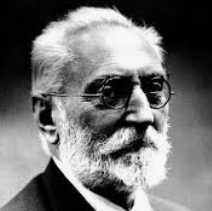
6 months 4 weeks ago
And he arrives at the cogito ergo sum, which St. Augustine had already anticipated... "I think therefore I am," can only mean "I think, therefore I am a thinker"; this being of "I am," which is deduced from "I think," is merely a knowing; this being is a knowledge, but not life. And the primary reality is not that I think, but that I live, for those also live who do not think. Although this living may not be a real living. God! what contradictions when we seek to join in wedlock life and reason!

4 months 1 week ago
What one has to say to begin with is that, as humans, we are limited in intelligence and we really have no reliable foresight. So none of us will come up with answers to the whole great problem. What we can do is judge our behavior, our history, and our present situation by a better standard than "efficiency" or "profit," or those measures that we're still using to determine economic decisions.

4 months 1 week ago
Each of us lives only now, this brief instant.
▼
Source
source
(Hays translation) III, 10
9 months 1 week ago
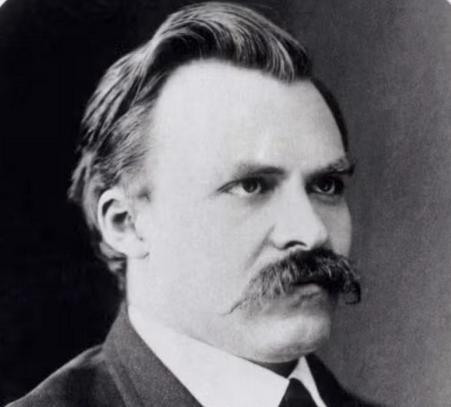
I will make an attempt to attain freedom, the youthful soul says to itself; and is it to be hindered in this by the fact that two nations happen to hate and fight one another, or that two continents are separated by an ocean, or that all around it a religion is taught with did not yet exist a couple of thousand years ago. All that is not you, it says to itself.

4 months 1 week ago
Here was buried Thomas Jefferson, author of the Declaration of American Independence, of the Statute of Virginia for Religious Freedom, and Father of the University of Virginia. Epitaph, upon his instructions to erect a "a plain die or cube ... surmounted by an Obelisk" with "the following inscription, and not a word more...because by these, as testimonials that I have lived, I wish most to be remembered." It omits that he had been President of the United States, a position of political power and prestige, and celebrates his involvement in the creation of the means of inspiration and instruction by which many human lives have been liberated from oppression and ignorance.
6 months 1 week ago
Genes do indirectly control the manufacture of bodies, and the influence is strictly one way: acquired characteristics are not inherited. No matter how much knowledge and wisdom you acquire during your life, not one jot will be passed on to your children by genetic means. Each new generation starts from scratch.
▼
Source
source
Ch. 3. Immortal Coils

8 months 1 week ago
Our chief want in life, is somebody who shall make us do what we can.
▼
Source
source
Considerations by the Way

7 months 1 week ago
Manners are of more importance than laws. The law can touch us here and there, now and then. Manners are what vex or soothe, corrupt or purify, exalt or debase, barbarize or refine us, by a constant, steady, uniform, insensible operation like that of the air we breathe in.
▼
Source
source
No. 1, p. 172 in The Works of the Right Honourable Edmund Burke: A New Edition, v. VIII. London: F. C. and J. Rivington, 1815
CivilSimian.com created by AxiomaticPanic, CivilSimian, Kalokagathia