

2 months 3 weeks ago
The subconscious is ceaselessly murmuring, and it is by listening to these murmurs that one hears the truth.
▼
Source
source
Ch. 2, sect. 2

4 months 3 days ago
The best government is a benevolent tyranny tempered by an occasional assassination.
▼
Source
source
Attributed to Voltaire in Likharev, K.K. (2021). On Government and Politics. In: Likharev, K.K. (eds) Essential Quotes for Scientists and Engineers.

2 months 2 weeks ago
Disciplinary society is still governed by no. Its negativity produces madmen and criminals. In contrast, achievement society creates depressives and losers.
▼
Source
source
Source: Page 8
2 months 2 weeks ago
The Text is plural. Which is not simply to say that it has several meanings, but that it accomplishes the very plural of meaning: an irreducible (and not merely an acceptable) plural. The Text is not a co-existence of meanings but a passage, an overcrossing; thus it answers not to an interpretation, even a liberal one, but to an explosion, a dissemination.
▼
Source
source
Proposition 4

5 months 2 days ago
After all, in the poets love has its priests, and sometimes one hears a voice which knows how to defend it; but of faith one hears never a word. Who speaks in honor of this passion? Philosophy goes further. Theology sits rouged at the window and courts its favor, offering to sell her charms to philosophy. it is supposed to be difficult to understand Hegel, but to understand Abraham is a trifle. To go beyond Hegel's is a miracle, but to get beyond Abraham is the easiest thing of all.
2 months 1 week ago
Man is to be found in reason, God in the passions.
▼
Source
source
K 21

3 months 1 week ago
In the pursuit of truth we must beware of being misled by terms which we do not rightly understand. That is the chief point. Almost all philosophers utter the caution; few observe it.
▼
Source
source
Paragraph 1

2 months 3 weeks ago
Erect I make a resolution; prone I revoke it.
1 month 3 weeks ago
You contain a trillion copies of a large, textual document written in a highly accurate, digital code, each copy as voluminous as a substantial book. I'm talking, of course, of the DNA in your cells.
2 days ago
With silent strides Odysseus then shot back the bolt,passed lightly through the courtyard and sped down the street.Some saw him take the graveyard's zigzag mountain path,some saw him leap on rocks that edged the savage shore,some visionaries saw him in the dead of nightswimming and talking secretly with the sea-demons,but only a small boy saw him in a lonely dreamsit crouched and weeping by the dark sea's foaming edge.
▼
Source
source
Book II, line 457

3 months 3 weeks ago
Our language can be seen as an ancient city: a maze of little streets and squares, of old and new houses, and of houses with additions from various periods; and this surrounded by a multitude of new boroughs with straight regular streets and uniform houses.
▼
Source
source
§ 18

4 months 1 day ago
Consider what you have in the smallest chosen library. A company of the wisest and wittiest men that could be picked out of all civil countries, in a thousand years, have set in best order the results of their learning and wisdom. The men themselves were hid and inaccessible, solitary, impatient of interruption, fenced by etiquette; but the thought which they did not uncover to their bosom friend is here written out in transparent words to us, the strangers of another age.

3 months 2 days ago
Vice itself lost half its evil by losing all its grossness.
▼
Source
source
Volume iii, p. 332

2 weeks 2 days ago
It is indeed foolish to be unhappy now because you may be unhappy at some future time.

4 months 3 weeks ago
Chance seldom interferes with the wise man; his greatest and highest interests have been, are, and will be, directed by reason throughout his whole life.
3 months 3 weeks ago
Nevertheless, the ultimate business of philosophy is to preserve the force of the most elemental words in which Dasein expresses itself, and to keep the common understanding from levelling them off to that unintelligibility which functions in turn as a source of pseudo-problems.
▼
Source
source
Macquarrie & Robinson translation

3 months 2 weeks ago
But Hermotimus, the Colophonian, rendered more abundant what was formerly published by Eudoxus and Theætetus, and invented a multitude of elements, and wrote concerning some geometrical places. But Philippus the Mendæan, a disciple of Plato, and by him inflamed in the mathematical disciplines, both composed questions, according to the institutions of Plato, and proposed as the object of his enquiry whatever he thought conduced to the Platonic philosophy.
▼
Source
source
Ch. IV.



3 months 2 days ago
A gentleman, even if he loses everything he owns, must show no emotion. Money must be so far beneath a gentleman that it is hardly worth troubling about.

4 months 2 days ago
You come from attending the funeral of mankind to attend to a natural phenomenon. A little thought is sexton to all the world.
▼
Source
source
p. 490

4 months 2 days ago
We are and irrefutable arbiters of value, and in the world of value Nature is only a part. Thus in this world we are greater than Nature. In the world of values, Nature in itself is neutral, neither good nor bad deserving of neither admiration nor censure. It is we who create value and our desires which confer value. In this realm we are kings, and we debase our kingship if we bow down to Nature. It is for us to determine our good life, not for Nature - not even for Nature personified as God.
2 weeks 2 days ago
Next, if you choose to view its results and the mischief that it does, no plague has cost the human race more dear
2 months 2 weeks ago
Encratic language (the language produced and spread under the protection of power) is statutorily a language of repetition; all official institutions of language are repeating machines: schools, sports, advertising, popular songs, news, all continually repeat the same structure, the same meaning, often the same words.
▼
Source
source
The Pleasure of the Text

4 months 4 days ago
I love liberty, and I loathe constraint, dependence, and all their kindred annoyances. As long as my purse contains money it secures my independence, and exempts me from the trouble of seeking other money, a trouble of which I have always had a perfect horror; and the dread of seeing the end of my independence, makes me proportionately unwilling to part with my money. The money that we possess is the instrument of liberty, that which we lack and strive to obtain is the instrument of slavery.

1 month 4 weeks ago
Invention is the mother of all necessities.

4 months 2 weeks ago
When the apostle James was talking about faith and works against those who thought their faith was enough, and didn't want to have good works, he said, You believe God is one; you do well; the demons also believe, and tremble.
▼
Source
source
(Jas 2:19) 183:13:2
3 weeks 4 days ago
Scientists believe there is a hierarchy of facts and that among them may be made a judicious choice. They are right, since otherwise there would be no science...

4 months 1 week ago
Cosmus, Duke of Florence, was wont to say of perfidious friends, that "We read that we ought to forgive our enemies; but we do not read that we ought to forgive our friends."
▼
Source
source
No. 206
2 months 3 weeks ago
In [Aristotle's] formal logic, thought is organized in a manner very different from that of the Platonic dialogue. In this formal logic, thought is indifferent toward its objects. Whether they are mental or physical, whether they pertain to society or to nature, they become subject to the same general laws of organization, calculation, and conclusion - but they do so as fungible signs or symbols, in abstraction from their particular "substance." This general quality (quantitative quality) is the precondition of law and order - in logic as well as in society - the price of universal control.
▼
Source
source
p. 136
1 month 4 weeks ago
Environments are invisible. Their groundrules, pervasive structure, and overall patterns elude easy perception.

1 day ago
I read no newspaper now but Ritchie's, and in that chiefly the advertisments, for they contain the only truths to be relied on in a newspaper.
▼
Source
source
Letter to Nathaniel Macon

3 weeks 1 day ago
It lies deep in our habits, confirmed by all manner of educational and other arrangements for several centuries back, to consider human talent as best of all evincing itself by the faculty of eloquent speech. Our earliest schoolmasters teach us, as the one gift of culture they have, the art of spelling and pronouncing, the rules of correct speech; rhetorics, logics follow, sublime mysteries of grammar, whereby we may not only speak but write. And onward to the last of our schoolmasters in the highest university, it is still intrinsically grammar, under various figures grammar. To speak in various languages, on various things, but on all of them to speak, and appropriately deliver ourselves by tongue or pen,-this is the sublime goal towards which all manner of beneficent preceptors and learned professors, from the lowest hornbook upwards, are continually urging and guiding us.

4 months 1 week ago
There is no conversation more boring than the one where everybody agrees.

3 months 3 weeks ago
Beware an act of avarice; it is bad and incurable disease.
▼
Source
source
Maxim no. 19.
2 months 3 weeks ago
Christian Kings may erre in deducing a Consequence, but who shall Judge?
▼
Source
source
The Third Part, Chapter 43, p. 330
3 months 1 day ago
It was these Romans who reunited in one State the Culture which had now been produced by the intermixture of different races, and thereby completed the period of Ancient Time, and closed the simple course of Ancient Civilization. With respect to its influence on Universal History, this nation, more than any other, was the blind and unconscious instrument for the furtherance of a higher World-Plan; after having formed itself, by its internal des tiny indicated above, into a most fit and proper instrument for that purpose.
▼
Source
source
p. 192

3 months 1 week ago
Man know thyself; then thou shalt know the Universe and God.
▼
Source
source
As quoted in Fragments of Reality: Daily Entries of Lived Life (2006) by Peter Cajander, p. 109
2 months 4 days ago
Forgetting extermination is part of extermination, because it is also the extermination of memory, of history, of the social, etc. This forgetting is as essential as the event in any case unlocatable by us, inaccessible to us in its truth. This forgetting is still too dangerous, it must be effaced by an artificial memory (today, everywhere, it is artificial memories that effect the memory of man, that efface man in his own memory). This artificial memory will be the restaging of extermination-but late, much too late for it to be able to make real waves and profoundly disturb something, and especially, especially through medium that is itself cold, radiating forgetfulness, deterrence, and extermination in a still more systematic way, if that is possible, than the camps themselves.
▼
Source
source
"Holocaust," p. 49
2 months 3 weeks ago
Bourgeois society is ruled by equivalence. It makes the dissimilar comparable by reducing it to abstract quantities. To the Enlightenment, that which does not reduce to numbers, and ultimately to the one, becomes illusion.
▼
Source
source
John Cumming trans., p. 7.
Just now
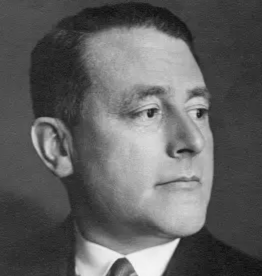
The political is the most intense and extreme antagonism, and every concrete antagonism becomes that much more political the closer it approaches the most extreme point, that of the friend-enemy grouping.
3 months 3 weeks ago
A confession has to be part of your new life.
▼
Source
source
p. 18e
3 months 2 weeks ago
If two right lines cut one another, they will form the angles at the vertex equal. ...This... is what the present theorem evinces, that when two right lines mutually cut each other, the vertical angles are equal. And it was first invented according to Eudemus by Thales...
▼
Source
source
Proposition XV. Thereom VIII.

4 months 5 days ago
The trade of insurance gives great security to the fortunes of private people, and by dividing among a great many that loss which would ruin an individual, makes it fall light and easy upon the whole society.
▼
Source
source
Chapter I, Part III, p. 821.

2 months 2 weeks ago
Positivism ... implies the double falsehood that no interpretation is needed, and that it is not needed because the story which the positivist writer tells, such as it is, is obvious. The story he or she tells is usually a bad one, and its being obvious only means that it is familiar.
▼
Source
source
p. 12
2 months 3 weeks ago
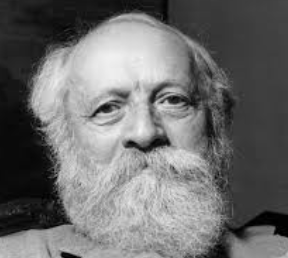
Dialogue and monologue are silenced. Bundled together, men march without Thou and without I, those of the left who want to abolish memory, and those of the right who want to regulate it: hostile and separated hosts, they march into the common abyss.
▼
Source
source
p. 33

4 months 1 day ago
The soul active sees absolute truth; and utters truth, or creates.
▼
Source
source
par. 17

2 months 2 weeks ago
Liberty, taking the word in its concrete sense, consists in the ability to choose.
▼
Source
source
Ch. 3, Liberty

4 months 4 weeks ago
If one thing goes without saying, almost anything can.
CivilSimian.com created by AxiomaticPanic, CivilSimian, Kalokagathia