


7 months 3 weeks ago
It cannot at this time be too often repeated; line upon line; precept upon precept; until it comes into the currency of a proverb, To innovate is not to reform.
▼
Source
source
p. 20

8 months 4 weeks ago
I am a lover of liberty. I will not and I cannot serve a party.
▼
Source
source
Spongia adversus aspergines Hutteni (1523), § 176, As quoted in Desiderius Erasmus of Rotterdam (1900) by Ephraim Emerton, p. 377

5 months 1 week ago
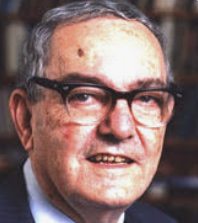
A great soul, any sincere soul, knows not what he is,-alternates between the highest height and the lowest depth; can, of all things, the least measure-Himself! What others take him for, and what he guesses that he may be; these two items strangely act on one another, help to determine one another. With all men reverently admiring him; with his own wild soul full of noble ardors and affections, of whirlwind chaotic darkness and glorious new light; a divine Universe bursting all into godlike beauty round him, and no man to whom the like ever had befallen, what could he think himself to be?
6 months 4 weeks ago
The behaviour of individuals is the tool with which the organisation achieves its targets.
▼
Source
source
p. 108.
9 months 1 week ago
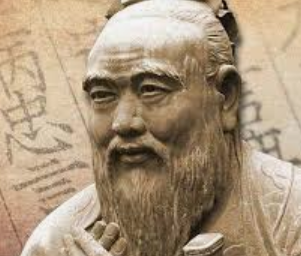
If a man has no humaneness what can his propriety be like? If a man has no humaneness what can his happiness be like?

8 months 2 weeks ago
And all the time - such is the tragi-comedy of our situation - we continue to clamor for those very qualities we are rendering impossible. You can hardly open a periodical without coming across the statement that what our civilization needs is more "drive", or dynamism, or self-sacrifice, or "creativity". In a sort of ghastly simplicity we remove the organ and demand the function. We make men without chests and expect of them virtue and enterprise. We laugh at honour and are shocked to find traitors in our midst. We castrate and bid the geldings be fruitful.
6 months 3 weeks ago
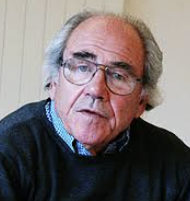
To challenge and to cope with this paradoxical state of things, we need a paradoxical way of thinking; since the world drifts into delirium, we must adopt a delirious point of view. We must no longer assume any principle of truth, of causality, or any discursive norm. Instead, we must grant both the poetic singularity of events and the radical uncertainty of events. It is not easy. We usually think that holding to the protocols of experimentation and verification is the most difficult thing. But in fact the most difficult thing is to renounce the truth and the possibility of verification, to remain as long as possible on the enigmatic, ambivalent, and reversible side of thought.
▼
Source
source
The Vital Illusion (2000) "The Murder of the Real". Wellek Library Lectures given May 1999 at the University of California, Irvine
8 months 1 week ago
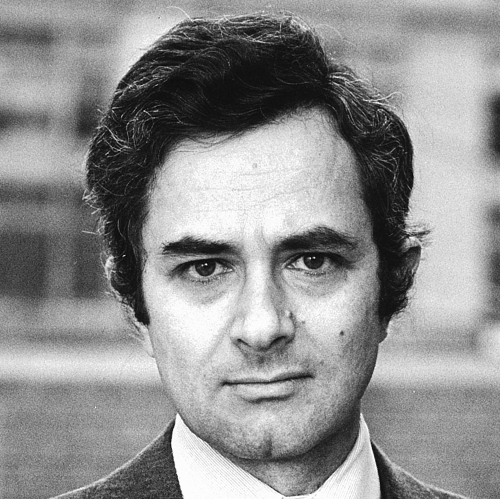
Philosophy is the childhood of the intellect, and a culture that tries to skip it will never grow up.
▼
Source
source
p. 12.
8 months 4 weeks ago
Tis a good word and a profitable desire, but withal absurd; for to make the handle bigger than the hand, the cubic longer than the arm, and to hope to stride further than our legs can reach, is both impossible and monstrous; or that man should rise above himself and humanity; for he cannot see but with his eyes, nor seize but with his hold. He shall be exalted, if God will lend him an extraordinary hand; he shall exalt himself, by abandoning and renouncing his own proper means, and by suffering himself to be raised and elevated by means purely celestial. It belongs to our Christian faith, and not to the stoical virtue, to pretend to that divine and miraculous metamorphosis.
▼
Source
source
Ch. 12

7 months 2 weeks ago
The true hero fights and dies in the name of his destiny, and not in the name of a belief.

6 months 2 weeks ago
Logic is figure without a ground.
▼
Source
source
(p. 241)

8 months 2 weeks ago
One cannot become a saint when one works sixteen hours a day.
▼
Source
source
Act 5, sc. 2
7 months 2 weeks ago
We always love . . . despite; and that "despite" covers an infinity.
7 months 2 weeks ago
Only through blind Instinct, in which the only possible guidance of the Imperative is awanting, does the Power in Intuition remain undetermined; where it is schematised as absolute it becomes infinite; and where it is presented in a determinate form, as a principle, it becomes at least manifold. By the above-mentioned act of Intelligising, the Power liberates itself from Instinct, to direct itself towards Unity.

9 months 6 days ago
But it isn't just a matter of faith, but of faith and works. Each is necessary. For the demons also believe you heard the apostle and tremble (Jas 2:19); but their believing doesn't do them any good. Faith alone is not enough, unless works too are joined to it: Faith working through love (Gal 5:6), says the apostle.
▼
Source
source
16A:11:2

7 months 3 weeks ago
A definition may be very exact, and yet go but a very little way towards informing us of the nature of the thing defined.
▼
Source
source
Introduction On Taste
4 months 2 weeks ago
The selfish spirit of commerce knows no country, and feels no passion or principle but that of gain.
▼
Source
source
Letter to Larkin Smith
4 months 4 weeks ago
A man may own a thousand acres of land, and yet he still sleeps upon a bed of five feet.
▼
Source
source
p. 38 (Chinese saying)
8 months 4 weeks ago
Since my logic aims to teach and instruct the understanding, not that it may with the slender tendrils of the mind snatch at and lay hold of abstract notions (as the common logic does), but that it may in very truth dissect nature, and discover the virtues and actions of bodies, with their laws as determined in matter; so that this science flows not merely from the nature of the mind, but also from the nature of things.
▼
Source
source
Aphorism 52
7 months 3 weeks ago
In the same way as philosophy loses sight of its true object and appropriate matter, when either it passes into and merges in theology, or meddles with external politics, so also does it mar its proper form when it attempts to mimic the rigorous method of mathematics.
▼
Source
source
Philosophy of Life, Lecture 1
9 months 1 week ago
A man living without conflicts, as if he never lives at all.

7 months 1 week ago
The species with eyes appears suddenly, capriciously as it were, and it is this species which changes the environment by creating its visible aspect. The eye does not come into being because it is needed. Just the contrary; because the eye appears it can henceforth be applied as a serviceable instrument. Each species builds up its stock of useful habits by selecting among, and taking advantage of, the innumerable useless actions which a living being performs out of sheer exuberance.
▼
Source
source
p. 17
6 months 1 week ago
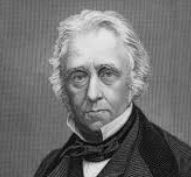
We hardly know any instance of the strength and weakness of human nature so striking, and so grotesque, as the character of this haughty, vigilant, resolute, sagacious blue-stocking, half Mithridates and half Trissotin, bearing up against a world in arms, with an ounce of poison in one pocket and a quire of bad verses in the other.
▼
Source
source
'Frederic the Great', The Edinburgh Review (April 1842), quoted in T. B. Macaulay, Critical and Historical Essays Contributed to The Edinburgh Review: A New Edition (1852), p. 802
5 months ago
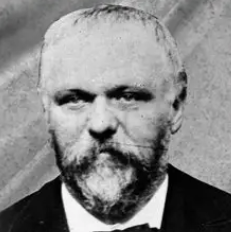
Myths are not descriptions of things, but expressions of a determination to act... A myth cannot be refuted since it is, at bottom, identical with the convictions of a group, being the expression of these convictions in the language of movement.
▼
Source
source
p. 28-29 (Letter to Daniel Halevy)

7 months 3 days ago
The Outsider's miseries are the prophet's teething pains. He retreats into his room, like a spider in a dark corner; he lives alone, wishes to avoid people.
▼
Source
source
Chapter Four The Attempt to Gain Control
6 months 4 weeks ago
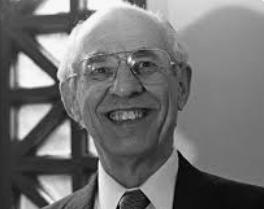
Truth and falsity are the most fundamental terms of rational criticism, and any adequate philosophy must give some account of these, or failing that, show that they can be dispensed with.
▼
Source
source
"Introduction: Philosophy of language and the rest of philosophy"

8 months 2 weeks ago
If good music has charms to soothe the savage breast, bad music has no less powerful spells for filling the mildest breast with rage, the happiest with horror and disgust. Oh, those mammy songs, those love longings, those loud hilarities! How was it possible that human emotions intrinsically decent could be so ignobly parodied.
▼
Source
source
"Silence is Golden," p. 59
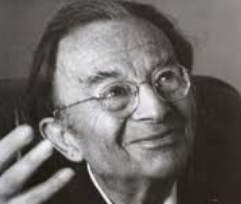
7 months 2 days ago
Only the person who has faith in himself is able to be faithful to others.
▼
Source
source
Ch. 4
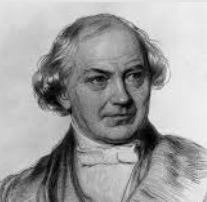
4 months 2 weeks ago
Philological analogies are to be preserved if possible, but modified according to scientific convenience.
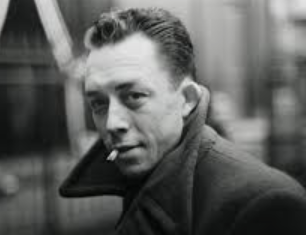
9 months 2 weeks ago
One recognizes one's course by discovering the paths that stray from it.

5 months 3 weeks ago
The most important feature of natural selection is that it is a process of drift. Evolution has no end-point or direction, so if the development of society is an evolutionary process it is one that is going nowhere.
▼
Source
source
An Old Chaos: Humanism and Flying Saucers (p. 78)
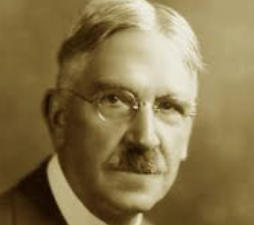
7 months 1 week ago
The ground of democratic ideas and practices is faith in the potentialities of individuals, faith in the capacity for positive developments if proper conditions are provided. The weakness of the philosophy originally advanced to justify the democratic movement was that it took individuality to be something given ready-made, that is, in abstraction from time, instead of as a power to develop.

8 months 1 week ago
Philip being arbitrator betwixt two wicked persons, he commanded one to fly out of Macedonia and the other to pursue him.
▼
Source
source
36 Philip
7 months 3 weeks ago
One may observe, that men of all persuasions confine the word persecution, and all the ill ideas of injustice and violence which belong to it, solely to those severities which are exercised upon themselves, or upon the party they are inclined to favour. Whatever is inflicted upon others, is a just punishment upon obstinate impiety, and not a restraint upon conscientious differences.
▼
Source
source
Volume II, p. 146
9 months 2 weeks ago
Those who purge the soul believe that the soul can receive no benefit from any teachings offered to it until someone by cross-questioning reduces him who is cross-questioned to an attitude of modesty, by removing the opinions that obstruct the teachings, and thus purges him and makes him think that he knows only what he knows, and no more.

8 months 3 weeks ago
Pride is an established conviction of one's own paramount worth in some particular respect, while vanity is the desire of rousing such a conviction in others, and it is generally accompanied by the secret hope of ultimately coming to the same conviction oneself. Pride works from within; it is the direct appreciation of oneself. Vanity is the desire to arrive at this appreciation indirectly, from without.
▼
Source
source
Vol. 1, Ch. 4, § 2
9 months 5 days ago
If what the philosophers say be true,—that all men's actions proceed from one source; that as they assent from a persuasion that a thing is so, and dissent from a persuasion that it is not, and suspend their judgment from a persuasion that it is uncertain, so likewise they seek a thing from a persuasion that it is for their advantage.
▼
Source
source
Book I, ch. 18, 1.

8 months 3 weeks ago
Not to be absolutely certain is, I think, one of the essential things in rationality.
▼
Source
source
"Don't Be Too Certain!"
7 months 2 weeks ago
Maybe suffering has no more justification than life.
7 months 2 weeks ago
The mind that puts everything in question, reaches, after a thousand interrogations, an almost total inertia, a situation which the inert, in fact, knows from the start, by instinct. For what is inertia but a congenital perplexity?
4 months 4 weeks ago
Knighthood, instead, appeared as a superterritorial and supernational community in which its members, who were consecrated to military priesthood, no longer had a homeland and thus were bound by faithfulness not to people but, on the one hand, to an ethics that had as its fundamental values honor, truth, courage, and loyalty and, on the other hand, to a spiritual authority of a universal type, which was essentially that of the Empire.
6 months 2 weeks ago
When the evolutionary process shifts from biology to software technology the body becomes the old hardware environment. The human body is now a probe, a laboratory for experiments.
▼
Source
source
(p. 180)

8 months 2 weeks ago
If a lion could talk, we could not understand him.
▼
Source
source
Pt II, p. 223 of the 1968 English edition

8 months 2 weeks ago
Athuroglossos is characterized by..: (1) When you have "a mouth like a running spring," you cannot distinguish those occasions when you should speak from those when you should remain silent; or that which must be said from that which must remain unsaid; or the circumstances and situations where speech is required from those where one ought to remain silent. (2) As Plutarch notes... you have no regard for the value of logos, for rational discourse as a means of gaining access to truth.
CivilSimian.com created by AxiomaticPanic, CivilSimian, Kalokagathia