


4 months 6 days ago
The purely corporeal can be uncanny. Compare the way angels and devils are portrayed. So-called "miracles" must be connected with this. A miracle must be, as it were, a sacred gesture.
▼
Source
source
p. 50e

4 months 2 weeks ago
Reading maketh a full man; conference a ready man; and writing an exact man.
▼
Source
source
Of Studies
1 month 3 weeks ago
The supreme accomplishment is to blur the line between work and play.
▼
Source
source
In Ellen J. Langer (ed.) Mindfulness (Merloyd Lawrence Books, 1989) p. 133

3 weeks 4 days ago
Most men ebb and flow in wretchedness between the fear of death and the hardships of life; they are unwilling to live, and yet they do not know how to die.

1 week 3 days ago
I shall often go wrong through defect of judgment. When right, I shall often be thought wrong by those whose positions will not command a view of the whole ground. I ask your indulgence for my own errors, which will never be intentional, and your support against the errors of others, who may condemn what they would not if seen in all its parts.

3 months 6 days ago
Having always lived in fear of being surprised by the worst, I have tried in every circumstance to get a head start, flinging myself into misfortune long before it occurred.

4 months 4 weeks ago
Truth is the ultimate end of the whole universe.
▼
Source
source
I, 1, 2
3 months 1 week ago
We wish, in a word, equality - equality in fact as a corollary, or rather, as primordial condition of liberty. From each according to his faculties, to each according to his needs; that is what we wish sincerely and energetically.
▼
Source
source
As quoted in The Old Order and the New (1890) by J. Morris Davidson

4 months 1 week ago
The great majority of men and women, in ordinary times, pass through life without ever contemplating or criticising, as a whole, either their own conditions or those of the world at large. They find themselves born into a certain place in society, and they accept what each day brings forth, without any effort of thought beyond what the immediate present requires. Almost as instinctively as the beasts of the field, they seek the satisfaction of the needs of the moment, without much forethought, and without considering that by sufficient effort the whole conditions of their lives could be changed.
▼
Source
source
Introduction, p. 4

1 month 2 weeks ago
Tyranny offers relief from the burden of sanity and a licence to enact forbidden impulses of hatred and violence. By acting on these impulses and releasing them in their subjects tyrants give people a kind of happiness, which as individuals they may be incapable of achieving.
▼
Source
source
An Old Chaos: What a Tyrant Can Do For You (p. 57)
3 months 3 days ago
A special kind of beauty exists which is born in language, of language, and for language.
▼
Source
source
A Retrospective Glance at the Lifework of a Master of Books
2 weeks 6 days ago
It is very difficult to understand proletarian violence as long as we try to think in terms of the ideas disseminated by bourgeois philosophy; according to this philosophy, violence is a relic of barbarism which is bound to disappear under the progress of enlightenment.
▼
Source
source
p. 65

2 months 3 weeks ago
Seek, therefore, thyself! But in finding oneself, does not one find one's own nothingness? ...Carlyle answers (Past and Present, book iii, chap. xi.). "The latest Gospel in the world is, Know thy work and do it. Know thyself: long enough has that poor self of thine tormented thee; thou wilt never get to know it, I believe! Think it thy business, this of knowing thyself; thou art an unknowable individual: know what thou canst work at; and work at it, like Hercules. That will be thine better plan." ...and what is my work? - without thinking about myself, is to love God. ...And on the other hand, in loving God in myself, am I not loving myself more than God, am I not loving myself in God?
3 months 1 week ago
All religions are cruel, all founded on blood; for all rest principally on the idea of sacrifice - that is, on the perpetual immolation of humanity to the insatiable vengeance of divinity.

4 months 2 weeks ago
Even opinion is of force enough to make itself to be espoused at the expense of life.
▼
Source
source
Book I, Ch. 40. Of Good and Evil, tr. Cotton, rev. W. Hazlitt, 1842
2 months 2 weeks ago
We distinguish diagrammatic from sentential paper-and-pencil representations of information by developing alternative models of information-processing systems that are informationally equivalent and that can be characterized as sentential or diagrammatic. Sentential representations are sequential, like the propositions in a text. Diagrammatic representations are indexed by location in a plane. Diagrammatic representations also typically display information that is only implicit in sentential representations and that therefore has to be computed, sometimes at great cost, to make it explicit for use. We then contrast the computational efficiency of these representations for solving several.illustrative problems in mathematics and physics.
▼
Source
source
p. 65
4 months 6 days ago
The problems are dissolved in the actual sense of the word - like a lump of sugar in water.
▼
Source
source
Ch. 9 : Philosophy, p. 183

4 months 1 week ago
England has to fulfill a double mission in India: one destructive, the other regenerating - the annihilation of old Asiatic society, and the laying the material foundations of Western society in Asia... When a great social revolution shall have mastered the results of the bourgeois epoch... and subjected them to the common control of the most advanced peoples, then only will human progress cease to resemble that hideous, pagan idol, who would not drink the nectar but from the skulls of the slain.
▼
Source
source
"The Future Results of British Rule in India," New York Daily Tribune, 08 August 1853
1 month 2 weeks ago
Given our anthropocentric bias, thinking of non-human vertebrates not just as equivalent in moral status to toddlers or infants, but as though they were toddlers or infants, is a useful exercise. Such reconceptualisation helps correct our lack of empathy for sentient beings whose physical appearance is different from "us". Ethically, the practice of intelligent "anthropomorphism" shouldn't be shunned as unscientific, but embraced insofar as it augments our stunted capacity for empathy. Such anthropomorphism can be a valuable corrective to our cognitive and moral limitations. This is not a plea to be sentimental, simply for impartial benevolence.
▼
Source
source
Reprogramming Predators, BLTC Research, 2009
3 months 6 days ago
How did this division of the nations come about, what was its basis? The division is in accordance with all the previous history of the nationalities in question. It is the beginning of the decision on the life or death of all these nations, large and small. All the earlier history of Austria up to the present day is proof of this and 1848 confirmed it. Among all the large and small nations of Austria, only three standard-bearers of progress took an active part in history, and still retain their vitality - the Germans, the Poles and the Magyars. Hence they are now revolutionary. All the other large and small nationalities and peoples are destined to perish before long in the revolutionary world storm. (Weltsturm). For that reason they are now counter-revolutionary.
▼
Source
source
The Magyar Struggle in Neue Rheinische Zeitung (13 January 1849).
1 month 3 weeks ago
Education is the instruction of the intellect in the laws of Nature, under which name I include not merely things and their forces, but men and their ways; and the fashioning of the affections and of the will into an earnest and loving desire to move in harmony with those laws. For me, education means neither more nor less than this. Anything which professes to call itself education must be tried by this standard, and if it fails to stand the test, I will not call it education, whatever may be the force of authority, or of numbers, upon the other side.

2 months 1 week ago
All media work us over completely. They are so pervasive in their personal, political, economic, aesthetic, psychological, moral, ethical, and social consequences that they leave no part of us untouched, unaffected, unaltered. The medium is the massage. Any understanding of social and cultural change is impossible without a knowledge of the way media work as environments. All media are extensions of some human faculty - psychic or physical.
▼
Source
source
(p. 26)
2 months 6 days ago
We should be offended when children are denied a proper education. We should be offended when children are told they will spend eternity in hell. We should be offended when medical science, for example stem-cell research, is compromised by the bigoted opinions of powerful and above all well-financed ignoramuses. We should be offended when voodoo, of all kinds, is given equal weight to science. We should be offended by hymen reconstruction surgery. We should be offended by 'female circumcision', euphemism for genital mutilation. We should be offended by stoning.
▼
Source
source
I Am Offended!, August 3, 2008


3 months 2 weeks ago
In democratic ages men rarely sacrifice themselves for another, but they show a general compassion for all the human race. One never sees them inflict pointless suffering, and they are glad to relieve the sorrows of others when they can do so without much trouble to themselves. They are not disinterested, but they are gentle.
▼
Source
source
Book Three, Chapter I.
3 weeks 5 days ago
The interventionists do not approach the study of economic matters with scientific disinterestedness. Most of them are driven by an envious resentment against those whose incomes are larger than their own. This bias makes it impossible for them to see things as they really are. For them the main thing is not to improve the conditions of the masses, but to harm the entrepreneurs and capitalists even if this policy victimizes the immense majority of the people.
3 months 3 days ago
To disappear into deep water or to disappear toward a far horizon, to become part of depth of infinity, such is the destiny of man that finds its image in the destiny of water.
▼
Source
source
Introduction

2 months 1 week ago
Every one who has a heart and eyes sees that you, working men, are obliged to pass your lives in want and in hard labor, which is useless to you, while other men, who do not work, enjoy the fruits of your labor-that you are the slaves of these men, and that this ought not to exist.
▼
Source
source
To the Working People, Complete Works, trans. Leo Wiener, Vol 24, p. 129
1 week 3 days ago
That we are overdone with banking institutions which have banished the precious metals and substituted a more fluctuating and unsafe medium, that these have withdrawn capital from useful improvements and employments to nourish idleness, that the wars of the world have swollen our commerce beyond the wholesome limits of exchanging our own productions for our own wants, and that, for the emolument of a small proportion of our society who prefer these demoralizing pursuits to labors useful to the whole, the peace of the whole is endangered and all our present difficulties produced, are evils more easily to be deplored than remedied.
▼
Source
source
Letter to Abbe Salimankis, 1810. ME 12:379

4 months 5 days ago
You can't lead the people if you don't love the people. You can't save the people, if you don't serve the people.
▼
Source
source
Hope on a Tightrope: Words and Wisdom (2008); also on "The Way I See It" Starbucks Coffee Cup #284

4 months 1 week ago
Truth happens to an idea. It becomes true, is made true by events. Its verity is in fact an event, a process: the process namely of its verifying itself, its veri-fication. Its validity is the process of its valid-ation.
▼
Source
source
Lecture VI, Pragmatism's Conception of Truth
1 month 4 days ago
Two difficulties: (1) Can we transform psychologic time, which is qualitative, into a quantitative time? (2) Can we reduce to one and the same measure facts which transpire in different worlds [of conscious beings]!
3 months 2 weeks ago
The main business of religions is to purify, control, and restrain that excessive and exclusive taste for well-being which men acquire in times of equality.
▼
Source
source
Book One, Chapter V.

5 months 1 week ago
The man who does not wish to belong to the mass needs only to cease taking himself easily; let him follow his conscience, which calls to him: Be your self! All you are now doing, thinking, desiring, is not you yourself.
4 months 6 days ago
Logic takes care of itself; all we have to do is to look and see how it does it.
▼
Source
source
Journal entry (13 October 1914), also in Tractatus Logico-Philosophicus (§ 5.47)
4 months 1 week ago
We are faced with the paradoxical fact that education has become one of the chief obstacles to intelligence and freedom of thought.
▼
Source
source
Ch. 12: Free Thought and Official Propaganda
3 months 3 days ago
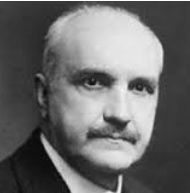
Skepticism is the chastity of the intellect, and it is shameful to surrender it too soon or to the first comer: there is nobility in preserving it coolly and proudly through long youth, until at last, in the ripeness of instinct and discretion, it can be safely exchanged for fidelity and happiness.
▼
Source
source
The Works of George Santayana p. 65
2 months 6 days ago
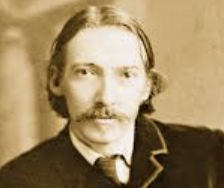
The devil, depend upon it, can sometimes do a very gentlemanly thing.
▼
Source
source
The Suicide Club, Story of the Young Man with the Cream Tarts.
3 months 1 day ago
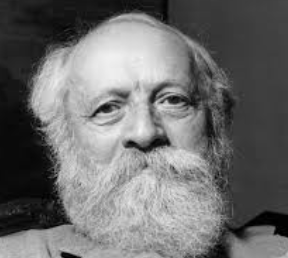
All journeys have secret destinations of which the traveler is unaware.
▼
Source
source
The Legend of the Baal-Shem (1955),1995 edition, p. 36
4 months 1 week ago
Beauty is the main positive form of the aesthetic assimilation of reality, in which aesthetic ideal finds it direct expression...
▼
Source
source
About Beauty
3 months 1 week ago
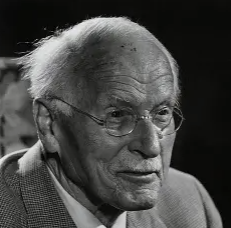
When we assume God to be a guiding principle-well, sure enough, a god is usually characteristic of a certain system of thought or morality. For instance, take the Christian God, the summum bonum: God is love, love being the highest moral principle; and God is spirit, the spirit being the supreme idea of meaning. All our Christian moral concepts derive from such assumptions, and the supreme essence of all of them is what we call God.
▼
Source
source
Nietzsche's Zarathustra (1988), p. 40
3 weeks 4 days ago
No man can have a peaceful life who thinks too much about lengthening it.
▼
Source
source
Line 4.
4 months 1 week ago
One must care about a world one will not see.
▼
Source
source
Attributed to Russell in The Wordsworth Dictionary of Quotations (1997), p. 450, and in Robertson's Dictionary of Quotations (1998), p. 362, but no specific source is given.
4 months 1 week ago
The "social contract," in the only sense in which it is not completely mythical, is a contract among conquerors, which loses its raison d'être if they are deprived of the benefits of conquest.
▼
Source
source
Ch. 12: Powers and forms of governments

2 months 3 weeks ago
It is because of my wretchedness that I am "I." It is on account of the wretchedness of the universe that, in a sense, God is "I" (that is to say a person).
▼
Source
source
p. 83

4 months 1 week ago
Speed, it seems to me, provides the one genuinely modern pleasure.
▼
Source
source
Wanted, A New Pleasure
4 months 4 weeks ago
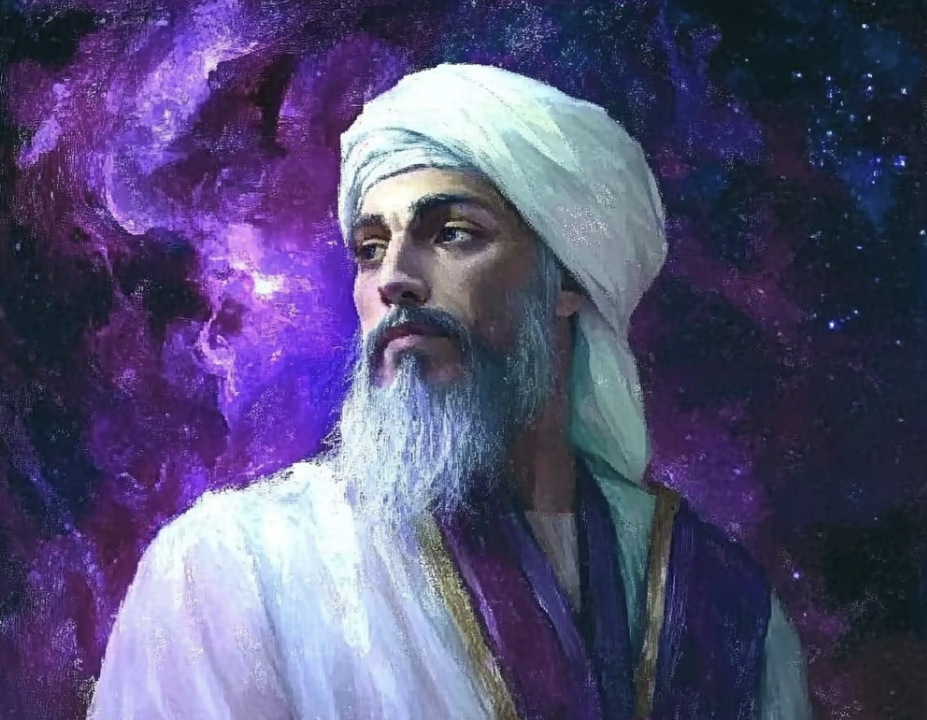
The knowledge of anything, since all things have causes, is not acquired or complete unless it is known by its causes. Therefore in medicine we ought to know the causes of sickness and health. And because health and sickness and their causes are sometimes manifest, and sometimes hidden and not to be comprehended except by the study of symptoms, we must also study the symptoms of health and disease. Now it is established in the sciences that no knowledge is acquired save through the study of its causes and beginnings, if it has had causes and beginnings; nor completed except by knowledge of its accidents and accompanying essentials. Of these causes there are four kinds: material, efficient, formal, and final.
2 months 3 weeks ago
"God is just and punishes us; that is all we need to know; as far as we are concerned the rest is merely curiosity." Such was the conclusion of Lamennais (Essai, etc., partie, chap. vii.), an opinion shared by many others. Calvin also held the same view. But is there anyone content with this? Pure curiosity! - to call this load that well nigh crushes our heart pure curiosity!

1 month 5 days ago
A right exists in theory... All human beings have the same set of rights, but rights need to be enforced by the state. It needs to rely on the coercive power of the state... its army, its police force, to actually make those rights something real that citizens can enjoy, and the enforcement power is not universal. ...We wouldn't want to live in a world in which every liberal state wanted to enforce liberal rights in every other state in the world.
▼
Source
source
24:09

3 months 1 week ago
All those instances to be found in history, whether real or fabulous, of a doubtful public spirit, at which morality is perplexed, reason is staggered, and from which affrighted Nature recoils, are their chosen and almost sole examples for the instruction of their youth.
▼
Source
source
No. 1, volume v, p. 286
CivilSimian.com created by AxiomaticPanic, CivilSimian, Kalokagathia