


8 months 2 weeks ago
The things that we can see with our physical eyes are mere shadows of reality. If they appear ugly and ill formed, then what must be the ugliness of the soul in sin, deprived of all light? The soul, like the body, can undergo transformation in appearance. In sin it appears as completely ugly to the beholder. In virtue it shines resplendently before God.

7 months 2 weeks ago
In democratic ages men rarely sacrifice themselves for another, but they show a general compassion for all the human race. One never sees them inflict pointless suffering, and they are glad to relieve the sorrows of others when they can do so without much trouble to themselves. They are not disinterested, but they are gentle.
▼
Source
source
Book Three, Chapter I.


6 months 4 weeks ago
Jesus said that God was not the God of the dead, but of the living. And the other life is not, in fact, thinkable to us except under the same forms as those of this earthly and transitory life.

8 months 6 days ago
A teacher who can show good, or indeed astounding results while he is teaching, is still not on that account a good teacher, for it may be that, while his pupils are under his immediate influence, he raises them to a level which is not natural to them, without developing their own capacities for work at this level, so that they immediately decline again once the teacher leaves the schoolroom.
▼
Source
source
p. 43e

8 months 2 weeks ago
One should hasten to put such witches to death. Statement of 20 August 1538;
▼
Source
source
as quoted in Conversations With Martin Luther (1915), translated and edited by Preserved Smith and Herbert Percival Gallinger, p. 163

6 months 1 week ago
For him who loves labor, there is always something to do.
▼
Source
source
Maxim 219


6 months 3 weeks ago
Anyone who can understand that the Buddhist idea of Nirvana is not merely negative, and that the Buddha himself who (like the Superman) 'looks down on suffering humanity like a hillsman on the planes' is not an atheistic monster, will instantly see how this misses the point. Nietzsche was not an atheist, any more than the Buddha was. Anyone who reads the Night Song and the Dance Song in Zarathustra will recognize that they spring out of the same emotion as the Vedic or Gathic hymns or the Psalms of David. The idea of the Superman is a response to the need for salvation in precisely the same way that Buddhism was a response to the 'three signs'.
▼
Source
source
p. 135
7 months 2 weeks ago
In America, more than anywhere else in the world, care has been taken constantly to trace clearly distinct spheres of action for the two sexes, and both are required to keep in step, but along paths that are never the same.
▼
Source
source
Book Three, Chapter XII.

7 months 2 weeks ago
The man who makes his religion a means to the gaining of this world, will lose both worlds alike; whereas the man who gives up this world for the sake of religion, will get both worlds alike.
▼
Source
source
The Faith and Practice of Al-Ghazali, Allen & Unwin (1963), p. 152.
5 months 1 week ago
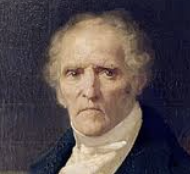
Hitherto men have speculated vaguely on the unity of universes; it is now about to be demonstrated by reasoning from the passional world to material, guided by the analogy which exists between the two.
▼
Source
source
L'attraction passioneé, Harmonian Man: Selected Writings of Charles Fourier, p. 54

8 months 1 day ago
The hopes of the right-minded may be realized, those of fools are impossible.

6 months 3 weeks ago
Einstein analyses the ideas of time-order and of simultaneity. Primarily (according to his analysis) time-order only refers to the succession of events at a given place. Accordingly each given place has its own time-order. But these time-orders are not independent in the system of nature, and their correlation is known to us by means of physical measurement. Now ultimately all physical measurement depends upon coincidence in time and place.
▼
Source
source
p. 51
4 months 1 week ago
The major and almost only theme of all my work is the struggle of man with "God": the unyielding, inextinguishable struggle of the naked worm called "man" against the terrifying power and darkness of the forces within him and around him.
▼
Source
source
As quoted in Nikos Kazantzakis (1968) by Helen Kazantzakis, p. 507

5 months 2 days ago
Under all speech that is good for anything there lies a silence that is better.
▼
Source
source
Silence is deep as Eternity; speech is shallow as Time.
9 months 1 day ago
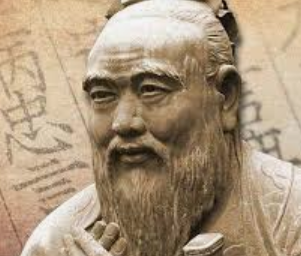
I hear and I forget. I see and I remember. I do and I understand.

5 months 3 weeks ago
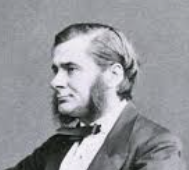
For every man the world is as fresh as it was at the first day, and as full of untold novelties for him who has the eyes to see them.

7 months 2 weeks ago
Divinity reveals herself in all things... everything has Divinity latent within itself. For she enfolds and imparts herself even unto the smallest beings, and from the smallest beings, according to their capacity. Without her presence nothing would have being, because she is the essence of the existence of the first unto the last being.
▼
Source
source
As translated by Arthur Imerti

8 months 1 day ago
With an ignorant man thou shouldst not become a confederate and associate.

5 months 2 weeks ago
The whole world is in some ways better than it's ever been in the past. And, indeed, I think for many people the meaning of their lives really depends on that belief. If you strip out that belief in progress, if you start thinking of the world in the way in which the ancient pre-Christian Europeans did, or the Buddhists and the Hindus or the Taoists of China do, many people think that's a kind of despair. I don't know how many times I've been told "If I thought that, John, I wouldn't get up in the morning" and "If I agreed with you, John, that history had no pattern of that kind, I wouldn't get up in the morning." I said, "Well, stay in bed a bit longer, you might find a better reason for getting up."
▼
Source
source
Quoted in John Gray at the Writers' Festival, part 1," The Philosopher's Zone, a discussion with Alan Saunders on ABC Radio National

6 months 3 weeks ago
Theory is taught so as to make the student believe that he or she can become a Marxist, a feminist, an Afrocentrist, or a deconstructionist with about the same effort and commitment required in choosing items from a menu.
▼
Source
source
Chap 4, Sect 2

7 months 3 days ago
Another doctrine repugnant to Civill Society, is that whatsoever a man does against his Conscience, is Sinne; and it dependeth on the presumption of making himself judge of Good and Evill. For a man's Conscience and his Judgement are the same thing, and as the Judgement, so also the Conscience may be erroneous.
▼
Source
source
The Second Part, Chapter 29, p. 168
6 months 3 weeks ago
Once we can see how this question of freedom of the will has been vitiated by post-romantic philosophy, with its inbuilt tendency to laziness and boredom, we can also see how it came about that existentialism found itself in a hole of its own digging, and how the philosophical developments since then have amounted to walking in circles round that hole.
▼
Source
source
p. 214
8 months 2 weeks ago
Faith looks to the word and the promise; that is, to the truth. But hope looks to that which the word has promised, to the gift.
▼
Source
source
p. 221
4 months 1 day ago
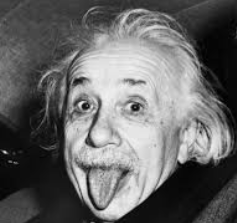
Jesus is too colossal for the pen of phrasemongers, however artful. No man can dispose of Christianity with a bon mot.

4 months 2 weeks ago
The world I believe is far too serious, and being far too serious, is it has need of a wise and merry philosophy.
▼
Source
source
Ch. I : The Awakening, p. 13
4 months 3 weeks ago
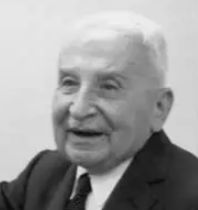
Government spending cannot create additional jobs. If the government provides the funds required by taxing the citizens or by borrowing from the public, it abolishes on the one hand as many jobs as it creates on the other. If government spending is financed by borrowing from the commercial banks, it means credit expansion and inflation. If in the course of such an inflation the rise in commodity prices exceeds the rise in nominal wage rates, unemployment will drop. But what makes unemployment shrink is precisely the fact that real wage rates are falling.
4 months 3 weeks ago
It must be obvious... that there is a contradiction in wanting to be perfectly secure in a universe whose very nature is momentariness and fluidity.

8 months 2 weeks ago
Unless I am convinced by the testimony of the Scriptures or by clear reason (for I do not trust either in the pope or in councils alone, since it is well known that they have often erred and contradicted themselves), I am bound by the Scriptures I have quoted and my conscience is captive to the Word of God. I cannot and will not recant anything, since it is neither safe nor right to go against conscience. May God help me. Amen.
▼
Source
source
Statement in defense of his writings at the Diet of Worms (19 April 1521), as translated in The Nature of Protestantism (1963) by Karl Heim, p. 78
7 months 2 weeks ago
The French want no-one to be their superior. The English want inferiors. The Frenchman constantly raises his eyes above him with anxiety. The Englishman lowers his beneath him with satisfaction.
▼
Source
source
Journeys to England and Ireland (1835).
6 months 3 weeks ago
In both positivism and Heidegger-at least in his later work-speculation is the target of attack. In both cases the thought that autonomously raises itself above the facts through interpreting them and that cannot be reclaimed by them without leaving a surplus is condemned for being empty and vain concept-mongering.
▼
Source
source
p. 9
7 months 3 weeks ago
No evil is honorable; but death is honorable; therefore death is not evil.
▼
Source
source
As quoted in Epistles No. 82, by Seneca the Younger

8 months 1 week ago
I may as well say at once that I do not distinguish between inference and deduction. What is called induction appears to me to be either disguised deduction or a mere method of making plausible guesses.
▼
Source
source
Principles of Mathematics (1903), Ch. II: Symbolic Logic, p. 11
6 months 2 weeks ago
Courage, garrulousness and the mob are on our side. What more do we want?
▼
Source
source
E 32

8 months 2 weeks ago
Live as long as you please, you will strike nothing off the time you will have to spend dead.
▼
Source
source
Ch. 20. Of the Force of Imagination
4 months 2 weeks ago
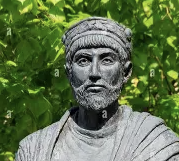
Must we then speak of this subject also: and shall we write concerning things that are not to be told, and shall we publish things not to be divulged, and secrets not to be spoken aloud? Who indeed is Attis or Gallos; who the Mother of the Gods; what is the reason of this rule of Chastity; moreover for what cause has such an institution been established among us from remote antiquity; handed down to us indeed from the most ancient of the Phrygians, but accepted in the first place by the Greeks - and those not the vulgar herd, but the Athenians - taught by the event that they had not done well in ridiculing him that was performing the rites of the Great Mother. For they are said to have insulted and driven off the Gallos, as one who was making innovations in religion: because they did not understand the character of the goddess, or how that she was the very "Deo", "Rhea," and " "Demeter" so much honoured amongst them themselves.
8 months 2 weeks ago
And I myself, in Rome, heard it said openly in the streets, "If there is a hell, then Rome is built on it." That is, "After the devil himself, there is no worse folk than the pope and his followers."
▼
Source
source
Against the Roman Papacy, An Institution of the Devil
5 months 2 weeks ago
To say that all philosophy is writing is, minimally, to say that it is never the transparent expression of thought.
▼
Source
source
Chapter 3, Deconstruction and Criticism, p. 46

6 months 1 week ago
Although the medium is the message, the controls go beyond programming. The restraints are always directed to the "content," which is always another medium. The content of the press is literary statement, as the content of the book is speech, and the content of the movie is the novel. So the effects of radio are quite independent of its programming.
▼
Source
source
(p. 267)
9 months 1 week ago
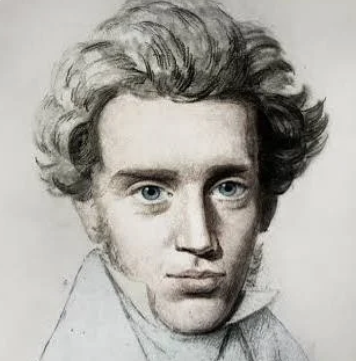
I can understand myself in believing, although in addition I can in a relative misunderstanding comprehend the human aspect of this life: but comprehend faith or comprehend Christ, I cannot.

7 months 2 days ago
The possibility of peace, on whose behalf many are working, might perhaps become actual because the technical advances in offensive weapons make the prospect of a European war so disastrous, and because, if the nations were at grips again, even the victorious aggressor would be ruined. But there still remains open the possibility of a new war which, more dreadful than any that have preceded it would make an end of contemporary Europeans.

5 months 3 weeks ago
God give me strength to face a fact though it slay me.
▼
Source
source
As quoted in Nature Vol. 149 (Jan-Jun) 1942 p. 291, and A Philosophy for Our Time (1954) by Bernard Mannes Baruch, p. 13
8 months 2 weeks ago
I prefer the company of peasants because they have not been educated sufficiently to reason incorrectly.
7 months 2 weeks ago
I am far from denying that newspapers in democratic countries lead citizens to do very ill-considered things in common; but without newspapers there would be hardly any common action at all. So they mend many more ills than they cause.
▼
Source
source
Book Two, Chapter VI.
CivilSimian.com created by AxiomaticPanic, CivilSimian, Kalokagathia