


4 months 6 days ago
There are men who astonish and delight, men who instruct and guide. Some men's words I remember so well that I must often use them to express my thought. Yes, because I perceive that we have heard the same truth, but they have heard it better.
▼
Source
source
Character

4 months 3 weeks ago
Pleasant it is, when over a great sea the winds trouble the waters, to gaze from shore upon another's great tribulation: not because any man's troubles are a delectable joy, but because to perceive from what ills you are free yourself is pleasant.
▼
Source
source
Book II, lines 1-4 (tr. Rouse)
1 month 2 days ago
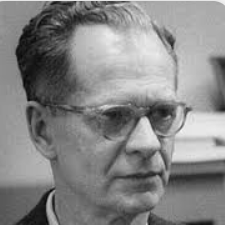
I do not admire myself as a person. My successes do not override my shortcomings.
▼
Source
source
Journal of Humanistic Psychology (Spring 1991) Vol. 31 No. 2, p. 112

3 weeks ago
It would be some consolation for the feebleness of ourselves and our works, if all things should perish as slowly as they come into being; but as it is, increases are of sluggish growth, but the way to ruin is rapid.
▼
Source
source
Letters to Lucilius, letter 91, page 294.
4 months 6 days ago
Next to the originator of a good sentence is the first quoter of it.
▼
Source
source
Quotation and Originality


3 months 1 week ago
Our philosophy... reduceth to a single origin and relateth to a single end, and maketh contraries to coincide so that there is one primal foundation both of origin and of end. From this coincidence of contraries, we deduce that ultimately it is divinely true that contraries are within contraries; wherefore it is not difficult to compass the knowledge that each thing is within every other.
▼
Source
source
As translated by Dorothea Waley Singer

3 months 3 weeks ago
Unto Thee, O Lord, the Soul of Creation cried: "For whom didst Thou create me, and who so fashioned me? Feuds and fury, violence and the insolence of might have oppressed me; None have I to protect me save Thee; Command for me then the blessings of a settled, peaceful life."
▼
Source
source
Ahunuvaiti Gatha; Yasna 29, 1.
1 month 2 weeks ago
Of the twenty-two civilizations that appear in history, nineteen of them collapsed when they reached the moral state the United States is in now. The average age of the world's great civilizations has been 200 years. All nations have progressed through this sequence:From bondage to spiritual faithFrom spiritual faith to great courageFrom courage to libertyFrom liberty to abundanceFrom abundance to selfishnessFrom selfishness to complacencyFrom complacency to apathyFrom apathy to dependencyFrom dependency back again into bondage.
▼
Source
source
In Joe D. Batten and Gail Batten, The Confidence Chasm (New York: American Management Association, 1972) p. 118

5 months 4 days ago
If you're going to write a story, avoid contemporary references. They date a story and they have no staying power.
2 months 3 weeks ago
The Text is plural. Which is not simply to say that it has several meanings, but that it accomplishes the very plural of meaning: an irreducible (and not merely an acceptable) plural. The Text is not a co-existence of meanings but a passage, an overcrossing; thus it answers not to an interpretation, even a liberal one, but to an explosion, a dissemination.
▼
Source
source
Proposition 4

4 months 6 days ago
Happiness is not achieved by the conscious pursuit of happiness; it is generally the by-product of other activities.
▼
Source
source
Essay "Religion and Time" in Vedanta for the Western World (1945) edited by Christopher Isherwood

4 months 1 week ago
"Optimism," said Cacambo, "What is that?" "Alas!" replied Candide, "It is the obstinacy of maintaining that everything is best when it is worst!

4 months 1 day ago
Reaching and understanding is the process of bringing about an agreement on the presupposed basis of validity claims that are mutually recognized.
▼
Source
source
p. 23
4 months 6 days ago
There is always a best way of doing everything, if it be to boil an egg. Manners are the happy ways of doing things; each once a stroke of genius or of love, - now repeated and hardened into usage. They form at last a rich varnish, with which the routine of life is washed, and its details adorned.
▼
Source
source
Behavior

6 days ago
That one hundred and fifty lawyers should do business together ought not to be expected.
▼
Source
source
On the U.S. Congress, in his Autobiography, 6 January 1821

4 months 2 days ago
The child learns to believe a host of things. I.e. it learns to act according to these beliefs. Bit by bit there forms a system of what is believed, and in that system some things stand unshakeably fast and some are more or less liable to shift. What stands fast does so, not because it is intrinsically obvious or convincing; it is rather held fast by what lies around it.
1 month 3 weeks ago
We have classical associations and great names of our own which we can confidently oppose to the most splendid of ancient times. Senate has not to our ears a sound so venerable as Parliament. We respect the Great Charter more than the laws of Solon. The Capitol and the Forum impress us with less awe than our own Westminster Hall and Westminster Abbey... The list of warriors and statesmen by whom our constitution was founded or preserved, from De Montfort down to Fox, may well stand a comparison with the Fasti of Rome. The dying thanksgiving of Sydney is as noble as the libation which Thrasea poured to Liberating Jove: and we think with far less pleasure of Cato tearing out his entrails than of Russell saying, as he turned away from his wife, that the bitterness of death was past.
▼
Source
source
'History', The Edinburgh Review (May 1828), quoted in The Miscellaneous Writings of Lord Macaulay, Vol. I (1860), p. 252
4 months 2 weeks ago
As soon as the soul has been made to perceive that a thing can conduct it to that which it loves supremely, it must inevitably embrace it with joy.

2 months 3 days ago
Natural selection is like artificial selection, but without the human chooser. Instead of a human deciding which offspring shall die in which shall reproduce, nature 'decides'. The quotation marks are vital because nature doesn't consciously decide. This might seem too obvious to emphasize, but you'd be surprised by the number of people who think natural selection implies some kind of personal choice. They couldn't be more wrong. It just is the case that some offspring are more likely to die while others have what it takes to survive and reproduce. Therefore, as the generations go by, the average, typical creature in the population becomes ever better at the arts of surviving and reproducing. Ever better, I should specify, when, when measured against some absolute standard.
▼
Source
source
Chapter 1, "Facing Mount Rushmore" (p. 34)

2 months 3 weeks ago
If we love God while thinking that he does not exist, he will manifest his existence.
▼
Source
source
p. 260

1 month 1 week ago
The irony of the post-Cold War period is that the fall of communism was followed by the rise of another utopian ideology. In American and Britain, and to a lesser extent other Western countries, a type of market fundamentalism became the guiding philosophy. The collapse of American power that is underway is the predictable upshot.
4 months 1 week ago
A man's face as a rule says more, and more interesting things, than his mouth, for it is a compendium of everything his mouth will ever say, in that it is the monogram of all this man's thoughts and aspirations.
▼
Source
source
Vol. 2, Ch. 29, § 377
1 month 4 weeks ago
[Asked "Do you still favour English independence?"] No, I don't think I've ever really favoured English independence. My view is that if the Scots want to be independent then we should aim for the same thing. Scottish independence, I don't think the Welsh want independence, the Northern Irish certainly don't. The Scottish desire for independence is, to some extent, a fabrication. They want to identify themselves as Scots but still to be part of a,[sic] to enjoy the subsidy they get from being part of the kingdom. I can see there are Scottish nationalists who envision something more than that, but if that becomes a real political force then yeah, we should try for independence too. As it is, as you know, the Scots have two votes: they can vote for their own parliament and vote to put their people into our parliament, who come to our parliament with no interest in Scotland but an interest in bullying us.

4 months 1 week ago
What would become of history, had we not a dependence on the veracity of the historian, according to the experience, what we have had of mankind?
▼
Source
source
§ 8.18

3 days ago
At dawn, when you have trouble getting out of bed, tell yourself: 'I have to go to work - as a human being. What do I have to complain of, if I'm going to do what I was born for - the things I was brought into the world to do? Or is this what I was created for? To huddle under the blankets and stay warm?' (Hays translation) At dawn of day, when you dislike being called, have this thought ready: "I am called to man's labour; why then do I make a difficulty if I am going out to do what I was born to do and what I was brought into the world for?
▼
Source
source
(Farquharson translation)
3 days ago
Hasten [to examine] thy own ruling faculty and that of the universe and that of thy neighbor: thy own, that thy may make it just; and that of the universe, that thou mayst remember of what thou art a part; and that of thy neighbor, that thy mayst know whether he has acted ignorantly or with knowledge, and that thou mayst also consider that his ruling faculty is akin to thine.
▼
Source
source
IX, 22

3 months 3 days ago
Everything turns on pain; the rest is accessory, even nonexistent, for we remember only what hurts. Painful sensations being the only real ones, it is virtually useless to experience others.
3 months 3 days ago
Just as man as a social being, cannot in the long run exist without a tie to the community, so the individual will never find the real justification for his existence, and his own spiritual and moral autonomy, anywhere except in an extramundane principle capable of relativizing the overpowering influence of external factors.
▼
Source
source
p 23
2 months 3 weeks ago
I am I and my circumstance, and if I don't save it I don't save myself.

4 months 1 day ago
Monsters cannot be announced. One cannot say: 'here are our monsters', without immediately turning the monsters into pets.
▼
Source
source
Some Statements and Truisms about Neologisms, Newisms, Postisms, Parasitisms, and other small Seismisms, The States of Theory, ed. David Carroll, New York: Columbia University Press, 1989.
1 month 3 weeks ago
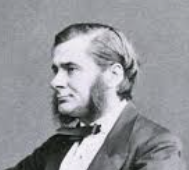
If a well were sunk at our feet in the midst of the city of Norwich, the diggers would very soon find themselves at work in that white substance almost too soft to be called rock, with which we are all familiar as "chalk".
4 months 1 week ago
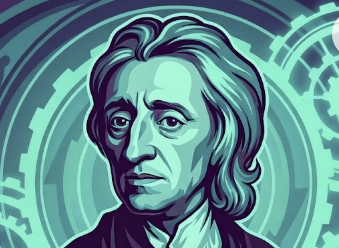
The scene should be gently open'd, and his entrance made step by step, and the dangers pointed out that attend him from several degrees, tempers, designs, and clubs of men. He should be prepared to be shocked by some, and caress'd by others; warned who are like to oppose, who to mislead, who to undermine him, and who to serve him. He should be instructed how to know and distinguish them; where he should let them see, and when dissemble the knowledge of them and their aims and workings.
▼
Source
source
Sec. 94
4 months 1 week ago
Ancient histories, as one of our wits has said, are but fables that have been agreed upon.
▼
Source
source
Jeannot et Colin, 1764

4 days ago
Either every imaginable institution is founded on a religious concept or it is only a passing phenomenon. Institutions are strong and durable to the degree that they are, so to speak, deified. Not only is human reason, or what is ignorantly called philosophy, incapable of supplying these foundations, which with equal ignorance are called superstitious, but philosophy is, on the contrary, an essentially disruptive force.
▼
Source
source
Chapter V, p. 41
3 days ago
The best revenge is not to be like your enemy.
▼
Source
source
VI, 6

2 months 3 weeks ago
Seek, therefore, thyself! But in finding oneself, does not one find one's own nothingness? ...Carlyle answers (Past and Present, book iii, chap. xi.). "The latest Gospel in the world is, Know thy work and do it. Know thyself: long enough has that poor self of thine tormented thee; thou wilt never get to know it, I believe! Think it thy business, this of knowing thyself; thou art an unknowable individual: know what thou canst work at; and work at it, like Hercules. That will be thine better plan." ...and what is my work? - without thinking about myself, is to love God. ...And on the other hand, in loving God in myself, am I not loving myself more than God, am I not loving myself in God?
2 months 4 days ago
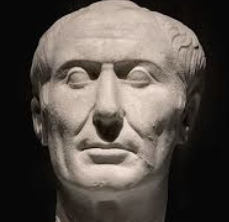
Life is short, but its ills make it seem long.
▼
Source
source
Maxim 124
4 months 6 days ago
The propagandist's purpose is to make one set of people forget that certain other sets of people are human.
▼
Source
source
"Words and Behaviour", The Olive Tree, 1936
2 weeks 3 days ago
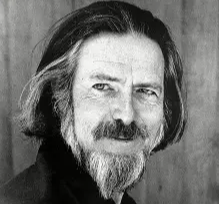
This mysterious something has been called God, the Absolute, Nature, Substance, Energy, Space, Ether, Mind, Being, the Void, the Infinite-names and ideas which shift in popularity and respectabilitywith the winds of intellectual fashion, of considering the universe intelligent or stupid, superhuman or subhuman, specific or vague. All of them might be dismissed as nonsense-noises if the notion of an underlying Ground of Being were no more than a product of intellectual speculation. But these names are often used to designate the content of a vivid and almost sensorily concrete experience-the "unitive" experience of the mystic, which, with secondary variations, is found in almost all cultures at all times. This experience is the transformed sense of self which I was discussing in the previous chapter, though in "naturalistic" terms, purified of all hocus-pocus about mind, soul, spirit, and other intellectually gaseous words.
▼
Source
source
p. 104-105

3 weeks 6 days ago
O thou who art able to write a Book, which once in the two centuries or oftener there is a man gifted to do, envy not him whom they name City-builder, and inexpressibly pity him whom they name Conqueror or City-burner! Thou too art a Conqueror and Victor; but of the true sort, namely over the Devil: thou too hast built what will outlast all marble and metal, and be a wonder-bringing City of the Mind, a Temple and Seminary and Prophetic Mount, whereto all kindreds of the Earth will pilgrim.
▼
Source
source
Bk. II, ch. 8.

5 months 1 week ago
In Germany there is much complaining about my "eccentricities." But since it is not known where my center is, it won't be easy to find out where or when I have thus far been "eccentric." That I was a philologist, for example, meant that I was outside my center (which fortunately does not mean that I was a poor philologist). Likewise, I now regard my having been a Wagnerian as eccentric. It was a highly dangerous experiment; now that I know it did not ruin me, I also know what significance it had for me — it was the most severe test of my character.
1 month 3 weeks ago
It may be that the public mind of India may expand under our system till it has outgrown that system; that by good government we may educate our subjects into a capacity for better government, that, having become instructed in European knowledge, they may, in some future age, demand European institutions. Whether such a day will ever come I know not. But never will I attempt to avert or to retard it. Whenever it comes, it will be the proudest day in English history.
▼
Source
source
Speech in the House of Commons
4 months 1 week ago
The spurious axioms of the third kind from conditions proper to the subject whence they are transferred rashly to the object are plentiful, not, as in those of the Second Class, because the only way to the intellectual concept lies through the sensuous data, but because only by aid of the latter can the concept be applied to that which is given by experience, that is, can we know whether something is contained under a certain intellectual concept or not. To this class belongs the threadbare one of the schools: whatever exists contingently does at some time not exist. This spurious principle springs from the poverty of the intellect, having insight frequently into the nominal, rarely into the real, marks of contingency or necessity.

4 months 1 week ago
Obscenity is whatever happens to shock some elderly and ignorant magistrate.
▼
Source
source
Quoted in Look (New York, 23 February 1954). Cf. Russell (1928), Sceptical Essays
6 days ago
We are not to expect to be translated from despotism to liberty in a featherbed.
▼
Source
source
Letter to Gilbert du Motier, marquis de Lafayette
5 months 1 week ago
Knowledge more than a Means. Also without this passion I refer to the passion for knowledge, science would be furthered: science has hitherto increased and grown up without it. The good faith in science, the prejudice in its favour, by which States are at present dominated (it was even the Church formerly), rests fundamentally on the fact that the absolute inclination and impulse has so rarely revealed itself in it, and that science is regarded not as a passion, but as a condition and an "ethos." Indeed, amour-plaisir of knowledge (curiosity) often enough suffices, amour-vanity suffices, and habituation to it, with the afterthought of obtaining honour and bread; it even suffices for many that they do not know what to do with a surplus of leisure, except to continue reading, collecting, arranging, observing and narrating; their "scientific impulse" is their ennui.
3 months 3 days ago
Mind, even more deadly to empires than to individuals, erodes them, compromises their solidity.
CivilSimian.com created by AxiomaticPanic, CivilSimian, Kalokagathia