


2 months 3 weeks ago
As man loses touch with his 'inner being', his instinctive depths, he finds himself trapped in the world of consciousness, that is to say, in the world of other people. Any poet knows this truth; when other people sicken him, he turns to hidden resources of power inside himself, and he knows then that other people don't matter a damn. He knows the 'secret life' inside him is the reality; other people are mere shadows in comparison. but the 'shadows' themselves cling to one another. 'Man is a political animal', said Aristotle, telling one of the greatest lies in human history. Man has more in common with the hills, or with the stars, than with other men.
▼
Source
source
p. 170

5 months 1 week ago
Anxiety and nothing always correspond to each other. As soon as the actuality of freedom and of spirit is posited, anxiety is canceled. But what then does the nothing of anxiety signify more particularly in paganism. This is fate. Fate is a relation to spirit as external. It is the relation between spirit and something else that is not spirit and to which fate nevertheless stands in a spiritual relation. Fate may also signify exactly the opposite, because it is the unity of necessity and accidental. ... A necessity that is not conscious of itself is eo ipso the accidental in relation to the next moment. Fate, then, is the nothing of anxiety.

3 months 1 week ago
What am I, other than a chance in the infinite probabilities of not having been!

1 week 4 days ago
Let those flatter who fear; it is not an American art. To give praise which is not due might be well from the venal, but would ill beseem those who are asserting the rights of human nature. They know, and will therefore say, that kings are the servants, not the proprietors of the people.
2 months 3 weeks ago
In most men, the conscious and the unconscious being hardly ever make contact; consequently the conscious aim is to make himself as comfortable as possible with as little effort as possible. But there are other men, whom we have been calling, for convenience, 'Outsiders', whose conscious and unconscious being keep in closer contact, and the conscious mind is forever aware of the urge to care about 'more abundant life', and care less about comfort and stability and the rest of the notions that are so dear to the bourgeois.
▼
Source
source
Chapter Nine, Breaking the Circuit
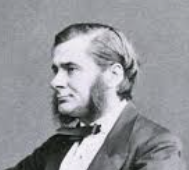
1 month 3 weeks ago
The student of development finds, not only that the chick commences its existence as an egg, primarily identical, in all essential respects, with that of the Dog, but that the yelk of this egg undergoes division-that the primitive groove arises, and that the contiguous parts of the germ are fashioned, by precisely similar methods into a young chick, which, at one stage of its existence, is so like the nascent Dog, that ordinary inspection would hardly distinguish the two.
▼
Source
source
The history of the development of any other vertebrate animal, Lizard, Snake, Frog, or Fish, tells the same story. Ch.2, p. 79
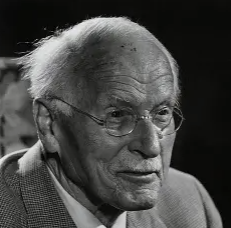
3 months 1 week ago
The dream is the small hidden door in the deepest and most intimate sanctum of the soul, which opens to that primeval cosmic night that was soul long before there was conscious ego and will be soul far beyond what a conscious ego could ever reach.
▼
Source
source
The Meaning of Psychology for Modern Man

5 months 1 week ago
Absolute freedom mocks at justice. Absolute justice denies freedom. To be fruitful, the two ideas must find their limits in each other.
▼
Source
source
"Historical Murder", as translated by Anthony Bower

2 months 1 week ago
The metropolis today is a classroom; the ads are its teachers. The traditional classroom is an obsolete detention home, a feudal dungeon.
▼
Source
source
(p. 12)

4 months 3 weeks ago
The philosophers who wished us to have the gods for our friends rank the friendship of the holy angels in the fourth circle of society, advancing now from the three circles of society on earth to the universe, and embracing heaven itself. And in this friendship we have indeed no fear that the angels will grieve us by their death or deterioration. But as we cannot mingle with them as familiarly as with men (which itself is one of the grievances of this life), and as Satan, as we read, sometimes transforms himself into an angel of light, to tempt those whom it is necessary to discipline, or just to deceive, there is great need of God's mercy to preserve us from making friends of demons in disguise, while we fancy we have good angels for our friends; for the astuteness and deceitfulness of these wicked spirits is equalled by their hurtfulness.
▼
Source
source
XIX, 9
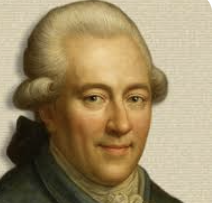
2 months 3 weeks ago
We accumulate our opinions at an age when our understanding is at its weakest.
▼
Source
source
H 4

4 months 1 week ago
Who does not see that we are likely to ascertain the distinctive significance of religious melancholy and happiness, or of religious trances, far better by comparing them as conscientiously as we can with other varieties of melancholy, happiness, and trance, than by refusing to consider their place in any more general series, and treating them as if they were outside of nature's order altogether?
▼
Source
source
Lecture I, "Religion and Neurology"

1 month 3 weeks ago
Lakshmi, the Goddess of wealth, comes of Her own accord where fools are not respected, grain is well stored up, and the husband and wife do not quarrel.
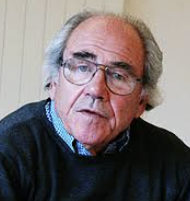
2 months 2 weeks ago
Distinctive signs, full signs, never seduce us.
▼
Source
source
(p. 59)
1 week 5 days ago
While experiencing happiness, we have difficulty in being conscious of it. Only when the happiness is past and we look back on it we do suddenly realize - sometimes with astonishment - how happy we had been.
▼
Source
source
Ch. 6

2 months 1 week ago
The Quakers sent me books, from which I learnt how they had, years ago, established beyond doubt the duty for a Christian of fulfilling the command of non-resistance to evil by force, and had exposed the error of the Church's teaching in allowing war and capital punishment.
▼
Source
source
Chapter I, The Doctrine of Non-resistance to Evil by Force has been Professed by a Minority of Men from the Very Foundation of Christianity
4 months 1 week ago
The beginning of religion, more precisely its content, is the concept of religion itself, that God is the absolute truth, the truth of all things, and subjectively that religion alone is the absolutely true knowledge.
3 months 2 days ago
Lichtenberg ... held something of the following kind: one should neither affirm the existence of God nor deny it. ... It is not that he wished to leave certain perspectives open, nor to please everyone. It is rather that he was identifying himself, for his part, with a consciousness of self, of the world, and of others that was "strange" (the word is his) in a sense which is equally well destroyed by the rival explanations.
▼
Source
source
pp. 45-46

2 months 4 weeks ago
In the vast all of the Universe, must there be this unique anomaly - a consciousness that knows itself, loves itself and feels itself, joined to an organism which can only live within such and such degrees of heat, a merely transitory phenomenon? No, it is not mere curiosity that inspires the wish to know whether or not the stars are inhabited by living organisms, by consciousness akin to our own, and a profound longing enters into that dream that our souls shall pass from star to star through the vast spaces of the heavens, in an infinite series of transmigrations. The feeling of the divine makes us wish and believe that everything is animated, that consciousness, in a greater or less degree, extends through everything. We wish not only to save ourselves, but to save the world from nothingness. And therefore God. Such is his finality as we feel it.
1 month 2 weeks ago
Talking about dreams is like talking about movies, since the cinema uses the language of dreams; years can pass in a second and you can hop from one place to another. It's a language made of image. And in the real cinema, every object and every light means something, as in a dream.
▼
Source
source
As quoted in Rolling Stone no. 421
2 months 1 week ago
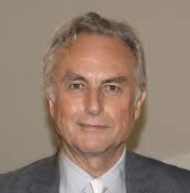
Just because science so far has failed to explain something, such as consciousness, to say it follows that the facile, pathetic explanations which religion has produced somehow by default must win the argument is really quite ridiculous.
▼
Source
source
Steve Paulson, "The flying spaghetti monster" Salon.com

1 month 2 days ago
Far be it from me to say or insinuate a word of disparagement against such characters as Hampden, Elliot, Pym; whom I believe to have been right worthy and useful men. I have read diligently what books and documents about them I could come at;-with the honestest wish to admire, to love and worship them like Heroes; but I am sorry to say, if the real truth must be told, with very indifferent success! At bottom, I found that it would not do. They are very noble men, these; step along in their stately way, with their measured euphemisms, philosophies, parliamentary eloquences, Ship-moneys, Monarchies of Man; a most constitutional, unblamable, dignified set of men. But the heart remains cold before them.
1 month 3 weeks ago
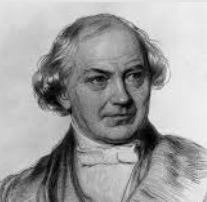
Each such answer to the great question, invariably asserted by the followers of its propounder, if not by himself, to be complete and final, remains in high authority and esteem, it may be for one century, or it may be for twenty: but, as invariably, Time proves each reply to have been a mere approximation to the truth-tolerable chiefly on account of the ignorance of those by whom it was accepted, and wholly intolerable when tested by the larger knowledge of their successors.
▼
Source
source
Ch.2, p. 72
1 week 4 days ago
A whale is not a fish in natural history, but it is a fish in commerce and law. A plea that human laws which mention fish do not apply to whales, would be rejected at once by an intelligent judge.

4 months 1 week ago
Malthus's population principle was quite as much a banner, and a point of union among us, as any opinion specially belonging to Bentham. This great doctrine, originally brought forward as an argument against the indefinite improvability of human affairs, we took up with ardent zeal in the contrary sense, as indicating the sole means of realizing that improvability by securing full employment at high wages to the whole labouring population through a voluntary restriction of the increase of their numbers.
▼
Source
source
(p. 105)

4 months 1 week ago
To discover the various use of things is the work of history.
▼
Source
source
Vol. I, Ch. 1, Section 1, pg. 42.

3 weeks 5 days ago
Socrates was ennobled by the hemlock draught. Wrench from Cato's hand his sword, the vindicator of liberty, and you deprive him of the greatest share of his glory.
3 months 1 week ago
No longer ask me for my program: isn't breathing one?

5 months 1 day ago
They hate not to make use of their abilities... they do not necessarily work for their own self-interest.
3 months 3 days ago
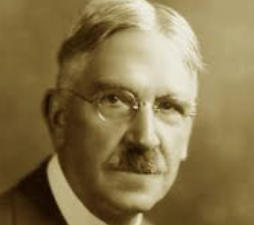
Works of art express space as opportunity for movement and action.
▼
Source
source
p. 217
3 months 2 weeks ago
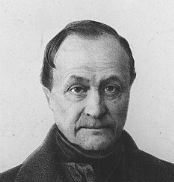
The first condition of unity is a subjective principle; and this principle in the Positive system is the subordination of the intellect to the heart: Without this the unity that we seek can never be placed on a permanent basis, whether individually or collectively. It is essential to have some influence sufficiently powerful to produce convergence amid the heterogeneous and often antagonistic tendencies of so complex an organism as ours.
▼
Source
source
p. 24

4 months 1 week ago
But what of the poor Ghosts who never get into the omnibus at all?' 'Everyone who wishes it does. Never fear. There are only two kinds of people in the end: those who say to God, "Thy will be done," and those to whom God says, in the end, "Thy will be done." All that are in Hell, choose it. Without that self-choice there could be no Hell. No soul that seriously and constantly desires joy will ever miss it. Those who seek find. To those who knock it is opened.
▼
Source
source
Ch. 9, p. 72; part of this has also been rendered in a variant form, and quoted as:

3 months 4 days ago
Even the most inspired verse, which boasts not without a relative justification to be immortal, becomes in the course of ages a scarcely legible hieroglyphic; the language it was written in dies, a learned education and an imaginative effort are requisite to catch even a vestige of its original force. Nothing is so irrevocable as mind.

2 months 3 weeks ago
It is the aim of public life to arrange that all forms of power are entrusted, so far as possible, to men who effectively consent to be bound by the obligation towards all human beings which lies upon everyone, and who understand the obligation. Law is the quality of the permanent provisions for making this aim effective.

1 month 6 days ago
There is a left wing version of this longing for community... because in a liberal society we never move as quickly as we should towards full equality, and therefore there are many marginalized groups who feel that the liberal society is... hypocritical, that it's promising an equality of recognition, and of rights, but it is not delivering... and therefore the very concept of liberal universalism is challenged in favor of a definition of rights that is tied to the specific groups.
▼
Source
source
18:44

3 months 1 week ago
No sound ought to be heard in the church but the healing voice of Christian charity.

3 months 2 weeks ago
You may set the Negro free, but you cannot make him otherwise than an alien to the European. Nor is this all we scarcely acknowledge the common features of humanity in this stranger whom slavery has brought among us. His physiognomy is to our eyes hideous, his understanding weak, his tastes low; and we are almost inclined to look upon him as a being intermediate between man and the brutes.
▼
Source
source
Chapter XVIII.

3 months 2 weeks ago
All things are artificial, for nature is the Art of God.
▼
Source
source
Section 16

4 months 2 weeks ago
The plague of man is boasting of his knowledge.
▼
Source
source
Ch. 12 (tr. ?)
2 months 3 weeks ago
The most successful tempters and thus the most dangerous are the deluded deluders.
▼
Source
source
F 120
3 months 2 weeks ago
He who discommendeth others obliquely commendeth himself.
▼
Source
source
Part I, Section XXXIV
5 months 1 week ago
Real fulfillment, for the man who allows absolutely free rein to his desires, and who must dominate everything, lies in hatred.

8 months 2 weeks ago
I believe in clear-cut positions. I think that the most arrogant position is this apparent, multidisciplinary modesty of "what I am saying now is not unconditional, it is just a hypothesis," and so on. It really is a most arrogant position. I think that the only way to be honest and expose yourself to criticism is to state clearly and dogmatically where you are. You must take the risk and have a position.
1 week 4 days ago
As to the species of exercise, I advise the gun. While this gives a moderate exercise to the body, it gives boldness, enterprise, and independence to the mind. Games played with the ball, and others of that nature, are too violent for the body, and stamp no character on the mind. Let your gun therefore be the constant companion of your walks. Never think of taking a book with you.
3 months 1 week ago
Let us apply these principles to adultery. The state can no more prohibit it or punish it by law than any other illegitimate satisfaction of the sexual impulse.
▼
Source
source
P. 431


3 months 4 days ago
I am the resurrection and the life. The one who exercises faith in me, even though he dies, will come to life; and everyone who is living and exercises faith in me will never die at all.
▼
Source
source
11:25-26, NWT

1 month 6 days ago
We aspire not to equality but to domination. Countries inhabited by foreign races must become again countries of serfs, farm laborers, and factory workers. The goal is not to suppress inequities, but, rather, to amplify them and to make of them a matter of course.
▼
Source
source
as translated by Asselin Charles, in "Colonial Discourse Since Christopher Columbus," Journal of Black Studies, Vol. 26, No. 2 (November 1995), p. 147
4 months 1 week ago
A bureaucracy always tends to become a pedantocracy.
▼
Source
source
Ch. VI: Of the Infirmities and Dangers to Which Representative Government Is Liable (p. 234)

2 months 3 weeks ago
Capitalism lacks narrativity.
CivilSimian.com created by AxiomaticPanic, CivilSimian, Kalokagathia