


8 months 1 week ago
So that is what hell is. I would never have believed it. You remember: the fire and brimstone, the torture. Ah! the farce. There is no need for torture: Hell is other people.
▼
Source
source
Garcin, Act 1, sc. 5

7 months 1 week ago
We are at war with a system, which, by it's essence, is inimical to all other Governments, and which makes peace or war, as peace and war may best contribute to their subversion. It is with an armed doctrine that we are at war. It has, by it's essence, a faction of opinion, and of interest, and of enthusiasm, in every country. To us it is a Colossus which bestrides our channel. It has one foot on a foreign shore, the other upon the British soil. Thus advantaged, if it can at all exist, it must finally prevail.
▼
Source
source
p. 19
8 months 1 week ago
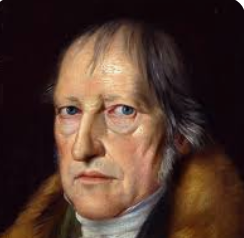
With Leibnitz the extent to which thoughts advance is the extent of the universe; where comprehension ceases, the universe ceases, and God begins: so that later it was even maintained that to be comprehended was derogatory to God, because He was thus degraded into finitude. In that procedure a beginning is made from the determinate, this and that are stated to be necessary; but since in the next place the unity of these moments is not comprehended, it is transferred to God. God is therefore, as it were, the waste channel into which all contradictions flow: Leibnitz's Théodicée is just a popular summing up such as this.
▼
Source
source
Third division, Chapter I. - The Metaphysics of the Understanding Alternate translation: "God is, as it were, the sewer into which all contradictions flow."

5 months 2 weeks ago
For Leopardi evil is integral to the way the world works; but when he talks of evil he does not mean any kind of malign agency of the sort that Gnostics imagined. Evil is the suffering that is built into the scheme of things. 'What hope is there when evil is ordinary?' he asks. 'I mean, in an order where evil is necessary?' These rhetorical questions show why Leopardi had no interest in projects of revolution and reform. No type of human action - least of all the harlequinade of politics - could fundamentally alter a world in which evil was ordinary.
▼
Source
source
The Faith of Puppets: Leopardi and the Souls of Machines (p.35-6)
8 months 2 weeks ago
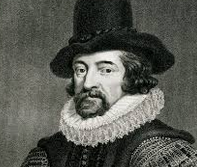
They are ill discoverers that think there is no land, when they can see nothing but sea.
▼
Source
source
Book II, vii, 5

8 months 2 weeks ago
Few men have been admired by their own domestics.
▼
Source
source
Book iii. Chap 2. Of Repentance
5 months 4 days ago
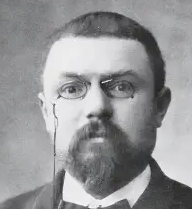
It is because simplicity and vastness are both beautiful that we seek by preference simple facts and vast facts; that we take delight, now in following the giant courses of the stars, now in scrutinizing the microscope that prodigious smallness which is also a vastness, and now in seeking in geological ages the traces of a past that attracts us because of its remoteness.
▼
Source
source
Part I. Ch. 1 : The Selection of Facts, p. 23
9 months 1 week ago
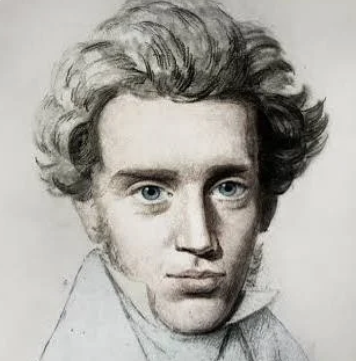
Freedom's possibility is not the ability to choose the good or the evil. The possibility is to be able. In a logical system, it is convenient to say that possibility passes over into actuality. However, in actuality it is not so convenient, and an intermediate term is required. The intermediate term is anxiety, but it no more explains the qualitative leap than it can justify it ethically. Anxiety is neither a category of necessity nor a category of freedom; it is entangled freedom, where freedom is not free in itself but entangled, not by necessity, but in itself.

4 months 3 weeks ago
Thus they are deceived by the likeness of blows, and are appeased by the pretended tears of those who deprecate their wrath, and thus an unreal grief is healed by an unreal revenge.
9 months 1 week ago
Now just as the historical gives occasion for the contemporary to become a disciple, but only it must be noted through receiving the condition from the God himself, since otherwise we speak Socratically, so the testimony of contemporaries gives occasion for each successor to become a disciple, but only it must be noted through receiving the condition from the God himself.
4 months ago
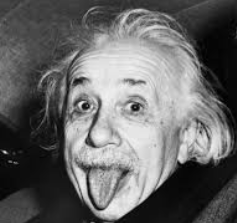
...to the question whether or not the motion of the Earth in space can be made perceptible in terrestrial experiments. We have already remarked... that all attempts of this nature led to a negative result. Before the theory of relativity was put forward, it was difficult to become reconciled to this negative result.
4 months ago
Physical concepts are free creations of the human mind, and are not, however it may seem, uniquely determined by the external world. In our endeavor to understand reality we are somewhat like a man trying to understand the mechanism of a closed watch. He sees the face and the moving hands, even hears its ticking, but he has no way of opening the case. If he is ingenious he may form some picture of a mechanism which could be responsible for all the things he observes, but he may never be quite sure his picture is the only one which could explain his observations. He will never be able to compare his picture with the real mechanism and he cannot even imagine the possibility or the meaning of such a comparison. But he certainly believes that, as his knowledge increases, his picture of reality will become simpler and simpler and will explain a wider and wider range of his sensuous impressions. He may also believe in the existence of the ideal limit of knowledge and that it is approached by the human mind. He may call this ideal limit the objective truth.
▼
Source
source
The Evolution of Physics (1938) (co-written with Leopold Infeld)
6 months 3 weeks ago
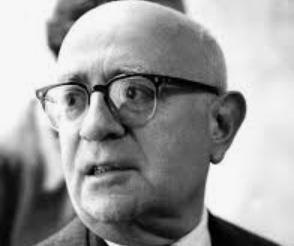
What appears as the positive is essentially the negative, i.e. the thing that is to be criticized.
▼
Source
source
p. 18
9 months 1 week ago
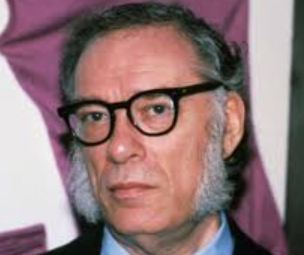
I don't say it was deliberate fraud. He was probably madly sincere, and sincerely mad.

8 months 3 weeks ago
God is surrounded with people full of love who demand of him the benefits of love which are in his power: thus he is properly the king of love.
7 months 1 week ago
Never wholly separate in your Mind the merits of any Political Question from the Men who are concerned in it.
▼
Source
source
Letter to Charles-Jean-François Depont (November 1789), quoted in Alfred Cobban and Robert A. Smith (eds.), The Correspondence of Edmund Burke, Volume VI: July 1789-December 1791 (1967), p. 47

8 months 3 weeks ago
Why, then, do we wonder any longer that, although in material things we are thoroughly experienced, nevertheless in our actions we are dejected, unseemly, worthless, cowardly, unwilling to stand the strain, utter failures one and all? .
▼
Source
source
Book II, ch. 16, 18
5 months 2 weeks ago
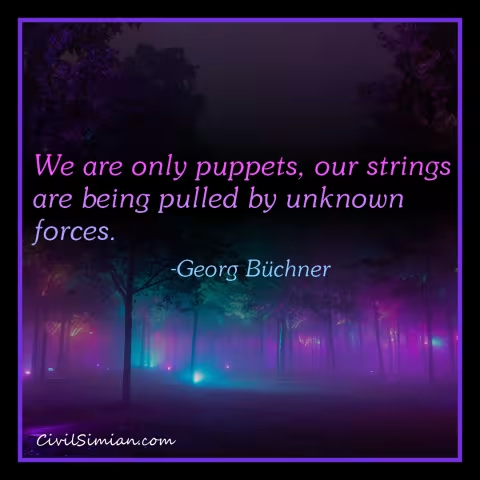
Human beings act, certainly. But none of them knows why they act as they do. There is a scattering of facts, which can be known and reported. Beyond these facts are the stories that are told. Human beings may behave like puppets, but no one is pulling the strings.
▼
Source
source
In The Puppet Theatre: Puppetry, Conspiracy and Ouija Boards (p. 136)
6 months 4 days ago
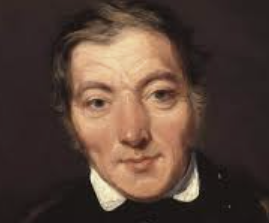
They would receive the same care and attention as those who belong to the establishment. Nor will there be any distinction made between the children of those parents who are deemed the worst, and of those who may be esteemed the best members of society: indeed I would prefer to receive the offspring of the worst, if they shall be sent at an early age; because they really require more of our care and pity and by well-training these, society will be more essentially benefited than if the like attention were paid to those whose parents are educating them in comparatively good habits. On educating children of the poor, and of neighboring communities.
8 months 2 weeks ago
Those who have handled sciences have been either men of experiment or men of dogmas. The men of experiment are like the ant, they only collect and use; the reasoners resemble spiders, who make cobwebs out of their own substance. But the bee takes a middle course: it gathers its material from the flowers of the garden and of the field, but transforms and digests it by a power of its own. Not unlike this is the true business of philosophy; for it neither relies solely or chiefly on the powers of the mind, nor does it take the matter which it gathers from natural history and mechanical experiments and lay it up in the memory whole, as it finds it, but lays it up in the understanding altered and digested. Therefore from a closer and purer league between these two faculties, the experimental and the rational (such as has never yet been made), much may be hoped.
▼
Source
source
Aphorism 95
4 months 2 weeks ago
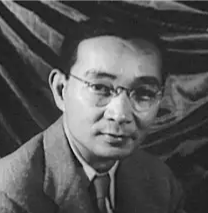
Our task is not so much discovery as re-discovery. What one needs is not so much thinking as remembering. Sometimes it suffices to sit quietly and listen well, when venerable men have thought before us. Constant forgettings of truths once perceived are the very charm of the human mind; the history of human thought is nothing more than the story of these forgettings and rememberings and forgettings again.
▼
Source
source
On the Wisdom of America (1950), p. xiv
4 months 1 week ago
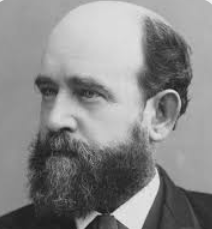
It is too narrow an understanding of production which confines it merely to the making of things. Production includes not merely the making of things, but the bringing of them to the consumer. The merchant or storekeeper is thus as truly a producer as is the manufacturer, or farmer, and his stock or capital is as much devoted to production as is theirs.
▼
Source
source
Book I, Ch. 2
6 months 3 weeks ago
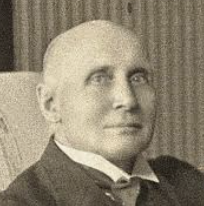
Any physical object which by its influence deteriorates its environment, commits suicide.
▼
Source
source
Ch. 6: "The Nineteenth Century", p. 155

8 months 1 week ago
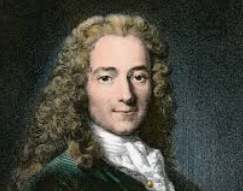
Let the punishments of criminals be useful. A hanged man is good for nothing; a man condemned to public works still serves the country, and is a living lesson.
▼
Source
source
"Civil and Ecclesiastical Laws," Dictionnaire philosophique (1785-1789)
9 months 1 week ago
So it happens at times that a person believes that he has a world-view, but that there is yet one particular phenomenon that is of such a nature that it baffles the understanding, and that he explains differently and attempts to ignore in order not to harbor the thought that this phenomenon might overthrow the whole view, or that his reflection does not possess enough courage and resolution to penetrate the phenomenon with his world-view.

8 months 1 week ago
What potent blood hath modest May!
▼
Source
source
May-Day
7 months 1 week ago
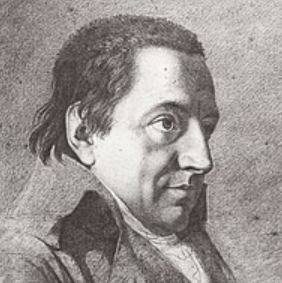
Every other art,-as poetry, music, painting,-may be practised without the process showing forth the rules according to which it is conducted ;-but in the self-cognizant art of the philosopher, no step can be taken without declaring the grounds upon which it proceeds.
▼
Source
source
p. 14

7 months 6 days ago
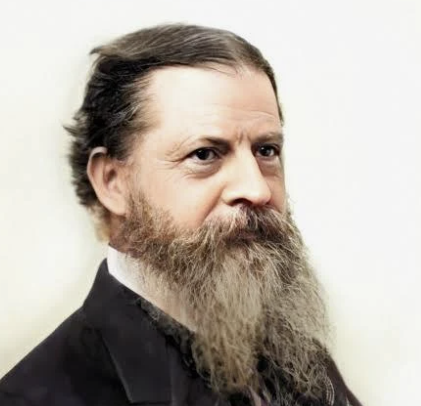
Wherever ideas come together they tend to weld into general ideas; and whenever they are generally connected, general ideas govern the connection; and these general ideas are living feelings spread out.

6 months 1 week ago
Renaissance Italy became a kind of Hollywood collection of sets of antiquity, and the new visual antiquarianism of the Renaissance provided an avenue to power for men of any class.
▼
Source
source
(p. 136)
7 months 3 days ago
Reason ... contradicts the established order of men and things on behalf of existing societal forces that reveal the irrational character of this order - for "rational" is a mode of thought and action which is geared to reduce ignorance, destruction, brutality, and oppression.
▼
Source
source
pp. 141-142

6 months 1 week ago
To subdue destruction is one of the most important affirmations of which we are capable in this world. It is the affirmation of this life, bound up with yours, and with the realm of the living: an affirmation caught up with a potential for destruction and its countervailing force.
▼
Source
source
p. 65
6 months 4 days ago
Believe me, my friends, you are yet very deficient with regard to the best modes of training your children, or of arranging your domestic concerns.
7 months 1 day ago
We are sorely deficient in talking with each other and listening to each other. We lack mobility, criticism and self-criticism. We incline to doctrinism. What makes it worse is that so many people do not really want to think. They want only slogans and obedience. They ask no questions and they give no answers, except by repeating drilled-in phrases. They can only assert and obey, neither probe nor apprehend. Thus they cannot be convinced, either. How shall we talk with people who will not go where others probe and think, where men seek independence in insight and conviction?

8 months 1 day ago
I will now tell you who are assembled here the wise sayings of Mazda, the praises of Ahura and the hymns of the Good Spirit, the sublime truth which I see rising out of these flames. You shall therefore harken to the Soul of Nature. Contemplate the beams of fire with a most pious mind. Every one, both men and women, ought to-day to choose his creed. Ye offspring of renowned ancestors, awake to agree with us. So preached Zoroaster, the proph of the Parsis, in one of his earliest sermons nearly 3,500 years ago.
▼
Source
source
p. 15 (Introduction), S. A. Kapadia
5 months ago
A man is as old as his arteries, and as young as his ideas.
▼
Source
source
Ch. 4 : On Old Age

7 months 2 weeks ago
If man's love for himself be necessary, then his love for Him through whom, first his coming-to-be, and second, his continuance in his essential being with all his inward and outward traits, his substance and his accidents, occur must also be necessary. Whoever is so besotted by his fleshy appetites as to lack this love neglects his Lord and Creator. He possesses no authentic knowledge of Him; his gaze is limited to his cravings and to things of sense.
▼
Source
source
Al-Ghazali on Love, Longing, Intimacy & Contentment, Translated with an introduction and notes by Eric Ormsby. Cambridge: The Islamic Texts Society (2011), p. 25.
8 months 3 weeks ago
The essence of the good is a certain kind of moral purpose, and that of the evil is a certain kind of moral purpose.
▼
Source
source
Book I, ch. 29, 1

4 months 1 week ago
Professional standards, the standards of ambition and selfishness, are always sliding downward toward expense, ostentation, and mediocrity. They tend always to narrow the ground of judgment. But amateur standards, the standards of love, are always straining upward toward the humble and the best. They enlarge the ground of judgment. The context of love is the world.
▼
Source
source
The Responsibility of the Poet

5 months 1 day ago
Close thy Byron; open thy Goethe.
▼
Source
source
Bk. I, ch. 9.
8 months 1 week ago
In this distribution of functions, the scholar is the delegated intellect. In the right state, he is, Man Thinking. In the degenerate state, when the victim of society, he tends to become a mere thinker, or, still worse, the parrot of other men's thinking.
▼
Source
source
pars. 7-8
8 months 1 week ago
Intellectuals cannot be good revolutionaries; they are just good enough to be assassins.
▼
Source
source
Act 5, sc. 3


7 months 6 days ago
God is what survives the evidence that nothing deserves to be thought.
4 months 3 weeks ago
Political freedom means this: that the polis, the state, is free; religious freedom this: that religion is free, just as freedom of conscience indicates that conscience is free; thus, it does not that I am free from state, from religion, from conscience, or that I am rid of them. It does not mean my freedom, but the freedom of a power that rules and vanquishes me; it means that one of my oppressors, like state, religion, conscience, is free.
▼
Source
source
Landstreicher, p. 76
9 months 1 week ago
The tyrant dies and his rule is over; the martyr dies and his rule begins.
CivilSimian.com created by AxiomaticPanic, CivilSimian, Kalokagathia