


6 months 2 weeks ago
I am here to plead his cause with you. I plead not for his life, but for his character - his immortal life; and so it becomes your cause wholly, and is not his in the least. Some eighteen hundred years ago Christ was crucified; this morning, perchance, Captain Brown was hung. These are the two ends of a chain which is not without its links. He is not Old Brown any longer; he is an angel of light.
3 months ago
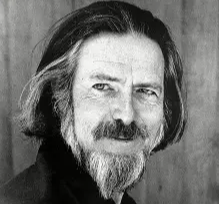
You do not ask what is the value, or what is the use, of this feeling. Of what use is the universe? What is the practical application of a million galaxies? Yet just because it has no use, it has a use-which may sound like a paradox, but is not. What, for instance, is the use of playing music? If you play to make money, to outdo some other artist, to be a person of culture, or to improve your mind, you are not really playing-for your mind is not on the music. You don't swing. When you come to think of it, playing or listening to music is a pure luxury, an addiction, a waste of valuable time and money for nothing more than making elaborate patterns of sound.
▼
Source
source
p. 92

6 months 3 weeks ago
Obstinacy is the result of the will forcing itself into the place of the intellect.
▼
Source
source
Vol. 2, Ch. 26, § 321
7 months 2 weeks ago
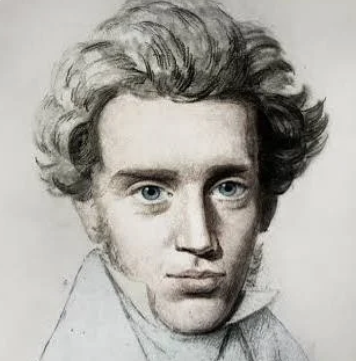
When Christianity came into the world the task was simply to proclaim Christianity. The same is the case wherever Christianity is introduced into a country the religion of which is not Christianity.
5 months 1 week ago
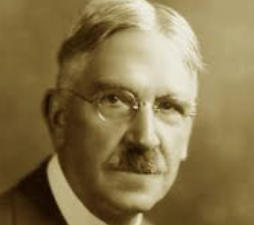
Art expresses, it does not state; it is concerned with existences in their perceived qualities, not with conceptions symbolized in terms.
▼
Source
source
p. 139
6 months 2 weeks ago
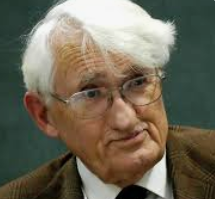
Reaching and understanding is the process of bringing about an agreement on the presupposed basis of validity claims that are mutually recognized.
▼
Source
source
p. 23

5 months 1 week ago
Understanding being nothing else, but conception caused by Speech.
▼
Source
source
The First Part, Chapter 4, p. 17

5 months 1 week ago
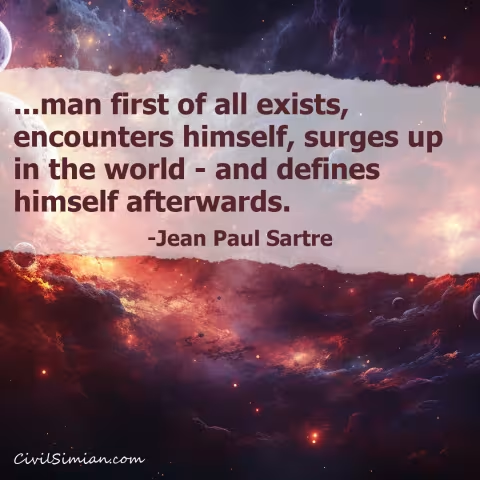
Man does not exercise his thought because he finds it amusing, but because, obliged as he is to live immersed in the world and to force his way among things, he finds himself under the necessity of organizing his psychic activities, which are not very different from those of the anthropoid, in the form of thought - which is what the animal does not do.
▼
Source
source
p. 28
6 months 3 weeks ago
An unbiased reader, on opening one of their [Fichte's, Schelling's or Hegel's] books and then asking himself whether this is the tone of a thinker wanting to instruct or that of a charlatan wanting to impress, cannot be five minutes in any doubt. ... The tone of calm investigation, which had characterized all previous philosophy, is exchanged for that of unshakeable certainty, such as is peculiar to charlatanry of every kind and at all times. ... From every page and every line, there speaks an endeavor to beguile and deceive the reader, first by producing an effect to dumbfound him, then by incomprehensible phrases and even sheer nonsense to stun and stupefy him, and again by audacity of assertion to puzzle him, in short, to throw dust in his eyes and mystify him as much as possible.
▼
Source
source
E. Payne, trans. (1974) Vol. 1, p. 23
3 months 1 week ago
We do not have and cannot have any means of discovering whether or not we are carried along in a uniform motion of translation.
▼
Source
source
L'état actuel et l'avenir de la physique mathematique


5 months 6 days ago
One of those leaders of what they call the social revolution has said that religion is the opiate of the people. Opium...opium...opium, yes. Let us give them opium so that they can sleep and dream.

3 months 1 week ago
But deepest of all illusory Appearances, for hiding Wonder, as for many other ends, are your two grand fundamental world-enveloping Appearances, SPACE and TIME. These, as spun and woven for us from before Birth itself, to clothe our celestial ME for dwelling here, and yet to blind it, - lie all-embracing, as the universal canvas, or warp and woof, whereby all minor Illusions, in this Phantasm Existence, weave and paint themselves. In vain, while here on Earth, shall you endeavor to strip them off; you can, at best, but rend them asunder for moments, and look through.
▼
Source
source
Bk. III, ch. 8.

5 months 3 weeks ago
The lowest degree of education is to distinguish oneself from the ignorant ordinary man. The educated man does not loathe honey even if he finds it in the surgeon's cupping-glass; he realizes that the cupping glass does not essentially alter the honey. The natural aversion from it in such a case rests on popular ignorance, arising from the fact that the cupping-glass is made only for impure blood. Men imagine that the blood is impure because it is in the cupping-glass, and are not aware that the impurity is due to a property.
▼
Source
source
III. The Classes of Seekers, p. 31.

6 months 2 weeks ago
Kant was also quite aware that "the urgent need" of reason is both different from and "more than mere quest and desire for knowledge." Hence, the distinguishing of the two faculties, reason and intellect, coincides with a distinction between two altogether different mental activities, thinking and knowing.
▼
Source
source
p. 14

2 months 2 weeks ago
There is no act, however virtuous, for which ingenuity may not find some bad motive.
▼
Source
source
Letter to Edward Dowse
5 months 2 weeks ago
The doctrine of the transmigration of souls was indigenous to India and was brought into Greece by Pythagoras.
▼
Source
source
quoted in Londhe, S. (2008). A tribute to Hinduism: Thoughts and wisdom spanning continents and time about India and her culture. New Delhi: Pragun Publication.

5 months 1 day ago
Human history began with an act of disobedience, and it is not unlikely that it will be terminated by an act of obedience.
▼
Source
source
Disobedience as a Psychological and Moral Problem in On Disobedience and Other Essays
3 months 1 week ago
To such a one, already filled with intellectual substance, and possessing what we may call the practical gold-bullion of human culture, it was an obvious improvement that he should be taught to speak it out of him on occasion; that he should carry a spiritual banknote producible on demand for what of "gold-bullion" he had, not so negotiable otherwise, stored in the cellars of his mind. A man, with wisdom, insight and heroic worth already acquired for him, naturally demanded of the schoolmaster this one new faculty, the faculty of uttering in fit words what he had. A valuable superaddition of faculty:-and yet we are to remember it was scarcely a new faculty; it was but the tangible sign of what other faculties the man had in the silent state.
6 months 2 weeks ago
We are as much as we see. Faith is sight and knowledge. The hands only serve the eyes.
▼
Source
source
April 9, 1841

3 months 2 weeks ago
To be free in an age like ours, one must be in a position of authority. That in itself would be enough to make me ambitious.
▼
Source
source
Letter to his elder sister Henriette (1841).
2 months 2 weeks ago
But if judicious men skilled in Chymical affairs shall once agree to write clearly and plainly of them, and thereby keep men from being stunn'd... or imposed upon by dark and empty Words; 'tis to be hop'd that these men finding that they can no longer write impertinently and absurdly, without being laugh'd at for doing so, will be reduc'd either to write nothing, or Books that may teach us something, and not rob men, as formerly, of invaluable Time; and so ceasing to trouble the world with Riddles or Impertinencies, we shall either by their Books receive an Advantage, or by their silence escape an Inconvenience.
5 months 1 week ago
We are sorely deficient in talking with each other and listening to each other. We lack mobility, criticism and self-criticism. We incline to doctrinism. What makes it worse is that so many people do not really want to think. They want only slogans and obedience. They ask no questions and they give no answers, except by repeating drilled-in phrases. They can only assert and obey, neither probe nor apprehend. Thus they cannot be convinced, either. How shall we talk with people who will not go where others probe and think, where men seek independence in insight and conviction?
5 months 6 days ago
Glorious is the risk! - καλος γαρ ο κινδυνος, glorious is the risk that we are able to run of our souls never dying ... Faced with this risk, I am presented with arguments designed to eliminate it, arguments demonstrating the absurdity of the belief in the immortality of the soul; but these arguments fail to make any impression on me, for they are reasons and nothing more than reasons, and it is not with reasons that the heart is appeased. I do not want to die - no; I neither want to die nor do I want to want to die; I want to live for ever and ever and ever. I want this "I" to live - this poor "I" that I am and that I feel myself to be here and now, and therefore the problem of the duration of my soul, of my own soul, tortures me.
5 months 1 week ago
In old days the plastic arts, music, and poesy were so germane to man in his totality that his Transcendence plainly manifest in them. ... What is to-day obvious to all is a decay in the essence of art. ... the opposition to man's true nature as man.


6 months 4 weeks ago
In this life it is necessary that we be on our guard. To begin with we must be constantly aware of the fact that life here below is best described as being a type of continual warfare. This is a fact that Job, that undefeated soldier of vast experience, tells us so plainly. Yet in this matter the great majority of mankind is often deceived, for the world, like some deceitful magician, captivates their minds with seductive blandishments, and as a result most individuals behave as if there had been a cessation of hostilities.
▼
Source
source
p.61
5 months 1 week ago
Prosperity, both for individuals and for states, means possessions; and possessions mean burdens and harness and slavery; and slavery for the mind, too, because it is not only the rich man's time that is pre-empted, but his affections, his judgement, and the range of his thoughts.
▼
Source
source
"The Irony of Liberalism"
6 months 3 weeks ago
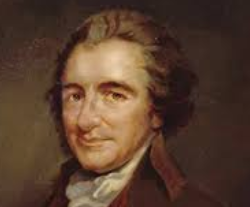
I have lived an honest and useful life to mankind; my time has been spend in doing good and I die in perfect composure and resignation to the will of my Creator, God.
▼
Source
source
Last will (1809), as quoted in The Fortnightly Review, vol. 31, pp. 398-399
3 months 2 weeks ago
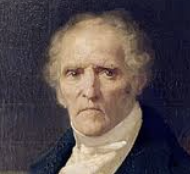
When we see civilization elated with this declining and decrepit phase of its career, we are reminded of a faded belle who, boasting of her attractions in her fiftieth year, excites at once the remark that she was fairer at twenty-five. So it is with civilization, which, dreaming of perfection and progress, is constantly deteriorating, and which will find but too soon in its industrial achievements new sources of political oppression, crimes and commotions.
2 months 2 weeks ago
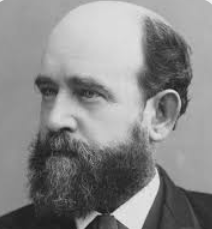
To prevent government from becoming corrupt and tyrannous, its organization and methods should be as simple as possible, its functions be restricted to those necessary to the common welfare, and in all its parts it should be kept as close to the people and as directly within their control as may be.
▼
Source
source
Ch. 17 : The Functions of Government

6 months 2 weeks ago
Solitude, the safeguard of mediocrity, is to genius the stern friend.
▼
Source
source
Culture

6 months 2 weeks ago
If everything must have a cause, then God must have a cause. If there can be anything without a cause, it may just as well be the world as God, so that there cannot be any validity in that argument. It is exactly of the same nature as the Hindu's view, that the world rested upon an elephant and the elephant rested upon a tortoise; and when they said, "How about the tortoise?" the Indian said, "Suppose we change the subject." The argument is really no better than that.
▼
Source
source
"The First-cause Argument"

5 months 2 days ago
Architecture is a way for power to achieve eloquence through form.

4 months 4 weeks ago
Nowadays three witty turns of phrase and a lie make a writer.
▼
Source
source
D 25

3 months 1 week ago
In all human affairs, and especially in those that relate to war, ...leave always some room to fortune, and to accidents which cannot be foreseen.
▼
Source
source
The General History, Book II, Ch. 4 (trans. by Hampton)
2 months 2 weeks ago
Thus night with all her snares passed through the upper worldand baited all heads sweetly, fed all foolish hopes,for night can bring to men all shrewish day denies,wrapped as a gift in the green leaves of opiate dream.
▼
Source
source
Book VII, line 356
6 months 2 weeks ago
The essence of the modern state is the union of the universal with the full freedom of the particular, and with the welfare of individuals.
▼
Source
source
Sect. 260


5 months 3 weeks ago
The world is the house of the strong. I shall not know until the end what I have lost or won in this place, in this vast gambling den where I have spent more than sixty years, dicebox in hand, shaking the dice.
▼
Source
source
Conclusion
3 months ago
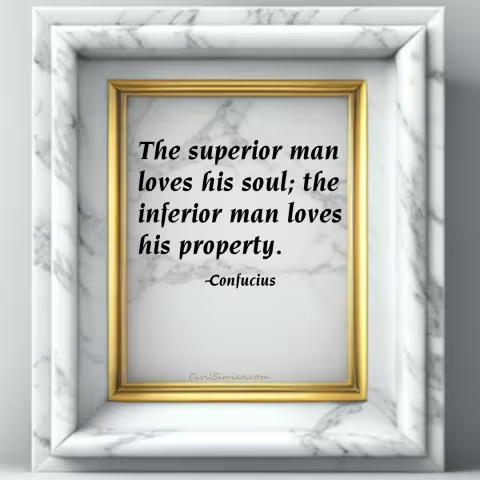
I don't know what your destiny will be, but one thing I know, the only ones among you who will be really happy are those who have sought and found how to serve.
▼
Source
source
Widely attributed to Schwietzer online, no known original source.

2 months 2 weeks ago
To change your mind and to follow him who sets you right is to be nonetheless the free agent that you were before. Remember that to change thy opinion and to follow him who corrects thy error is as consistent with freedom as it is to persist in thy error.
▼
Source
source
(Long translation) VIII, 16

5 months 2 weeks ago
To fear is to die every minute.
6 months 2 weeks ago
The good life, as I conceive it, is a happy life. I do not mean that if you are good you will be happy; I mean that if you are happy you will be good.
▼
Source
source
Part I: Man and Nature, Ch. 1: Current Perplexities, p. 10
6 months 4 weeks ago
Since my logic aims to teach and instruct the understanding, not that it may with the slender tendrils of the mind snatch at and lay hold of abstract notions (as the common logic does), but that it may in very truth dissect nature, and discover the virtues and actions of bodies, with their laws as determined in matter; so that this science flows not merely from the nature of the mind, but also from the nature of things.
▼
Source
source
Aphorism 52
CivilSimian.com created by AxiomaticPanic, CivilSimian, Kalokagathia