

2 months 4 weeks ago
Those who have ever valued liberty for its own sake believed that to be free to choose, and not to be chosen for, is an inalienable ingredient in what makes human beings human.


4 months 1 week ago
Abbot Terrasson tells us that if the size of a book were measured not by the number of its pages but by the time required to understand it, then we could say about many books that they would be much shorter were they not so short.
▼
Source
source
A xix

4 months 6 days ago
By quarrelling amongst themselves, instead of confederating, Germans and Scandinavians, both of them belonging to the same great race, only prepare the way for their hereditary enemy, the Slav.
▼
Source
source
The Eastern Question: A Reprint of Letters written 1853 -1856 dealing with the events of the Crimean War, edit., Eleanor Marx Aveling, London, Swan Sonnenschein & Co. (1897) p. 90

4 months 1 week ago
Passing from quantity to quality of population, we come to the question of eugenics. We may perhaps assume that, if people grow less superstitious, government will acquire the right to sterilize those who are not considered desirable as parents. This power will be used, at first, to diminish imbecility, a most desirable object. But probably, in time, opposition to the government will be taken to prove imbecility, so that rebels of all kinds will be sterilized. Epileptics, consumptives, dipsomaniacs and so on will gradually be included; in the end, there will be a tendency to include all who fail to pass the usual school examinations. The result will be to increase the average intelligence; in the long run, it may be greatly increased. But probably the effect upon really exceptional intelligence will be bad. Mr. Micawber, who was Dickens's father, would hardly have been regarded as a desirable parent. How many imbeciles ought to outweigh one Dickens I do not profess to know.

2 months 6 days ago
Never did Christ utter a single word attesting to a personal resurrection and a life beyond the grave.
▼
Source
source
My Religion (1884), Ch. 8
6 days ago
To sum up: it is wrong always, everywhere, and for anyone, to believe anything upon insufficient evidence. If a man, holding a belief which he was taught in childhood or persuaded of afterwards, keeps down and pushes away any doubts which arise about it in his mind, purposely avoids the reading of books and the company of men that call into question or discuss it, and regards as impious those questions which cannot easily be asked without disturbing it--the life of that man is one long sin against mankind.

4 months 6 days ago
It is sublime as night and a breathless ocean. It contains every religious sentiment, all the grand ethics, which visit in turn each noble poetic mind .... It is of no use to put away the book if I trust myself in the woods or in a boat upon the pond. Nature makes a Brahmin of me presently: eternal compensation, unfathomable power, unbroken silence .... This is her creed. Peace, she saith to me, and purity and absolute abandonment - these panaceas expiate all sin and bring you to the beatitude of the Eight Gods.
▼
Source
source
Quoted in Nani Ardeshir Palkhivala, India's Priceless Heritage, 1st ed. (Bombay: Bharatiya Vidya Bhavan, 1980) pp. 9-24
3 months 3 weeks ago
About Pontus there are some creatures of such an extempore being that the whole term of their life is confined within the space of a day; for they are brought forth in the morning, are in the prime of their existence at noon, grow old at night, and then die.

5 months 4 days ago
I don't believe in flying saucers... The energy requirements of interstellar travel are so great that it is inconceivable to me that any creatures piloting their ships across the vast depths of space would do so only in order to play games with us over a period of decades.
4 months 6 days ago
We do not count a man's years until he has nothing else to count.
▼
Source
source
Old Age

4 months ago
In the history of madness, two events signal this change with singular clarity: in 1657, the founding of the Hôpital Général, and the Great Confinement of the poor; and in 1794, the liberation of the mad in chains at Bicêtre. Between these two singular and symmetrical events, something happened, whose ambiguity has perplexed historians of medicine: blind repression in an absolutist regime, according to some, and, according to others, the progressive discovery, by science and philanthropy, of madness in its positive truth. In fact, beneath these reversible meanings, a structure was taking shape, which did not undo that ambiguity but was decisive for it. This structure explains the passage from the medieval and humanist experience of madness to the experience that is our own, which confines madness in mental illness.
▼
Source
source
Preface to 1961 edition
4 months 1 week ago
In the visible world, the Milky Way is a tiny fragment; within this fragment, the solar system is an infinitesimal speck, and of this speck our planet is a microscopic dot. On this dot, tiny lumps of impure carbon and water, of complicated structure, with somewhat unusual physical and chemical properties, crawl about for a few years, until they are dissolved again into the elements of which they are compounded. They divide their time between labour designed to postpone the moment of dissolution for themselves and frantic struggles to hasten it for others of their kind.
▼
Source
source
Dreams and Facts, 1919
4 months 2 weeks ago
To the rational being only the irrational is unendurable, but the rational is endurable.
▼
Source
source
Variant translation: To a reasonable creature, that alone is insupportable which is unreasonable; but everything reasonable may be supported. Book I, ch. 2,1.
4 months 1 week ago
This freedom from absolute, arbitrary power, is so necessary to, and closely joined with a man's preservation, that he cannot part with it, but by what forfeits his preservation and life together: for a man, not having the power of his own life, cannot, by compact, or his own consent, enslave himself to any one, nor put himself under the absolute, arbitrary power of another, to take away his life, when he pleases.
▼
Source
source
Second Treatise of Civil Government, Ch. IV, sec. 23

4 months 5 days ago
But when they have realized that it [society] rejects them forever, they themselves assume the ostracism of which they are victims so as not to leave the initiative to their oppressors.
▼
Source
source
p. 65-6
4 months 2 weeks ago
I speak the truth, not my fill of it, but as much as I dare speak; and I dare to do so a little more as I grow old.
▼
Source
source
Ch. 2

3 months 2 days ago
Religion comforts us for the defeat of our will to power. It adds new worlds to ours, and thus brings us hope of new conquests and new victories. We are converted to religion out of fear of suffocating within the narrow confines of this world.

4 months 1 week ago
The annual labour of every nation is the fund which originally supplies it with all the necessaries and conveniences of life which it annually consumes.
▼
Source
source
Introduction and Plan of the Work, p. 1.

2 months 2 weeks ago
There will be no mass-based feminist movement as long as feminist ideas are understood only by a well-educated few.
2 weeks ago
The murder of one person is called unrighteous and incurs one death penalty. Following this argument, the murder of ten persons will be ten times as unrighteous and there should be ten death penalties; the murder of a hundred persons will be a hundred times as unrighteous and there should be a hundred death penalties. All the gentlemen of the world know that they should condemn these things, calling them unrighteous. But when it comes to the great unrighteousness of attacking states, they do not know that they should condemn it. On the contrary, they applaud it, calling it righteous.
▼
Source
source
Book 5: Condemnation of Offensive War I

3 months 1 week ago
In America a woman loses her independence for ever in the bonds of matrimony. While there is less constraint on girls there than anywhere else, a wife submits to stricter obligations. For the former, her father's house is a home of freedom and pleasure; for the latter, her husband's is almost a cloister.
▼
Source
source
Book Three, Chapter X.

3 weeks 6 days ago
To fall into mere unreasoning deliquium of love and admiration, was not good; but such unreasoning, nay irrational supercilious no-love at all is perhaps still worse!-It is a thing forever changing, this of Hero-worship: different in each age, difficult to do well in any age. Indeed, the heart of the whole business of the age, one may say, is to do it well.
4 months 1 week ago
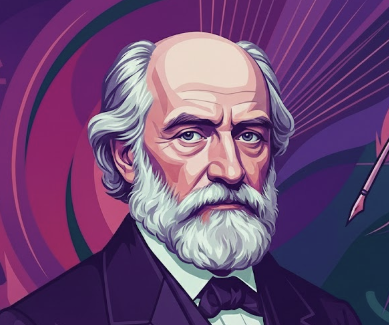
Every parting gives a foretaste of death, every reunion a hint of the resurrection.
▼
Source
source
Vol. 2, Ch. 26, § 310, as translated by Eric F. J. Payne
4 months 1 week ago
An unbiased reader, on opening one of their [Fichte's, Schelling's or Hegel's] books and then asking himself whether this is the tone of a thinker wanting to instruct or that of a charlatan wanting to impress, cannot be five minutes in any doubt. ... The tone of calm investigation, which had characterized all previous philosophy, is exchanged for that of unshakeable certainty, such as is peculiar to charlatanry of every kind and at all times. ... From every page and every line, there speaks an endeavor to beguile and deceive the reader, first by producing an effect to dumbfound him, then by incomprehensible phrases and even sheer nonsense to stun and stupefy him, and again by audacity of assertion to puzzle him, in short, to throw dust in his eyes and mystify him as much as possible.
▼
Source
source
E. Payne, trans. (1974) Vol. 1, p. 23
3 months 3 weeks ago
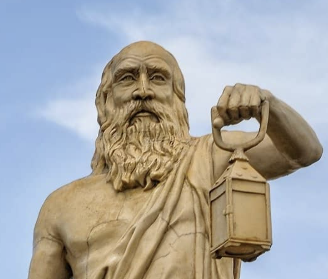
To the question what wine he found pleasant to drink, he replied, "That for which other people pay."
▼
Source
source
Diogenes Laërtius, vi. 54
4 months 2 weeks ago
To which we may add this other Aristotelian consideration, that he who confers a benefit on any one loves him better than he is beloved by him again.
▼
Source
source
Book II, Ch. 8. Of the Affections of Fathers
2 months 2 weeks ago
It is the business of the future to be dangerous; and it is among the merits of science that it equips the future for its duties.
▼
Source
source
Ch. 13: "Requisites for Social Progress", p. 291
2 months 2 weeks ago
We do not require elaborate training merely in order to refrain from embarking upon intricate trains of inference. Such abstinence is only too easy.
▼
Source
source
Symbolism: Its Meaning and Effect (1927).
3 months 1 week ago
Among these widely differing families of men, the first that attracts attention, the superior in intelligence, in power, and in enjoyment, is the white, or European, the MAN pre-eminently so called, below him appear the Negro and the Indian.
▼
Source
source
Chapter XVIII.
3 days ago
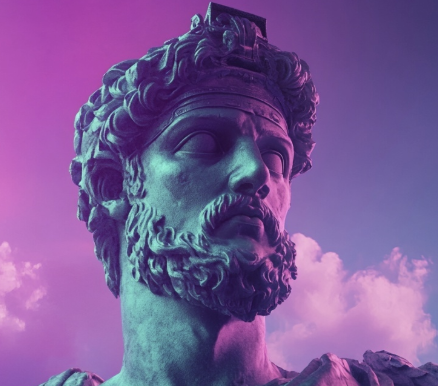
Wipe out the imagination. Stop pulling the strings. Confine thyself to the present. ...Divide and distribute every object into the causal [formal] and the material. ...Let the wrong which is done by a man stay there where the wrong was done.
▼
Source
source
VII, 29

4 months 2 weeks ago
Who then to frail mortality shall trust But limns the water, or but writes in dust.
3 months 3 weeks ago
Cicero said loud-bawling orators were driven by their weakness to noise, as lame men to take horse.
▼
Source
source
Cicero
2 months 3 weeks ago
The State is always, whatever be its form - primitive, ancient, medieval, modern - an invitation issued by one group of men to other human groups to carry out some enterprise in common. That enterprise, be its intermediate processes what they may, consists in the long run in the organisation of a certain type of common life. ... [As Renan says,] "To have common glories in the past, a common will in the present; to have done great things together; to wish to do greater; these are the essential conditions which make up a people.... In the past, an inheritance of glories and regrets; in the future, one and the same programme to carry out.... The existence of a nation is a daily plebiscite."
▼
Source
source
Chapter XIV: Who Rules The World?

5 months 3 days ago
The papers were always talking about the debt owed to society. According to them, it had to be paid. But that doesn't speak to the imagination. What really counted was the possibility of escape, a leap to freedom, out of the implacable ritual, a wild run for it that would give whatever chance for hope there was. Of course, hope meant being cut down on some street corner, as you ran like mad, by a random bullet. But when I really thought it through, nothing was going to allow me such a luxury. Everything was against it; I would just be caught up in the machinery again.
2 months 3 weeks ago
Socrates reminds us that it is not the same thing, but almost the opposite, to understand religion and to accept it.
▼
Source
source
p. 45
4 months ago
The public execution, then, has a juridico-political function. It is a ceremonial by which a momentarily injured sovereignty is reconstituted. It restores that sovereignty by manifesting it at its most spectacular. The public execution, however hasty and everyday, belongs to a whole series of great rituals in which power is eclipsed and restored (coronation, entry of the king into a conquered city, the submission of rebellious subjects); over and above the crime that has placed the sovereign in contempt, it deploys before all eyes an invincible force. Its aim is not so much to re-establish a balance as to bring into play, as its extreme point, the dissymmetry between the subject who has dared to violate the law and the all-powerful sovereign who displays his strength.
▼
Source
source
Chapter One, The Spectacle of the Scaffold
1 month 2 weeks ago
Scarcity is not a result of uneven endowments-that is diversity. Scarcity is having a mismatch between a culture and nature's giving. Cultures have evolved cultural diversity to mimic the biological diversity of climates and ecosystems. It's when that relationship is disrupted that you get unsustainable population growth.
1 month 2 days ago
Let men be happy, informed, skillful, well behaved, and productive.
▼
Source
source
Freedom and the control of men (1955/1956) American Scholar, 25 (1), 47-65
1 month 3 weeks ago
It is quite true that, to the best of my judgment, the argumentation which applies to brutes holds equally good of men; and, therefore, that all states of consciousness in us, as in them, are immediately caused by molecular changes of the brain-substance. It seems to me that in men, as in brutes, there is no proof that any state of consciousness is the cause of change in the motion of the matter of the organism. If these positions are well based, it follows that our mental conditions are simply the symbols in consciousness of the changes which takes place automatically in the organism; and that, to take an extreme illustration, the feeling we call volition is not the cause of a voluntary act, but the symbol of that state of the brain which is the immediate cause of that act.
4 months 1 week ago
To what shall the character of utility be ascribed, if not to that which is a source of pleasure?
▼
Source
source
Théorie des peines et des récompenses (1811); translation by Richard Smith, The Rationale of Reward, J. & H. L. Hunt, London, 1825, Bk. 3, Ch. 1
4 months 3 weeks ago
All teems with symbol; the wise man is the man who in any one thing can read another.
4 months ago
If there is a kind of "proof" of the sincerity of the parrhesiastes, it is his courage... Saying something dangerous-different from what the majority believes-is a strong indication that he is a parrhesiastes.
6 days ago
A whale is not a fish in natural history, but it is a fish in commerce and law. A plea that human laws which mention fish do not apply to whales, would be rejected at once by an intelligent judge.
2 weeks ago
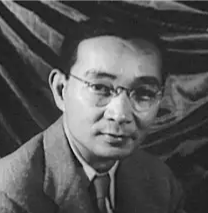
I distrust all dead and mechanical formulas for expressing anything connected with human affairs and human personalities. Putting human affairs in exact formulas shows in itself a lack of the sense of humor and therefore a lack of wisdom.
▼
Source
source
Ch. I : The Awakening, p. 5
2 months 2 weeks ago
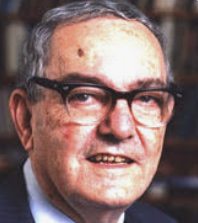
If we want a theory explaining how people play billiards, we do not want a theory of perfect billiard balls; we want a theory of what heuristics a human billiard player uses in order to plan and make a (often not quite accurate) shot. These heuristics and actions do not involve solving the differential equations of the billiard board; they involve rules of thumb and it is these practice guides to action we are trying to discover in order to explain the behavior.
▼
Source
source
An Empirically Based Microeconomics (1997), p. 173
4 months 6 days ago
What would we really know the meaning of? The meal in the firkin; the milk in the pan; the ballad in the street; the news of the boat; the glance of the eye; the form and the gait of the body; - show me the ultimate reason of these matters; show me the sublime presence of the highest spiritual cause lurking, as always it does lurk, in these suburbs and extremities of nature; let me see every trifle bristling with the polarity that ranges it instantly on an eternal law; and the shop, the plough, and the ledger, referred to the like cause by which light undulates and poets sing; - and the world lies no longer a dull miscellany and lumber-room, but has form and order; there is no trifle; there is no puzzle; but one design unites and animates the farthest pinnacle and the lowest trench.
▼
Source
source
par. 40
4 months 1 week ago
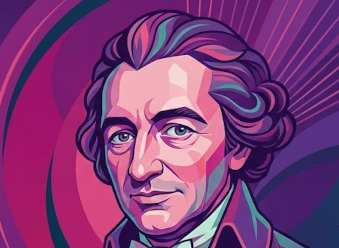
Our Traders in Men (an unnatural commodity!) must know the wickedness of that Slave-Trade, if they attend to reasoning, or the dictates of their own hearts; and such as shun and stiffle all these, wilfully sacrifice Conscience, and the character of integrity to that golden Idol.

1 month 1 week ago
For Leopardi evil is integral to the way the world works; but when he talks of evil he does not mean any kind of malign agency of the sort that Gnostics imagined. Evil is the suffering that is built into the scheme of things. 'What hope is there when evil is ordinary?' he asks. 'I mean, in an order where evil is necessary?' These rhetorical questions show why Leopardi had no interest in projects of revolution and reform. No type of human action - least of all the harlequinade of politics - could fundamentally alter a world in which evil was ordinary.
▼
Source
source
The Faith of Puppets: Leopardi and the Souls of Machines (p.35-6)

4 months 6 days ago
That all men are equal is a proposition which at ordinary times no sane individual has ever given his assent.
▼
Source
source
"The Idea of Equality"
CivilSimian.com created by AxiomaticPanic, CivilSimian, Kalokagathia