


4 months 1 week ago
The prospect for the human race is sombre beyond all precedent. Mankind are faced with a clear-cut alternative: either we shall all perish, or we shall have to acquire some slight degree of common sense. A great deal of new political thinking will be necessary if utter disaster is to be averted.


4 months 3 weeks ago
If you would govern a state of a thousand chariots (a small-to-middle-size state), you must pay strict attention to business, be true to your word, be economical in expenditure and love the people. You should use them according to the seasons.

5 months 1 week ago
That which distinguishes the Christian narrow way from the common human narrow way is the voluntary. Christ was not someone who coveted earthly things but had to be satisfied with poverty, no, he chose poverty.
3 months 2 days ago
Our whole past experience is continually in our consciousness, though most of it sunk to a great depth of dimness. I think of consciousness as a bottomless lake, whose waters seem transparent, yet into which we can clearly see but a little way.
▼
Source
source
Vol. VII, par. 547

3 months 6 days ago
The unbought grace of life, the cheap defence of nations, the nurse of manly sentiment and heroic enterprise, is gone!
▼
Source
source
Volume iii, p. 331
2 months 1 week ago
Be kind. Don't kill for any reason. Don't even kill out of self-defense. Really - I mean that. Don't take any more than you need of anything. Help others.
▼
Source
source
From a speech given on 20 January 1969 at the University of Michigan, about two months before Slaughterhouse Five was published

4 months 1 week ago
Covetousness, and the desire of having in our possession, and under our dominion, more than we have need of, being the root of all evil, should be early and carefully weeded out, and the contrary quality of a readiness to impart to others, implanted. This should be encourag'd by great commendation and credit, and constantly taking care that he loses nothing by his liberality.
▼
Source
source
Sec. 110
1 month 4 weeks ago
Can we find nothing good to say about TV? Well, yes, it brings scattered solitaries into a sort of communion. TV allows your isolated American to think that he participates in the life of the entire country. It does not actually place him in a community, but his heart is warmed with the suggestion (on the whole false) that there is a community somewhere in the vicinity and that his atomized consciousness will be drawn back toward the whole.
▼
Source
source
The Distracted Public (1990), p. 159
4 months 3 weeks ago
I am not bothered by the fact that I am not understood. I am bothered when I do not know others.
3 months 2 days ago
I am an orphan, alone; nevertheless I am found everywhere. I am one, but opposed to myself. I am youth and old man at one and the same time. I have known neither father nor mother, because I have had to be fetched out of the deep like a fish, or fell like a white stone from heaven. In woods and mountains I roam, but I am hidden in the innermost soul of man. I am mortal for everyone, yet I am not touched by the cycle of aeons.
▼
Source
source
Combining alchemical assertions

4 months 1 week ago
I opened with that which good Catholics have more than once made to Huguenots. "My dear sir," said I, "were you ever baptized?" "No, friend," replied the Quaker, "nor any of my brethren." "Zounds!" said I to him, "you are not Christians then!" "Friend," replied the old man, in a soft tone of voice, "do not swear; we are Christians, but we do not think that sprinkling a few drops of water on a child's head makes him a Christian." "My God!" exclaimed I, shocked at his impiety, "have you then forgotten that Christ was baptized by St. John?" "Friend," replied the mild Quaker, "once again, do not swear. Christ was baptized by John, but He Himself never baptized any one; now we profess ourselves disciples of Christ, and not of John." "Mercy on us," cried I, "what a fine subject you would be for the holy inquisitor! In the name of God, my good old man, let me baptize you."
▼
Source
source
Voltaire's account of his conversations with Andrew Pit

4 months 2 weeks ago
I have seen no more evident monstrosity and miracle in the world than myself.
▼
Source
source
Ch. 11

3 weeks ago
1) Preserve Life
2) State of war (opportunism)
3) Relativism
4) Confusion
Civilization, goodness, justice, fairness all contained inside the first option. Under # 1 (Universal Humanism):
1) Survive.
2) Don't prevent another from surviving.
3) Help the less fortunate.

2 months 2 weeks ago
My thoughts have been shaped by the conviction that feminism must become a mass based political movement if it is to have a revolutionary, transformative impact on society.
▼
Source
source
p. xiii.

4 months 5 days ago
I know only one Church: it is the society of men.
▼
Source
source
Act 1

4 months 1 week ago
In all ages of the world, priests have been enemies to liberty; and it is certain, that this steady conduct of theirs must have been founded on fixed reasons of interest and ambition. Liberty of thinking, and of expressing our thoughts, is always fatal to priestly power, and to those pious frauds, on which it is commonly founded; and, by an infallible connexion, which prevails among all kinds of liberty, this privilege can never be enjoyed, at least has never yet been enjoyed, but in a free government.
▼
Source
source
Part I, Essay 9: Of The Parties of Great Britain
3 months 6 days ago
Because half-a-dozen grasshoppers under a fern make the field ring with their importunate chink, whilst thousands of great cattle, reposed beneath the shadow of the British oak, chew the cud and are silent, pray do not imagine that those who make the noise are the only inhabitants of the field; that of course they are many in number; or that, after all, they are other than the little shrivelled, meagre, hopping, though loud and troublesome insects of the hour.
▼
Source
source
Volume iii, p. 344
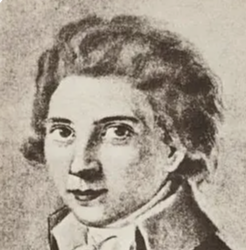
3 months 6 days ago
There is no self-knowledge except historical self-knowledge. No one knows what he is if he doesn't know what his contemporaries are.
▼
Source
source
"Ideas," Lucinde and the Fragments, P. Firchow, trans. (1991), § 139
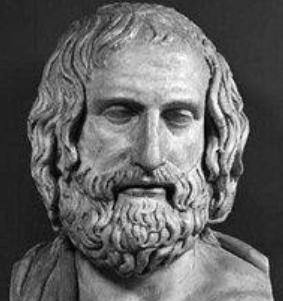
3 months 3 weeks ago
Wrongly do the Greeks suppose that aught begins or ceases to be; for nothing comes into being or is destroyed; but all is an aggregation or secretion of pre-existent things: so that all-becoming might more correctly be called becoming-mixed, and all corruption, becoming-separate.
▼
Source
source
quoted in Heinrich Ritter, Tr. from German by Alexander James William Morrison, The History of Ancient Philosophy, Vol.1
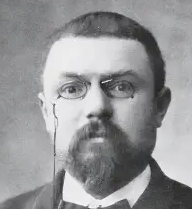
1 month ago
It is often said that experiments should be made without preconceived ideas. That is impossible. Not only would it make every experiment fruitless, but even if we wished to do so, it could not be done. Every man has his own conception of the world, and this he cannot so easily lay aside. We must, for example, use language, and our language is necessarily steeped in preconceived ideas.
▼
Source
source
Ch. IX: Hypotheses in Physics, Tr. George Bruce Halsted

2 months 1 week ago
We do not have to love one another to be obligated to build a world in which all lives are sustainable. The right to persist can only be understood as a social right, as the subjective instance of a social and global obligation we bear toward one another.
▼
Source
source
p. 64

2 months 4 days ago
Any loss of identity prompts people to seek reassurance and rediscovery of themselves by testing, and even by violence. Today, the electric revolution, the wired planet, and the information environment involve everybody in everybody to the point of individual extinction.
▼
Source
source
Letter to Clare Westcott, November 26 1975. Letters of Marshall McLuhan, p. 514
4 months 1 week ago
I should like to believe my people's religion, which was just what I could wish, but alas, it is impossible. I have really no religion, for my God, being a spirit shown merely by reason to exist, his properties utterly unknown, is no help to my life. I have not the parson's comfortable doctrine that every good action has its reward, and every sin is forgiven. My whole religion is this: do every duty, and expect no reward for it, either here or hereafter.
▼
Source
source
Greek Exercises (1888), written two days after his sixteenth birthday.
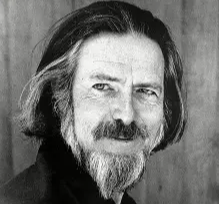
2 weeks 3 days ago
This mysterious something has been called God, the Absolute, Nature, Substance, Energy, Space, Ether, Mind, Being, the Void, the Infinite-names and ideas which shift in popularity and respectabilitywith the winds of intellectual fashion, of considering the universe intelligent or stupid, superhuman or subhuman, specific or vague. All of them might be dismissed as nonsense-noises if the notion of an underlying Ground of Being were no more than a product of intellectual speculation. But these names are often used to designate the content of a vivid and almost sensorily concrete experience-the "unitive" experience of the mystic, which, with secondary variations, is found in almost all cultures at all times. This experience is the transformed sense of self which I was discussing in the previous chapter, though in "naturalistic" terms, purified of all hocus-pocus about mind, soul, spirit, and other intellectually gaseous words.
▼
Source
source
p. 104-105
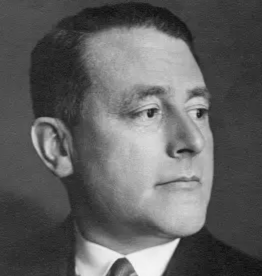
5 days ago
The specific political distinction to which political actions and motives can be reduced is that between friend and enemy.
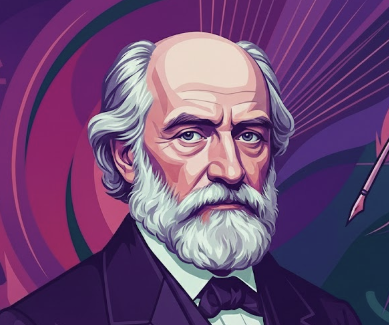
4 months 1 week ago
Reading is merely a surrogate for thinking for yourself; it means letting someone else direct your thoughts. Many books, moreover, serve merely to show how many ways there are of being wrong, and how far astray you yourself would go if you followed their guidance. You should read only when your own thoughts dry up, which will of course happen frequently enough even to the best heads; but to banish your own thoughts so as to take up a book is a sin against the holy ghost; it is like deserting untrammeled nature to look at a herbarium or engravings of landscapes.
▼
Source
source
Vol. 2, Ch. 22, § 261
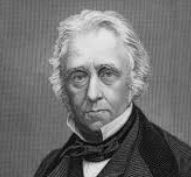
1 month 3 weeks ago
He had a head which statuaries loved to copy, and a foot the deformity of which the beggars in the streets mimicked.
▼
Source
source
p. 313
4 months 3 weeks ago
Sincerity is the end and beginning of things; without sincerity there would be nothing. On this account, the superior man regards the attainment of sincerity as the most excellent thing.

4 months 1 day ago
One of the most difficult of the philosopher's tasks is to find out where the shoe pinches.
▼
Source
source
p. 61

5 months 6 days ago
Evils draw men together.

3 months 2 days ago
To have accomplished nothing and to die overworked.

4 days ago
Man cannot be wicked without being evil, nor evil without being degraded, nor degraded without being punished, nor punished without being guilty. In short ... there is nothing so intrinsically plausible as the theory of original sin.
▼
Source
source
Second Dialogue, p. 38

3 days ago
By remembering then that I am a part of such a whole, I shall be content with everything that happens. And inasmuch as I am in a manner intimately related to the parts which are of the same kind with myself, I shall do nothing unsocial, but I shall rather direct myself to the things which are of the same kind with myself, and I shall turn all my efforts to the common interest, and divert them from the contrary.
▼
Source
source
X, 6

4 months 1 week ago
The society adopts neither rites nor priesthood, and it will never lose sight of the resolution not to advance any thing as a society inconvenient to any sect or sects, in any time or country, and under any government. It will be seen that it is so much the more easy for the society to keep within this circle, because, that the dogmas of the Theophilanthropists are those upon which all the sects have agreed, that their moral is.that upon which there has never been the least dissent; and that the name they have taken expresses the double end of all the sects, that of leading to the adoration of God and love of man.
▼
Source
source
Introduction

3 months 3 weeks ago
I will now tell you who are assembled here the wise sayings of Mazda, the praises of Ahura and the hymns of the Good Spirit, the sublime truth which I see rising out of these flames. You shall therefore harken to the Soul of Nature. Contemplate the beams of fire with a most pious mind. Every one, both men and women, ought to-day to choose his creed. Ye offspring of renowned ancestors, awake to agree with us. So preached Zoroaster, the proph of the Parsis, in one of his earliest sermons nearly 3,500 years ago.
▼
Source
source
p. 15 (Introduction), S. A. Kapadia

3 weeks 6 days ago
For the whole Past, as I keep repeating, is the possession of the Present; the Past had always something true, and is a precious possession. In a different time, in a different place, it is always some other side of our common Human Nature that has been developing itself. The actual True is the sum of all these; not any one of them by itself constitutes what of Human Nature is hitherto developed. Better to know them all than misknow them. "To which of these Three Religions do you specially adhere?" inquires Meister of his Teacher. "To all the Three!" answers the other: "To all the Three; for they by their union first constitute the True Religion."

4 months 2 weeks ago
The cause and root of nearly all evils in the sciences is this - that while we falsely admire and extol the powers of the human mind we neglect to seek for its true helps.
▼
Source
source
Aphorism 9

4 months 3 weeks ago
The verdict of the world is conclusive.
▼
Source
source
III, 24

4 months 6 days ago
In this frame of mind it occurred to me to put the question directly to myself: "Suppose that all your objects in life were realized; that all the changes in institutions and opinions which you are looking forward to, could be completely effected at this very instant: would this be a great joy and happiness to you?" And an irrepressible self-consciousness distinctly answered, "No!" At this my heart sank within me: the whole foundation on which my life was constructed fell down. All my happiness was to have been found in the continual pursuit of this end. The end had ceased to charm, and how could there ever again be any interest in the means? I seemed to have nothing left to live for.
▼
Source
source
(pp. 133-134)

4 months 6 days ago
But petitional prayer is only one department of prayer; and if we take the word in the wider sense as meaning every kind of inward communion or conversation with the power recognized as divine, we can easily see that scientific criticism leaves it untouched. Prayer in this wide sense is the very soul and essence of religion.
▼
Source
source
Lecture XIX, "Other Characteristics"

4 months 5 days ago
"They would say," he answered, "that you do not fail in obedience through lack of love, but have lost love because you never attempted obedience."
▼
Source
source
Ch. 7 : The Pendragon, section 2

3 months 3 weeks ago
To have a great man for an intimate friend seems pleasant to those who have never tried it; those who have, fear it.
▼
Source
source
Book I, epistle xviii, line 86

4 months 1 week ago
Just as we teach children to avoid being destroyed by motor cars if they can, so we should teach them to avoid being destroyed by cruel fanatics, and to this end we should seek to produce independence of mind, somewhat sceptical and wholly scientific, and to preserve, as far as possible, the instinctive joy of life that is natural to healthy children. This is the task of a liberal education: to give a sense of the value of things other than domination, to help create wise citizens of a free community, and through the combination of citizenship with liberty in individual creativeness to enable men to give to human life that splendour which some few have shown that it can achieve.
▼
Source
source
Ch. 18: The Taming of Power
4 months 1 day ago
"Fare well!" "A whole world of pain is contained in these words." How can it be contained in them? - It is bound up in them. The words are like an acorn from which an oak tree can grow.
▼
Source
source
p. 52e
4 months 6 days ago
Pacifists ought to enter more deeply into the aesthetical and ethical point of view of their opponents. ... So long as antimilitarists propose no substitute for war's disciplinary function, no moral equivalent of war, analogous, as one might say, to the mechanical equivalent of heat, so long they fail to realize the full inwardness of the situation. And as a rule they do fail. The duties, penalties, and sanctions pictured in the utopias they paint are all too weak and tame to touch the military-minded.

4 months 1 week ago
It is precisely in knowing its limits that philosophy consists.
▼
Source
source
A 727, B 755
6 days ago
Alas for him who seeks salvation in good only!Balanced on God's strong shoulders, Good and Evil flaptogether like two mighty wings and lift him high.
▼
Source
source
Odysseus, Book VIII, line 770
CivilSimian.com created by AxiomaticPanic, CivilSimian, Kalokagathia