

6 months 2 weeks ago
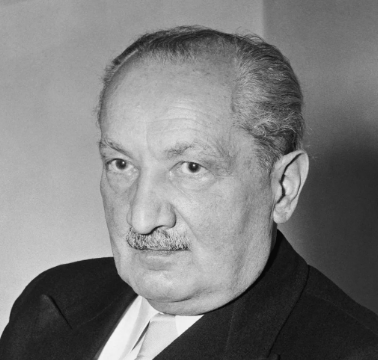
Those in the crossing must in the end know what is mistaken by all urging for intelligibility: that every thinking of being, all philosophy, can never be confirmed by "facts," ie, by beings. Making itself intelligible is suicide for philosophy. Those who idolize "facts" never notice that their idols only shine in a borrowed light. They are also meant not to notice this; for thereupon they would have to be at a loss and therefore useless. But idolizers and idols are used wherever gods are in flight and so announce their nearness.
▼
Source
source
Contributions to Philosophy (From Enowning) [Beitrage Zur Philosophie (Vom Ereignis)], notes of 1936-1938, as translated by Parvis Emad and Kenneth Maly

7 months 2 weeks ago
We get into the habit of living before acquiring the habit of thinking.
7 months 2 weeks ago
Fate is not in man but around him.

6 months 3 weeks ago
The Theophilanthropists believe in the existence of God, and the immortality of the soul.
▼
Source
source
Introduction

6 months 2 weeks ago
It is a political axiom that power follows property.
▼
Source
source
Chapter 12 (p. 113)

2 months 2 weeks ago
As to the species of exercise, I advise the gun. While this gives a moderate exercise to the body, it gives boldness, enterprise, and independence to the mind. Games played with the ball, and others of that nature, are too violent for the body, and stamp no character on the mind. Let your gun therefore be the constant companion of your walks. Never think of taking a book with you.

3 months 4 weeks ago
Suppose we encounter an advanced civilization that has engineered a happy biosphere. Population sizes are controlled by cross-species immunocontraception. Free-living herbivores lead idyllic lives in their wildlife parks. Should we urge the reintroduction of starvation, asphyxiation, disemboweling and being eaten alive by predators? Is their regime of compassionate stewardship of the biosphere best abandoned in favour of "re-wilding"? I suspect the advanced civilization would regard human pleas to restore the old Darwinian regime of "Nature, red in tooth and claw" as callous if not borderline sociopathic.
▼
Source
source
Reply to "I am horrified at what goes on in philosophy departments, personally", Freethought Blogs, 10 Sept. 2015
5 months 1 day ago
Optimism is an alienated form of faith, pessimism an alienated form of despair. If one truly responds to man and his future, ie, concernedly and "responsibly." one can respond only by faith or by despair. Rational faith as well as rational despair are based on the most thorough, critical knowledge of all the factors that are relevant for the survival of man.
▼
Source
source
p. 483

6 months 2 weeks ago
Mystery is delightful, but unscientific, since it depends upon ignorance.
▼
Source
source
The Analysis of Mind (1921), Lecture I: Recent Criticisms of "Consciousness"

5 months 1 day ago
The Church is now more like the Scribes and Pharisees than like Christ... What are now called the "essential doctrines" of the Christian religion he does not even mention.
▼
Source
source
As quoted in The Life of Florence Nightingale (1913) by Edward Tyas Cook, p. 392
2 months 2 weeks ago
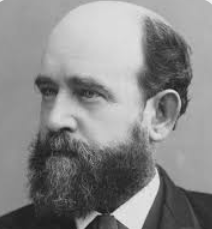
The tax upon land values is, therefore, the most just and equal of all taxes. It falls only upon those who receive from society a peculiar and valuable benefit, and upon them in proportion to the benefit they receive. It is the taking by the community, for the use of the community, of that value which is the creation of the community. It is the application of the common property to common uses. When all rent is taken by taxation for the needs of the community, then will the equality ordained by Nature be attained. No citizen will have an advantage over any other citizen save as is given by his industry, skill, and intelligence; and each will obtain what he fairly earns. Then, but not till then, will labor get its full reward, and capital its natural return.
▼
Source
source
Book VIII, Ch. 3

3 months 1 week ago
No nation ever had so bad a neighbour as Germany has had in France for the last 400 years; bad in all manner of ways; insolent, rapacious, insatiable, unappeasable, continually aggressive. ... Germany, after 400 years of ill-usage, and generally ill-fortune, from that neighbour, has had at last the great happiness to see its enemy fairly down in this manner; and Germany, I do clearly believe, would be a foolish nation not to think of raising up some secure boundary-fence between herself and such a neighbour now that she has the chance.
▼
Source
source
Letter to The Times on the Franco-Prussian War and Germany's annexation of Alsace-Lorraine (18 November 1870), p. 8
4 months 4 weeks ago
The empirical research of the last fifteen years on the structure of large organizations seems to confirm the hypothesis of Herbert Simon that human cognitive limits are a basic limiting factor in determining organization structures .
▼
Source
source
Jay R. Galbraith, "Organization design: An information processing view." Organizational Effectiveness Center and School 21 (1977). p. 21
4 months 1 week ago
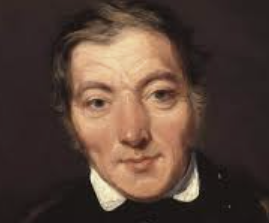
It is the interest of the individual and of all society, that he should be made, at the earliest period, to understand his own construction, the proper use of its parts, and how to keep them at all times in a state of health; and especially that he should be taught to observe the varied effects of different kinds of food, and different quantities, upon his own constitution. He should be taught the general and individual laws of health, thus early, that he may know how to prevent the approach of disease. And the knowledge of the particular diet best suited to his constitution, is one of the most essential laws of health.
▼
Source
source
3rd Part
2 months 2 weeks ago
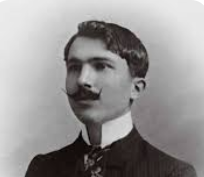
Every man has his own circle composed of trees, animals, men, ideas, and he is in duty bound to save this circle. He, and no one else. If he does not save it, he cannot be saved. These are the labors each man is given and is in duty bound to complete before he dies. He may not otherwise be saved. For his own soul is scattered and enslaved in these things about him, in trees, in animals, in men, in ideas, and it is his own soul he saves by completing these labors.

6 months 3 weeks ago
I have therefore found it necessary to deny knowledge in order to make room for faith.
6 months 3 weeks ago
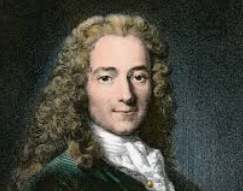
I opened with that which good Catholics have more than once made to Huguenots. "My dear sir," said I, "were you ever baptized?" "No, friend," replied the Quaker, "nor any of my brethren." "Zounds!" said I to him, "you are not Christians then!" "Friend," replied the old man, in a soft tone of voice, "do not swear; we are Christians, but we do not think that sprinkling a few drops of water on a child's head makes him a Christian." "My God!" exclaimed I, shocked at his impiety, "have you then forgotten that Christ was baptized by St. John?" "Friend," replied the mild Quaker, "once again, do not swear. Christ was baptized by John, but He Himself never baptized any one; now we profess ourselves disciples of Christ, and not of John." "Mercy on us," cried I, "what a fine subject you would be for the holy inquisitor! In the name of God, my good old man, let me baptize you."
▼
Source
source
Voltaire's account of his conversations with Andrew Pit

2 months 2 weeks ago
It is permitted to modern philosophy, all swollen up with Bacon's venom, to repeat to us to satiety, to disgust, to nausea, that we make God similar to man; we will reply as many times that is not quite the same thing to say that a man resembles his portrait or that his portrait resembles him.
▼
Source
source
p. 293
5 months 1 day ago
At present we live to impede each other's satisfactions; competition, domestic life, society, what is it all but this? We go somewhere where we are not wanted and where we don't want to go. What else is conventional life? Passivity when we want to be active. So many hours spent every day in passively doing what conventional life tells us, when we would so gladly be at work. And is it a wonder that all individual life is extinguished?


6 months 3 weeks ago
The light dove, cleaving the air in her free flight, and feeling its resistance, might imagine that its flight would be still easier in empty space.
▼
Source
source
B 8

5 months 5 days ago
My purpose here is to denounce an idea which seems to be dangerous and false. ... Revolutionary trade unionists and orthodox communists are at one in considering everything that is purely theoretical as bourgeois. ... The culture of a socialist society would be a synthesis of theory and practice; but to synthesize is not the same as to confuse together; it is only contraries that can be synthesized. ... Marx's principal glory is to have rescued the study of societies not only from Utopianism but also and at the same time from empiricism. ... Humanity cannot progress by importing into theoretical study the processes of blind routine and haphazard experiment by which production has so long been dominated. ... The true relation between theory and application only appears when theoretical research has been purged of all empiricism.
▼
Source
source
"The teaching of mathematics," p. 71-72

5 months 2 weeks ago
This is how I recognize an authentic poet: by frequenting him, living a long time in the intimacy of his work, something changes in myself, not so much my inclinations or my tastes as my very blood, as if a subtle disease had been injected to alter its course, its density and nature. To live around a true poet is to feel your blood run thin, to dream a paradise of anemia, and to hear, in your veins, the rustle of tears.
7 months 2 weeks ago
Homer has taught all other poets the art of telling lies skillfully.

4 months 2 weeks ago
It is always the psychic and social grounds, brought into play by each medium or technology, that readjust the balance of the hemispheres and of human sensibilities into equilibrium with those grounds.
▼
Source
source
p. 82

5 months 2 weeks ago
All the time that this horrid scene was acting or avenging, as well as for some time before, and ever since, the wicked instigators of this unhappy multitude, guilty, with every aggravation, of all their crimes, and screened in a cowardly darkness from their punishment, continued without interruption, pity, or remorse, to blow up the blind rage of the populace, with a continued blast of pestilential libels, which infected and poisoned the very air we breathed in.
▼
Source
source
Speech at Bristol Previous to the Election, referring to the Gordon Riots (6 September 1780), quoted in The Works of the Right Honourable Edmund Burke, Vol. II (1855), pp. 158-159

4 months 4 weeks ago
The most dangerous untruths are truths moderately distorted.
▼
Source
source
H 7 Variant translation: The most dangerous untruths are truths slightly distorted.

2 months 2 weeks ago
Nothing is so fatal to the progress of the human mind as to suppose that our views of science are ultimate; that there are no mysteries in nature; that our triumphs are complete, and that there are no new worlds to conquer.
▼
Source
source
In David Knight, Humphry Davy: Science & Power (1998) p. 87
4 months 2 weeks ago
Human perception is literally incarnation.
▼
Source
source
"Catholic Humanism and Modern Letters", in Christian Humanism in Letters, The McAuley Lectures (1954), p. 49-67
5 months 5 days ago
Stars and blossoming fruit-trees: utter permanence and extreme fragility give an equal sense of eternity.
▼
Source
source
p. 277

3 months 4 days ago
I do not know whether I shall make progress; but I should prefer to lack success rather than to lack faith.
6 months 3 weeks ago
The sham cause in physical influence consists in rashly assuming that the commerce of substance and transitive forces is sufficiently knowable from their mere existence. Hence it is not so much a system as rather the neglect of all philosophical system as a superfluity in the argument. Freeing the concept from this defect, we shall have a species of commerce alone deserving to be called real, and from which the whole constituting the world merits being called real, and not ideal or imaginary.
5 months 1 week ago
What renders man an imaginative and moral being is that in society he gives new aims to his life which could not have existed in solitude: the aims of friendship, religion, science, and art.
▼
Source
source
Ch. V: Democracy

6 months 2 weeks ago
I deny that anyone knows, or can know, the nature of the two sexes, as long as they have only been seen in their present relation to one another. If men had ever been found in society without women, or women without men, or if there had been a society of men and women in which the women were not under the control of the men, something might have been positively known about the mental and moral differences which may be inherent in the nature of each. What is now called the nature of women is an eminently artificial thing - the result of forced repression in some directions, unnatural stimulation in others.
▼
Source
source
Ch. 1
3 months 1 week ago
This great maxim of philosophy he had gathered by the teaching of nature alone - that man was created to work, not to speculate or feel or dream. Accordingly, he set his whole heart thitherwards. He did work wisely and unweariedly, and perhaps performed more with the tools he had than any man I now know.
5 months 2 weeks ago
If there is anyone who owes everything to Bach, it is certainly God.

4 months 3 days ago
I have repeatedly stressed that the rape of the Earth and rape of women are intimately linked - both metaphorically, in shaping world-views, and materially, in shaping women's everyday lives. The deepening economic vulnerability of women makes them more vulnerable to all forms of violence, including sexual assault, as we found out during a series of public hearings on the impact of economic reforms on women organized by the National Commission on Women and the Research Foundation for Science, Technology and Ecology.
▼
Source
source
Ecofeminism, by Maria Mies and Vandana Shiva, 1993, (full text pdf)

5 months 2 days ago
Power is not opposed to freedom. It is precisely freedom that distinguishes power from violence or coercion.

6 months 2 weeks ago
The fact that a belief has a good moral effect upon a man is no evidence whatsoever in favor of its truth.
▼
Source
source
BBC Radio Debate on the Existence of God, Russell vs. Copleston, 1948
2 months 2 weeks ago
When we get piled upon one another in large cities, as in Europe, we shall become corrupt as in Europe.
▼
Source
source
Letter to James Madison (20 December 1787), The Writings of Thomas Jefferson (19 Vols., 1905) edited by Andrew A. Lipscomb and Albert Ellery Bergh, Vol. VI, p. 392.
3 months 1 week ago
I think he once told us his first short clothes were a hull made mostly or wholly of leather. We all only laughed, for it is now long ago. Thou dear father! Through what stern obstructions was thy way to manhood to be forced, and for us and for our travelling to be made smooth!
5 months 2 weeks ago
The problem of induction is, roughly speaking, the problem of finding a way to prove that certain empirical generalizations which are derived from past experience will hold good also in the future. There are only two ways of approaching this problem on the assumption that it is a genuine problem, and it is easy to see that neither of them can lead to its solution.
▼
Source
source
p. 49.
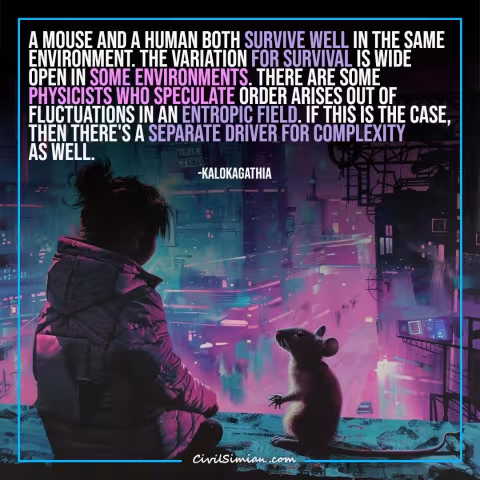

6 months 2 weeks ago
I fancy that most people who think at all have done a great deal of their thinking in the first fourteen years.

6 months 2 weeks ago
I do not understand! I understand nothing! I cannot understand nor do I want to understand! I want to believe! To Believe!
▼
Source
source
Act 1
7 months 1 week ago
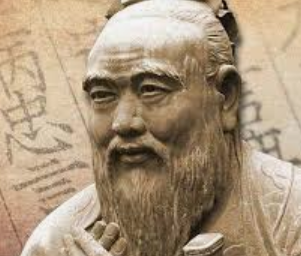
When the Great Dao (Tao, perfect order) prevails, the world is like a Commonwealth State shared by all, not a dictatorship.

7 months 2 days ago
What is it, in your opinion, to be a great nobleman? It is to be master of several objects that men covet, and thus to be able to satisfy the wants and the desires of many. It is these wants and these desires that attract them towards you, and that make them submit to you: were it not for these, they would not even look at you; but they hope, by these services... to obtain from you some part of the good which they desire, and of which they see that you have the disposal.
CivilSimian.com created by AxiomaticPanic, CivilSimian, Kalokagathia