

8 months 2 weeks ago
Lastly, there are Idols which have immigrated into men's minds from the various dogmas of philosophies, and also from wrong laws of demonstration. These I call Idols of the Theater, because in my judgment all the received systems are but so many stage plays, representing worlds of their own creation after an unreal and scenic fashion.
▼
Source
source
Aphorism 44

7 months 2 weeks ago
I know of no country in which there is so little independence of mind and real freedom of discussion as in America.
▼
Source
source
Chapter XV.



8 months 1 week ago
The state of society is one in which the members have suffered amputation from the trunk, and strut about so many walking monsters,-a good finger, a neck, a stomach, an elbow, but never a man.
▼
Source
source
par. 5
6 months 2 weeks ago
Every body continues in its state of rest, or of uniform motion in a right line, unless it is compelled to change that state by forces impressed upon it.
▼
Source
source
Laws of Motion, I

4 months 1 week ago
Turn thy thoughts now to the consideration of thy life, thy life as a child, as a youth, thy manhood, thy old age, for in these also every change was a death. Is this anything to fear?
▼
Source
source
IX, 21
6 months 1 week ago
A real mother, who knows the will of God by experience, will prepare her children also to fulfil it. Such a mother will suffer if she sees her child overfed, effeminate, and dressed-up, for she knows that these things will make it difficult for it to fulfil the will of God which she recognizes.
7 months 1 day ago
It is a great good fortune, as Stendhal said, for one "to have his passion as a profession."
▼
Source
source
p. 4

8 months 1 week ago
This I think is sufficiently evident, that children generally hate to be idle. All the care then is, that their busy humour should be constantly employ'd in something of use to them; which, if you will attain, you must make what you would have them do a recreation to them, and not a business.
▼
Source
source
Sec. 129
7 months 1 week ago
It is comparatively easy for the philosopher in his closet to invent imaginary schemes of policy, and to shew how mankind, if they were without passions and without prejudices, might best be united in the form of a political community. But, unfortunately, men in all ages are the creatures of passions, perpetually prompting them to defy the rein, and break loose from the dictates of sobriety and speculation.
▼
Source
source
History of the Commonwealth of England. From its Commencement, to the Restoration of Charles the Second. Volume the Fourth. Oliver, Lord Protector (1828), p. 579
5 months 3 days ago
Marxism has been the greatest fantasy of our century. It was a dream offering the prospect of a society of perfect unity, in which all human aspirations would be fulfilled and all values reconciled.
▼
Source
source
Epilogue, p. 1206


8 months 1 week ago
Science may set limits to knowledge, but should not set limits to imagination.

8 months 6 days ago
What should we gain by a definition, as it can only lead us to other undefined terms?
▼
Source
source
p. 26

7 months 1 week ago
Every cause produces more than one effect.
▼
Source
source
On Progress: Its Law and Cause
7 months 1 week ago
There is but one Temple in the World; and that is the Body of Man. Nothing is holier than this high form. Bending before men is a reverence done to this Revelation in the Flesh. We touch Heaven, when we lay our hand on a human body. Variant translation: There is but one temple in the Universe and that is the Body of Man.
▼
Source
source
As inscribed on the Library of Congress, quoted in Handbook of the New Library of Congress (1897) by Herbert Small, p. 53
6 months 1 week ago
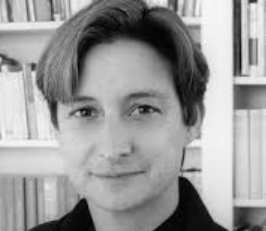
Nonviolence does not necessarily emerge from a pacific or calm part of the soul. Very often it is an expression of rage, indignation, and aggression.
▼
Source
source
p. 21
8 months 1 week ago
A great man quotes bravely, and will not draw on his invention when his memory serves him with a word just as good.
▼
Source
source
Quotation and Originality
8 months 1 week ago
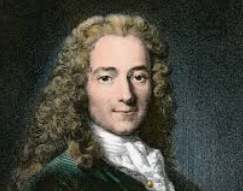
Nothing is so common as to imitate one's enemies, and to use their weapons.
▼
Source
source
"Oracles", 1770
8 months 2 weeks ago
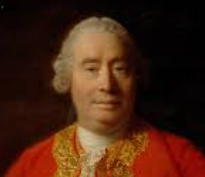
Now as we call every thing custom, which proceeds from a past repetition, without any new reasoning or conclusion, we may establish it as a certain truth, that all the belief, which follows upon any present impression, is deriv'd solely from that origin.
▼
Source
source
Part 3, Section 8
8 months 4 weeks ago
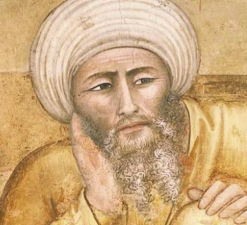
This is one of the most intricate problems of religion. For if you look into the traditional arguments (Hadith) about this problem you will find them contradictory; such also being the case with arguments of reason. The contradiction in the arguments of the first kind is found in the Qur'an and the Hadith.

8 months 1 week ago
Mr. Sensible learned only catchwords from them. He could talk like Epicurus of spare diet, but he was a glutton. He had from Montaigne the language of friendship, but no friend.
▼
Source
source
Pilgrim's Regress 176

8 months 2 weeks ago
I know that a Christian should be humble, but against the Pope I am going to be proud and say to him: "You, Pope, I will not have you for my boss, for I am sure that my doctrine is divine."
▼
Source
source
Chapter 2, Verse 6

8 months 1 week ago
It is strange that men will talk of miracles, revelations, inspiration, and the like, as things past, while love remains.
▼
Source
source
Pearls of Thought (1881) p. 163
4 months 2 weeks ago
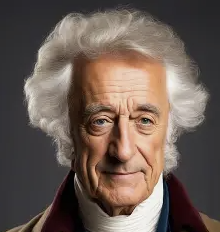
The question "cui bono" to what practical end and advantage do your researches tend? is one which the speculative philosopher who loves knowledge for its own sake, and enjoys, as a rational being should enjoy, the mere contemplation of harmonious and mutually dependent truths, can seldom hear without a sense of humiliation. He feels that there is a lofty and disinterested pleasure in his speculations which ought to exempt them from such questioning; communicating as they do to his own mind the purest happiness (after the exercise of the benevolent and moral feelings) of which human nature is susceptible, and tending to the injury of no one, he might surely allege this as a sufficient and direct reply to those who, having themselves little capacity, and less relish for intellectual pursuits, are constantly repeating upon him this enquiry.

7 months 6 days ago
Every thought derives from a thwarted sensation.
7 months 1 week ago
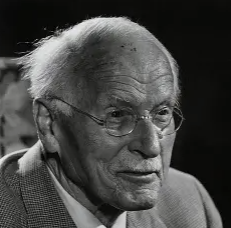
The dynamic principle of fantasy is play, a characteristic also of the child, and as such it appears inconsistent with the principle of serious work. But without this playing with fantasy no creative work has ever yet come to birth. The debt we owe to the play of imagination is incalculable. It is therefore short-sighted to treat fantasy, on account of its risky or unacceptable nature, as a thing of little worth.
▼
Source
source
Ch. 1, p. 82
4 months 3 weeks ago
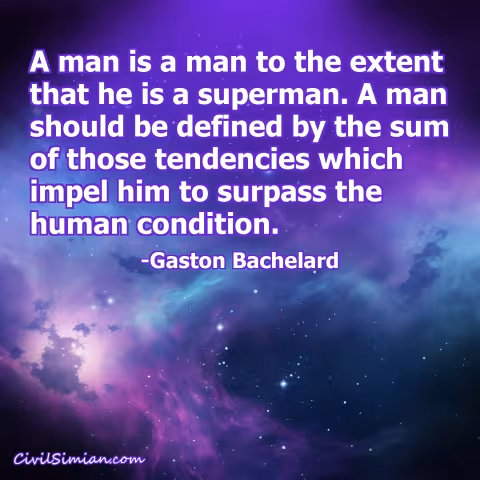
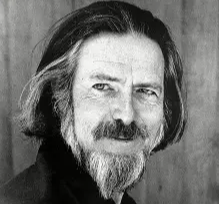
Additionally, in the United States, we define manliness in terms of aggression. I think it must be because we're frightened. We put on a show of being tough guys, but it's completely unnecessary, you know. If you have what it takes, you don't need to put on an act, and you certainly don't need to beat nature into submission. Why be hostile to nature?
▼
Source
source
p. 8
7 months 2 days ago
To look at a work of art in order to see how well certain rules are observed and canons conformed to impoverished perception. But to strive to note the ways in which certain conditions are fulfilled, such as the organic means by which the media is made to express and carry definite parts, or how the problem of adequate individualization is solved, sharpens esthetic perception and enriches its content.
▼
Source
source
p. 213

5 months 5 days ago
A right exists in theory... All human beings have the same set of rights, but rights need to be enforced by the state. It needs to rely on the coercive power of the state... its army, its police force, to actually make those rights something real that citizens can enjoy, and the enforcement power is not universal. ...We wouldn't want to live in a world in which every liberal state wanted to enforce liberal rights in every other state in the world.
▼
Source
source
24:09
8 months 1 week ago
Every natural fact is a symbol of some spiritual fact.
▼
Source
source
Language
7 months 1 day ago
The philosopher will ask himself ... if the criticism we are now suggesting is not the philosophy which presses to the limit that criticism of false gods which Christianity has introduced into our history.
▼
Source
source
p. 47
6 months 3 weeks ago
Do not all theists insist that there can be no morality, no justice, honesty or fidelity without the belief in a Divine Power? Based upon fear and hope, such morality has always been a vile product, imbued partly with self-righteousness, partly with hypocrisy. As to truth, justice, and fidelity, who have been their brave exponents and daring proclaimers? Nearly always the godless ones: the Atheists; they lived, fought, and died for them. They knew that justice, truth, and fidelity are not conditioned in heaven, but that they are related to and interwoven with the tremendous changes going on in the social and material life of the human race; not fixed and eternal, but fluctuating, even as life itself.
4 months 1 week ago
Cursed be all those on land and sea who eat their fill,cursed be all those who starve yet raise no hand in protest,cursed be all the bread, the wine, the meat which day by daydescends deep in the entrails of the exploited manand turns not into freedom's cry, the murderer's ruthless knife!
▼
Source
source
Prayer of three revolutionaries, Book X, line 391

7 months 3 weeks ago
But after these, Pythagoras changed that philosophy, which is conversant about geometry itself, into the form of a liberal doctrine, considering its principles in a more exalted manner; and investigating its theorems immaterially and intellectually; who likewise invented a treatise of such things as cannot be explained in geometry, and discovered the constitution of the mundane figures.
▼
Source
source
Chap. IV.
4 months 1 week ago
Philological analogies are to be preserved if possible, but modified according to scientific convenience.

6 months 3 weeks ago
And the conversion of the other Don Quixote - he who was converted only to die - was possible because he was mad, and it was his madness, and not his death or his conversion that immortalized him, earning him forgiveness for this crime of having been born. Felix culpa! And neither was his madness cured, but only transformed. His death was his last knightly adventure; in dying he stormed heaven, which suffereth violence.
7 months 6 days ago
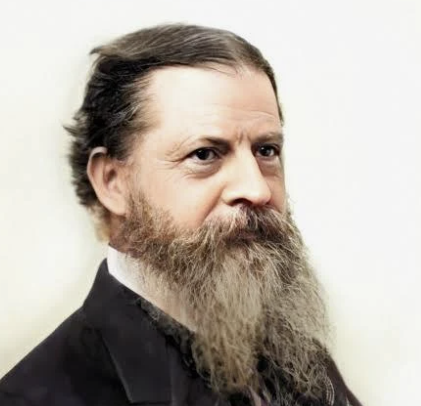
The origin of things, considered not as leading to anything, but in itself, contains the idea of First, the end of things that of Second, the process mediating between them that of Third. A philosophy which emphasises the idea of the One, is generally a dualistic philosophy in which the conception of Second receives exaggerated attention: for this One (though of course involving the idea of First) is always the other of a manifold which is not one. The idea of the Many, because variety is arbitrariness and arbitrariness is repudiation of any Secondness, has for its principal component the conception of First. In psychology Feeling is First, Sense of reaction Second, General conception Third, or mediation. In biology, the idea of arbitrary sporting is First, heredity is Second, the process whereby the accidental characters become fixed is Third. Chance is First, Law is Second, the tendency to take habits is Third. Mind is First, Matter is Second, Evolution is Third.
7 months 2 days ago
When there is genuine artistry in scientific inquiry and philosophic speculation, a thinker proceeds neither by rule nor yet blindly, but by means of meaning that exist immediately as feelings having qualitative color.

6 months 3 weeks ago
It may seem to be a long way from Blake's innocent talk of love and copulation to De Sade's need to inflict pain. And yet both are the outcome of a sexual mysticism that strives to transcend the everyday world. Simone de Beauvoir said penetratingly of De Sade's work that 'he is trying to communicate an experience whose distinguishing characteristic is, nevertheless its will to remain incommunicable'. De Sade's perversion may have sprung from his dislike of his mother or of other women, but its basis is a kind of distorted religious emotion.
▼
Source
source
p. 90

7 months 3 days ago
And, being assembled together with them, commanded them that they should not depart from Jerusalem, but wait for the promise of the Father, which, saith he, ye have heard of me. For John truly baptized with water; but ye shall be baptized with the Holy Ghost not many days hence.
▼
Source
source
1:4-5 (KJV)
7 months 6 days ago
Only what we have not accomplished and what we could not accomplish matters to us, so that what remains of a whole life is only what it will not have been.

5 months 4 days ago
One need only open the eyes to see that the conquests of industry which have enriched so many practical men would never have seen the light, if these practical men alone had existed and if they had not been preceded by unselfish devotees who died poor, who never thought of utility, and yet had a guide far other than caprice.As Mach says, these devotees have spared their successors the trouble of thinking.
▼
Source
source
Author's Essay Prefatory to the Translation: "The Choice of Facts," p.4
8 months 1 week ago
The yogi, absorbed in contemplation, contributes in his degree to creation: he breathes a divine perfume, he hears wonderful things. Divine forms traverse him without tearing him, and, united to the nature which is proper to him, he goes, he acts as animating original matter. To some extent, and at rare intervals even I am a yogi .
▼
Source
source
Quoted in R. Malhotra and V. Viswanathan, Snakes in the Ganga: Breaking India 2.0., 2022
9 months 1 week ago
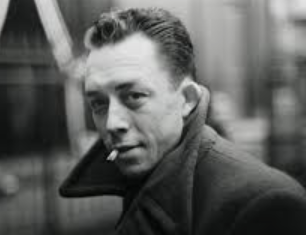
A novel is never anything but a philosophy put into images. And in a good novel, the whole of the philosophy has passed into the images. But if once the philosophy overflows the characters and action, and therefore looks like a label stuck on the work, the plot loses its authenticity and the novel its life. Nevertheless, a work that is to last cannot dispense with profound ideas. And this secret fusion between experiences and ideas, between life and reflection on the meaning of life, is what makes the great novelist.
CivilSimian.com created by AxiomaticPanic, CivilSimian, Kalokagathia