

5 months 3 days ago
Culture, when it loses its sacred sense, loses all sense. With the disappearance of the sacred, which imposed limits to the perfection which could be attained by the profane, arises one of the most dangerous illusions of our civilization-the illusion that there are no limits to the changes that human life can undergo, that society is 'in principle' an endlessly flexible thing, and that to deny this flexibility and this perfectibility is to deny man's total autonomy and thus to deny man himself.
▼
Source
source
The Revenge of the Sacred in Secular Culture
8 months 1 week ago
It requires twenty years for a man to rise from the vegetable state in which he is within his mother's womb, and from the pure animal state which is the lot of his early childhood, to the state when the maturity of reason begins to appear. It has required thirty centuries to learn a little about his structure. It would need eternity to learn something about his soul. It takes an instant to kill him.
▼
Source
source
"Man: General Reflection on Man", 1771



7 months 1 week ago
There never, gentlemen, was a period in which the steadfastness of some men has been nut to so sore a trial. It is not very difficult for well-formed minds to abandon their interest; but the separation of fame and virtue is an harsh divorce. Liberty is in danger of being made unpopular to Englishmen. Contending for an imaginary power, we begin to acquire the spirit of domination, and to lose the relish of honest equality.
5 months 3 days ago
Nothing is great but truth, and the smallest truth is great. The other day I had a thought, which I put like this: Even a harmful truth is useful, for it can be harmful only for the moment and will lead to other truths, which must always become useful, very much so. Conversely, even a useful error is harmful, for it can be useful only for the moment, enticing us into other errors, which become more and more harmful.
▼
Source
source
Letter to Charlotte von Stein (1787) in Goethe's World View: Presented in His Reflections and Maxims (1963), Edited with an Introduction by Frederick Ungar, Translated by Heinz Norden, pp. 72-73, Frederick Ungar Publishing Company, New York.


5 months 1 day ago
The science of the age, in short, is physical, chemical, physiological; in all shapes mechanical. Our favourite Mathematics, the highly prized exponent of all these other sciences, has also become more and more mechanical. Excellence in what is called its higher departments depends less on natural genius than on acquired expertness in wielding its machinery. Without undervaluing the wonderful results which a Lagrange or Laplace educes by means of it, we may remark, that their calculus, differential and integral, is little else than a more cunningly-constructed arithmetical mill; where the factors, being put in, are, as it were, ground into the true product, under cover, and without other effort on our part than steady turning of the handle. We have more Mathematics than ever; but less Mathesis.
8 months 1 week ago
I care not how affluent some may be, provided that none be miserable in consequence of it. But it is impossible to enjoy affluence with the felicity it is capable of being enjoyed, while so much misery is mingled in the scene.
▼
Source
source
Means by Which the Fund Is to Be Created

8 months 1 week ago
It is clear that thought is not free if the profession of certain opinions makes it impossible to earn a living.
▼
Source
source
Ch. 12: Free Thought and Official Propaganda
8 months 1 week ago
Can a society in which thought and technique are scientific persist for a long period, as, for example, ancient Egypt persisted, or does it necessarily contain within itself forces which must bring either decay or explosion? "Can a Scientific Community Be Stable?,"
▼
Source
source
Lecture, Royal Society of Medicine, London, 11/29/1949
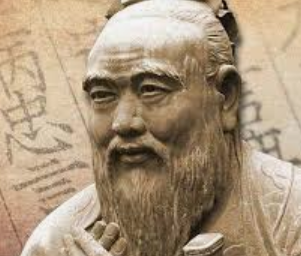
9 months ago
Let the states of equilibrium and harmony exist in perfection, and a happy order will prevail throughout heaven and earth, and all things will be nourished and flourish.
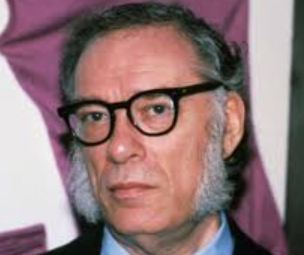
9 months 1 week ago
There is no belief, however foolish, that will not gather its faithful adherents who will defend it to the death.
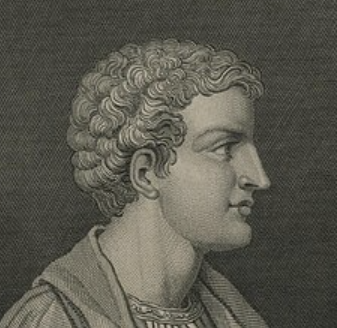
8 months ago
Tomorrow we will be back on the vast ocean.
▼
Source
source
The Routledge Dictionary of Latin Quotations: The Illiterati's Guide to Latin Maxims, Mottoes, Proverbs and Sayings

6 months 1 week ago
At the approach of danger there are always two voices that speak with equal force in the heart of man: one very reasonably tells the man to consider the nature of the danger and the means of avoiding it; the other even more reasonable says that it is too painful and harassing to think of the danger, since it is not a man's power to provide for everything and escape from the general march of events; and that it is therefore better to turn aside from the painful subject till it has come, and to think of what is pleasant. In solitude a man generally yields to the first voice; in society to the second.
▼
Source
source
Bk. X, ch. 17
4 months 1 week ago
"Since we cannot change reality, let us change the eyes which see reality," says one of my favorite Byzantine mystics. I did this when a child; I do it now as well in the most creative moments of my life.
▼
Source
source
"The Son", Ch. 4, p. 45

6 months 1 week ago
The simulacrum now hides, not the truth, but the fact that there is none, that is to say, the continuation of Nothingness.


6 months 1 week ago
A wise man rules his passions, a fool obeys them.
▼
Source
source
Maxim 49

7 months 1 week ago
It is easy to see that this problem can be solved neither in theoretical nor in practical philosophy, but only in a higher discipline, which is the link that combines them, and neither theoretical nor practical, but both at once.
8 months ago
I am not bound over to swear allegiance to any master; where the storm drives me I turn in for shelter.
▼
Source
source
Book I, epistle i, line 14

8 months ago
Fools learn wisdom through misfortune.
8 months 4 weeks ago
Withdraw into yourself and look. And if you do not find yourself beautiful yet, act as does the creator of a statue that is to be made beautiful: he cuts away here, he smoothes there, he makes this line lighter, this other purer. ... Cut away all that is excessive, straighten all that is crooked, bring light to all that is overcast, labor to make all one glow or beauty and never cease chiseling your statue, until there shall shine out on you from it the godlike splendor of virtue.
5 months 2 weeks ago
Blair has been the modern man he claims to be: for him, a sense of subjective certainty is all that is needed for an action to be right. If deception is needed to realise the providential design, it cannot be truly deceitful.
▼
Source
source
Neoconned!: How Blair took New Labour for a ride, The Independent

6 months 3 weeks ago
The self-surmounter can never put up with the man who has ceased to be dissatisfied with himself.
▼
Source
source
p. 139
9 months ago
Cornered vessel without corners, strange cornered vessel, strange cornered vessel.
4 months 6 days ago
In the army, capitalist development leads to the extension of obligatory military service to the reduction of the time of service and consequently to a material approach to a popular militia. But all of this takes place under the form of modern militarism in which the domination of the people by the militarist State and the class character of the State manifest themselves most clearly.
▼
Source
source
Ch.8

8 months 1 week ago
There is no worse lie than a truth misunderstood by those who hear it.
▼
Source
source
Lectures XIV and XV, "The Value of Saintliness"

6 months 3 weeks ago
Time begins to emit a scent when it gains duration; when it is given a narrative or deep tension; when it gains depth and breadth, even space.

4 months 1 week ago
External things are not the problem. It's your assessment of them. Which you can erase right now.
▼
Source
source
(Hays translation) VIII, 47
5 months 4 days ago
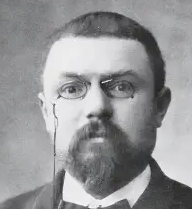
We do not have and cannot have any means of discovering whether or not we are carried along in a uniform motion of translation.
▼
Source
source
L'état actuel et l'avenir de la physique mathematique

7 months 6 days ago
That fear which gives birth to thoughts, and the fear of thoughts...

6 months 3 weeks ago
As we search as a nation for constructive ways to challenge racism and white supremacy, it is absolutely essential that progressive female voices gain a hearing.
8 months 2 weeks ago
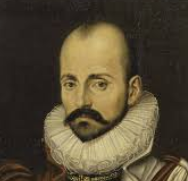
Age imprints more wrinkles in the mind than it does on the face.
▼
Source
source
Book III, Ch. 2

8 months 3 weeks ago
As the soul is the life of the body, so God is the life of the soul. As therefore the body perishes when the soul leaves it, so the soul dies when God departs from it.
▼
Source
source
p. 277
7 months 6 days ago
Whether or not there exists a solution to problems troubles only a minority; that the emotions have no outcome, lead to nothing, vanish into themselves - that is the great unconscious drama, the affective insolubility everyone suffers without even thinking about it.
4 months 2 weeks ago
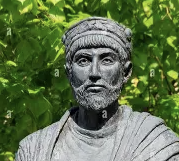
As a general rule, all that has been hitherto advanced respecting the nature of this deity, must be understood to refer to his properties: for the nature of the god is not one thing, and his influence another: and truly, besides these two, his energy a third thing: seeing that all things which he wills, these he is, he can, and he works. For neither doth he will that which he is not; nor is he without strength to do that which he wills; nor doth he will that which he cannot effect. Now this is very different in the case of men, for theirs is a double nature mixed up in one, that of soul and body; the former divine, the latter full of darkness and obscurity: hence naturally arise warfare and discord between the two.
8 months 1 week ago
While loving glory so much how can you persist in a plan which will cause you to lose it?
▼
Source
source
Letters of Voltaire and Frederick the Great (New York: Brentano's, 1927), transl. Richard Aldington, letter 130 from Voltaire to Frederick II of Prussia, October 1757.

8 months 1 week ago
And every man, in love or pride, Of his fate is ever wide.
▼
Source
source
Nemesis

7 months 3 days ago
Christian Kings may erre in deducing a Consequence, but who shall Judge?
▼
Source
source
The Third Part, Chapter 43, p. 330
8 months 3 weeks ago
Therefore, on hearing His words let no one say either: "These are not Christ's words," or "These are not my words." On the contrary, if he knows that he is in the body of Christ, let him say: "These are both Christ's words and my words." Say nothing without Him, and He will say nothing without thee. We must not consider ourselves as strangers to Christ, or look upon ourselves as other than Himself.
▼
Source
source
p.422
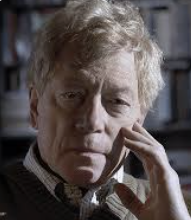
6 months 3 days ago
Take any aspect of the Western inheritance of which our ancestors were proud, and you will find university courses devoted to deconstructing it. Take any positive feature of our political and cultural inheritance, and you will find concerted efforts in both the media and the academy to place it in quotation marks, and make it look like an imposture or a deceit.
▼
Source
source
(p. 40)

6 months 3 weeks ago
To-day is the parent of to-morrow. The present casts its shadow far into the future. That is the law of life, individual and social. Revolution that divests itself of ethical values thereby lays the foundation of injustice, deceit, and oppression for the future society. The means used to prepare the future become its cornerstone.
7 months 6 days ago
At the edge of life you feel that you are no longer master of the life within you, that subjectivity is an illusion, and that uncontrollable forces are seething inside you, evolving with no relation to a personal center or a definite, individual rhythm.
▼
Source
source
essay 2 - On not wanting to live
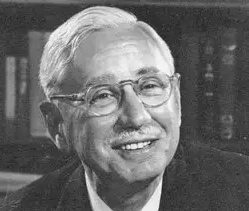
5 months ago
Sir William Hunter, estimated that 40,000,000 of the people of India were seldom or never able to satisfy their hunger. In 1901, 272,000 died of plague introduced from abroad, in 1902, 500,000 died of plague; in 1903, 800,000; in 1904, 1,000,000. We can now understand why there are famines in India. Their cause, in plain terms, is not the absence of food, but the inability of the people to pay for it. It was hoped the railways would solve the problem...the fact that the worst famines have come since the building of the railways...behind all these, as the fundamental source of the terrible famines in India, lies such merciless exploitation, such unbalanced exploitation of goods, and such brutal collection of high taxes in the very midst of famine....
▼
Source
source
(source: The Case for India - By Will Durant Simon and Schuster, New York. 1930 p.50-53).
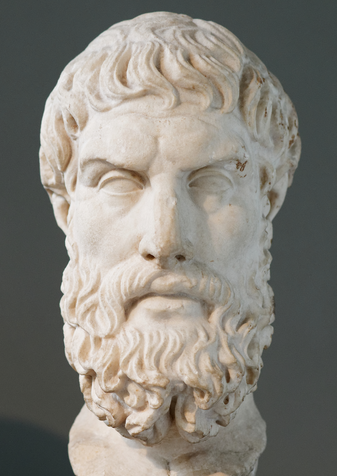
9 months ago
Is God willing to prevent evil, but not able? Then he is not omnipotent. Is he able, but not willing? Then he is malevolent. Is he both able and willing? Then whence cometh evil? Is he neither able nor willing? Then why call him God?
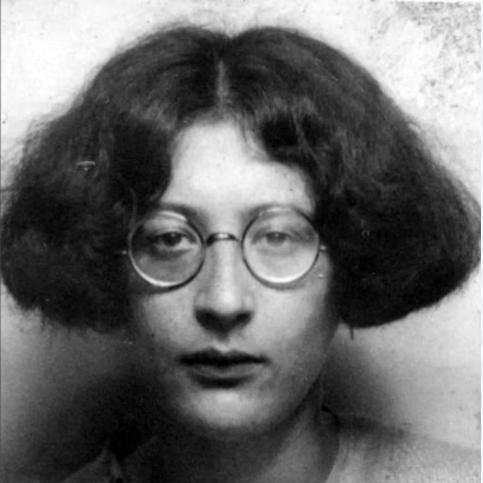
6 months 3 weeks ago
The prestige which constitutes three-fourths of might is first of all made up of that superb indifference which the powerful have for the weak, an indifference so contagious that it is communicated even to those who are its object.
▼
Source
source
in The Simone Weil Reader, p. 168
4 months 1 week ago
Hasten to examine thy own ruling faculty and that of the universe and that of thy neighbor: thy own, that thy may make it just; and that of the universe, that thou mayst remember of what thou art a part; and that of thy neighbor, that thy mayst know whether he has acted ignorantly or with knowledge, and that thou mayst also consider that his ruling faculty is akin to thine.
▼
Source
source
IX, 22
7 months 6 days ago
The skeptic is the least mysterious man in the world, and yet, starting from a certain moment, he no longer belongs to this world.
CivilSimian.com created by AxiomaticPanic, CivilSimian, Kalokagathia