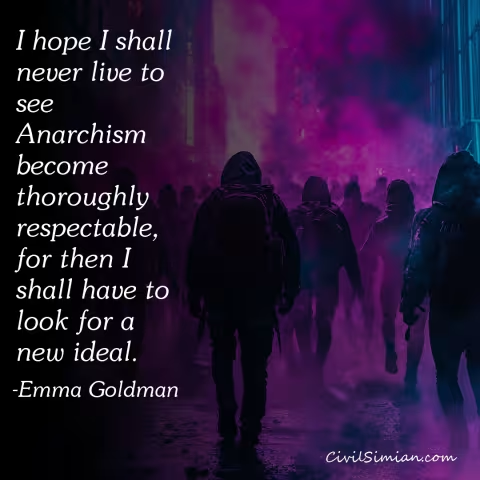
I haven't gone seriously down the anarchism rabbit hole yet. I think it's paradoxical though that you have to form groups to break up groups...but there's all kinds of versions....



Merit is a work for the sake of which Christ gives rewards. But no such work is to be found, for Christ gives by promise. Just as if a prince should say to me, "Come to me in my castle, and I will give you a hundred florins." I do a work, certainly, in going to the castle, but the gift is not given me as the reward of my work in going, but because the prince promised it to me.
Students have powerful images of what a perfect body is and pursue it incessantly. But deprived of literary guidance, they no longer have any image of a perfect soul, and hence do not long to have one.
Reading after a certain age diverts the mind too much from its creative pursuits. Any man who reads too much and uses his own brain too little falls into lazy habits of thinking, just as the man who spends too much time in the theater is tempted to be content with living vicariously instead of living his own life.

Everywhere in life, the true question is not what we gain, but what we do.

Losing love is so rich a philosophical ordeal that it makes a hairdresser into a rival of Socrates.
When people come to me saying they want to kill themselves, I tell them, "What's your rush? You can kill yourself any time you like. So calm down. Suicide is a positive act." And they do calm down.

Our senses are not receptors so much as reactors and makers of different modalities of space. Perhaps touch is not just skin contact with things, but the very life of things in the mind.

Marcus Aurelius wrote the following about Severus (a person who is not clearly identifiable according to the footnote): Through him I became acquainted with the conception of a community based on equality and freedom of speech for all, and of a monarchy concerned primarily to uphold the liberty of the subject.

But Aversion wee have for things, not only which we know have hurt us; but also that we do not know whether they will hurt us, or not.

Everything of this sort is not anger, but the semblance of anger, like that of boys who want to beat the ground when they have fallen upon it, and who often do not even know why they are angry, but are merely angry without any reason or having received any injury, yet not without some semblance of injury received, or without some wish to exact a penalty for it.

The first and the simplest emotion which we discover in the human mind is Curiosity.
What the English call "comfortable" is something endless and inexhaustible. Every condition of comfort reveals in turn its discomfort, and these discoveries go on for ever. Hence the new want is not so much a want of those who have it directly, but is created by those who hope to make profit from it.

The third category of which I come now to speak is precisely that whose reality is denied by nominalism. For although nominalism is not credited with any extraordinarily lofty appreciation of the powers of the human soul, yet it attributes to it a power of originating a kind of ideas the like of which Omnipotence has failed to create as real objects, and those general conceptions which men will never cease to consider the glory of the human intellect must, according to any consistent nominalism, be entirely wanting in the mind of Deity.
Man's position in the world is defined by the fact that in every dimension of his being and behavior he finds himself at every moment between two boundaries. This condition appears as the formal structure of our existence, filled always with different contents in life's diverse provinces, activities, and destinies. We feel that the content and value of every hour stands between a higher and a lower; every thought between a wiser and a more foolish; every possession between a more extended and a more limited; every deed between a greater and a lesser measure of meaning, adequacy, and morality.

The sweetest thing in all my life has been the longing - to reach the Mountain, to find the place where all the beauty came from - my country, the place where I ought to have been born. Do you think it all meant nothing, all the longing? The longing for home? For indeed it now feels not like going, but like going back.

This idea of weapons of mass extermination is utterly horrible and is something which no one with one spark of humanity can tolerate. I will not pretend to obey a government which is organising a mass massacre of mankind.
There is one mistake we got to avoid, and that is the mistake of supposing that if you simulate it, you duplicate it. This is a deep mistake embedded in our popular culture - that simulation is equivalent to duplication, but of course it isn't. A perfect simulation of the brain - say, on a computer - would no longer thereby be conscious than a perfect simulation of a rainstorm on a weather-predicting computer will leave us all wet.
Sovereign is he who decides on the exception.

To discover the various use of things is the work of history.
Theologian: But what is to love? Philosopher: To be delighted by the happiness of another.
He would be the finer gentleman that should leave the world without having tasted of lying or pretence of any sort, or of wantonness or conceit.
No passion so effectually robs the mind of all its powers of acting and reasoning as fear.
The abyss of endless time that swallows it all. The emptiness of all those applauding hands. The people who praise us-how capricious they are, how arbitrary. And the tiny region in which it all takes place.

Patriotism is an ephemeral motive that scarcely ever outlasts the particular threat to society that aroused it.
There are things I can't force. I must adjust. There are times when the greatest change needed is a change of my viewpoint.
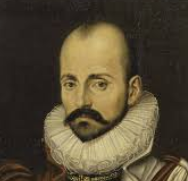
The first law that ever God gave to man was a law of pure obedience; it was a commandment naked and simple, wherein man had nothing to inquire after, nor to dispute; forasmuch as to obey is the proper office of a rational soul, acknowledging a heavenly superior and benefactor.
The bourgeoisie has stripped of its halo every occupation hitherto honoured and looked up to with reverent awe. It has converted the physician, the lawyer, the priest, the poet, the man of science, into its paid wage labourers.
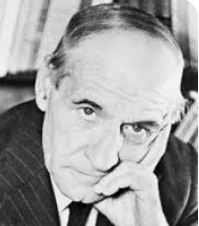
I am I and my circumstance, and if I don't save it I don't save myself.

Don't say: "They must have something in common, or they would not be called 'games'" but look and see whether there is anything common to all. For if you look at them, you won't see something that is common to all, but similarities, affinities, and a whole series of them at that.
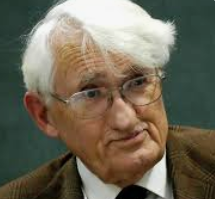
Although objectively greater demands are placed on this authority, it operates less as a public opinion giving a rational foundation to the exercise of political and social authority, the more it is generated for the purpose of an abstract vote that amounts to no more than an act of acclamation within a public sphere temporarily manufactured for show or manipulation.
Men became scientific because they expected law in Nature; and they expected law in Nature because they believed in a Legislator.
By all evidence we are in the world to do nothing.

There is hardly a member of Congress who can make up his mind to go home without having despatched at least one speech to his constituents; nor who will endure any interruption until he has introduced into his harangue whatever useful suggestions may be made touching the four-and-twenty States of which the Union is composed, and especially the district which he represents.
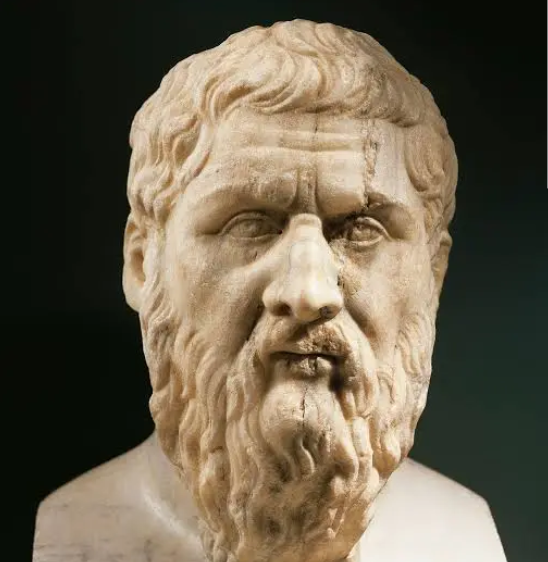
The orators and the despots have the least power in their cities since they do nothing that they wish to do, practically speaking, though they do whatever they think to be best.
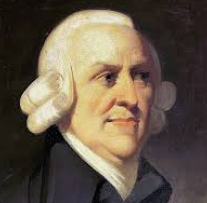
In public, as well as in private expences, great wealth may, perhaps, frequently be admitted as an apology for great folly.
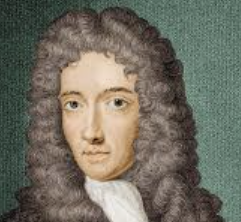
For it has been truly observed by a great philosopher, that truth does more easily emerge out of error than confusion.

More than a century ago, in 1804, in Letter XC of that series that constitutes the immense monody of his Obermann, Sénancour wrote the words which I have put at the head of this chapter - and of all the spiritual descendants of the patriarchal Rousseau, Sénancour was the most profound and intense; of all the men of heart and feeling that France has produced, not excluding Pascal, he was the most tragic. "Man is perishable. That may be; but let us perish resisting, and if it is nothingness that awaits us, do not let us so act that it shall be a just fate." Change this sentence from it negative to the positive form - "And if it is nothingness that awaits us, let us so act that it shall be an unjust fate" - and you get the firmest basis of action for the man who cannot or will not be a dogmatist.
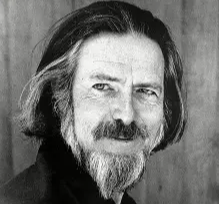
[Successful meditation brings about realizations:] That we are no longer this poor little stranger and afraid in a world it never made. But that you are this universe and you are creating it in every moment... Because you see it starts now, it didn't begin in the past, there was no past. See, if the universe began in the past when that happened it was now; see, but it's still now - and the universe is still beginning now, and it's trailing off like the wake of a ship from now, and that wake fades out so does the past. You can look back there to explain things, but the explanation disappears. You'll never find it there. ... Things are not explained by the past, they are explained by what Happens Now. That Creates the past, and it begins here... That's the birth of responsibility.
Can the man say, Fiat lux, Let there be light; and out of chaos make a world? Precisely as there is light in himself, will he accomplish this.
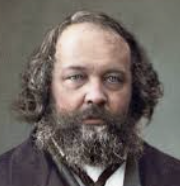
If there is a state, then necessarily there is domination and consequently slavery. A state without slavery, open or camouflaged, is inconceivable - that is why we are enemies of the state.

It is too early to love. We will buy the right to do so by shedding blood.

Its first ethical precept is the identity of means used and aims sought. The ultimate end of all revolutionary social change is to establish the sanctity of human life, the dignity of man, the right of every human being to liberty and wellbeing. Unless this be the essential aim of revolution, violent social changes would have no justification. For external social alterations can be, and have been, accomplished by the normal processes of evolution. Revolution, on the contrary, signifies not mere external change, but internal, basic, fundamental change. That internal change of concepts and ideas, permeating ever-larger social strata, finally culminates in the violent upheaval known as revolution.
There is but one law for all, namely, that law which governs all law, the law of our Creator, the law of humanity, justice, equity - the law of nature, and of nations.
The media themselves are the avant-garde of our society. Avant-garde no longer exists in painting, music and poetry, it's the media themselves.
CivilSimian.com created by AxiomaticPanic, CivilSimian, Kalokagathia