


9 months 2 weeks ago
An intellectual is someone whose mind watches itself.
5 months 1 day ago
We cannot hope to give here a final clarification of the essence of fact, judgement, object, property; this task leads into metaphysical abysses; about these one has to seek advice from men whose name cannot be stated without earning a compassionate smile-e.g.
▼
Source
source
Fichte. Das Kontinuum. Kritische Untersuchungen uber die Grundlagen der Analysis (1918), as quoted/translated by Erhard Scholz, "Philosophy as a Cultural Resource and Medium of Reflection for Hermann Weyl"
7 months 1 week ago
The concept of guilt is found most powerfully developed even in the most primitive communal forms which we know: ... the man is guilty who violates one of the original laws which dominate the society and which are mostly derived from a divine founder; the boy who is accepted into the tribal community and learns its laws, which bind him thenceforth, learns to promise; this promise is often given under the sign of death, which is symbolically carried out on the boy, with a symbolical rebirth.
▼
Source
source
p. 178

7 months 4 days ago
The student of the history of progressive thought is well aware that every idea in its early stages has been misrepresented, and the adherents of such ideas have been maligned and persecuted...The history of progress is written in the blood of men and women who have dared to espouse an unpopular cause, as, for instance, the black man's right to his body, or woman's right to her soul. If, then, from time immemorial, the New has met with opposition and condemnation, why should my beliefs be exempt from a crown of thorns?

8 months 3 weeks ago
The presence of a thought is like the presence of a lover.

7 months 2 weeks ago
The conscious side of woman corresponds to the emotional side of man, not to his "mind." Mind makes up the soul, or better, the "animus" of woman, and just as the anima of a man consists of inferior relatedness, full of affect, so the animus of woman consists of inferior judgments, or better, opinions.
▼
Source
source
The Secret of the Golden Flower (1931) Commentary by C.G.Jung in CW 13: Alchemical Studies. P. 60

8 months 3 weeks ago
When all is said and done, we are in the end absolutely dependent on the universe; and into sacrifices and surrenders of some sort, deliberately looked at and accepted, we are drawn and pressed as into our only permanent positions of repose. Now in those states of mind which fall short of religion, the surrender is submitted to as an imposition of necessity, and the sacrifice is undergone at the very best without complaint. In the religious life, on the contrary, surrender and sacrifice are positively espoused: even unnecessary givings-up are added in order that the happiness may increase. Religion thus makes easy and felicitous what in any case is necessary; and if it be the only agency that can accomplish this result, its vital importance as a human faculty stands vindicated beyond dispute. It becomes an essential organ of our life, performing a function which no other portion of our nature can so successfully fulfill.
▼
Source
source
Lecture II, "Circumscription of the Topic"
7 months 2 weeks ago
If the individual were no longer compelled to prove himself on the market, as a free economic subject, the disappearance of this kind of freedom would be one of the greatest achievements of civilization. The technological processes of mechanization and standardization might release individual energy into a yet uncharted realm of freedom beyond necessity. The very structure of human existence would be altered; the individual would be liberated from the work world's imposing upon him alien needs and alien possibilities. The individual would be free to exert autonomy over a life that would be his own.
▼
Source
source
p. 2
7 months 2 weeks ago
To romanticize the world is to make us aware of the magic, mystery and wonder of the world; it is to educate the senses to see the ordinary as extraordinary, the familiar as strange, the mundane as sacred, the finite as infinite.
▼
Source
source
As quoted in "Bildung in Early German Romanticism" by Frederick C. Beiser, in Philosophers on Education : Historical Perspectives (1998) by Amélie Rorty, p. 294

8 months 3 weeks ago
Have you learned the alphabet of heaven and can count three? Do you know the number of God's family? Can you put mysteries into words? Do you presume to fable of the ineffable? Pray, what geographer are you, that speak of heaven's topography? Whose friend are you that speak of God's personality? ... Tell me of the height of the mountains of the moon, or of the diameter of space, and I may believe you, but of the secret history of the Almighty, and I shall pronounce thee mad.

4 months 3 weeks ago
Truth will do well enough if left to shift for herself. She seldom has received much aid from the power of great men to whom she is rarely known & seldom welcome. She has no need of force to procure entrance into the minds of men. Error indeed has often prevailed by the assistance of power or force. Truth is the proper & sufficient antagonist to error.
▼
Source
source
Notes on Religion (October 1776), published in The Writings of Thomas Jefferson : 1816-1826 (1899) edited by Paul Leicester Ford, v. 2, p. 102

4 months 2 weeks ago
That which had grown from the earth, to the earth, But that which has sprung from heavenly seed, Back to the heavenly realms returns. This is either a dissolution of the mutual involution of the atoms, or a similar dispersion of the unsentient elements.
▼
Source
source
VII, 50



5 months 2 weeks ago
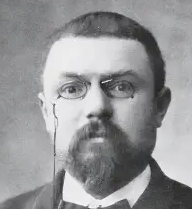
As we can not give a general definition of energy, the principle of the conservation of energy signifies simply that there is something which remains constant.
7 months 2 weeks ago
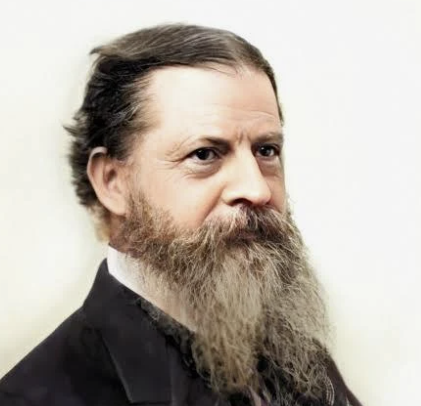
Fifth, in what measure this unification acts, seems to be regulated only by special rules; or, at least, we cannot in our present knowledge say how far it goes. But it may be said that, judging by appearances, the amount of arbitrariness in the phenomenon of human minds is neither altogether trifling nor very prominent.

7 months 2 weeks ago
When there were gathered together an innumerable multitude of people, insomuch that they trode one upon another, he began to say unto his disciples first of all, Beware ye of the leaven of the Pharisees, which is hypocrisy. For there is nothing covered, that shall not be revealed; neither hid, that shall not be known. Therefore whatsoever ye have spoken in darkness shall be heard in the light; and that which ye have spoken in the ear in closets shall be proclaimed upon the housetops. And I say unto you my friends, Be not afraid of them that kill the body, and after that have no more that they can do. But I will forewarn you whom ye shall fear: Fear him, which after he hath killed hath power to cast into hell; yea, I say unto you, Fear him.
▼
Source
source
12:1-5

7 months 4 days ago
I found Randi likable and plausible; the only thing that bothered me was the sweeping and intense nature of his skepticism. He was obviously working from the premise that all paranormal phenomena, without exception, are fakes or delusions. He seemed to take to take it for granted that all of us - there were also two women present - shared his opinions, and he made jovial, disparaging remarks about psychics and other such weirdos. I began to get the uncomfortable feeling of a Jew who has accidentally walked into a Nazi meeting, or a Jehovah's Witness at a convention of militant atheists. As a supposedly scientific psychic investigator, Randi struck me as being oddly fixed in his opinions.
▼
Source
source
pp. 39-40


8 months 3 weeks ago
While it is true that science cannot decide questions of value, that is because they cannot be intellectually decided at all, and lie outside the realm of truth and falsehood. Whatever knowledge is attainable, must be attained by scientific methods; and what science cannot discover, mankind cannot know.
▼
Source
source
Religion and Science (1935), Ch. IX: Science of Ethics.

7 months 2 weeks ago
The capabilities (intellectual and material) of contemporary society are immeasurably greater than ever before-which means that the scope of society's domination over the individual is immeasurably greater than ever before. Our society distinguishes itself by conquering the centrifugal social forces with Technology rather than Terror, on the dual basis of an overwhelming efficiency and an increasing standard of living.
▼
Source
source
p. xliii

7 months 3 days ago
That man and woman have an equality of duties and rights is accepted by woman even less than by man. Behind his destiny woman must annihilate herself, must be only his complement. A woman dedicates herself to the vocation of her husband; she fills up and performs the subordinate parts in it. But if she has any destiny, any vocation of her own, she must renounce it, in nine cases out of ten.
7 months 2 weeks ago
Operational analysis ... cannot raise the decisive question whether the consent itself was not the work of manipulation-a question for which the actual state of affairs provides ample justification. The analysis cannot raise it because it would transcend its terms toward transitive meaning-toward a concept of democracy which would reveal the democratic election as a rather limited democratic process. Precisely such a non-operational concept is the one rejected by the authors as "unrealistic" because it defines democracy on too articulate a level as the clear-cut control of representation by the electorate-popular control as popular sovereignty.
▼
Source
source
p. 116

7 months 3 weeks ago
They all attributed the peaceful dominion of religion in their country mainly to the separation of church and state. I do not hesitate to affirm that during my stay in America I did not meet a single individual, of the clergy or the laity, who was not of the same opinion on this point.
▼
Source
source
Chapter XVII.

4 months 4 weeks ago
What is the purpose of houses? It is to protect us from the wind and cold of winter, the heat and rain of summer, and to keep out robbers and thieves. Once these ends have been secured, that is all. Whatever does not contribute to these ends should be eliminated.
▼
Source
source
Ch 20, as quoted in Van Norden, Bryan W. (2011). Introduction to Classical Chinese Philosophy. Hackett Publishing. p. 52. ISBN 978-1-60384-468-0.
9 months 1 week ago
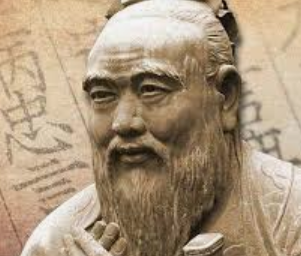
Let the superior man never fail reverentially to order his own conduct, and let him be respectful to others and observant of propriety: then all within the four seas, all men are brothers. What has the superior man to do with being distressed because he has no brothers?
4 months 1 week ago
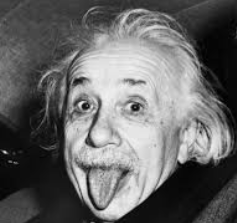
Sometimes one pays most for the things one gets for nothing.
▼
Source
source
Quoted in The Ultimate Quotable Einstein by Alice Calaprice (2010), p. 230

8 months 2 weeks ago
He yawned. He had finished the day and he had also finished with his youth. Various well-bred moralities had already discreetly offered him their services: disillusioned epicureanism, smiling tolerance, resignation, common sense stoicism - all the aids whereby a man may savour, minute by minute, like a connoisseur, the failure of a life.
▼
Source
source
L'âge de raison (The Age of Reason)
5 months 2 days ago
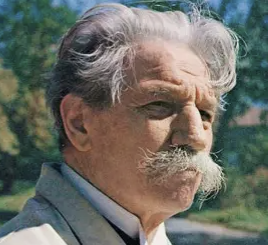
The deepest thinking is humble. It is only concerned that the flame of truth which it keeps alive should burn with the strongest and purest heat; it does not trouble about the distance to which its brightness penetrates.
▼
Source
source
Ch. XVI : Looking Backward and Forward, p. 257


7 months 2 weeks ago
We are all secularised anarchists today.

8 months 4 weeks ago
Lastly, we must also know what Baptism signifies, and why God has ordained just such external sign and ceremony for the Sacrament by which we are first received into the Christian Church. But the act or ceremony is this, that we are sunk under the water, which passes over us, and afterwards are drawn out again. These two parts, to be sunk under the water and drawn out again, signify the power and operation of Baptism, which is nothing else than putting to death the old Adam, and after that the resurrection of the new man, both of which must take place in us all our lives, so that a truly Christian life is nothing else than a daily baptism, once begun and ever to be continued.
▼
Source
source
On Infant Baptism, Large Catechism
7 months 2 weeks ago
Be ye therefore ready also: for the Son of man cometh at an hour when ye think not.
▼
Source
source
12:40

7 months 5 days ago
The process begins with the individual woman's acceptance that American women, without exception, are socialized to be racist, classist and sexist, in varying degrees, and that labeling ourselves feminists does not change the fact that we must consciously work to rid ourselves of the legacy of negative socialization.
4 months 3 weeks ago
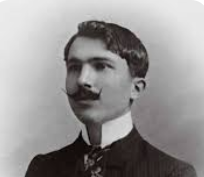
Nothing exists! Neither life nor death. I watch mind and matter hunting each other like two nonexistent erotic phantasms - merging, begetting, disappearing - and I say: "This is what I want!" I know now: I do not hope for anything. I do not fear anything, I have freed myself from both the mind and the heart, I have mounted much higher, I am free. This is what I want. I want nothing more. I have been seeking freedom.
▼
Source
source
This passage was used for Kazantzakis' epitaph: "Δεν ελπίζω τίποτα, δε φοβούμαι τίποτα, είμαι λεύτερος." I hope for nothing. I fear nothing. I am free.
8 months 3 weeks ago
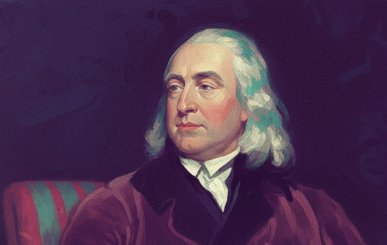
Nature has placed mankind under the governance of two sovereign masters, pain and pleasure. It is for them alone to point out what we ought to do, as well as to determine what we shall do. On the one hand the standard of right and wrong, on the other the chain of causes and effects, are fastened to their throne. They govern us in all we do, in all we say, in all we think: every effort we can make to throw off our subjection, will serve but to demonstrate and confirm it. In words a man may pretend to abjure their empire: but in reality he will remain subject to it all the while. The principle of utility recognizes this subjection, and assumes it for the foundation of that system, the object of which is to rear the fabric of felicity by the hands of reason and of law. Systems which attempt to question it, deal in sounds instead of sense, in caprice instead of reason, in darkness instead of light.
▼
Source
source
Ch. 1: Of the Principle of Utility

9 months 1 week ago
In order to understand the Scriptures, it is absolutely necessary to know the whole, complete Christ, that is, Head and members. For sometimes Christ speaks in the name of the Head alone, sometimes in the name of His body, which is the holy Church spread over the entire earth. And we are in His body, and we hear ourselves speaking in it, for the Apostle tells us: We are members of His body (Eph. 5:30). In many places does the Apostle tell us this.
▼
Source
source
p. 419
8 months 3 weeks ago
Too little liberty brings stagnation, and too much brings chaos.
▼
Source
source
Authority and the Individual (1949), p. 37
8 months 3 weeks ago
If you punish a child for being naughty, and reward him for being good, he will do right merely for the sake of the reward; and when he goes out into the world and finds that goodness is not always rewarded, nor wickedness always punished, he will grow into a man who only thinks about how he may get on in the world, and does right or wrong according as he finds either of advantage to himself.
7 months 1 week ago
God ... demands everything, in order to give everything anew to him who loves Him, after that loving has truly given up all.
▼
Source
source
p. 45

4 months 3 weeks ago
What I stand for is what I stand on.
▼
Source
source
Below in A Part
6 months 3 weeks ago
I urge you to please notice when you are happy, and exclaim or murmur or think at some point, "If this isn't nice, I don't know what is."
▼
Source
source
Knowing What's Nice, an essay from In These Times
9 months 1 week ago
All those of you who rejoice in peace, now it is time to judge the truth....Undoubtedly in days gone by there were holy men as Scripture tells,For God stated that he left behind seven thousand men in safety,And there are many priests and kings who are righteous under the law,There you find so many of the prophets, and many of the people too.Tell me which of the righteous of that time claimed an altar for himself?That wicked nation perpetrated a very large number of crimes,They sacrificed to idols and may prophets were put to death,Yet not a single one of the righteous withdrew from unity.The righteous endured the unrighteous while waiting for the winnower:They all mingled in one temple but were not mingled in their hearts;They said such things against them yet they had a single altar.
▼
Source
source
Early Christian Latin Poets, 2000, Carolinne White, Routledge, London, ISBN 0415187826 ISBN 9780415187824 p. 55.
9 months 3 weeks ago
Since my earliest childhood a barb of sorrow has lodged in my heart. As long as it stays I am ironic - if it is pulled out I shall die.

7 months 1 week ago
And neither ought we to be surprised by the affirmation that the consciousness of the Universe is composed and integrated by the consciousnesses of the beings which form the Universe, by the consciousnesses of all the beings that exist, and that nevertheless it remains a personal consciousness distinct from those which compose it. Only thus is it possible to understand how in God we live, move, and have our being.
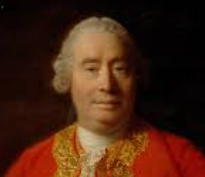
8 months 3 weeks ago
In our reasonings concerning matter of fact, there are all imaginable degrees of assurance, from the highest certainty to the lowest species of moral evidence. A wise man, therefore, proportions his belief to the evidence.
▼
Source
source
Section X: Of Miracles; Part I. 87

8 months 1 week ago
From an ill-natured man take no loan.
CivilSimian.com created by AxiomaticPanic, CivilSimian, Kalokagathia