


1 week 6 days ago
To be honest, as critical as I am of people for being anti-human, I love everybody so much for sinking on this ship with me. Admit it or not, we're all dying together.
2 months 4 weeks ago
The highest form of vanity is love of fame.

4 months 5 days ago
I am not much an advocate for travelling, and I observe that men run away to other countries because they are not good in their own, and run back to their own because they pass for nothing in the new places. For the most part, only the light characters travel. Who are you that have no task to keep you at home? I have been quoted as saying captious things about travel; but I mean to do justice. .... He that does not fill a place at home, cannot abroad. He only goes there to hide his insignificance in a larger crowd. You do not think you will find anything there which you have not seen at home? The stuff of all countries is just the same. Do you suppose there is any country where they do not scald milk-pans, and swaddle the infants, and burn the brushwood, and broil the fish? What is true anywhere is true everywhere. And let him go where he will, he can only find so much beauty or worth as he carries.
▼
Source
source
Culture
1 month 2 weeks ago
I believe Gandhi is the only person who knew about real democracy - not democracy as the right to go and buy what you want, but democracy as the responsibility to be accountable to everyone around you. Democracy begins with freedom from hunger, freedom from unemployment, freedom from fear, and freedom from hatred. To me, those are the real freedoms on the basis of which good human societies are based.
▼
Source
source
1998
3 months 1 day ago
The traditional disputes of philosophers are, for the most part, as unwarranted as they are unfruitful. The surest way to end them is to establish beyond question what should be the purpose and method of a philosophical enquiry. And this is by no means so difficult a task as the history of philosophy would lead one to suppose. For if there are any questions which science leaves it to philosophy to answer, a straightforward process of elimination must lead to their discovery.
▼
Source
source
Ch. 1, first lines.
3 months 3 weeks ago
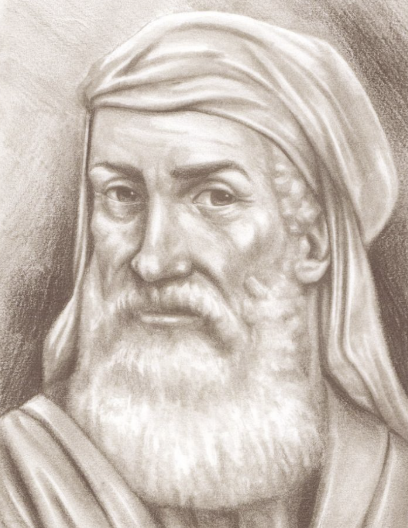
For already, sometime, I have been a boy and a girl, a shrub, a bird, and a silent fish in the sea.
▼
Source
source
fr. 117
5 days ago
The Sensations are the 'Objective', the Ideas the 'Subjective' part of every act of perception or knowledge.

4 months 6 days ago
None but a coward dares to boast that he has never known fear.
▼
Source
source
Attributed to Russell in M. Kumar Dictionary of Quotations, p. 76, but actually said by Marshal Lannes, according to The London Literary Gazette and Journal of Belles Lettres, Arts, Sciences (1824), p. 664

4 months 2 weeks ago
All things must needs be borne on through the calm void moving at equal rate with unequal weights.
▼
Source
source
Book II, lines 238-239 (tr. Bailey)

3 months 1 day ago
If, at the limit, you can rule without crime, you cannot do so without injustices.
2 months 3 weeks ago
The greater part of Eastern teachers of the Church, from Clement of Alexandria to Maximus the Confessor, were supporters of Apokatastasis, of universal salvation and resurrection. And this is characteristic of (contemporary) Russian religious thought. Orthodox thought has never been suppressed by the idea of Divine justice and it never forgot the idea of Divine love. Chiefly - it did not define man from the point of view of Divine justice but from the idea of transfiguration and Deification of man and cosmos.
▼
Source
source
"The Truth of Orthodoxy" as translated in Vestnik of the Russian West European Patriarchal Exarchate
1 month 3 weeks ago
All truth, in the long run, is only common sense clarified.
▼
Source
source
"On the Study of Biology"
4 months 1 week ago
It ought to be remembered that there is nothing more difficult to take in hand, more perilous to conduct, or more uncertain in its success, than to take the lead in the introduction of a new order of things. Because the innovator has for enemies all those who have done well under the old conditions, and lukewarm defenders in those who may do well under the new. This coolness arises partly from fear of the opponents, who have the laws on their side, and partly from the incredulity of men, who do not readily believe in new things until they have had a long experience of them.
▼
Source
source
The Prince (1513), Ch. 6; translated by W. K. Marriott

4 months 1 week ago
Those that will combat use and custom by the strict rules of grammar do but jest.

2 months 3 weeks ago
Humility consists of knowing that in this world the whole soul, not only what we term the ego in its totality, but also the supernatural part of the soul, which is God present in it, is subject to time and to the vicissitudes of change. There must be absolutely acceptance of the possibility that everything material in us should be destroyed. But we must simultaneously accept and repudiate the possibility that the supernatural part of the soul should disappear.
▼
Source
source
"Concerning the Our Father" in Waiting on God (1972), Routledge & Kegan Paul edition, p. 153
4 months 1 week ago
I moreover affirm that our wisdom itself, and wisest consultations, for the most part commit themselves to the conduct of chance.
▼
Source
source
Book III, Ch. 8. Of the Art of Conversation
5 days ago
My new trade of nail-making is to me in this country what an additional title of nobility or the ensigns of a new order are in Europe.
▼
Source
source
As quoted in The Dark Side of Thomas Jefferson, by Henry Wiencek, Smithsonian Magazine,

4 months 4 days ago
If the many, the specialists, gain the day, it will be the end of science as we know it - of great science. It will be a spiritual catastrophe comparable in its consequences to nuclear armament.
▼
Source
source
K. Popper, The Myth of the Framework, London: Routledge. As quoted in The Cambridge Companion to Karl Popper (2016) by J. Shearmur, G. Stokes
5 days ago
Professional standards, the standards of ambition and selfishness, are always sliding downward toward expense, ostentation, and mediocrity. They tend always to narrow the ground of judgment. But amateur standards, the standards of love, are always straining upward toward the humble and the best. They enlarge the ground of judgment. The context of love is the world.
▼
Source
source
The Responsibility of the Poet
3 months 3 weeks ago
Human beings are social animals. We were social before we were human.
▼
Source
source
Chapter 1, The Origins Of Altruism, p. 3
2 months 2 weeks ago
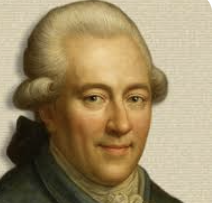
Every man has his moral backside which he refrains from showing unless he has to and keeps covered as long as possible with the trousers of decorum.
▼
Source
source
B 12 Variant translation: Everyone has a moral backside, which he does not show except in case of need and which he covers as long as possible with the breeches of respectability.
5 days ago
There are extraordinary situations which require extraordinary interposition. An exasperated people, who feel that they possess power, are not easily restrained within limits strictly regular.
3 months 1 day ago
Far from diminishing the appetite for power, suffering exasperates it; hence the mind feels more comfortable in the society of a braggart than in that of a martyr; and nothing is more repugnant to it than the spectacle of dying for an idea.
4 months 5 days ago
Poetry teaches the enormous force of a few words, and, in proportion to the inspiration, checks loquacity.
▼
Source
source
Parnassus (1874) Preface
4 months 2 weeks ago
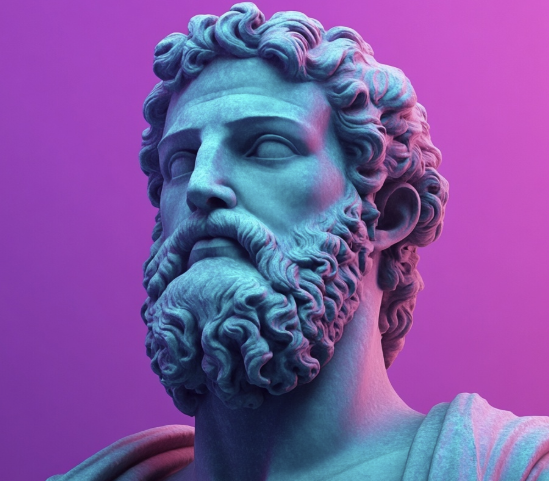
For what is it that everyone is seeking? To live securely, to be happy, to do everything as they wish to do, not to be hindered, not to be subject to compulsion.
▼
Source
source
Book IV, ch. 1, 46.
5 months 6 days ago
According to one mode... nature is thus denominated, viz. the first subject matter to every thing which contains in itself the principle of motion and mutation. But after another mode it is denominated form, which subsists according to definition: for as art is called that which subsists according to art, and that which is artificial; so likewise nature is both called that which is according to nature, and that which is natural. ...that which is composed from these is not nature, but consists from nature; as, for instance, man. And this is nature in a greater degree than matter: for every thing is then said to be, when it is form in energy... entelecheia, rather than when it is incapacity.

3 months 6 days ago
The objects of a financier are, then, to secure an ample revenue; to impose it with judgment and equality; to employ it economically; and, when necessity obliges him to make use of credit, to secure its foundations in that instance, and for ever, by the clearness and candour of his proceedings, the exactness of his calculations, and the solidity of his funds.
1 day ago
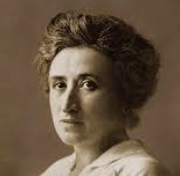
The socialist system of society should only be, and can only be, an historical product, born out of the school of its own experiences, born in the course of its realization, as a result of the developments of living history, which - just like organic nature of which, in the last analysis, it forms a part - has the fine habit of always producing along with any real social need the means to its satisfaction, along with the task simultaneously the solution. However, if such is the case, then it is clear that socialism by its very nature cannot be decreed or introduced by ukase. It has as its prerequisite a number of measures of force - against property, etc. The negative, the tearing down, can be decreed; the building up, the positive, cannot. New Territory. A thousand problems. Only experience is capable of correcting and opening new ways.
▼
Source
source
Chapter Six, "The Problem of Dictatorship"
4 months 3 weeks ago
Christ is not valued at all unless He be valued above all.
▼
Source
source
p. 395
2 months 2 weeks ago
Nothing can contribute more to peace of soul than the lack of any opinion whatever.
▼
Source
source
E 11
2 months 3 weeks ago
Rome is the Great Beast of atheism and materialism, adoring nothing but itself. Israel is the Great Beast of religion. Neither one nor the other is likable. The Great Beast is always repulsive.
▼
Source
source
p. 123
5 days ago
What a stupendous, what an incomprehensible machine is man! Who can endure toil, famine, stripes, imprisonment and death itself in vindication of his own liberty, and the next moment, be deaf to all those motives whose powers supported him through his trial, and inflict on his fellow men a bondage, one hour of which is fraught with more misery than ages of that which he rose in rebellion to oppose.
▼
Source
source
Letter to Jean Nicholas Demeunier (24 January 1786) Bergh 17:103

4 months 1 day ago
Why in the world shouldn't they have regarded with awe and reverence that act by which the human race is perpetuated. Not every religion has to have St. Augustine's attitude to sex. Why even in our culture marriages are celebrated in a church, everyone present knows what is going to happen that night, but that doesn't prevent it being a religious ceremony.
▼
Source
source
Intentionality, and Romanticism (1997) by Richard Thomas Eldridge, p. 130
2 weeks ago
As for the beauty of the gods, not even Hermes tried to describe it in his tale; he said that it transcended description, and must be comprehended by the eye of the mind; for in words it was hard to portray and impossible to convey to mortal ears. Never indeed will there be or appear an orator so gifted that he could describe such surpassing beauty as shines forth on the countenance of the gods.

2 months 2 weeks ago
I do not regard the late Carl Sagan as any kind of authority. On the contrary, as this book will show, I regard him in many ways as a dubious publicity seeker and careerist, more concerned to maintain his reputation as the brilliant and sceptical representative of hard-headed science than to look squarely and honestly at the facts.
▼
Source
source
In short, a bit of a crook. pp. xix-xx
3 weeks 6 days ago
Karl Marx was born at Trier on 5 May 1818, the child of Jewish parents with a long rabbinical tradition on both sides. His grandfathers were rabbis; his father, a well-to-do lawyer, changed his first name from Herschel to Heinrich and adopted Protestantism, which in Prussia was a necessary condition of professional and cultural emancipation.
▼
Source
source
(pg. 96)

3 months 1 week ago
I intend no Monopoly, but a Community in Learning; I study not for my own sake only, but for theirs that study not for themselves.
▼
Source
source
Section 3
5 months 3 days ago
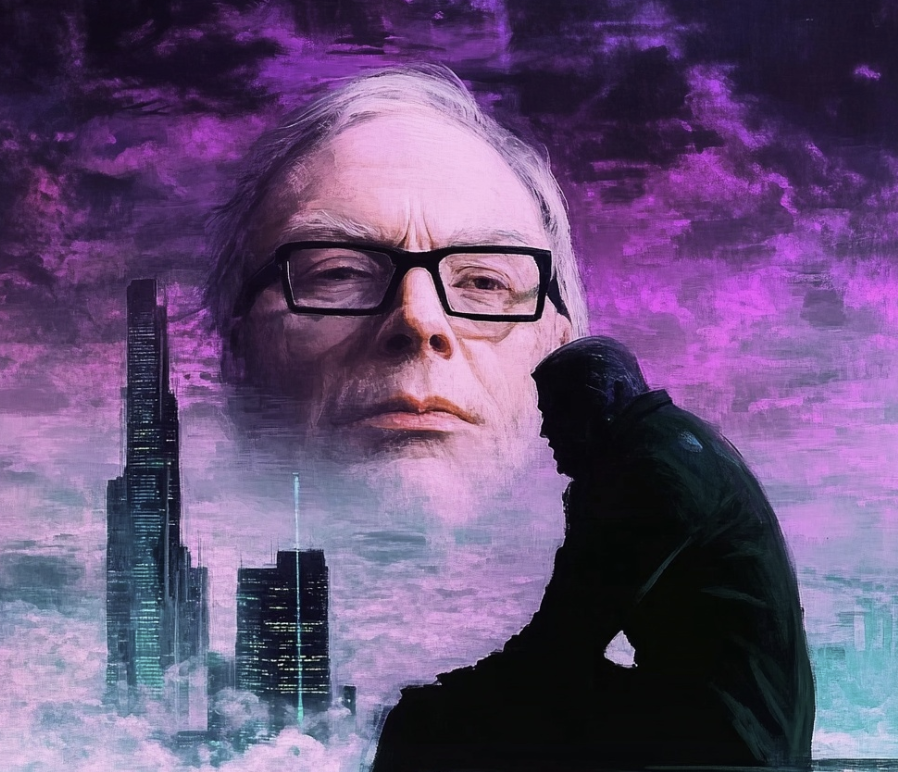
For man to become successful, for man to establish himself as the ruler of the planet, it was necessary for him to use his brain as something more than a device to make the daily routine of getting food and evading enemies a little more efficient. Man had to learn to control his environment.
2 months 2 weeks ago
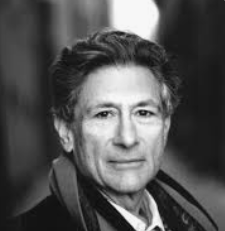
An elaborated culture has a density, complexity, and historical-semantic value that is so strong as to make politics possible... Gramsci's insight is to have recognised that subordination, fracturing, diffusion, reproducing, as much as producing, creating, forcing, guiding, are necessary aspects of elaboration.
▼
Source
source
Quoted in Richard Middleton, Studying Popular Music (Philadelphia: Open University Press, 1990, ISBN 0-335-15275-9), p. 248
2 months 2 days ago
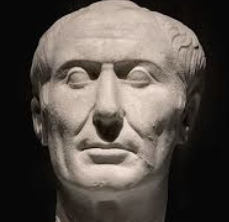
We desire nothing so much as what we ought not to have.
▼
Source
source
Maxim 559 [Mimi et aliorum sententiae 677]
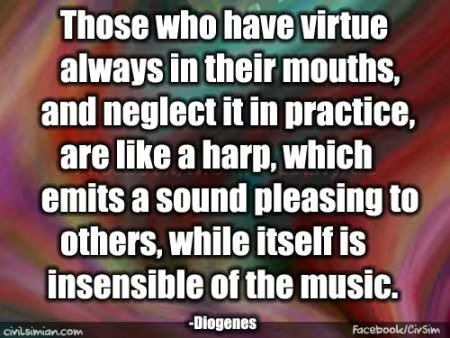
4 months 5 days ago
The ornament of a house is the friends who frequent it.
▼
Source
source
Domestic Life

4 months 4 days ago
The heart of Christianity is a myth which is also a fact.
▼
Source
source
"Myth Became Fact", 1944
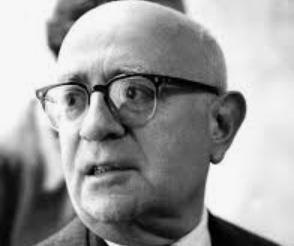
2 months 3 weeks ago
When I made my theoretical model, I could not have guessed that people would try to realise it with Molotov cocktails.
▼
Source
source
As quoted in The Dialectical Imagination : A History of the Frankfurt School and the Institute of Social Research (1973) by M Jay, p. 279.
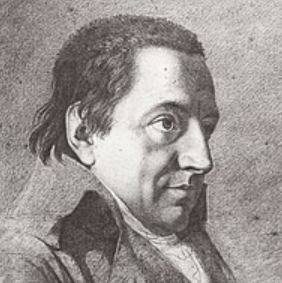
3 months 5 days ago
There is nothing enduring, permanent, either in me or out of me, nothing but everlasting change. I know of no existence, not even of my own. I know nothing and am nothing. Images - pictures - only are, pictures which wander by without anything existing past which they wander, without any corresponding reality which they might represent, without significance and without aim. I myself am one of these images, or rather a confused image of these images. All reality is transformed into a strange dream, without a world of which the dream might be, or a mind that might dream it. Contemplation is a dream; thought, the source of all existence and of all that I fancied reality, of my own existence, my own capacities, is a dream of that dream.
▼
Source
source
Jane Sinnett, trans 1846 p. 60

4 months 1 week ago
It is not for its own sake that men desire money, but for the sake of what they can purchase with it.
▼
Source
source
Chapter I, p. 471.
4 months 5 days ago
The silent organ loudest chants The master's requiem.
▼
Source
source
Dirge, st. 13
CivilSimian.com created by AxiomaticPanic, CivilSimian, Kalokagathia