




6 months 4 days ago
Many things about our bodies would not seem to us so filthy and obscene if we did not have the idea of nobility in our heads.
▼
Source
source
D 6
4 months 2 weeks ago
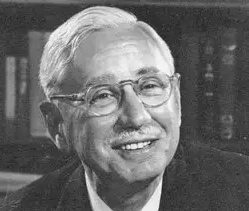
Man is as young as the risks he takes.
▼
Source
source
Ch. 2 : On Youth
6 months 3 weeks ago
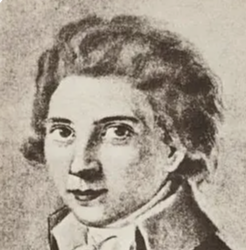
Religion is usually nothing but a supplement to or even a substitute for education, and nothing is religious in the strict sense which is not a product of freedom.
▼
Source
source
"Selected Aphorisms from the Athenaeum (1798)", Dialogue on Poetry and Literary Aphorisms, Ernst Behler and Roman Struc, trans. (Pennsylvania University Press:1968) #233

4 months 1 week ago
Of all these experiences that seem so frightful, none is insuperable. Separate trials have been over- come by many: fire by Mucius, crucifixion by Regulus, poison by Socrates, exile by Rutilius, and a sword-inflicted death by Cato; therefore, let us also overcome something.
5 months 2 weeks ago
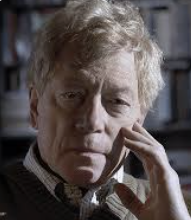
The first effect of modernism was to make high culture difficult: to surround beauty with a wall of erudition.
▼
Source
source
Avant-garde and Kitsch (p. 85)
7 months 1 week ago
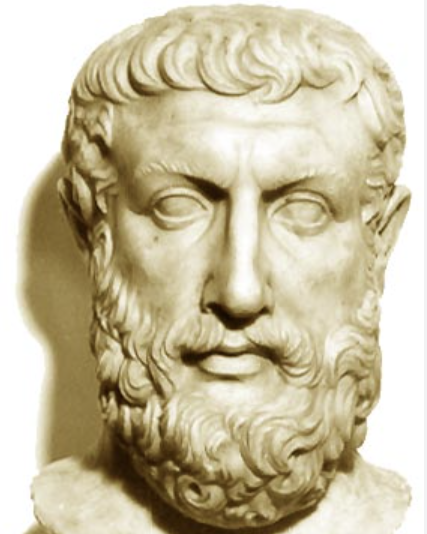
It is indifferent to me where I am to begin, for there shall I return again.
▼
Source
source
Frag. B 5, quoted by Proclus, Commentary on the Parmenides, 708

7 months 2 weeks ago
So in the end when one is doing philosophy one gets to the point where one would like just to emit an inarticulate sound.
▼
Source
source
§ 261
4 months 3 days ago
The virtuous who are prosperous must be exalted, and the virtuous who are not prosperous must be exalted too.
▼
Source
source
Book 2; Exaltation of the Virtuous I
8 months 1 week ago
Every habit and faculty is confirmed and strengthened by the corresponding actions, that of walking by walking, that of running by running.
▼
Source
source
Book II, ch. 18, 1

6 months 1 week ago
Some philosophers fail to distinguish propositions from judgments; ... But in the real world it is more important that a proposition be interesting than that it be true. The importance of truth is that it adds to interest.
▼
Source
source
p. 259.

3 months 3 weeks ago
There are three relations [between thee and other things]: the one to the body which surrounds thee; the second to the divine cause from which all things come to all; and the third to those who live with thee.
▼
Source
source
VIII, 27

6 months 1 week ago
The basic paradox about sex is that it always seems to be offering more than it can deliver. A glimpse of a girl undressing through a lighted bedroom window induces a vision of ecstatic delight, but in the actual process of persuading the girl into bed, the vision somehow evaporates.
▼
Source
source
p. 16
8 months 3 weeks ago
It seemed to him [Euphemius] it would be a brilliant notion to call in an outside force to fight on his behalf. This same brilliant notion has occurred to participants in civil wars uncounted times in history and it has ended in catastrophe just about every time, since those called in invariably take over for themselves. Of all history's lessons, this seems to be the plainest, and the most frequently ignored.
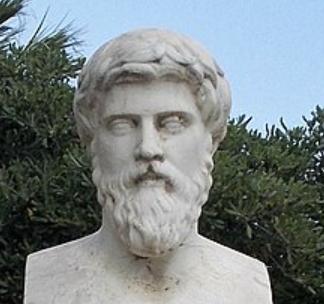
7 months 1 week ago
Alcibiades had a very handsome dog, that cost him seven thousand drachmas; and he cut off his tail, "that," said he, "the Athenians may have this story to tell of me, and may concern themselves no further with me."
▼
Source
source
50 Alcibiades
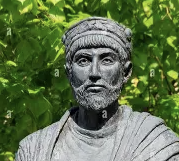
4 months 4 days ago
To what purpose, pray, exist all these things that be born? Whence come male and female? Whence the difference in kind of all things that be, amongst visible species, unless there be certain pre-existing and previously established Reasons and Causes subsisting beforehand, in the nature of a pattern? With regard to which, though we are dull of sight, yet let us strive to clear away the mist from the eyes of the soul.
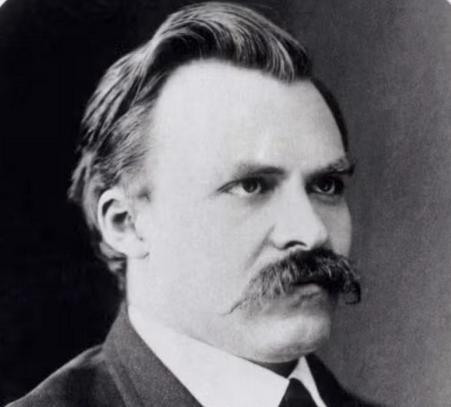
8 months 3 weeks ago
Are designations congruent with things? Is language the adequate expression of all realities? It is only by means of forgetfulness that man can ever reach the point of fancying himself to possess a "truth" of the grade just indicated. If he will not be satisfied with truth in the form of tautology, that is to say, if he will not be content with empty husks, then he will always exchange truths for illusions.
6 months 1 week ago
The chief impression left by a study of Crowley's life and works is that he wasted an immense amount of time and energy trying to shock everyone he came into contact with, and his dislike of orthodoxy turned him into an unconsciously comic figure, like Don Quixote.
▼
Source
source
pp. 153-154

7 months 3 weeks ago
Besides, we should never attempt to balance anybody's misery against somebody else's happiness.
▼
Source
source
pp. 486-487
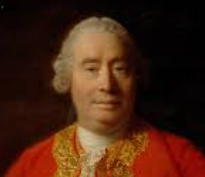
7 months 4 weeks ago
If reason (I mean abstract reason, derived from inquiries a priori) be not alike mute with regard to all questions concerning cause and effect, this sentence at least it will venture to pronounce, That a mental world, or universe of ideas, requires a cause as much, as does a material world, or universe of objects; and, if similar in its arrangement, must require a similar cause. For what is there in this subject, which should occasion a different conclusion or inference? In an abstract view, they are entirely alike; and no difficulty attends the one supposition, which is not common to both of them.
▼
Source
source
Philo to Cleanthes, Part IV

6 months 1 week ago
A modern factory reaches perhaps almost the limit of horror. Everybody in it is constantly harassed and kept on edge by the interference of extraneous wills while the soul is left in cold and desolate misery. What man needs is silence and warmth; what he is given is an icy pandemonium.Physical labour may be painful, but it is not degrading as such. It is not art; it is not science; it is something else, possessing an exactly equal value with art and science, for it provides an equal opportunity to reach the impersonal stage of attention.
▼
Source
source
p. 59

5 months 2 days ago
Human rights are not just cultural or legal constructions, as fashionable western relativists are fond of claiming. They are universal values. To deny the benefits of the new regime of rights to other cultures is to patronise them in a way that is reminiscent of the colonial era. If the new regime on torture is good enough for the US, who can say that it is not good for everyone?
4 months 2 weeks ago
Is the position tenable, that certain phenomena, possible in Euclidean space, would be impossible in non-Euclidean space, so that experience, in establishing these phenomena, would directly contradict the non-Euclidean hypothesis? For my part I think no such question can be put. To my mind it is precisely equivalent to the following, whose absurdity is patent to all eyes: are there lengths expressible in meters and centimeters, but which can not be measured in fathoms, feet, and inches, so that experience, in ascertaining the existence of these lengths, would directly contradict the hypothesis that there are fathoms divided into six feet?
▼
Source
source
Ch. V: Experiment and Geometry (1905) Tr. George Bruce Halstead

4 months 2 weeks ago
Democracy, which means despair of finding any Heroes to govern you, and contented putting up with the want of them,-alas, thou too, mein Lieber, seest well how close it is of kin to Atheism, and other sad Isms: he who discovers no God whatever, how shall he discover Heroes, the visible Temples of God?

7 months ago
It is the common wonder of all men, how among so many million of faces there should be none alike.
▼
Source
source
Section 2
4 months 2 weeks ago
It seems to us that the past is our property. Well, on the contrary - we are its property, because we are not able to make changes in it, while it fills the whole of our existence.
▼
Source
source
Original: "Otóż przeciwnie - to my jesteśmy jej własnością, ponieważ nie jesteśmy w stanie dokonać w niej zmian, ona natomiast wypełnia całość naszego istnienia." Klucz niebieski albo opowieści biblijne zebrane ku pouczeniu i przestrodze

6 months 3 weeks ago
For my part for one, though I make no doubt of preferring the antient Course, or almost any other to this vile chimera, and sick mans dream of Government yet I could not actively, or with a good heart, and clear conscience, go to the establishment of a monarchical despotism in the place of this system of Anarchy.
▼
Source
source
Letter to Richard Burke (26 September 1791), quoted in Alfred Cobban and Robert A. Smith (eds.), The Correspondence of Edmund Burke, Volume VI: July 1789-December 1791 (1967), p. 414
5 months 4 days ago
There is no disease so destructive as lust.

6 months 3 weeks ago
Consciousness is nature's nightmare.

8 months 2 days ago
I suppose the body to be nothing but a statue or machine made of earth, which God forms with the explicit intention of making it as much as possible like us.
▼
Source
source
Descartes, René (1662). Le Homme (The Treatise on Man), XI:119, CSM I:99 in The Stanford Encyclopedia of Philosophy: "Descartes and the Pineal Gland - 2.1 "The Treatise of Man".
7 months 2 weeks ago
Technically speaking, since our complex societies are highly susceptible to interferences and accidents,they certainly offer ideal opportunities for a prompt disruption of normal activities. These disruptions can, with minimum expense, have considerably destructive consequences. Global terrorism is extreme both in its lack of realistic goals and in its cynical exploitation of the vulnerability of complex systems.
▼
Source
source
Habermas (2004) in: Giovanna Borradori (2004) Philosophy in a Time of Terror: : Dialogues with Jurgen Habermas and Jacques Derrida. p. 34

6 months 3 days ago
We need to augment and amend the existing body of classical and neoclassical economic theory to achieve a more realistic picture of economic process.
▼
Source
source
Herbert A. Simon (1986) in Preface to: Gilad & Kaish (eds.), Handbook of Behavioral Economics, p. xvi.
6 months 3 weeks ago
Knowledge is the plague of life, and consciousness, an open wound in its heart.
3 months 3 weeks ago
Man cannot be wicked without being evil, nor evil without being degraded, nor degraded without being punished, nor punished without being guilty. In short ... there is nothing so intrinsically plausible as the theory of original sin.
▼
Source
source
Second Dialogue, p. 38
5 months 3 weeks ago
In one way or another, all my books have been devoted to expounding and exploring the almost limitless power of the Darwinian principle-power unleashed whenever and wherever there is enough time for the consequences of primordial self-replication to unfold. Preface
8 months 3 weeks ago
Perception and knowledge could never be the same.
6 months 1 week ago
Dadaism and surrealism ... represented the intoxication of total license, the intoxication in which the mind wallows when it has made a clean sweep of value and surrendered to the immediate. The good is the pole towards which the human spirit is necessarily oriented, not only in action but in every effort, including the effort of pure intelligence. The surrealists have set up non-oriented thought as a model; they have chosen the total absence of value as their supreme value. Men have always been intoxicated by license, which is why, throughout history, towns have been sacked. But there has not always been a literary equivalent for the sacking of towns. Surrealism is such an equivalent.
▼
Source
source
"The responsibility of writers," p. 167
6 months 1 week ago
Tactically, conceptualism is no doubt the strongest position of the three; for the tired nominalist can lapse into conceptualism and still allay his puritanic conscience with the reflection that he has not quite taken to eating lotus with the Platonists.
▼
Source
source
"Logic and the Reification of Universals"
3 months 3 weeks ago
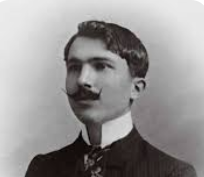
I will not accept boundaries; appearances cannot contain me; I choke! To bleed in this agony, and to live it profoundly, is the second duty. The mind is patient and adjusts itself, it likes to play; but the heart grows savage and will not condescend to play; it stifles and rushes to tear apart the nets of necessity.
3 months 3 weeks ago
I felt that human partitions - bodies, brains, and souls - were capable of being demolished, and that humanity might return again, after frightfully bloody wandering, to its primeval, divine oneness. In this condition, there is no such thing as "me", "you", and "he"; everything is a unity and this unity is a profound mystic intoxication in which death loses its scythe and ceases to exist. Separately, we die one by one, but all together we are immortal. Like prodigal sons, after so much hunger, thirst, and rebellion, we spread our arms and embrace our two parents: heaven and earth.
▼
Source
source
Liberty, Ch. 12, p. 105
6 months 3 weeks ago
The wise will determine from the gravity of the case; the irritable from sensibility to oppression; the high-minded from disdain and indignation at abusive power in unworthy hands.
3 months 3 weeks ago
Pain is not the only essence of our God, nor is hope in a future life or a life on this earth, neither joy nor victory. Every religion that holds up to worship one of these primordial aspects of God narrows our hearts and our minds. The essence of our God is STRUGGLE. Pain, joy, and hope unfold and labor within this struggle, world without end.
6 months 2 weeks ago
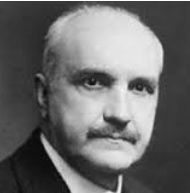
They [the wise spirits of antiquity in the first circle of Dante's Inferno] are condemned, Dante tells us, to no other penalty than to live in desire without hope, a fate appropriate to noble souls with a clear vision of life.
▼
Source
source
Obiter Scripta

7 months 3 weeks ago
For those who want 'to change life", 'to reinvent love,' God is nothing but a hindrance.
▼
Source
source
p. 500
6 months 1 week ago
Paradoxical as it may seem, a Latin prose or a geometry problem, even though they are done wrong, may be of a great service one day, provided we devote the right kind of effort to them. Should the occasion arise, they can one day make us better able to give someone in affliction exactly the help required to save him, at the supreme moment of his need.
CivilSimian.com created by AxiomaticPanic, CivilSimian, Kalokagathia