


4 months 4 weeks ago
T is so much to be a king, that he only is so by being so. The strange lustre that surrounds him conceals and shrouds him from us; our sight is there broken and dissipated, being stopped and filled by the prevailing light.
▼
Source
source
Book III, Ch. 7. Of the Inconveniences of Greatness
4 months 4 weeks ago
To an atheist all writings tend to atheism: he corrupts the most innocent matter with his own venom.
▼
Source
source
Ch. 12

2 months 2 weeks ago
Practice is the best of all instructors.
▼
Source
source
Maxim 439



5 months 4 days ago
Nothing is more common than good things: the point in question is only to discriminate them; and it is certain that they are all natural and within our reach and even known to all mankind.

3 weeks 1 day ago
I learn with great satisfaction that you are about committing to the press the valuable historical and State papers you have been so long collecting. Time and accident are committing daily havoc on the originals deposited in our public offices. The late war has done the work of centuries in this business. The last cannot be recovered, but let us save what remains; not by vaults and locks which fence them from the public eye and use in consigning them to the waste of time, but by such a multiplication of copies, as shall place them beyond the reach of accident.
▼
Source
source
Letter to Mr. Hazard
1 month 3 days ago
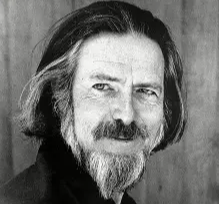
Religion is always falling apart. Buddhism, the Religion of No-Religion.
3 weeks ago
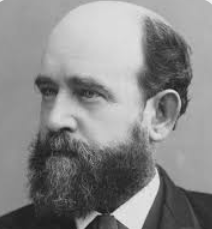
The primary error of the advocates of land nationalization is in their confusion of equal rights with joint rights, and in their consequent failure to realize the nature and meaning of economic rent... In truth the right to the use of land is not a joint or common right, but an equal right; the joint or common right is to rent, in the economic sense of the term. Therefore it is not necessary for the state to take land, it is only necessary for it to take rent. This taking by the commonalty of what is of common right, would of itself secure equality in what is of equal right - for since the holding of land could be profitable only to the user, there would be no inducement for any one to hold land that he could not adequately use, and monopolization being ended no one who wanted to use land would have any difficulty in finding it.
▼
Source
source
Part III : Recantation, Ch. XI Compensation

4 months 3 weeks ago
I find it wholesome to be alone the greater part of the time. To be in company, even with the best, is soon wearisome and dissipating. I love to be alone. I never found the companion that was so companionable as solitude. We are for the most part more lonely when we go abroad among men than when we stay in our chambers. A man thinking or working is always alone, let him be where he will... The really diligent student... is as solitary as a dervish in the desert. The farmer can work alone in the field or the woods all day, hoeing or chopping, and not feel lonesome.

4 months 3 weeks ago
What do I care about Jupiter? Justice is a human issue, and I do not need a god to teach it to me.
▼
Source
source
Orestes, Act 2

4 months 3 weeks ago
Society is undergoing a silent revolution, which must be submitted to, and which takes no more notice of the human existences it breaks down than an earthquake regards the houses it subverts. The classes and the races, too weak to master the new conditions of life, must give way. But can there be anything more puerile, more short-sighted, than the views of those Economists who believe in all earnest that this woeful transitory state means nothing but adapting society to the acquisitive propensities of capitalists, both landlords and money-lords?
▼
Source
source
"Forced Emigration," New York Daily Tribune, 22 March 1853.

5 months 2 weeks ago
Of all the schools of patience and lucidity, creation is the most effective. It is also the staggering evidence of man's sole dignity: the dogged revolt against his condition, perseverance in an effort considered sterile. It calls for a daily effort, self-mastery, a precise estimate of the limits of truth, measure, and strength. It constitutes an ascesis. All that "for nothing," in order to repeat and mark time. But perhaps the great work of art has less importance in itself than in the ordeal it demands of a man and the opportunity it provides him of overcoming his phantoms and approaching a little closer to his naked reality.

5 months 2 weeks ago
Science is a systematic method for studying and working out those generalizations that seem to describe the behavior of the universe. It could exist as a purely intellectual game that would never affect the practical life of human beings either for good or evil, and that was very nearly the case in ancient Greece, for instance. Technology is the application of scientific findings to the tools of everyday life, and that application can be wise or unwise, useful or harmful. Very often, those who govern technological decisions are not scientists and know little about science.

4 months 3 weeks ago
The best authorities are unanimous in saying that a war with H-bombs might possibly put an end to the human race. It is feared that if many H-bombs are used there will be universal death, sudden only for a minority, but for the majority a slow torture of disease and disintegration. Many warnings have been uttered by eminent men of science and by authorities in military strategy. None of them will say that the worst results are certain. What they do say is that these results are possible, and no one can be sure that they will not be realized. We have not yet found that the views of experts on this question depend in any degree upon their politics or prejudices. They depend only, so far as our researches have revealed, upon the extent of the particular expert's knowledge. We have found that the men who know most are the most gloomy.

4 months 3 weeks ago
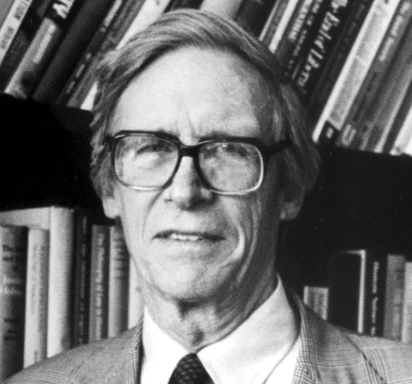
An intuitionist conception of justice is, one might say, but half a conception.
▼
Source
source
Chapter I, Section 8, pg. 41
3 months 2 weeks ago
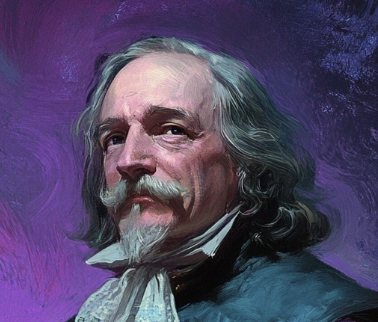
For such Truth as opposeth no man's profit nor pleasure is to all men welcome.
▼
Source
source
Review and Conclusion, p. 396, (Last text line)

3 weeks 1 day ago
What we do need to worry about is the possibility that we will be reduced, in the face of the enormities of our time, to silence or to mere protest.
▼
Source
source
A Poem of Difficult Hope

2 months 3 weeks ago
There is no single speech nor article in which it is not said that the purpose of all these orgies is the peace of Europe. At a dinner given by the representatives of French literature, all breathe of peace. M. Zola, who, a short time previously, had written that war was inevitable, and even serviceable; M. de Vogue, who more than once has stated the same in print, say, neither of them, a word as to war, but speak only of peace. The sessions of Parliament open with speeches upon the past festivities; the speakers mention that such festivities are an assurance of peace to Europe. It is as if a man should come into a peaceful company, and commence energetically to assure everyone present that he has not the least intention to knock out anyone's teeth, blacken their eyes, or break their arms, but has only the most peaceful ideas for passing the evening.
▼
Source
source
Ch. 1

2 weeks 4 days ago
I am glad (sayes Eleutherius) to see the Vanity or Envy of the canting Chymists thus discover'd and chastis'd; and I could wish, that Learned Men would conspire together to make these deluding Writers sensible, that they must no longe[r] hope with Impunity to abuse the World. For whilst such Men are quietly permitted to publish Books with promising Titles, and therein to Assert what they please, and contradict others, and ev'n themselves as they please, with as little danger of being confuted as of being understood, they are encourag'd to get themselves a name, at the cost of the Readers, by finding that intelligent Men are wont for the reason newly mention'd, to let their Books and Them alone: And the ignorant and credulous (of which the number is still much greater then that of the other) are forward to admire most what they least understand.
4 months 3 weeks ago
It is impossible to pursue this nonsense any further.
▼
Source
source
(Bastiat and Carey), p. 813 (last text page, second last line).
2 months 2 weeks ago
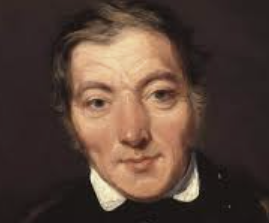
The end of government is to make the governed and the governors happy. That government then is thebest, which in practice produces the greatest happiness to the greatest number; including those who govern, and those who obey.
▼
Source
source
Essay Fourth, The Principles of the Former Essays Applied to Government

3 months 1 day ago
A good means to discovery is to take away certain parts of a system to find out how the rest behaves.
▼
Source
source
As quoted in A Dictionary of Scientific Quotations (1991) edited by Alan Lindsay Mackay, p. 154

3 months 6 days ago
When television screens had only rare images of black folks, black people were more critically vigilant about these representations. Even when blackness was represented 'positiviely,' as it was in early black television shows like Julia, which focused on the life of a black nurse, the beauty standard was a reflection of white supremacist aesthetics.
1 month ago
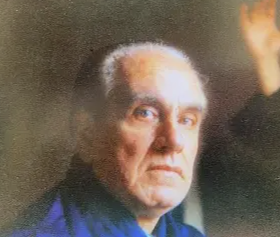
Although our case is different from that of ascetics who remove themselves from the world, the situation of the latest technological civilization might offer the incentive for commitments of this kind. In a large city, in mass society, among the almost unreal swarming of faceless beings, an essential sense of isolation or of detachment often occurs naturally, perhaps even more than in the solitude of moors and mountains.
▼
Source
source
p. 121
1 month 2 days ago
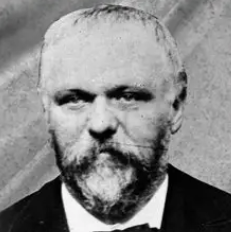
Everyone explains that discussions about Socialism are exceedingly obscure; this obscurity is due, to a large extent, to the fact that contemporary socialists use a terminology which no longer corresponds to their ideas.
▼
Source
source
p. 47

4 months 3 weeks ago
To expect, indeed, that the freedom of trade should ever be entirely restored in Great Britain, is as absurd as to expect that an Oceana or Utopia should never be established in it.
▼
Source
source
Chapter II, p. 505.
3 weeks ago
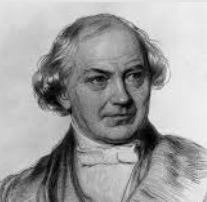
When a series of progressive numbers is given as the result of observation, it may generally be reduced to law by combinations of arithmetical and geometrical progressions. A true formula for a progressive series of numbers cannot commonly be obtained from a narrow range of observations.

2 weeks 5 days ago
Either all things proceed from one intelligent source and come together as in one body, and the part ought not to find fault with what is done for the benefit of the whole; or there are only atoms, and nothing else than a mixture and dispersion. Why, then, art thou disturbed? Say to this ruling faculty, Art thou dead, art thou corrupted, art thou playing the hypocrite, art thou become a beast, dost thou herd and feed with the rest?
▼
Source
source
IX, 39
3 weeks 1 day ago
I forgot to ask the favor of you to speak to Lilly as to the treatment of the nailers. it would destroy their value in my estimation to degrade them in their own eyes by the whip. this therefore must not be resorted to but in extremities. as they will again be under my government, I would chuse they should retain the stimulus of character.
▼
Source
source
Letter to colonel Randolph as quoted in The Dark Side of Thomas Jefferson, by Henry Wiencek, Smithsonian Magazine,
3 months 1 week ago
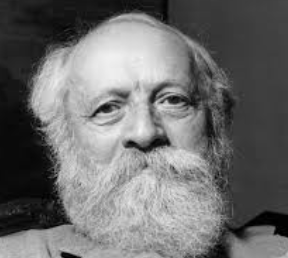
In the ice of solitude man becomes most inexorably a question to himself, and just because the question pitilessly summons and draws into play his most secret life he becomes an experience to himself.
▼
Source
source
p. 150

4 months 3 weeks ago
Change alone is eternal, perpetual, immortal.
▼
Source
source
Unverified attribution noted in Respectfully Quoted: A Dictionary of Quotations (1993), ed. Suzy Platt, Library of Congress, p. 39;
2 months 4 weeks ago
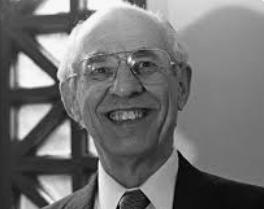
To successfully adjudicate ethical problems, as opposed to 'solving' them, it is necessary that the members of the society have a sense of community. A compromise that cannot pretend to be the last word on an ethical question, that cannot pretend to derive from binding principles in an unmistakeably constraining way, can only derive its force from a shared sense of what is and is not reasonable, from loyalties to one another, and a commitment to 'muddling through' together.
▼
Source
source
"How Not to Solve Ethical Problems"

4 months 3 weeks ago
Possibilities that fail to get realized are, for determinism, pure illusions: they never were possibilities at all. There is nothing inchoate, it says, about this universe of ours, all that was or is or shall be actual having been from eternity virtually there. The cloud of alternatives our minds escort this mass of actuality withal is a cloud of sheer deceptions, to which 'impossibilities' is the only name that rightfully belongs.
▼
Source
source
The Dilemma of Determinism in "The Will to Believe" p. 151

3 months 3 weeks ago
In America, conscription is unknown; men are enlisted for payment. Compulsory recruitment is so alien to the ideas and so foreign to the customs of the people of the United States that I doubt whether they would ever dare to introduce it into their law.
▼
Source
source
Chapter XIII.
1 month 2 weeks ago
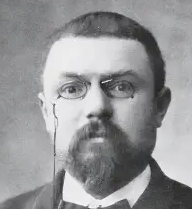
The ones who are preoccupied by logic are above all; to read their works, one is tempted to believe they have advanced only step by step, after the manner of a Vauban who pushes on his trenches against the place besieged, leaving nothing to chance. The others are guided by intuition and, at the first stroke, make quick but sometimes precarious conquests, like bold cavalrymen of the advance guard.
▼
Source
source
quoted in Jacques Hadamard, An essay on the psychology of invention in the mathematical field (1954), pp. 106.
3 months 2 weeks ago
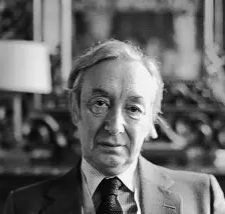
I saw a Divine Being. I'm afraid I'm going to have to revise all my various books and opinions.
▼
Source
source
National Post (3 March 2001).
3 months 1 week ago
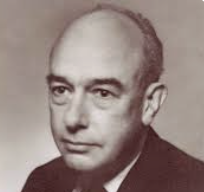
Nonbeing must in some sense be, otherwise what is it that there is not? This tangled doctrine might be nicknamed Plato's beard; historically it has proved tough, frequently dulling the edge of Occam's razor.
▼
Source
source
"On What There Is"

3 months 2 weeks ago
What every man who loves his country hopes for in his inmost heart: the suppression of half his compatriots.
5 months 2 weeks ago
A novel is never anything but a philosophy put into images. And in a good novel, the whole of the philosophy has passed into the images. But if once the philosophy overflows the characters and action, and therefore looks like a label stuck on the work, the plot loses its authenticity and the novel its life. Nevertheless, a work that is to last cannot dispense with profound ideas. And this secret fusion between experiences and ideas, between life and reflection on the meaning of life, is what makes the great novelist.
4 months 2 weeks ago
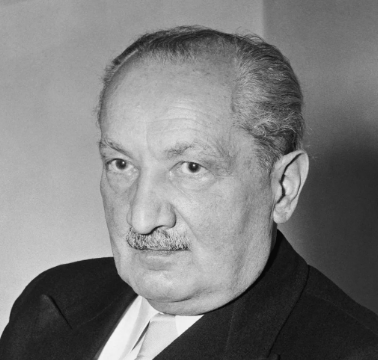
Every questioning is a seeking. Every seeking takes its direction beforehand from what is sought. Questioning is a knowing search for beings in their thatness and whatness.
▼
Source
source
Introduction: The Exposition of the Question of the Meaning of Being (Stambaugh translation)
1 month 3 days ago
Speaking as of today, I do not consider it intellectually respectable to be a partisan in matters of religion. I see religion as I see such other basic fascinations as art and science, in which there is room for many different approaches, styles, techniques, and opinions. Thus I am not formally a committed member of any creed or sect and hold no particular religious view or doctrine as absolute. I deplore missionary zeal, and consider excessive dedication to and advocacy of any particular religion, as either the best or the only true way, an almost irreligious arrogance. Yet my work and my life are fully concerned with religion, and the mystery of being is my supreme fascination, though, as a shameless mystic, I am more interested in religion as feeling and experience than as conception and theory.
▼
Source
source
p. 61

5 months 3 weeks ago
The essential nature (concerning the soul) cannot be corporeal, yet it is also clear that this soul is present in a particular bodily part, and this one of the parts having control over the rest (heart).

3 months 3 weeks ago
As there must be moderation in other things, so there must be moderation in self-criticism. Perpetual contemplation of our own actions produces a morbid consciousness, quite unlike that normal consciousness accompanying right actions spontaneously done; and from a state of unstable equilibrium long maintained by effort, there is apt to be a fall towards stable equilibrium, in which the primitive nature reasserts itself. Retrogression rather than progression may hence result.
▼
Source
source
Ch. 10, General Conclusions

3 months 4 days ago
It repudiates, as something vile and sinful, our deepest feelings; but being absolutely ignorant as to the real functions of human emotions, Puritanism is itself the creator of the most unspeakable vices.
3 months 1 week ago
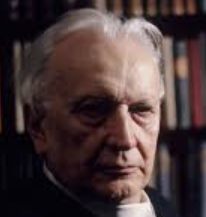
The masses are our masters; and for every one who looks facts in the face his existence has become dependent on them, so that the thought of them must control his doings, his cares, and his duties. Even an articulated mass always tends to become unspiritual and inhuman. It is life without existence, superstitions without faith. It may stamp all flat; it is disinclined to tolerate independence and greatness, but prone to constrain people to become as automatic as ants.
4 months 3 weeks ago
Perseus wore a magic cap that the monsters he hunted down might not see him.We draw the magic cap down over eyes and ears as a make-believe that there are no monsters.
▼
Source
source
Author's prefaces to the First Edition.
3 months 2 weeks ago
Saints live in flames; wise men, next to them.

4 months 3 weeks ago
Give all to love; Obey thy heart; Friends, kindred, days, Estate, good fame, Plans, credit, and the muse; Nothing refuse.
▼
Source
source
Give All to Love, st. 1
5 months 2 weeks ago
All systems of morality are based on the idea that an action has consequences that legitimize or cancel it. A mind imbued with the absurd merely judges that those consequences must be considered calmly. It is ready to pay up. In other words, there may be responsible persons, but there are no guilty ones, in its opinion. At very most, such a mind will consent to use past experience as a basis for its future actions.
CivilSimian.com created by AxiomaticPanic, CivilSimian, Kalokagathia