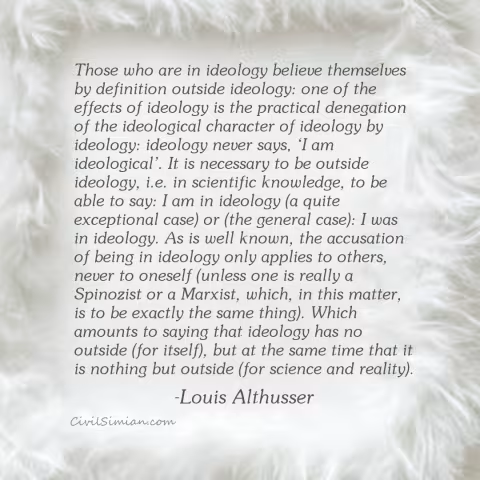
See biography for Louis Althusser:
https://civilsimian.com/Louis-Althusser
Read Louis Althusser's work:
https://civilsimian.com/user/362/content


To this end they make a shield of their hypocritical zeal for religion. They go about invoking the Bible, which they would have minister to their deceitful purposes. Contrary to the sense of the Bible and the intention of the holy Fathers, if I am not mistaken, they would extend such authorities until even in purely physical matters - where faith is not involved - they would have us altogether abandon reason and the evidence of our senses in favor of some biblical passage, though under the surface meaning of its words this passage may contain a different sense.

The utilitarian morality does recognise in human beings the power of sacrificing their own greatest good for the good of others. It only refuses to admit that the sacrifice is itself a good. A sacrifice which does not increase, or tend to increase, the sum total of happiness, it considers as wasted. The only self-renunciation which it applauds, is devotion to the happiness, or to some of the means of happiness, of others; either of mankind collectively, or of individuals within the limits imposed by the collective interests of mankind.
I cannot imagine how the clockwork of the universe can exist without a clockmaker.

Patience is a remedy for every sorrow.

All science must start with some assumptions as to the ultimate analysis of the facts with which it deals. These assumptions are justified partly by their adherence to the types of occurrence of which we are directly conscious, and partly by their success in representing the observed facts with a certain generality, devoid of ad hoc suppositions.

All which a man loves, for which he leaves everything else but that, is his god, thus the glutton and drunkard has for his idol his own flesh, the fornicator has for his idol the harlot and the greedy has for his idol silver and gold, and so the same for every other sinner.
An agreeable companion on a journey is as good as a carriage.
The plebeian must expect to find himself neglected and despised in proportion as he is remiss in cultivation the objects of esteem; the lord will always be surrounded with sycophants and slaves. The lord therefore has no motive to industry and exertion; no stimulus to rouse him from the lethargic 'oblivious pool', out of which every human intellect originally arose.

We are born believing. A man bears beliefs as a tree bears apples.

The core of the belief in progress is that human values and goals converge in parallel with our increasing knowledge. The twentieth century shows the contrary. Human beings use the power of scientific knowledge to assert and defend the values and goals they already have. New technologies can be used to alleviate suffering and enhance freedom. They can, and will, also be used to wage war and strengthen tyranny. Science made possible the technologies that powered the industrial revolution. In the twentieth century, these technologies were used to implement state terror and genocide on an unprecedented scale. Ethics and politics do not advance in line with the growth of knowledge - not even in the long run.

The question here is the same as the question I addressed with regard to madness, disease, delinquency and sexuality. In all of these cases, it was not a question of showing how these objects were for a long time hidden before being finally discovered, nor of showing how all these objects are only wicked illusions or ideological products to be dispelled in the light of reason finally having reached its zenith. It was a matter of showing by what conjunctions a whole set of practices-from the moment they become coordinated with a regime of truth-was able to make what does not exist (madness, disease, delinquency, sexuality, etcetera), nonetheless become something.
Did ye never read in the scriptures, The stone which the builders rejected, the same is become the head of the corner: this is the Lord's doing, and it is marvellous in our eyes? Therefore say I unto you, The kingdom of God shall be taken from you, and given to a nation bringing forth the fruits thereof. And whosoever shall fall on this stone shall be broken: but on whomsoever it shall fall, it will grind him to powder.

Vague a l'ame - melancholy yearning for the end of the world.
No one is guiltless...But no one is beyond the pale of human existence, provided he pays for his guilt.

I believe Gandhi is the only person who knew about real democracy - not democracy as the right to go and buy what you want, but democracy as the responsibility to be accountable to everyone around you. Democracy begins with freedom from hunger, freedom from unemployment, freedom from fear, and freedom from hatred. To me, those are the real freedoms on the basis of which good human societies are based.

We cannot pretend that we do not see the armed policeman who marches up and down beneath our window to guarantee our security while we eat our luxurious dinner, or look at the new piece at the theater, or that we are unaware of the existence of the soldiers who will make their appearance with guns and cartridges directly our property is attacked.

Rest gives relish to labour.
He who is not sure of his memory, should not undertake the trade of lying.
In our opinion, the task of a far-sighted policy of the Third Reich ought to have been that of seeking every possible means to obtain at least the neutrality of the western nations so as to have free hands for a devestating attack exclusively against the Soviet Union-but that would have required the shrewdness and genius of a Metternich.

Philosophers often behave like little children who scribble some marks on a piece of paper at random and then ask the grown-up "What's that?" - It happened like this: the grown-up had drawn pictures for the child several times and said "this is a man," "this is a house," etc. And then the child makes some marks too and asks: what's this then?

It is in applied psychology, if anywhere, that today we should be modest and grant validity to a number of apparently contradictory opinions; for we are still far from having anything like a thorough knowledge of the human psyche, that most challenging field of scientific enquiry. For the present we have merely more or less plausible opinions that defy reconciliation.

No punishment has ever possessed enough power of deterrence to prevent the commission of crimes. On the contrary, whatever the punishment, once a specific crime has appeared for the first time, its reappearance is more likely than its initial emergence could ever have been.

The acts of France were acts of hostility to this country; her whole system, every speech, every decree, every act, bespoke an intention preclusive of accommodation. No man, he would venture to say, had a more lively sense of the importance of the question before the House, or of the evils of war, than himself. A war with France, under such circumstances as now governed her conduct, must be terrible, but peace much more so. A nation that had abandoned all its valuable distinctions, arts, sciences, religion, law order, every thing but the sword, was most formidable and dreadful to all nations composed of citizens who only used soldiers as a defence; as such, France should be resisted with spirit and temper, without fear or scruple.

Death is the dark backing that a mirror needs if we are to see anything.
Conservatism starts from a sentiment that all mature people can readily share: the sentiment that good things are easily destroyed, but not easily created. This is especially true of the good things that come to us as collective assets: peace, freedom, law, civility, public spirit, the security of property and family life, in all of which we depend on the cooperation of others while having no means singlehandedly to obtain it. In respect of such things, the work of destruction is quick, easy, and exhilarating; the work of creation slow, laborious, and dull. That is one of the lessons of the twentieth century. It is also one reason why conservatives suffer such a disadvantage when it comes to public opinion. Their position is true but boring, that of their opponents exciting but false.
The greatness of the human being consists in this: that it is capable of the universe.

The mass-man sees in the State an anonymous power, and feeling himself, like it, anonymous, he believes that the State is something of his own. Suppose that in the public life of a country some difficulty, conflict, or problem presents itself, the mass-man will tend to demand that the State intervene immediately and undertake a solution directly with its immense and unassailable resources. This is the gravest danger that to-day threatens civilisation: State intervention; the absorption of all spontaneous social effort by the State.

What is more affectionate to others than man? Yet what is more savage against them than anger?
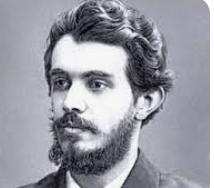
There is absolute truth in anarchism and it is to be seen in its attitude to the sovereignty of the state and to every form of state absolutism. ... The religious truth of anarchism consists in this, that power over man is bound up with sin and evil, that a state of perfection is a state where there is no power of man over man, that is to say, anarchy. The Kingdom of God is freedom and the absence of such power... the Kingdom of God is anarchy.

History, it is easily perceived, is a picture-gallery containing a host of copies and very few originals.

The standard of permanent Christianity must be kept clear in our minds and it is against that standard that we must test all contemporary thought. In fact, we must at all costs not move with the times.

Man is by nature unable to want God to be God. Indeed, he himself wants to be God, and does not want God to be God.

Whenever a theory appears to you as the only possible one, take this as a sign that you have neither understood the theory nor the problem which it was intended to solve.

The real pioneers in ideas, in art and in literature have remained aliens to their time, misunderstood and repudiated.
Does man think because he has found that thinking pays? Does he bring his children up because he has found it pays?
You have just dined, and however scrupulously the slaughterhouse is concealed in the graceful distance of miles, there is complicity.
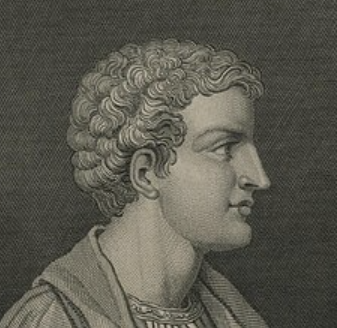
At times the world sees straight, but many times the world goes astray.
To attain this end we must secure a preponderance of virtue over vice and must endeavor to secure that the honest man may, even in this world, receive a lasting reward for his virtue. But in these great endeavors we are gravely hampered by the political institutions of today. What is to be done in these circumstances? To favor revolutions, overthrow everything, repel force by force?... No! We are very far from that. Every violent reform deserves censure, for it quite fails to remedy evil while men remain what they are, and also because wisdom needs no violence.
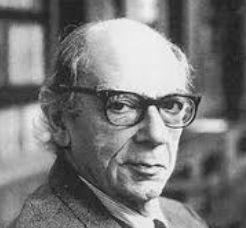
If, as I believe, the ends of men are many, and not all of them are in principle compatible with each other, then the possibility of conflict - and of tragedy - can never wholly be eliminated from human life, either personal or social. The necessity of choosing between absolute claims is then an inescapable characteristic of the human condition. This gives its value to freedom as Acton conceived of it - as an end in itself, and not as a temporary need, arising out of our confused notions and irrational and disordered lives, a predicament which a panacea could one day put right.
He [God] lends us a little of His reasoning powers and that is how we think: He puts a little of His love into us and that is how we love one another. When you teach a child writing, you hold its hand while it forms the letters: that is, it forms the letters because you are forming them. We love and reason because God loves and reasons and holds our hand while we do it.
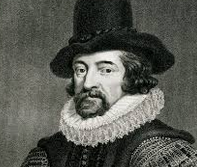
Books must follow sciences, and not sciences books.
A philosophy without heart and a faith without intellect are abstractions from the true life of knowledge and faith. The man whom philosophy leaves cold, and the man whom real faith does not illuminate, may be assured that the fault lies in them, not in knowledge and faith. The former is still an alien to philosophy, the latter an alien to faith.

From whatever side the matter is regarded, it is always found that reason confronts our longing for personal immortality and contradicts it. And the truth is, in all strictness, that reason is the enemy of life.

Let us pardon him his hope of a vain apocalypse, and of a second coming in great triumph upon the clouds of heaven. Perhaps these were the errors of others rather than his own; and if it be true that he himself shared the general illusion, what matters it, since his dream rendered him strong against death, and sustained him in a struggle to which he might otherwise have been unequal?
It is because simplicity and vastness are both beautiful that we seek by preference simple facts and vast facts; that we take delight, now in following the giant courses of the stars, now in scrutinizing the microscope that prodigious smallness which is also a vastness, and now in seeking in geological ages the traces of a past that attracts us because of its remoteness.
CivilSimian.com created by AxiomaticPanic, CivilSimian, Kalokagathia