This is a recent interest of mine. Ask yourself the question: Why is it not justice to kill a man that kills a mouse? Then, apply that answer to a hypothetical being that stands over humanity with humanity as the mouse.


Precisely by inculcating a critical attitude, the "canon" served to demythologize the conventional pieties of the American bourgeoisie and provided the student with a perspective from which to critically analyze American culture and institutions. Ironically, the same tradition is now regarded as oppressive. The texts once served an unmasking function; now we are told that it is the texts which must be unmasked.
They despised everything but virtue, caring little for their present state of life, and thinking lightly of the possession of gold and other property, which seemed only a burden to them; neither were they intoxicated by luxury; nor did wealth deprive them of their self-control; but they were sober, and saw clearly that all these goods are increased by virtue and friendship with one another, whereas by too great regard and respect for them, they are lost and friendship with them.
I have only one real message in this lecture, and that is: consciousness is a biological phenomenon, like photosynthesis, digestion, mitosis-you know all the biological phenomena-and once you accept that, most, if not all about the hard problems of consciousness simply evaporate.

The old Romans had a custom which survived even into my lifetime. They would add to the opening words of a letter: "If you are well, it is well; I also am well." Persons like ourselves would do well to say. "If you are studying philosophy, it is well." For this is just what "being well" means. Without philosophy the mind is sickly.

Courage, garrulousness and the mob are on our side. What more do we want?

Yes, to seek power that's vain and never grantedand for it to suffer hardship and endless pain:this is to heave and strain to push uphilla boulder, that still from the very top rolls backand bounds and bounces down to the bare, broad field.

Solvency is maintained by means of the national debt, on the principle, "If you will not lend me the money, how can I pay you?"
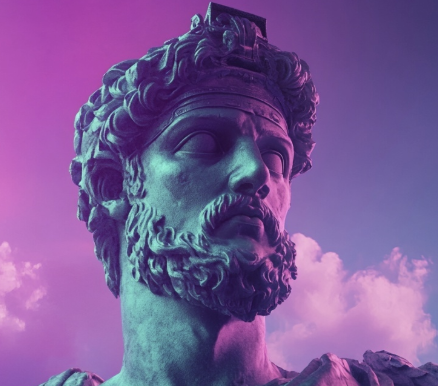
...undefiled by pleasures, invulnerable to any pain, untouched by arrogance, unaffected by meanness, an athlete in the greatest of all contests-the struggle not to be overwhelmed by anything that happens.

It is written, Man shall not live by bread alone, but by every word that proceedeth out of the mouth of God.

Revolutionary feminism embraces men who are able to change, who are capable of responding mutually in a subject-to-subject encounter where desire and fulfillment are in no way linked to coercive subjugation. This feminist vision of the sexual imaginary is the space few men seem able to enter.

We are spinning our own fates, good or evil, and never to be undone. Every smallest stroke of virtue or of vice leaves its never so little scar. ...Nothing we ever do is, in strict scientific literalness, wiped out.
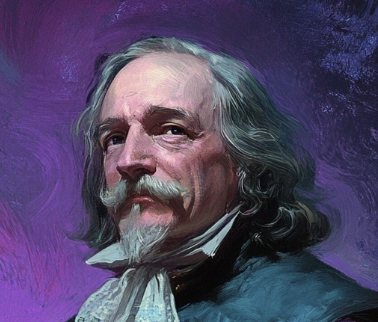
When two, or more men, know of one and the same fact, they are said to be CONSCIOUS of it one to another; which is as much as to know it together.

We forfeit three-fourths of ourselves in order to be like other people.

Every story of conversion is the story of a blessed defeat.
The animals are much more content with mere existence than we are; the plants are wholly so; and man is so according to how dull and insensitive he is. The animal's life consequently contains less suffering but also less pleasure than the human's, the direct reason being that on the one hand it is free from care and anxiety and the torments that attend them, but on the other is without hope and therefore has no share in that anticipation of a happy future which, together with the enchanting products of the imagination which accompany it, is the source of most of our greatest joys and pleasures. The animal lacks both anxiety and hope because its consciousness is restricted to what is clearly evident and thus to the present moment: the animal is the present incarnate.
In all that architecture has of the great and eternally beautiful, it is completely a production of the religious spirit. From the ruins of Tentyra to St Peter's in Rome, all the monuments speak; the genius of architecture is really only at ease in temples. It is there that above caprice, fashion, pettiness, licence, and finally all the gnawing cares of talent, it works without discomfort for glory and immortality.
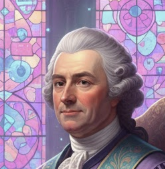
I entirely agree with you, as to the ill tendency of the affected doubts of some philosophers, and fantastical conceit of others. I am even so far gone of late in this way of think, that I have quitted several of the sublime notions I had got in their schools for vulgar opinions. And I give it you on my word, since this revolt from metaphysical notions to the plain dictates of nature and common sense, I find my understanding strangely enlightened, so that I can now easily comprehend a great many thing which before were all mystery and riddle.

Knowledge grows, but human beings remain much the same.Belief in progress is a relic of the Christian view of history as a universal narrative, and an intellectually rigorous atheism would start by questioning it.
I should prefer to be free from torture; but if the time comes when it must be endured, I shall desire that I may conduct myself therein with bravery, honour, and courage. Of course I prefer that war should not occur; but if war does occur, I shall desire that I may nobly endure the wounds, the starvation, and all that the exigency of war brings. Nor am I so mad as to crave illness; but if I must suffer illness, I shall desire that I may do nothing which shows lack of restraint, and nothing that is unmanly. The conclusion is, not that hardships are desirable, but that virtue is desirable, which enables us patiently to endure hardships.

The exploration of oneself is usually also an exploration of the world at large, of other writers, a process of comparison with oneself with others, discoveries of kinships, gradual illumination of one's own potentialities.

It is clear that thought is not free if the profession of certain opinions makes it impossible to earn a living.
If an event really happened which was not a part of the uniformity of nature, it would have two properties: no evidence could give the right to believe it to any except those whose actual experience it was; and no inference worthy of belief could be founded upon it at all. Are we then bound to believe that nature is absolutely and universally uniform? Certainly not; we have no right to believe anything of this kind. The rule only tells us that in forming beliefs which go beyond our experience, we may make the assumption that nature is practically uniform so far as we are concerned. Within the range of human action and verification, we may form, by help of this assumption, actual beliefs; beyond it, only those hypotheses which serve for the more accurate asking of questions.

Paper, they say, does not blush, but I assure you it's not true and that it's blushing just as I am now, all over.
I bow before the authority of special men because it is imposed upon me by my own reason. I am conscious of my inability to grasp, in all its details and positive developments, any very large portion of human knowledge. The greatest intelligence would not be equal to a comprehension of the whole. Thence results, for science as well as for industry, the necessity of the division and association of labor. I receive and I give - such is human life. Each directs and is directed in his turn. Therefore there is no fixed and constant authority, but a continual exchange of mutual, temporary, and, above all, voluntary authority and subordination.
Where all think alike, no one thinks very much.

We think in generalities, but we live in detail. To make the past live, we must perceive it in detail in addition to thinking of it in generalities.

It is often better for a person to recognize a sin than to do a good deed. Recognizing a sin makes a person humble. Doing a good deed often can feed a person's pride.
The happiness of men consists in life. And life is in labor.
We cannot understand what happens in the universe. What is glorious in it is united with what is full of horror. What is full of meaning is united to what is senseless. The spirit of the universe is at once creative and destructive - it creates while it destroys and destroys while it creates, and therefore it remains to us a riddle. And we must inevitably resign ourselves to this.

For we have in Latin only a few small streams and muddy puddles, while they have pure springs and rivers flowing in gold. I see that it is utter madness even to touch with the little finger that branch of theology that deals chiefly with the divine mysteries, unless one is also provided with the equipment of Greek.
The old land is still the true love, the others are but pleasant infidelities.

Well, then, arrest him. You can accuse him of something or other afterward.
As for others whose lives are not so ordered, he reminds himself constantly of the characters they exhibit daily and nightly at home and abroad, and of the sort of society they frequent; and the approval of such men, who do not even stand well in their own eyes has no value for him.
I am normally said to be free to the degree to which no man or body of men interferes with my activity. Political liberty in this sense is simply the area within which a man can act unobstructed by others. If I am prevented by others from doing what I could otherwise do, I am to that degree unfree; and if this area is contracted by other men beyond a certain minimum, I can be described as being coerced, or, it may be, enslaved. Coercion is not, however, a term that covers every form of inability. If I say that I am unable to jump more than ten feet in the air, or cannot read because I am blind, or cannot understand the darker pages of Hegel, it would be eccentric to say that I am to that degree enslaved or coerced. Coercion implies the deliberate interference of other human beings within the area in which I could otherwise act.
When I come to my own beliefs, I find myself quite unable to discern any purpose in the universe, and still more unable to wish to discern one.

Existence precedes and rules essence.
You could leave life right now. Let that determine what you do and say and think.

He laid it down as a maxim, that monarchy was the basis of all good government and the nearer to monarchy any government approached, the more perfect it was, and vice versa; and he certainly in his wildest moments, never had so far forgotten the nature of government, as to argue that we ought to wish for a constitution that we could alter at pleasure, and change like a dirty shirt. He was by no means anxious for a monarchy with a dash of republicanism to correct it. But the French constitution was the exact opposite of the English in every thing, and nothing could be so dangerous as to set it up to the view of the English, to mislead and debauch their minds.

One cannot too soon forget his errors and misdemeanors. To dwell long upon them is to add to the offense. Repentance and sorrow can only be displaced by something better, which is as free and original as if they had not been.
Animals only follow their natural instincts; but man, unless he has experienced the influence of learning and philosophy, is at the mercy of impulses that are worse than those of a wild beast. There is no beast more savage and dangerous than a human being who is swept along by the passions of ambition, greed, anger, envy, extravagance, and sensuality.

If good music has charms to soothe the savage breast, bad music has no less powerful spells for filling the mildest breast with rage, the happiest with horror and disgust. Oh, those mammy songs, those love longings, those loud hilarities! How was it possible that human emotions intrinsically decent could be so ignobly parodied.

But in the end one needs more courage to live than to kill himself.
One does not discover the absurd without being tempted to write a manual of happiness. "What! — by such narrow ways — ?" There is but one world, however. Happiness and the absurd are two sons of the same earth. They are inseparable. It would be a mistake to say that happiness necessarily springs from the absurd discovery. It happens as well that the feeling of the absurd springs from happiness.
The average man's opinions are much less foolish than they would be if he thought for himself: in science, at least, his respect for authority is on the whole beneficial.
Irony is the form of paradox. Paradox is what is good and great at the same time.

In the darkest region of the political field the condemned man represents the symmetrical, inverted figure of the king.

As a scholar [Allan Bloom] intends to enlighten us, and as a writer he has learned from Aristophanes and other models that enlightenment should also be enjoyable. To me, this is not the book of a professor, but that of a thinker who is willing to take the risks more frequently taken by writers. It is risky in a book of ideas to speak in one's own voice, but it reminds us that the sources of the truest truths are inevitably profoundly personal. ... Academics, even those describing themselves as existentialists, very seldom offer themselves publicly and frankly as individuals, as persons.
We're terrible animals. I think that the Earth's immune system is trying to get rid of us, as well it should.
CivilSimian.com created by AxiomaticPanic, CivilSimian, Kalokagathia