


4 months 3 weeks ago
It is not that we have a short space of time, but that we waste much of it. Life is long enough.
▼
Source
source
De Brevitate Vitae ("On the Shortness of Life", trans. John W. Basore), Ch. 1
4 months 2 weeks ago
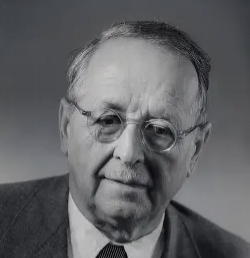
In these days the angel of topology and the devil of abstract algebra fight for the soul of each individual mathematical domain.
▼
Source
source
Weyl, Hermann. Invariants. Duke Math. J. 5 (1939), no. 3, 489--502. doi:10.1215/S0012-7094-39-00540-5. http://projecteuclid.org/euclid.dmj/1077491405.
8 months 1 week ago
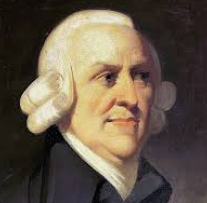
Wherever there is great property, there is great inequality.
▼
Source
source
Chapter I, Part II, p. 770.
4 months 1 week ago
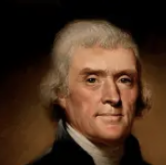
A lively and lasting sense of filial duty is more effectually impressed on the mind of a son or daughter by reading King Lear, than by all the dry volumes of ethics, and divinity, that ever were written.
▼
Source
source
Letter to Robert Skipwith (3 August 1771) ; also in The Writings of Thomas Jefferson (19 Vols., 1905) edited by Andrew A. Lipscomb and Albert Ellery Bergh, Vol. 4, p. 239
7 months 2 days ago
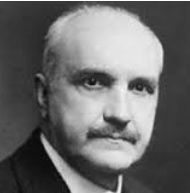
Oblivious of Democritus, the unwilling materialists of our day have generally been awkwardly intellectual and quite incapable of laughter. If they have felt anything, they have felt melancholy. Their allegiance and affection were still fixed on those mythical sentimental worlds which they saw to be illusory. The mechanical world they believed in could not please them, in spite of its extent and fertility. Giving rhetorical vent to their spleen and prejudice, they exaggerated nature's meagreness and mathematical dryness. When their imagination was chilled they spoke of nature, most unwarrantably, as dead, and when their judgment was heated they took the next step and called it unreal.
▼
Source
source
Ch. 3 "Mechanism"

4 months 5 days ago
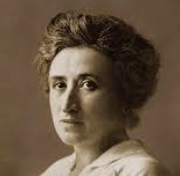
The times when the centre of gravity of political development and the crystallising agent of capitalist contradictions lay on the European continent, are long gone by. To-day Europe is only a link in the tangled chain of international connections and contradictions.
4 months 6 days ago
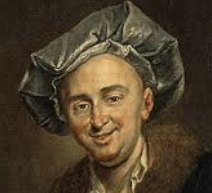
A mere nothing, a tiny fibre, something that could never be found by the most delicate anatomy, would have made of Erasmus and Fontenelle two idiots, and Fontenelle himself speaks of this very fact in one of his best dialogues.
4 months 6 days ago
The sciences that are expressed by numbers or by other small signs, are easily learned; and... this facility rather than its demonstrability is what has made the fortune of algebra.
9 months 1 week ago
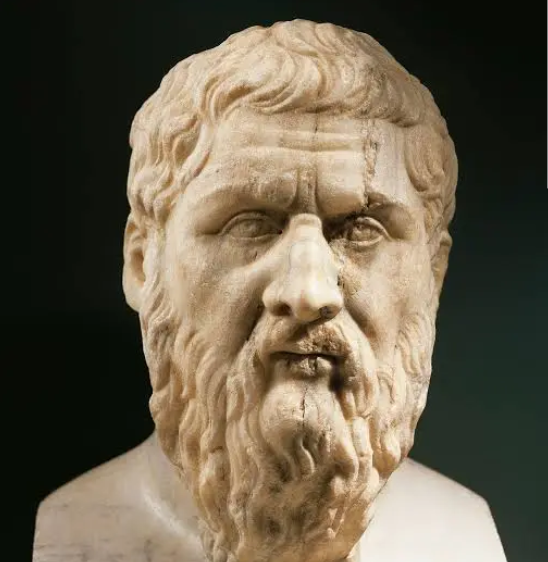
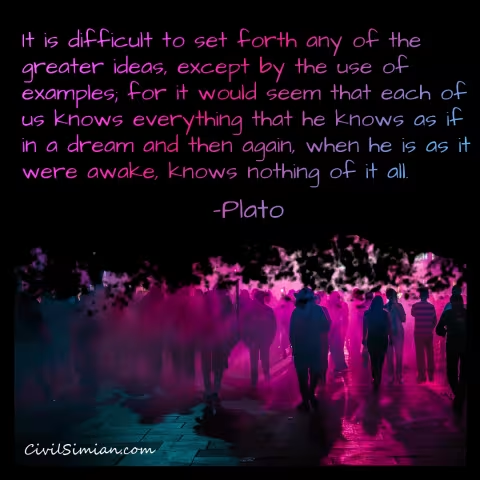
It is difficult to set forth any of the greater ideas, except by the use of examples; for it would seem that each of us knows everything that he knows as if in a dream and then again, when he is as it were awake, knows nothing of it all.
7 months 1 week ago
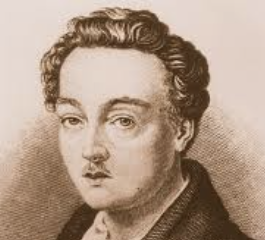
The weapon of the Republic is terror, and virtue is its strength.
▼
Source
source
Act I.

8 months 3 weeks ago
These five rules [above] form all that is necessary to render proofs convincing, immutable, and to say all, geometrical; and the eight rules together render them even more perfect.
7 months 3 weeks ago
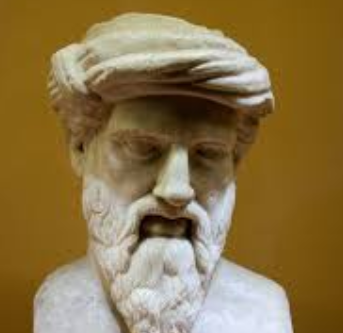
Envy has been, is, and shall be, the destruction of many. What is there, that Envy hath not defamed, or Malice left undefiled? Truly, no good thing.

8 months 1 week ago
Perhaps the best hope for the future of mankind is that ways will be found of increasing the scope and intensity of sympathy.

8 months 4 days ago
It is a sign of wisdom to be able to use parrhesia without falling into the garrulousness of athuroglossos... One of the problems... how to distinguish that which must be said from that which should be kept silent.

7 months 1 week ago
It was evident that he revived by fits and starts. He would suddenly come to himself from actual delirium for a few minutes; he would remember and talk with complete consciousness, chiefly in disconnected phrases which he had perhaps thought out and learnt by heart in the long weary hours of his illness, in his bed, in sleepless solitude.
▼
Source
source
Part 2, Chapter 10
8 months 1 week ago
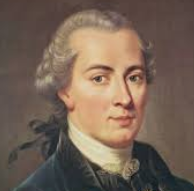
Thoughts without content are empty, intuitions without concepts are blind. The understanding can intuit nothing, the senses can think nothing. Only through their unison can knowledge arise.
▼
Source
source
A 51, B 75

7 months 1 week ago
...no legislator, at any period of the world, has willingly placed the seat of active power in the hands of the multitude: Because there it admits of no control, no regulation; no steady direction whatsoever. The people are the natural control on authority; but to exercise and to control together is contradictory and impossible.
▼
Source
source
p. 441
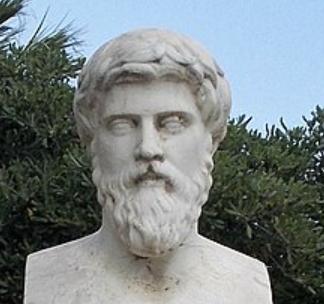
7 months 3 weeks ago
Thrasyllus the Cynic begged a drachm of Antigonus. "That," said he, "is too little for a king to give." "Why, then," said the other, "give me a talent." "And that," said he, "is too much for a Cynic (or, for a dog) to receive."
▼
Source
source
45 Antigonus I

6 months 3 weeks ago
The philosophy of the soul of my people appears to me as an expression of an inward tragedy analogous to the tragedy of the soul of Don Quixote, as the expression of conflict between what the world is as scientific reason shows it to be and what we wish that it might be, as our religious faith affirms it to be. And in this philosophy is to be found the explanation of what is usually said about us - namely, that we are fundamentally irreducible to Kultur - or in other words, that we refuse to submit to it. No, Don Quixote does not resign himself either to the world, or to science or logic, or to art or esthetics, or to morality or ethics.

8 months 1 week ago
Each human reality is at the same time a direct project to metamorphose its own For-itself into an In-itself-For-itself, a project of the appropriation of the world as a totality of being-in-itself, in the form of a fundamental quality. Every human reality is a passion in that it projects losing itself so as to found being and by the same stroke to constitute the In-itself which escapes contingency by being its own foundation, the Ens causa sui, which religions call God. Thus the passion of man is the reverse of that of Christ, for man loses himself as man in order that God may be born. But the idea of God is contradictory and we lose ourselves in vain.
▼
Source
source
Man is a useless passion. Part 4, Chapter 2, III
4 months 2 weeks ago
It is my opinion that the present subject interests all: "Whatever breathes, and moves upon the earth," all that are endowed with existence, with a rational soul, and with a mind: but that above all others it interests myself, inasmuch as I am a votary of the Sun.
5 months 3 weeks ago
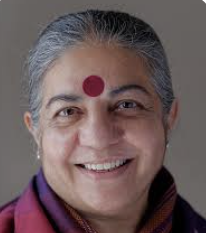
Biopiracy is biological theft; illegal collection of indigenous plants by corporations who patent them for their own use.
▼
Source
source
On biopiracy, from the booklet "No Patents on Seeds: A Handbook For Activists"
4 months 3 weeks ago
Nothing is hidden so much that it wouldn't be revealed through its fruit.
8 months 4 weeks ago
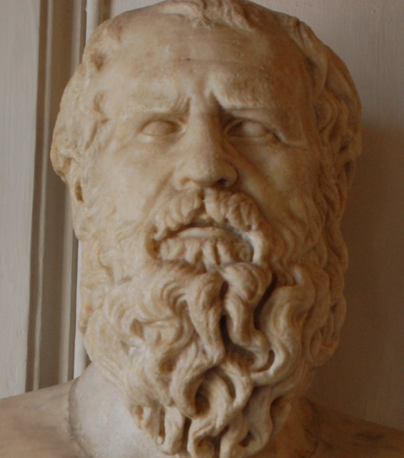
The best people renounce all for one goal, the eternal fame of mortals; but most people stuff themselves like cattle. For what sense or understanding have they? They follow minstrels and take the multitude for a teacher, not knowing that many are bad and few good. For the best men choose one thing above all immortal glory among mortals; but the masses stuff themselves like cattle.
6 months 4 weeks ago
All the seemingly positive valuations and judgments of ressentiment are hidden devaluations and negations.
▼
Source
source
L. Coser, trans. (1973), p. 67
6 months 3 weeks ago
Happiness is the indication that man has found the answer to the problem of human existence: the productive realization of his potentialities and thus, simultaneously, being one with the world and preserving the integrity of his self. In spending his energy productively he increases his powers, he "burns without being consumed."
▼
Source
source
p.189
7 months 1 week ago
The second half of a man's life is made up of nothing but the habits he has acquired during the first half.
▼
Source
source
As quoted in Peter's Quotations: Ideas for Our Time (1979) by Laurence J. Peter, p. 299
6 months 2 weeks ago
From any vocabulary of ideas we can build other ideas by formal combinations of signs. But not any set of ideas will be instructive. One must have the right ideas.
▼
Source
source
Chapter 15, Inductive Logic, p. 139.
4 months 2 weeks ago
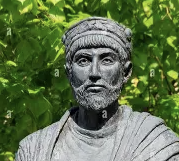
By the gods I do not want the Galileans to be killed or beaten unjustly nor to suffer any other ill. I do, however, state that the god-fearing (theosebeis) should be preferred to them ... honour should go to the gods and to the men and cities that worship them.
▼
Source
source
As quoted in Julian the Apostate (1978), by G. W. Bowersock, Ch. 8 : The Puritanical Pagan, p, 83
4 months 3 weeks ago
I am endeavouring to live every day as if it were a complete life.

7 months 5 days ago
Ennui is the echo in us of time tearing itself apart.
4 months 2 weeks ago
They are irreverent to the gods and disobedient to our edicts, lenient as they are. For we allow none of them to be dragged to the altars unwillingly...It is therefore my pleasure to announce and publish to all the people by this edict, that they must not abet the seditions of the clergy...They may hold their meetings, if they wish, and offer prayers according to their established use...and for the future, let all people live in harmony...Men should be taught and won over by reason, not by blows, insults, and corporal punishments. I therefore most earnestly admonish the adherents of the true religion not to injure or insult the Galilaeans in any way...Those who are in the wrong in matters of supreme importance are objects of pity rather than of hate...
▼
Source
source
Edict to the people of Bostra, reported in Henry Bettenson, Documents of the Christian Church
6 months 3 weeks ago
What is Mysticism? Is it not the attempt to draw near to God, not by rites or ceremonies, but by inward disposition? Is it not merely a hard word for " The Kingdom of Heaven is within"? Heaven is neither a place nor a time. There might be a Heaven not only here but now. It is true that sometimes we must sacrifice not only health of body, but health of mind (or, peace) in the interest of God; that is, we must sacrifice Heaven. But "thou shalt be like God for thou shalt see Him as He is": this may be here and now, as well as there and then. And it may be for a time - then lost - then recovered - both here and there, both now and then.

7 months 2 days ago
To live one's love and hatred, to live that which one is means defeat, resignation, and death. The crimes of society, the hell that man has made or man become unconquerable cosmic forces.
▼
Source
source
p. 61
6 months 5 days ago
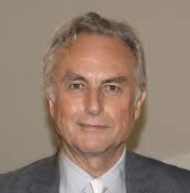
I speak as a biologist. There aren't many absolutely clear distinctions in biology. Mostly what we have is a spectrum. But the male-female divide is exceptional in biology. It really is a true binary.
▼
Source
source
Interviewed by Judith Woods, as cited in "Richard Dawkins interview: 'I shall continue to use every one of the prohibited words'", The Telegraph
5 months 2 days ago
A certain degree of blindness as to the absoluteness of one's own values may be indispensable to extract the valuable qualities from the world, the qualities whose value is believed to be the highest. It is possible that in order to realize one's values one must have faith in their exclusive character.
▼
Source
source
Chapter Eight, Logical Empiricism, p. 202-203

9 months 1 week ago
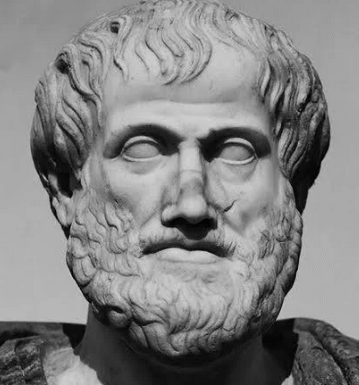
Concerning the generation of animals akin to them, as hornets and wasps, the facts in all cases are similar to a certain extent, but are devoid of the extraordinary features which characterize bees; this we should expect, for they have nothing divine about them as the bees have.

8 months 5 days ago
I am showing my pupils details of an immense landscape which they cannot possibly know their way around.
▼
Source
source
p. 56e
9 months 1 week ago
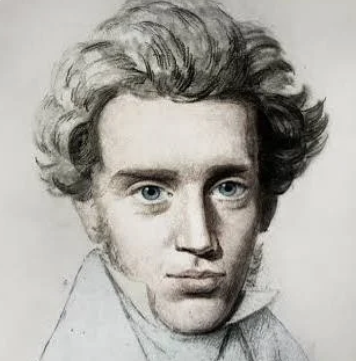
Socrates did not stop with a philosophical consideration of mankind; he addressed himself to each one individually, wrested everything from him, and sent him away empty-handed.

8 months 1 week ago
There have been men before ... who got so interested in proving the existence of God that they came to care nothing for God himself... as if the good Lord had nothing to do but to exist. There have been some who were so preoccupied with spreading Christianity that they never gave a thought to Christ.
▼
Source
source
Ch. 9
4 months 1 week ago
Cultivators of the earth are the most valuable citizens. They are the most vigorous, the most independent, the most virtuous, and they are tied to their country and wedded to its liberty and interests by the most lasting bands. As long therefore as they can find employment in this line, I would not convert them into mariners, artisans, or any thing else. But our citizens will find employment in this line till their numbers, and of course their productions, become too great for the demand both internal and foreign.
▼
Source
source
Letter to John Jay (23 August 1785); published in The Papers of Thomas Jefferson (1953), edited by Julian P. Boyd, vol. 8, p. 426
9 months 6 days ago
Query: How to contrive not to waste one's time? Answer: By being fully aware of it all the while. Ways in which this can be done: By spending one's days on an uneasy chair in a dentist's waiting room; by remaining on one's balcony all a Sunday afternoon; by travelling by the longest and least-convenient train routes, and of course standing all the way; by queueing at the box-office of theatres and then not booking a seat.
7 months 5 days ago
Except for music, everything is a lie, even solitude, even ecstasy. Music, in fact, is the one and the other, only better.

8 months 1 week ago
It is remarkable, that almost all speakers and writers feel it to be incumbent on them, sooner or later, to prove or to acknowledge the personality of God. ... In reading a work on agriculture, we have to skip the author's moral reflections, and the words "Providence" and "He" scattered along the page, to come at the profitable level of what he has to say. What he calls his religion is for the most part offensive to the nostrils. ... There is more religion in men's science than there is science in their religion.
CivilSimian.com created by AxiomaticPanic, CivilSimian, Kalokagathia