


4 months 3 weeks ago
The old often envy the young; when they do, they are apt to treat them cruelly.

4 months 4 weeks ago
Man is certainly stark mad; he cannot make a worm, and yet he will be making gods by dozens.
▼
Source
source
Book II, Ch. 12. Apology for Raimond Sebond
4 months 4 weeks ago
For my own part, I cannot without grief see so much as an innocent beast pursued and killed that has no defence, and from which we have received no offence at all.
▼
Source
source
Ch. 11, tr. Cotton, 1685

3 months 3 weeks ago
By adverting to the dignity of this high calling our ancestors have turned a savage wilderness into a glorious empire: and have made the most extensive, and the only honorable conquests, not by destroying, but by promoting the wealth, the number, the happiness of the human race.
2 weeks 4 days ago
In the Koran as in the Bible, politics is divinized, and human reason, crushed by the religious ascendancy, cannot insinuate its isolating and corrosive poison into the mechanisms of government, so that citizens are believers whose loyalty is exalted to faith, and obedience to enthusiasm and fanaticism.
▼
Source
source
p. 78
2 weeks 6 days ago
Inquiry into the evidence of a doctrine is not to be made once for all, and then taken as finally settled. It is never lawful to stifle a doubt; for either it can be honestly answered by means of the inquiry already made, or else it proves that the inquiry was not complete. "But," says one, "I am a busy man; I have no time for the long course of study which would be necessary to make me in any degree a competent judge of certain questions, or even able to understand the nature of the arguments." Then he should have no time to believe.
3 months 2 days ago
Happiness is the indication that man has found the answer to the problem of human existence: the productive realization of his potentialities and thus, simultaneously, being one with the world and preserving the integrity of his self. In spending his energy productively he increases his powers, he "burns without being consumed."
▼
Source
source
p.189

4 months 3 weeks ago
The governors of the world believe, and have always believed, that virtue can only be taught by teaching falsehood, and that any man who knew the truth would be wicked. I disbelieve this, absolutely and entirely. I believe that love of truth is the basis of all real virtue, and that virtues based upon lies can only do harm.
3 months 3 weeks ago
Neither the few nor the many have a right to act merely by their will, in any matter connected with duty, trust, engagement, or obligation.
▼
Source
source
p. 440
2 weeks 3 days ago
If you are distressed by anything external, the pain is not due to the thing itself, but to your estimate of it; and this you have the power to revoke at any moment.
▼
Source
source
VII, 11.

4 months 2 weeks ago
The most any one can do is to confess as candidly as he can the grounds for the faith that is in him, and leave his example to work on others as it may.
▼
Source
source
The Dilemma of Determinism, 1884
5 months 5 days ago
Since it is Reason which shapes and regulates all other things, it ought not itself to be left in disorder.
▼
Source
source
Book I, ch. 17, 1.

4 months 2 weeks ago
Man is a useless passion.
▼
Source
source
Part 4, Chapter 2, III
3 months 1 week ago
But Aversion wee have for things, not only which we know have hurt us; but also that we do not know whether they will hurt us, or not.
▼
Source
source
The First Part, Chapter 6, p. 24

4 months 4 weeks ago
For I find that even those that have sought knowledge for itself and not for benefit, or ostentation, or any practical enablement in the course of their life, have nevertheless propounded to themselves a wrong mark, namely, satisfaction, which men call truth, and not operation. For as in the courts and services of princes and states, it is a much easier matter to give satisfaction than to do the business; so in the inquiring of causes and reasons it is much easier to find out such causes as will satisfy the mind of man, and quiet objections, than such causes as will direct him and give him light to new experiences and inventions.
▼
Source
source
Valerius Terminus: Of the Interpretation of Nature (ca. 1603), in Works, Vol. 1; The Works of Francis Bacon (1857), Vol. 3, p. 232

2 weeks 6 days ago
Dispersed as the Jews are, they still form one nation, foreign to the land they live in.
▼
Source
source
As quoted in The Americans by Daniel Boorstin. See Truth from the "Zog Bog" by Gyeorgos Ceres Hatonn, 1993, 224 p.
1 month 1 week ago
Bukharin, like Lenin, regarded the system of basing economic life on mass terror not as a transient necessity but as a permanent principle of socialist organization. He did not shrink from justifying all means of coercion and held, like Trotsky at the same period, that the new system called essentially for the militarization of labour - i.e. the use of police and military force to compel the whole population to work in such places and conditions as the state might arbitrarily decree. Indeed, once the market is abolished there is no longer any free sale of labour or competition between workers, and police coercion is therefore the only means of allocating "human resources". If hired labour is eliminated, only compulsory labour remains. In other words, socialism - as conceived by both Trotsky and Bukharin at this time - is a permanent, nation-wide labour camp.
▼
Source
source
(pg. 28-9)

3 months 2 weeks ago
No nation which has sunk into this state of dependence can raise itself out of it by the means which have usually been adopted hitherto. Since resistance was useless to it when it was still in possession of all its powers, what can such resistance avail now that it has been deprived of the greater part of them?
▼
Source
source
Introduction p. 9-10
2 weeks 3 days ago
Do what nature now requires. Set thyself in motion, if it is in thy power, and do not look about thee to see if any one will observe it; nor yet expect Plato's Republic: but be content if the smallest thing goes on well, and consider such an event to be no small matter. Forward, as occasion offers. Never look round to see whether any shall note it.... Be satisfied with success in even the smallest matter, and think that even such a result is no trifle.
▼
Source
source
IX, 29

5 months 3 weeks ago
All men by nature desire to know. An indication of this is the delight we take in our senses; for even apart from their usefulness they are loved for themselves; and above all others the sense of sight. For not only with a view to action, but even when we are not going to do anything, we prefer sight to almost everything else. The reason is that this, most of all the senses, makes us know and brings to light many differences between things.
4 months 3 weeks ago
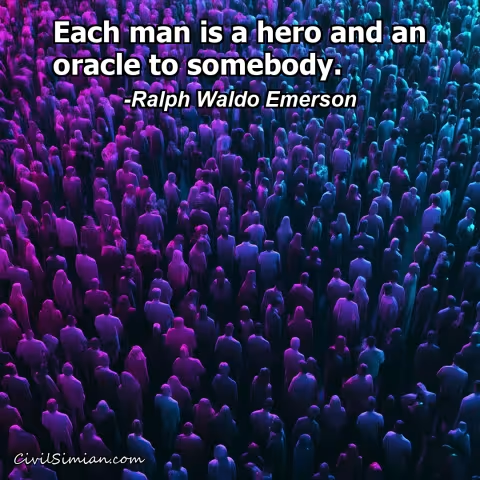
Ethics is in origin the art of recommending to others the sacrifices required for co-operation with oneself.
▼
Source
source
Ch. 6: On the Scientific Method in Philosophy

4 months 3 weeks ago
This great increase of the quantity of work which, in consequence of the division of labour, the same number of people are capable of performing, is owing to three different circumstances; first, to the increase of dexterity in every particular workman; secondly, to the saving of the time which is commonly lost in passing from one species of work to another; and lastly, to the invention of a great number of machines which facilitate and abridge labour, and enable one man to do the work of many.
▼
Source
source
Chapter I

4 months 2 weeks ago
As for Adler, I was much impressed by a personal experience. Once, in 1919, I reported to him a case which to me did not seem particularly Adlerian, but which he found no difficulty in analyzing in terms of his theory of inferiority feelings, although he had not even seen the child. Slightly shocked, I asked him how he could be so sure. "Because of my thousandfold experience," he replied; whereupon I could not help saying: "And with this new case, I suppose, your experience has become thousand-and-one-fold."
1 week 3 days ago
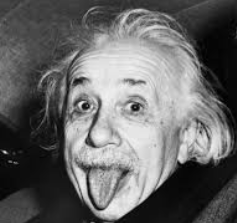
Our experience hitherto justifies us in trusting that nature is the realization of the simplest that is mathematically conceivable. I am convinced that purely mathematical construction enables us to find those concepts and those lawlike connections between them that provide the key to the understanding of natural phenomena. Useful mathematical concepts may well be suggested by experience, but in no way can they be derived from it. Experience naturally remains the sole criterion of the usefulness of a mathematical construction for physics. But the actual creative principle lies in mathematics. Thus, in a certain sense, I take it to be true that pure thought can grasp the real, as the ancients had dreamed.
1 month 1 day ago
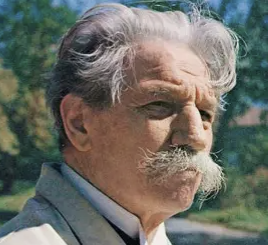
The restoration of our world-view can come only as a result of inexorably truth-loving and recklessly courageous thought. Such thinking alone is mature enough to learn by experience how the rational, when it thinks itself out to a conclusion, passes necessarily over into the non-rational. World- and life-affirmation and ethics are non-rational. They are not justified by any corresponding knowledge of the nature of the world, but are the disposition in which, through the inner compulsion of our will-to-live, we determine our relation to the world. What the activity of this disposition of ours means in the evolution of the world, we do not know. Nor can we regulate this activity from outside; we must leave entirely to each individual its shaping and its extension. From every point of view, then, world- and life-affirmation and ethics are non-rational, and we must have the courage to admit it.

4 months 2 weeks ago
People nowadays think that scientists exist to instruct them, poets, musicians, etc. to give them pleasure. The idea that these have something to teach them - that does not occur to them.
▼
Source
source
p. 36e

5 months 6 days ago
In order to understand the Scriptures, it is absolutely necessary to know the whole, complete Christ, that is, Head and members. For sometimes Christ speaks in the name of the Head alone, sometimes in the name of His body, which is the holy Church spread over the entire earth. And we are in His body, and we hear ourselves speaking in it, for the Apostle tells us: We are members of His body (Eph. 5:30). In many places does the Apostle tell us this.
▼
Source
source
p. 419

2 months 2 weeks ago
A man's reach must exceed his grasp or what's a metaphor?
▼
Source
source
(p.7) A play on the lines in Robert Browning's poem "Andrea del Sarto":Ah, but a man's reach should exceed his grasp, Or what's a heaven for?

1 month 5 days ago
He who has injured thee was either stronger or weaker than thee. If weaker, spare him; if stronger, spare thyself.
▼
Source
source
De Ira (On Anger); Book III, Chapter V
4 months 2 weeks ago
There is no history of mankind, there is only an indefinite number of histories of all kinds of aspects of human life. And one of these is the history of political power. This is elevated into the history of the world. But this, I hold, is an offence against every decent conception of mankind. It is hardly better than to treat the history of embezzlement or of robbery or of poisoning as the history of mankind. For the history of power politics is nothing but the history of international crime and mass murder (including it is true, some of the attempts to suppress them). This history is taught in schools, and some of the greatest criminals are extolled as heroes.
▼
Source
source
Vol 2, Ch. 25 "Has History any Meaning?" Variant: There is no history of mankind, there are only many histories of all kinds of aspects of human life. And one of these is the history of political power. This is elevated into the history of the world.
5 months 3 days ago
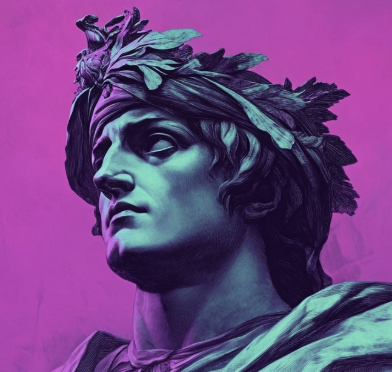
She is the sum of nature's universe.To her perfection all of beauty tends.
▼
Source
source
Chapter XIV, lines 49-50 (tr. Barbara Reynolds)
1 month 5 days ago
Live always in the best company when you read.
▼
Source
source
Vol. I, ch. 10, p. 370
2 months ago
It is better to live under a tree in a jungle inhabited by tigers and elephants, to maintain oneself in such a place with ripe fruits and spring water, to lie down on grass and to wear the ragged barks of trees than to live amongst one's relations when reduced to poverty.
4 months 4 weeks ago
A man of understanding has lost nothing, if he has himself.
▼
Source
source
Ch. 39
5 months 6 days ago
It is not by change of place that we can come nearer to Him who is in every place, but by the cultivation of pure desires and virtuous habits.
▼
Source
source
p. 433

4 months 2 weeks ago
To see ourselves as others see us is a most salutary gift. Hardly less important is the capacity to see others as they see themselves.
▼
Source
source
Page 159

3 months 6 days ago
The necessity for power is obvious, because life cannot be lived without order; but the allocation of power is arbitrary because all men are alike, or very nearly. Yet power must not seem to be arbitrarily allocated, because it will not then be recognized as power. Therefore prestige, which is illusion, is of the very essence of power.
▼
Source
source
p. 235

3 months 3 weeks ago
Burden not the back of Aries, Leo, or Taurus, with thy faults, nor make Saturn, Mars, or Venus, guilty of thy Follies.
▼
Source
source
Part III, Section VII
4 months 4 weeks ago
Who then to frail mortality shall trust But limns the water, or but writes in dust.

3 months 1 week ago
As the great words of freedom and fulfillment are pronounced by campaigning leaders and politicians, on the screens and radios and stages, they turn into meaningless sounds which obtain meaning only in the context of propaganda, business, discipline, and relaxation. This assimilation of the ideal with reality testifies to the extent to which the ideal has been surpassed. It is brought down from the sublimated realm of the soul or the spirit or the inner man, and translated into operational terms and problems. Here are the progressive elements of mass culture. The perversion is indicative of the fact that advanced industrial society is confronted with the possibility of a materialization of ideals. The capabilities of this society are progressively reducing the sublimated realm in which the condition of man was represented, idealized, and indicted. Higher culture becomes part of the material culture. In this transformation, it loses the greater part of its truth.
▼
Source
source
pp. 57-58

4 months 3 weeks ago
This proof can at most, therefore, demonstrate the existence of an architect of the world, whose efforts are limited by the capabilities of the material with which he works, but not of a creator of the world, to whom all things are subject.
▼
Source
source
A 627, B 655 (Physico-Theological Proof Impossible)
4 months 2 weeks ago
Most of the texts... preserved from this period come from writers... either... affiliated with the aristocratic party, or... distrustful of democratic or radically democratic institutions.

1 month 1 week ago
Man is a tool-using animal...Without tools he is nothing, with tools he is all.
▼
Source
source
Bk. I, ch. 5.
3 months 1 week ago
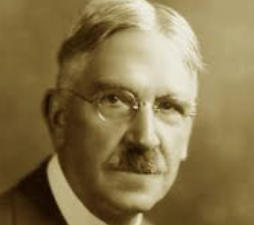
Freedom of thought and of expression are not mere rights to be claimed. They have their roots deep in the existence of individuals as developing careers in time. Their denial and abrogation is an abdication of individuality and a virtual rejection of time as opportunity.

4 months 4 weeks ago
I would take to be quite a fool any man who would make a book full of laws and statutes for an apple tree telling it how to bear apples and not thorns, when the tree is able by its own nature to do this better than the man with all his books can describe and demand.
▼
Source
source
p. 89
3 months 3 weeks ago
...what was done in France was a wild attempt to methodize anarchy; to perpetuate and fix disorder. That it was a foul, impious, monstrous thing, wholly out of the course of moral nature. He undertook to prove, that it was generated in treachery, fraud, falsehood, hypocrisy, and unprovoked murder. ... That by the terror of assassination they had driven away a very great number of the members, so as to produce a false appearance of a majority.-That this fictitious majority had fabricated a constitution, which as now it stands, is a tyranny far beyond any example that can be found in the civilized European world of our age.
▼
Source
source
p. 376
CivilSimian.com created by AxiomaticPanic, CivilSimian, Kalokagathia