

4 months 5 days ago
No particular results then, so far, but only an attitude of orientation, is what the pragmatic method means. The attitude of looking away from first things, principles, 'categories,' supposed necessities; and of looking towards last things, fruits, consequences, facts.
▼
Source
source
Lecture II, What Pragmatism Means

5 months 2 days ago
I simply don't think it is reasonable to use IQ tests to produce results of questionable value, which may then serve to justify racists in their own minds and to help bring about the kinds of tragedies we have already witnessed earlier in this century.
2 weeks 1 day ago
When one says, for example, that superiority and inferiority is a formation to be found in every human association, though the proposition certainly involves very profound insight into the essence of human nature and human relationship, yet the assertion is so general that it affords little knowledge of particular societary formations. In order to reach such particular knowledge we must study separate types of superiority and inferiority, and we must master the special features of their formation, which in proportion to their definiteness of course lose generality of application.
▼
Source
source
p. 169
2 days ago
Every soul, the philosopher says, is involuntarily deprived of truth; consequently in the same way it is deprived of justice and temperance and benevolence and everything of the kind. It is most necessary to keep this in mind, for thus thou wilt be more gentle towards all.
▼
Source
source
VII, 63
2 days ago
They call it "friendship" and "peace," and further "harmony" and "unanimity": for these are all cohesive and unificatory of opposites and dissimilars. Hence they also call it "marriage." And there are also three ages in life.
▼
Source
source
On the Triad
3 months 3 weeks ago
It is difficult to speak of the universal specifically.
▼
Source
source
Line 128

4 months 5 days ago
But capitalist production begets,with the inexorability of a law of Nature,its own negation. It is the negation of negation.
▼
Source
source
Vol. I, Ch. 32, p. 837.
1 month 3 weeks ago
Such night in England ne'er had been, nor ne'er again shall be.
▼
Source
source
The Armada, l. 34
2 months 3 weeks ago
Miracles are propitious accidents, the natural causes of which are too complicated to be readily understood.

3 weeks 5 days ago
But leaving this, let us remark one thing which is very plain: That whatever be the uses and duties, real or supposed, of a Secretary in Parliament, his faculty to accomplish these is a point entirely unconnected with his ability to get elected into Parliament, and has no relation or proportion to it, and no concern with it whatever.
5 days ago
Religion is a subject on which I have ever been most scrupulously reserved. I have considered it as a matter between every man and his Maker in which no other, and far less the public, had a right to intermeddle.
▼
Source
source
Letter to Richard Rush
4 months 4 days ago
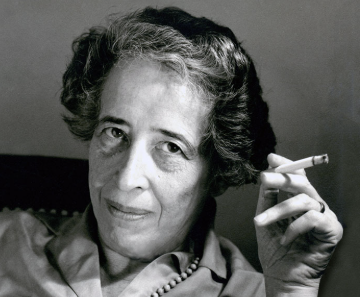
The sad truth of the matter is that most evil is done by people who never made up their minds to be or do either evil or good.
▼
Source
source
The Life of the Mind (1978), "Thinking"

2 months 3 weeks ago
The prestige which constitutes three-fourths of might is first of all made up of that superb indifference which the powerful have for the weak, an indifference so contagious that it is communicated even to those who are its object.
▼
Source
source
in The Simone Weil Reader, p. 168
4 weeks 1 day ago
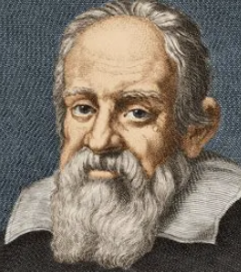
Well, since paradoxes are at hand, let us see how it might be demonstrated that in a finite continuous extension it is not impossible for infinitely many voids to be found.
▼
Source
source
Salviati, First Day, Stillman Drake translation

4 months 1 week ago
Thus there is nothing waste, nothing dead in the universe; no chaos, no confusions, save in appearence. We might compare this to the appearence of a pond in the distance, where we can see the confused movement and swarming of the fish, without distinguishing the fish themselves.Thus we are that each living body has a dominante entelechy, which in case of an animal is the soul, but the members of this living body are full of other living things, plants and animals, of which each has in turn ita dominant entelechy or soul.
▼
Source
source
Monadology (69-70).
2 months ago
Decisive actions are often taken in a moment and without any conscious deliverance from the rational parts of man.
▼
Source
source
The Rajah's Diamond, Story of the Young Man in Holy Orders.

4 months 1 week ago
It may indeed be doubted, whether butcher's meat is any where a necessary of life. Grain and other vegetables, with the help of milk, cheese, and butter, or oil, where butter is not to be had, it is known from experience, can, without any butcher's meat, afford the most plentiful, the most wholesome, the most nourishing, and the most invigorating diet.
▼
Source
source
Chapter II, Part II, Appendix to Articles I and II.
5 days ago
Fools, art is a heavy task, more heavy than gold crowns;it's far more difficult to match firm words than armies,they're disciplined troops, unconquered, to be placed in rhythm,the mind's most mighty foe, and not disperse in air.I'd give, believe me, a whole land for one good song,for I know well that only words, that words alone,like the high mountains, have no fear of age or death.
▼
Source
source
Pharaoh, Book X, line 688
2 weeks 1 day ago
The social game has a deeper double meaning-that it is played not only in a society as its outward bearer but that with its help people actually "play" "society."
▼
Source
source
Sociability (1910) in On Individuality and Social Forms (1971), p. 134
1 month 4 weeks ago
Eight hours daily labour is enough for any human being, and under proper arrangements sufficient to afford an ample supply of food, raiment and shelter, or the necessaries and comforts of life, and for the remainder of his time, every person is entitled to education, recreation and sleep.
▼
Source
source
"Foundation Axioms" of Society for Promoting National Regeneration


4 months 1 week ago
I believe that it is possible for one to praise, without concern, any man after he is dead since every reason and supervision for adulation is lacking.
▼
Source
source
Book 1

2 weeks 6 days ago
That most knowing of persons - gossip.
▼
Source
source
Line 1.

1 month ago
The second failing of liberalism comes directly out of the fact that it attempts to lower the horizons of politics. Liberal societies do not want to tell you how to live. They do not want to define "the good life" because that is the source of conflict, but as a result liberal societies tend not to satisfy these very deep human cravings for community, because... there's something wrong with the basic liberal premise that we all start... as self-interested individuals. We're not self-interested individuals.
▼
Source
source
15:22
3 weeks 5 days ago
One comfort is, that Great Men, taken up in any way, are profitable company. We cannot look, however imperfectly, upon a great man, without gaining something by him. He is the living light-fountain, which it is good and pleasant to be near. The light which enlightens, which has enlightened the darkness of the world; and this not as a kindled lamp only, but rather as a natural luminary shining by the gift of Heaven; a flowing light-fountain, as I say, of native original insight, of manhood and heroic nobleness;-in whose radiance all souls feel that it is well with them.
2 months 3 weeks ago
When two, or more men, know of one and the same fact, they are said to be CONSCIOUS of it one to another; which is as much as to know it together.
▼
Source
source
The First Part, Chapter 7, p. 31
2 days ago
Hence the Pythagoreans in their theology called it sometimes "universe," sometimes "heaven," sometimes "all," sometimes "Fate" and "eternity," "power" and "trust" and "Necessity," "Atlas" and "unwearying," and simply "God" and "Phanes" and "sun."They called it "universe," because all things are arranged by it both in general and in particular, and because it is the most perfect boundary of number, in the sense that "decad" is, as it were, "receptacle," just as heaven is the receptacle of all things, they called it "heaven" and, among the Muses, "Ourania."
▼
Source
source
On the Decad


3 months 5 days ago
So to be patriots as not to forget we are gentlemen.

3 months 1 day ago
I live only because it is in my power to die when I choose to: without the idea of suicide, I'd have killed myself right away.

2 months 4 days ago
There is no single speech nor article in which it is not said that the purpose of all these orgies is the peace of Europe. At a dinner given by the representatives of French literature, all breathe of peace. M. Zola, who, a short time previously, had written that war was inevitable, and even serviceable; M. de Vogue, who more than once has stated the same in print, say, neither of them, a word as to war, but speak only of peace. The sessions of Parliament open with speeches upon the past festivities; the speakers mention that such festivities are an assurance of peace to Europe. It is as if a man should come into a peaceful company, and commence energetically to assure everyone present that he has not the least intention to knock out anyone's teeth, blacken their eyes, or break their arms, but has only the most peaceful ideas for passing the evening.
▼
Source
source
Ch. 1
2 months 3 weeks ago
Oblivious of Democritus, the unwilling materialists of our day have generally been awkwardly intellectual and quite incapable of laughter. If they have felt anything, they have felt melancholy. Their allegiance and affection were still fixed on those mythical sentimental worlds which they saw to be illusory. The mechanical world they believed in could not please them, in spite of its extent and fertility. Giving rhetorical vent to their spleen and prejudice, they exaggerated nature's meagreness and mathematical dryness. When their imagination was chilled they spoke of nature, most unwarrantably, as dead, and when their judgment was heated they took the next step and called it unreal.
▼
Source
source
Ch. 3 "Mechanism"

1 month 3 weeks ago
We should be clear that neither genuine religious nor genuine moral impulses will ever be expressed in terms that tie the two essentially together. If you view religion as necessary for ethics, you've reduced us to the ethical level of 4 year olds. "If you follow these commandments you'll go to heaven, if you don't' you'll burn in hell" is just a spectacular version of the carrots and sticks with which you raise your children.
3 months 5 days ago
I'll know how to die with courage; that is easier than living.
▼
Source
source
Act II.
4 months 1 week ago
This disposition to admire, and almost to worship, the rich and powerful, and to despise or, at least, neglect persons of poor and mean conditions, though necessary both to establish and to maintain the distinction of ranks and the order of society, is, at the same time, the great and most universal cause of the corruption of our moral sentiments.
▼
Source
source
Section III, Chap. III.

4 months 4 days ago
Whatever you do, He will make good of it. But not the good He had prepared for you if you had obeyed him.
4 months 1 week ago
Few are the women and maidens who would let themselves think that one could at the same time be joyous and modest. They are all bold and coarse in their speech, in their demeanor wild and lewd. That is now the fashion of being in good cheer. But it is specially evil that the young maiden folk are exceedingly bold of speech and bearing, and curse like troopers, to say nothing of their shameful words and scandalous coarse sayings, which one always hears and learns from another.
5 days ago
Let what will be said or done, preserve your sang-froid immovably, and to every obstacle, oppose patience, perseverance, and soothing language.
▼
Source
source
Letter to William Short
2 months 3 weeks ago
Any madness in us gains from being expressed, because in this way one gives a human form to what separates us from humanity.
▼
Source
source
p. 76

4 months 4 days ago
If you die, I will lie down beside you and I will stay there until the end, without eating or drinking, you will rot in my arms and I will love you as carcass: for you love nothing if you do not love everything.
▼
Source
source
Act 10, sc. 2

2 months 2 weeks ago
The history of the Romanovs is an Elizabethan tragedy that lasts for three centuries. Its keynote is cruelty, a barbaric, pointless kind of cruelty that has always been common in the East, but that came to Europe only recently, in the time of Hitler.
▼
Source
source
pp. 61-62

4 months 2 weeks ago
The human understanding is of its own nature prone to suppose the existence of more order and regularity in the world than it finds. And though there be many things in nature which are singular and unmatched, yet it devises for them parallels and conjugates and relatives which do not exist. Hence the fiction that all celestial bodies move in perfect circles, spirals and dragons being (except in name) utterly rejected.
▼
Source
source
Aphorism 45
4 months 5 days ago
The weapon of criticism obviously cannot replace the criticism of weapons. Material force can only be overthrown by material force, but theory itself becomes a material force when it has gripped the masses. Theory is capable of gripping the masses when it demonstrates ad hominem, and it demonstrates ad hominem, when it becomes radical. To be radical is to grasp things by the root, but for man the root is man himself. The clear proof of the radicalism of German theory, and hence of its political energy, is that it proceeds from the decisive positive abolition of religion.
▼
Source
source
As quoted from David McLellan, Marx before Marxism, MacMillan, 1980, p. 150.
2 months 3 weeks ago
The State is always, whatever be its form - primitive, ancient, medieval, modern - an invitation issued by one group of men to other human groups to carry out some enterprise in common. That enterprise, be its intermediate processes what they may, consists in the long run in the organisation of a certain type of common life. ... [As Renan says,] "To have common glories in the past, a common will in the present; to have done great things together; to wish to do greater; these are the essential conditions which make up a people.... In the past, an inheritance of glories and regrets; in the future, one and the same programme to carry out.... The existence of a nation is a daily plebiscite."
▼
Source
source
Chapter XIV: Who Rules The World?

2 months 3 weeks ago
Every peasant has a lawyer inside of him, just as every lawyer, no matter how urbane he may be, carries a peasant within himself.
▼
Source
source
Civilization is Civilism

1 month 2 weeks ago
The mediaeval university looked backwards: it professed to be a storehouse of old knowledge... The modern university looks forward: it is a factory of new knowledge.
▼
Source
source
Letter to E. Ray Lankester (11 April 1892) Huxley Papers, Imperial College: 30.448
2 weeks 6 days ago
For sometimes it is an act of bravery even to live.
▼
Source
source
Seneca, Ad Lucilium epistulae morales, transl. Richard M. Gummere, 1920 ed., Epistle LXXVIII, pp. 181-182

4 months ago
What we are destroying is nothing but houses of cards and we are clearing up the ground of language on which they stood.
▼
Source
source
§ 118

4 months 6 days ago
No rules, however wise, are a substitute for affection and tact.
▼
Source
source
Ch. 12: Education and Discipline
CivilSimian.com created by AxiomaticPanic, CivilSimian, Kalokagathia