Socrates hated homeschooling...🤷♂️😁


Such would be the successive phases of the image:it is the reflection of a profound reality;it masks and denatures a profound reality;it masks the absence of a profound reality;it has no relation to any reality whatsoever: it is its own pure simulacrum.In the first case, the image is a good appearance-representation is of the sacramental order. In the second, it is an evil appearance-it is of the order of maleficence. In the third, it plays at being an appearance-it is of the order of sorcery. In the fourth, it is no longer of the order of appearances, but of simulation.
People think they have taken quite an extraordinarily bold step forward when they have rid themselves of belief in hereditary monarchy and swear by the democratic republic. In reality, however, the state is nothing but a machine for the oppression of one class by another, and indeed in the democratic republic no less than in the monarchy.

The aim of the book is to set a limit to thought, or rather - not to thought, but to the expression of thoughts: for in order to be able to set a limit to thought, we should have to find both sides of the limit thinkable (i.e. we should have to be able to think what cannot be thought). It will therefore only be in language that the limit can be set, and what lies on the other side of the limit will simply be nonsense.

Consider any individual at any period of his life, and you will always find him preoccupied with fresh plans to increase his comfort.
Language transcends us and yet, we speak.

In reading this author Montaigne and comparing him with Epictetus, I have found that they are assuredly the two greatest defenders of the two most celebrated sects of the world, and the only ones conformable to reason, since we can only follow one of these two roads, namely: either that there is a God, and then we place in him the sovereign good; or that he is uncertain, and that then the true good is also uncertain, since he is incapable of it.
Beat a dog once and you only have to show him the whip.
God's justice and His power are inseparable; 'tis in vain we invoke His power in an unjust cause. We are to have our souls pure and clean, at that moment at least wherein we pray to Him, and purified from all vicious passions; otherwise we ourselves present Him the rods wherewith to chastise us; instead of repairing anything we have done amiss, we double the wickedness and the offence when we offer to Him, to whom we are to sue for pardon, an affection full of irreverence and hatred. Which makes me not very apt to applaud those whom I observe to be so frequent on their knees, if the actions nearest to the prayer do not give me some evidence of amendment and reformation
The death of dogma is the birth of morality.
The art of dining well is no slight art, the pleasure not a slight pleasure.
You know what charm is: a way of getting the answer 'yes' without having asked any clear question.

When we speak of the commerce with our [American] colonies, fiction lags after truth, invention is unfruitful, and imagination cold and barren.

Evil perpetually tends to disappear.
We are constantly railing against the passions; we ascribe to them all of man's afflictions, and we forget that they are also the source of all his pleasures ... But what provokes me is that only their adverse side is considered ... and yet only passions, and great passions, can raise the soul to great things. Without them there is no sublimity, either in morals or in creativity. Art returns to infancy, and virtue becomes small-minded.

Man is to be found in reason, God in the passions.
The creative imagination of the Hindus has conceived no loftier and holier character than Sita; the literature of the world has not produced a higher ideal of womanly love, womanly truth, and womanly devotion.
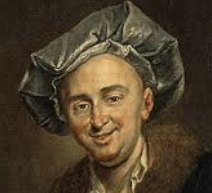
In general, the form and the structure of the brains of quadrupeds are almost the same as those of the brain of man...
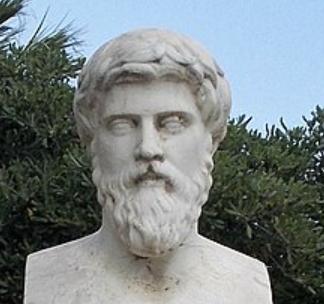
To one that promised to give him hardy cocks that would die fighting, "Prithee," said Cleomenes, "give me cocks that will kill fighting."
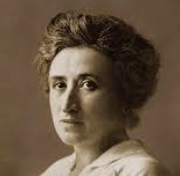
It makes no sense to regard the right of suffrage as a utopian product of fantasy, cut loose from social reality. And it is for this reason that it is not a serious instrument of the proletarian dictatorship. It is an anachronism, an anticipation of the juridical situation which is proper on the basis of an already completed socialist economy, but is not in the transition period of the proletarian dictatorship.

Get, by six hundred and fifty-eight votes, or by no vote at all, by the silent intimation of your own eyesight and understanding given you direct out of Heaven, and more sacred to you than anything earthly, and than all things earthly,-a correct image of the fact in question, as God and Nature have made it: that is the one thing needful; with that it shall be well with you in whatsoever you have to do with said fact. Get, by the sublimest constitutional methods, belauded by all the world, an incorrect image of the fact: so shall it be other than well with you; so shall you have laud from able editors and vociferous masses of mistaken human creatures; and from the Nature's Fact, continuing quite silently the same as it was, contradiction, and that only. What else?
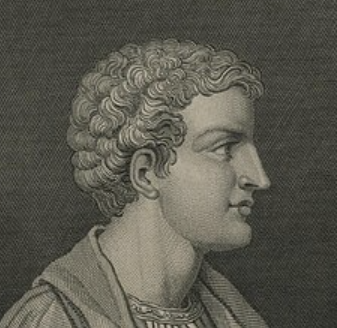
The man who is tenacious of purpose in a rightful cause is not shaken from his firm resolve by the frenzy of his fellow citizens clamoring for what is wrong, or by the tyrant's threatening countenance.
The ceaseless labour of your life is to build the house of death.
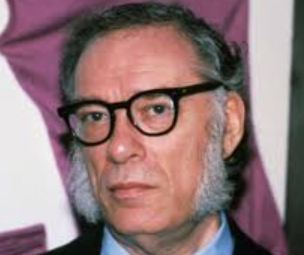
Earth governments in moments of stress are not famous for being reasonable.
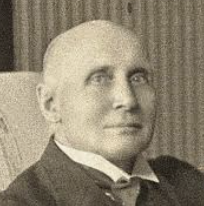
In all philosophic theory there is an ultimate which is actual in virtue of its accidents. It is only then capable of characterization through its accidental embodiments, and apart from these accidents is devoid of actuality. In the philosophy of organism this ultimate is termed creativity; and [[God] is its primordial, non-temporal accident. In monistic philosophies, Spinoza's or absolute idealism, this ultimate is God, who is also equivalently termed The Absolute. In such monistic schemes, the ultimate is illegitimately allowed a final, eminent reality, beyond that ascribed to any of its accidents. In this general position the philosophy of organism seems to approximate more to some strains of Indian, or Chinese, thought, than to western Asiatic, or European, thought. One side makes process ultimate; the other side makes fact ultimate.

Lord, give me the capacity of never praying, spare me the insanity of all worship, let this temptation of love pass from me which would deliver me forever unto You. Let the void spread between my heart and heaven! I have no desire to people my deserts by Your presence, to tyrannize my nights by Your light, to dissolve my Siberias beneath Your sun.
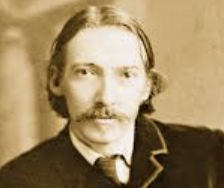
The cruelest lies are often told in silence. A man may have sat in a room for hours and not opened his teeth, and yet come out of that room a disloyal friend or a vile calumniator. And how many loves have perished because, from pride, or spite, or diffidence, or that unmanly shame which withholds a man from daring to betray emotion, a lover, at the critical point of the relation, has but hung his head and held his tongue?

O ye of little faith, why reason ye among yourselves, because ye have brought no bread? Do ye not yet understand, neither remember the five loaves of the five thousand, and how many baskets ye took up? Neither the seven loaves of the four thousand, and how many baskets ye took up? How is it that ye do not understand that I spake it not to you concerning bread, that ye should beware of the leaven of the Pharisees and of the Sadducees?
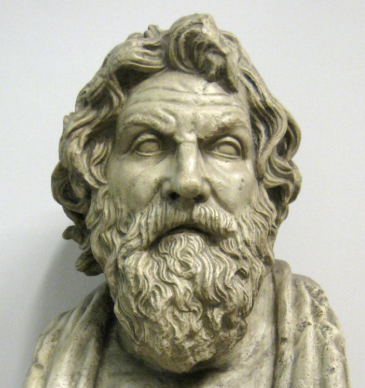
There is no work so mean, but it would amply serve me to furnish me with sustenance.

The basic paradox about sex is that it always seems to be offering more than it can deliver. A glimpse of a girl undressing through a lighted bedroom window induces a vision of ecstatic delight, but in the actual process of persuading the girl into bed, the vision somehow evaporates.
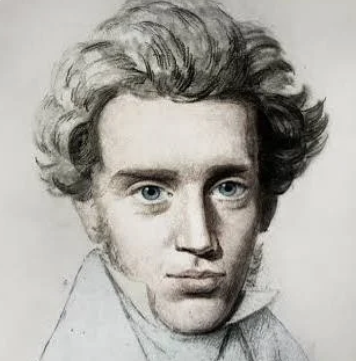
A Roman emperor sitting at the table surrounded by his bodyguard is a magnificent sight, but when the reason is fear, the magnificence pales. So also when the individual does not dare stand taciturnly by his word, does not stand freely and confidently on the pedestal of a conscious act, but is surrounded by a host of deliberations before and after that render him incapable of getting his eye on the action.

In the highest civilization, the book is still the highest delight. He who has once known its satisfactions is provided with a resource against calamity.
One comfort is, that Great Men, taken up in any way, are profitable company. We cannot look, however imperfectly, upon a great man, without gaining something by him. He is the living light-fountain, which it is good and pleasant to be near. The light which enlightens, which has enlightened the darkness of the world; and this not as a kindled lamp only, but rather as a natural luminary shining by the gift of Heaven; a flowing light-fountain, as I say, of native original insight, of manhood and heroic nobleness;-in whose radiance all souls feel that it is well with them.
That the sun will not rise to-morrow is no less intelligible a proposition, and implies no contradiction, than the affirmation, that it will rise.
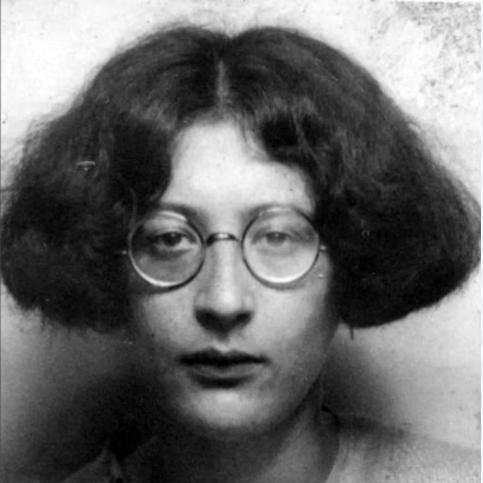
One could count on one's fingers the number of scientists in the entire world who have a general idea of the history and development of their own particular science; there is not one who is really competent as regards sciences other than his own. As science forms an indivisible whole, one may say that there are no longer, strictly speaking, any scientists, but only drudges doing scientific work. . . .

It is not the same thing. You are perhaps not lying, but you are not telling the truth.
"Do I look like someone who has something to do here on Earth?" - That's what I'd like to answer the busybodies who inquire into my activities.
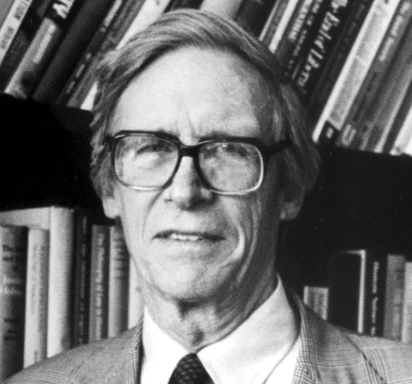
Clearly when the liberties are left unrestricted they collide with one another.
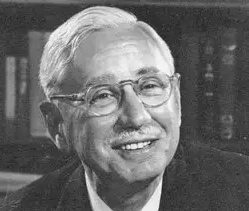
Power dements even more than it corrupts, lowering the guard of foresight and raising the haste of action.
To dissimulate is to pretend not to have what one has. To simulate is to feign to have what one doesn't have. One implies a presence, the other an absence. But it is more complicated than that because simulating is not pretending: "Whoever fakes an illness can simply stay in bed and make everyone believe he is ill. Whoever simulates an illness produces in himself some of the symptoms" (Littré). Therefore, pretending, or dissimulating, leaves the principle of reality intact: the difference is always clear, it is simply masked, whereas simulation threatens the difference between the "true" and the "false," the "real" and the "imaginary."
If I used to ask myself, over a coffin, "what good did it do the occupant to be born?" I now put the same question about anyone alive.
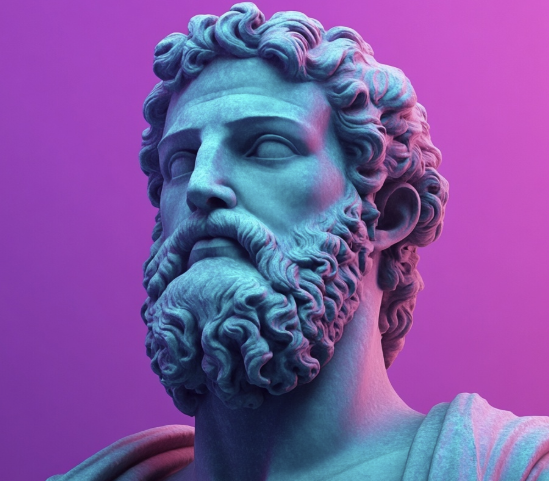
The propositions which are true and evident must of necessity be employed even by those who contradict them.
CivilSimian.com created by AxiomaticPanic, CivilSimian, Kalokagathia