

4 months 3 days ago
There slowly grew up in me an unshakable conviction that we have no right to inflict suffering and death on another living creature unless there is some unavoidable necessity for it, and that we ought all of us to feel what a horrible thing it is to cause suffering and death out of mere thoughtlessness. And this conviction has influenced me only more and more strongly with time. I have grown more and more certain that at the bottom of our heart we all think this, and that we fail to acknowledge it because we are afraid of being laughed at by other people as sentimentalists, though partly also because we allow our best feelings to get blunted. But I vowed that I would never let my feelings get blunted, and that I would never be afraid of the reproach of sentimentalism.
▼
Source
source
p. 275



7 months 3 weeks ago
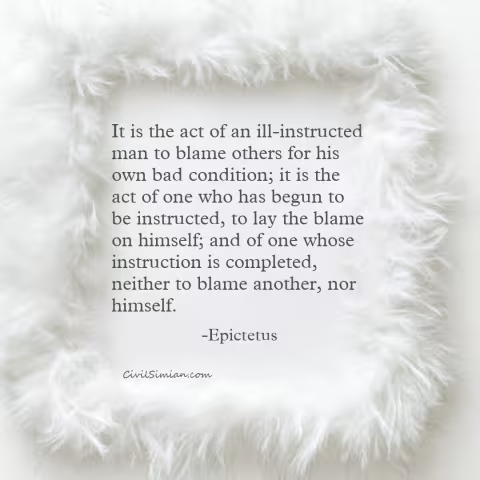
Hatred comes from the heart; contempt from the head; and neither feeling is quite within our control.
▼
Source
source
"Psychological Observations"
5 months 1 week ago
I finished the Iliad to-day... I never admired the old fellow so much, or was so strongly moved by him. What a privilege genius like his enjoys! I could not tear myself away. I read the last five books at a stretch during my walk to-day, and was at last forced to turn into a bypath, lest the parties of walkers should see me blubbering for imaginary beings, the creations of a ballad-maker who has been dead two thousand seven hundred years. What is the power and glory of Caesar and Alexander to that? Think what it would be to be assured that the inhabitants of Monomotapa would weep over one's writings.
▼
Source
source
Anno Domini 4551! Letter to his niece Margaret (August 1851), quoted in George Otto Trevelyan, The Life and Letters of Lord Macaulay, Volume II (1876), pp. 186-187

8 months ago
Let us keep to Christ, and cling to Him, and hang on Him, so that no power can remove us.
▼
Source
source
p. 433
5 months 2 weeks ago
To forget the wrongs you receive, is to remedy them.
▼
Source
source
Maxim 383

7 months 2 weeks ago
Frazer is much more savage than most of his savages, for they are not as far removed from the understanding of spiritual matter as a twentieth-century Englishman. His explanations of primitive practices are much cruder than the meaning of these practices themselves.
▼
Source
source
Ch. 7 : Remarks on Frazer's Golden Bough, p. 131

6 months 1 week ago
Imaginary evil is romantic and varied; real evil is gloomy, monotonous, barren, boring. Imaginary good is boring; real good is always new, marvelous, intoxicating.
▼
Source
source
p. 120

5 months 2 weeks ago
Media are means of extending and enlarging our organic sense lives into our environment.
▼
Source
source
"The Care and Feeding of Communication Innovation", Dinner Address to Conference on 8 mm Sound Film and Education, Teachers College, Columbia University, 8 November 1961
7 months 3 weeks ago
Every man, as the Stoics used to say, is first and principally recommended to his own care; and every man is certainly, in every respect, fitter and abler to take care of himself than of any other person. Every man feels his own pleasures and his own pains more sensibly than those of other people. The former are the original sensations; the latter the reflected or sympathetic images of those sensations. The former may be said to be the substance; the latter the shadow.
▼
Source
source
Section II, Chap. I.
7 months 3 weeks ago
"Let us work without reasoning," said Martin; "it is the only way to make life endurable."

5 months 2 weeks ago
A free society is a community of free beings, bound by the laws of sympathy and by the obligations of family love. It is not a society of people released from all moral constraint-for that is precisely the opposite of a society. Without moral constraint there can be no cooperation, no family commitment, no long-term prospects, no hope of economic, let alone social, order.
▼
Source
source
"The Limits of Liberty," The American Spectator

7 months 3 weeks ago
But then again of course I know perfectly well that He can't be used as a road. If you're approaching Him not as the goal but as a road, not as the end but as a means, you're not really approaching Him at all.
7 months 3 weeks ago
But why,' (some ask), 'why, if you have a serious comment to make on the real life of men, must you do it by talking about a phantasmagoric never-never land of your own?' Because, I take it, one of the main things the author wants to say is that the real life of men is of that mythical and heroic quality. One can see the principle at work in his characterization. Much that in a realistic work would be done by 'character delineation' is here done simply by making the character an elf, a dwarf, or a hobbit. The imagined beings have their insides on the outside; they are visible souls. And Man as a whole, Man pitted against the universe, have we seen him at all till we see that he is like a hero in a fairy tale?
▼
Source
source
p. 89
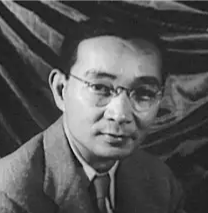
4 months ago
The secret of contentment is knowing how to enjoy what you have, and to be able to lose all desire for things beyond your reach.
▼
Source
source
As quoted in Remarks of Famous People (1965) by Jacob Morton Braude, p. 23
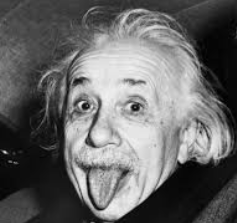
3 months 1 week ago
Why does this magnificent applied science which saves work and makes life easier bring us so little happiness? The simple answer runs: Because we have not yet learned to make sensible use of it. In war it serves that we may poison and mutilate each other. In peace it has made our lives hurried and uncertain. Instead of freeing us in great measure from spiritually exhausting labor, it has made men into slaves of machinery, who for the most part complete their monotonous long day's work with disgust and must continually tremble for their poor rations. ... It is not enough that you should understand about applied science in order that your work may increase man's blessings. Concern for the man himself and his fate must always form the chief interest of all technical endeavours; concern for the great unsolved problems of the organization of labor and the distribution of goods in order that the creations of our mind shall be a blessing and not a curse to mankind. Never forget this in the midst of your diagrams and equations.
▼
Source
source
Speech to students at the California Institute of Technology, in [http://select.nytimes.com/gst/abstract.html?res=F50A1FFF3F5E1B7A93C5A81789D85F458385F9&scp=4&sq=&st=p "Einstein Sees Lack in Applying Science"], The New York Times (16 February 1931)

4 months 1 week ago
Civil government does by its nature include much that is mechanical, and must be treated accordingly. We term it indeed, in ordinary language, the Machine of Society, and talk of it as the grand working wheel from which all private machines must derive, or to which they must adapt, their movements.

5 months 1 day ago
Getting rid of predation isn't a matter of moralising. A python who kills a small human child isn't morally blameworthy. Nor is a lion who hunts and kills a terrified zebra. In both cases, the victim suffers horribly. But the predator lacks the empathetic and mind-reading skills needed to understand the implications of what s/he is doing. Some humans still display a similar deficit. From the perspective of the victim, the moral status or (lack of) guilty intent of a human or nonhuman predator is irrelevant. Either way, to stand by and watch the snake asphyxiate a child would be almost as morally abhorrent as to kill the child yourself. So why turn this principle on its head with beings of comparable sentience to human infants and toddlers? With power comes complicity.
▼
Source
source
"The Radical Plan to Phase out Earth's Predatory Species", io9, 30 Jul. 2014
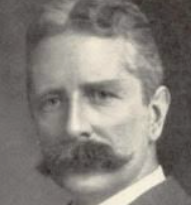
3 months 2 weeks ago
The mechanical mind has a passion for control - of everything except itself. Beyond the control it has won over the forces of nature it would now win control over the forces of society of stating the problem and producing the solution, with social machinery to correspond.
▼
Source
source
Revolt Against Mechanism (1933).

6 months 3 weeks ago
So to be patriots as not to forget we are gentlemen.

6 months 5 days ago
And in a flash I understood the meaning of sex. It is a craving for the mingling of consciousness, whose symbol is the mingling of bodies. Every time a man and a woman slake their thirst in the strange waters of the other's identity, they glimpse the immensity of their freedom.
▼
Source
source
p. 252
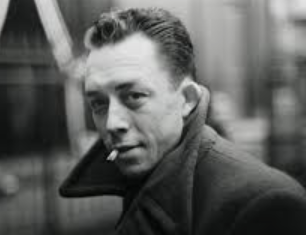
8 months 2 weeks ago
Time will prolong time, and life will serve life. In this field that is both limited and bulging with possibilities, everything to himself, except his lucidity, seems unforeseeable to him. What rule, then, could emanate from that unreasonable order? The only truth that might seem instructive to him is not formal: it comes to life and unfolds in men. The absurd mind cannot so much expect ethical rules at the end of its reasoning as, rather, illustrations and the breath of human lives.
8 months 2 weeks ago
The job of science will never be done, it will just sink deeper and deeper into never-ending complexity.

8 months 5 days ago
All the excesses, all the violence, and all the vanity of great men, come from the fact that they know not what they are: it being difficult for those who regard themselves at heart as equal with all men... For this it is necessary for one to forget himself, and to believe that he has some real excellence above them, in which consists this illusion that I am endeavoring to discover to you.
7 months 3 weeks ago
I am sorry that my convictions do not allow me to repeat my friend's offer, said one of the others. But I have had to abandon the humanitarian and egalitarian fancies. His name was Mr. Neo-Classical.
▼
Source
source
Pilgrim's Regress 89
5 months 2 weeks ago
I am an American, Chicago born - Chicago, that somber city - and go at things as I have taught myself, free-style, and will make the record in my own way: first to knock, first admitted; sometimes an innocent knock, sometimes a not so innocent.
▼
Source
source
Ch. 1 (opening line)
7 months 2 weeks ago
It seems to me that, in every culture, I come across a chapter headed Wisdom. And then I know exactly what is going to follow: Vanity of vanities, all is vanity.
▼
Source
source
Conversation of 1934

3 months 3 weeks ago
Never put off till tomorrow what you can do to-day.
6 months 3 weeks ago
Tyrants seldom want pretexts.

7 months 3 weeks ago
What do we mean by saying that existence precedes essence? We mean that man first of all exists, encounters himself, surges up in the world-and defines himself afterwards. If man as the existentialist see him is not definable, it is because to begin with he is nothing. He will not be anything until later, and then he will be what he makes of himself. Thus, there is no human nature, because there is no God to have a conception of it. Man simply is. Not that he is simply what he conceives himself to be, but he is what he wills, and as he conceives himself after already existing - as he wills to be after that leap towards existence. Man is nothing else but that which he makes of himself. That is the first principle of existentialism.
▼
Source
source
p. 28
8 months 1 week ago
All things are nourished together without their injuring one another. The courses of the seasons, and of the sun and moon, are pursued without any collision among them. The smaller energies are like river currents; the greater energies are seen in mighty transformations. It is this which makes heaven and earth so great.
6 months 1 week ago
The endeavor of scientific research to see events in their more general connection in order to determine their laws, is a legitimate and useful occupation. Any protest against such efforts, in the name of freefom from restrictive conditions, would be fruitless if science did not naïvely identify the abstractions called rules and laws with the actually efficacious forces, and confuse the probability that B will follow A with the actual effort make B follow A.
▼
Source
source
p. 150.

7 months 3 weeks ago
It is generally admitted that most grown-up people, however regrettably, will try to have a good time.

4 months 1 week ago
No easy way leads from the earth to heaven..
▼
Source
source
line 437; (Megara).

4 months 2 weeks ago
Culture is a much better predictor of populist sentiment than economics. ...The average Trump voter in 2016 had a higher per capita income than the average Hillary Clinton voter, and if you look at the people in the January 6th riot, the vast majority... were comfortable middle class people with good jobs... There is a core... white working class base to Trumpism, but... a lot of the people that are aligned with that movement are there for cultural reasons. They really don't like the kind of identity politics that's being... put forward by the progressive left... A lot of Hispanic voters, for example, don't like socialism, and they don't like the fact that the Democrats are using the word socialism as if it's a perfectly normal set of economic choices.
▼
Source
source
51:36:00
5 months 2 weeks ago
The total amount of suffering per year in the natural world is beyond all decent contemplation. During the minute it takes me to compose this sentence, thousands of animals are being eaten alive; others are running for their lives, whimpering with fear; others are being slowly devoured from within by rasping parasites; thousands of all kinds are dying of starvation, thirst and disease. [...] In a universe of blind physical forces and genetic replication, some people are going to get hurt, other people are going to get lucky, and you won't find any rhyme or reason in it, nor any justice. The universe we observe has precisely the properties we should expect if there is, at bottom, no design, no purpose, no evil and no good, nothing but blind, pitiless indifference. DNA neither knows nor cares. DNA just is. And we dance to its music.
▼
Source
source
pp. 131-132
7 months 2 weeks ago
"To stamp becoming with the character of being-that is the supreme will to power." (WM 617) This suggests that becoming only is if it is grounded in being as being: "That everything recurs is the closest approximation of a world of becoming to one of being."
▼
Source
source
p. 19

6 months 2 weeks ago
The office of the sovereign, be it a monarch or an assembly, consisteth in the end for which he was trusted with the sovereign power, namely the procuration of the safety of the people, to which he is obliged by the law of nature, and to render an account thereof to God, the Author of that law, and to none but Him. But by safety here is not meant a bare preservation, but also all other contentments of life, which every man by lawful industry, without danger or hurt to the Commonwealth, shall acquire to himself. And this is intended should be done, not by care applied to individuals, further than their protection from injuries when they shall complain; but by a general providence, contained in public instruction, both of doctrine and example; and in the making and executing of good laws to which individual persons may apply their own cases.
▼
Source
source
The Second Part, Chapter 30: Of the Office of the Sovereign Representative

7 months 3 weeks ago
Whate'er we leave to God, God doesAnd blesses us.
▼
Source
source
"Inspiration", in An American Anthology, 1900

6 months 4 weeks ago
I can cure the gout or stone in some, sooner than Divinity, Pride, or Avarice in others.
▼
Source
source
Section 9

7 months 2 weeks ago
How can one be late to the end of history? A question for today. It is serious because it obliges one to reflect again, as we have been doing since Hegel, on what happens and deserves the name of event, after history; it obliges one to wonder if the end of history is but the end of a certain concept of history.
▼
Source
source
Injunctions of Marx
6 months ago
What I am saying, then, is that elements of what we call "language" or "mind" penetrate so deeply into what we call "reality" that the very project of representing ourselves as being "mappers" of something "language-independent" is fatally compromised from the very start. Like Relativism, but in a different way, Realism is an impossible attempt to view the world from Nowhere. In this situation it is a temptation to say, "So we make the world," or "our language makes up the world," or "our culture makes up the world"; but this is just another form of the same mistake. If we succumb, once again we view the world-the only world we know-as a product. One kind of philosopher views it as a product from a raw material: Unconceptualized Reality. The other views it as a creation ex nihilo. But the world isn't a product. It's just the world.
▼
Source
source
"Realism with a Human Face"
7 months 3 weeks ago
If you would convince a man that he does wrong, do right. But do not care to convince him. Men will believe what they see.
▼
Source
source
Let them see. Pearls of Thought (1881) p. 222

8 months ago
It is not death, it is dying that alarms me.
▼
Source
source
Book II, Ch. 13

3 months 2 weeks ago
External things are not the problem. It's your assessment of them. Which you can erase right now.
▼
Source
source
(Hays translation) VIII, 47
CivilSimian.com created by AxiomaticPanic, CivilSimian, Kalokagathia