


8 months 3 weeks ago
Philosophy seems to me on the whole a rather hopeless business.
▼
Source
source
Letter to Gilbert Murray, December 28, 1902
4 months 2 weeks ago
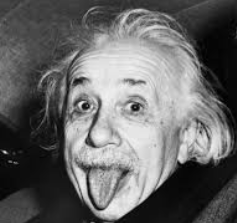
I am happy because I want nothing from anyone. I do not care about money. Decorations, titles or distinctions mean nothing to me. I do not crave praise. The only thing that gives me pleasure, apart from my work, my violin, and my sailboat, is the appreciation of my fellow workers.

7 months 3 weeks ago
The saying that beauty is but skin deep is but a skin-deep saying.
▼
Source
source
Vol. 2, Ch. XIV, Personal Beauty
8 months 3 weeks ago
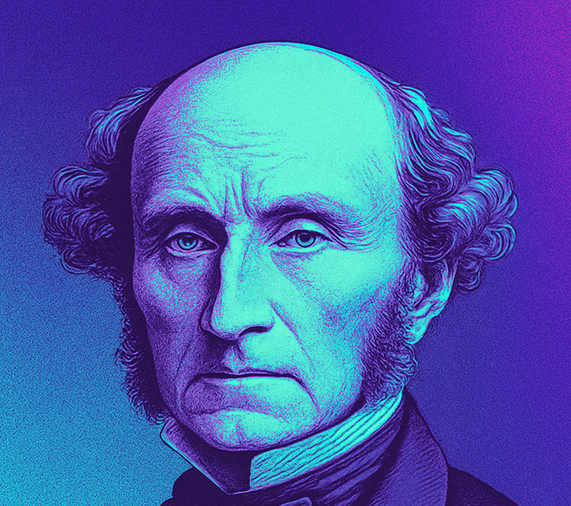
All those to whom I looked up, were of opinion that the pleasure of sympathy with human beings, and the feelings which made the good of others, and especially of mankind on a large scale, the object of existence, were the greatest and surest sources of happiness. Of the truth of this I was convinced, but to know that a feeling would make me happy if I had it, did not give me the feeling.
▼
Source
source
(p. 138)

5 months 2 weeks ago
Suppose Odin to have been the inventor of Letters, as well as "magic," among that people! It is the greatest invention man has ever made! this of marking down the unseen thought that is in him by written characters. It is a kind of second speech, almost as miraculous as the first.
9 months 2 weeks ago
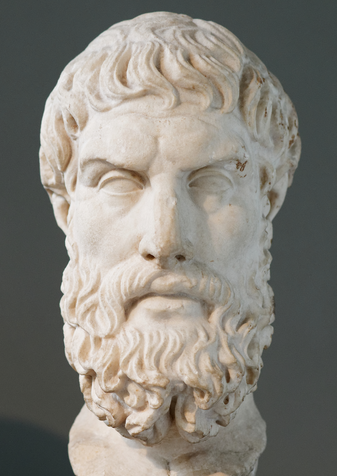
Temperance is that discreet regulation of the desires and passions, by which we are enabled to enjoy pleasures without suffering any consequent inconvenience. They who maintain such a constant self-command, as never to be enticed by the prospect of present indulgence, to do that which will be productive of evil, obtain the truest pleasure by declining pleasure.

4 months 3 weeks ago
Love the little trade which thou hast learned, and be content therewith.
▼
Source
source
IV, 31
9 months 3 weeks ago
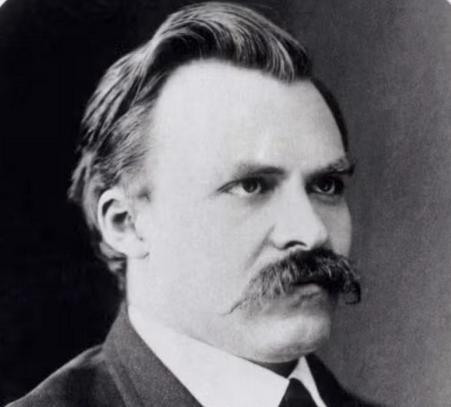
If you have hitherto believed that life was one of the highest value and now see yourselves disappointed, do you at once have to reduce it to the lowest possible price?
8 months 4 weeks ago
We never have a full demonstration, although there is always an underlying reason for the truth, even if it is only perfectly understood by God, who alone penetrated the infinite series in one stroke of the mind.
▼
Source
source
The Shorter Leibniz Texts (2006) edited by Lloyd H. Strickland, p. 111
6 months 2 weeks ago
Each generation is a filter, a sieve; good genes tend to fall through the sieve into the next generation; bad genes tend to end up in bodies that die young or without reproducing.
7 months 1 week ago
The consequences of a plethora of half-digested theoretical knowledge are deplorable.

8 months 2 weeks ago
With a drunken man do not walk on the road.
9 months 1 week ago
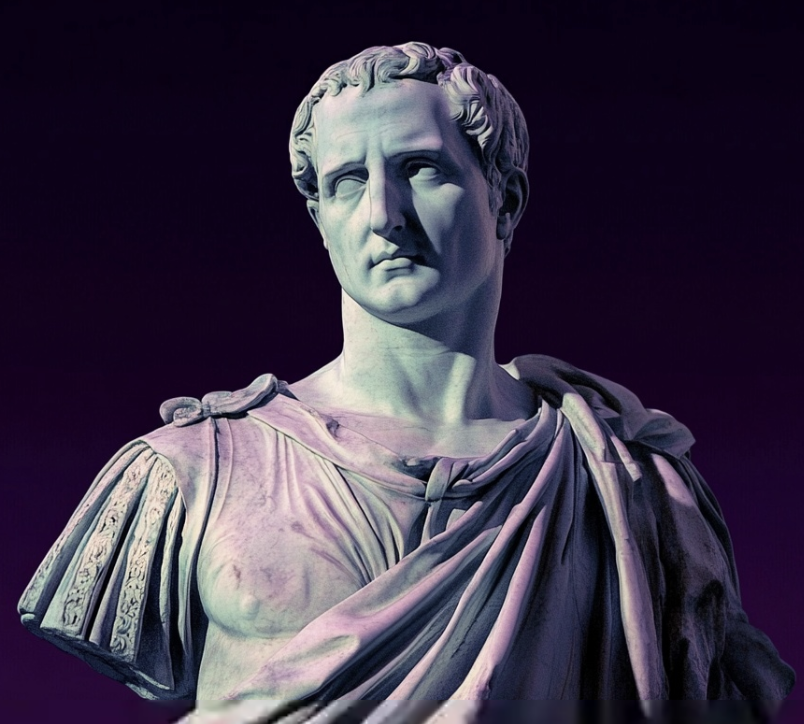
And what can be more divine than the exhalations of the earth, which affect the human soul so as to enable her to predict the future ? And could the hand of time evaporate such a virtue? Do you suppose you are talking of some kind of wine or salted meat ?
▼
Source
source
Book I, Chapter III

7 months 3 weeks ago
A gentleman, even if he loses everything he owns, must show no emotion. Money must be so far beneath a gentleman that it is hardly worth troubling about.
7 months 3 weeks ago
In most cases, people, even the most vicious, are much more naive and simple-minded than we assume them to be. And this is true of ourselves too.

6 months 3 weeks ago
I have lived through much, and now I think I have found what is needed for happiness. A quiet secluded life in the country, with the possibility of being useful to people to whom it is easy to do good, and who are not accustomed to have it done to them; then work which one hopes may be of some use; then rest, nature, books, music, love for one's neighbor -- such is my idea of happiness. And then, on the top of all that, you for a mate, and children perhaps -- what more can the heart of man desire?
▼
Source
source
Part 1, Chapter V
6 months 1 week ago
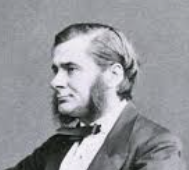
The whole analogy of natural operations furnishes so complete and crushing an argument against the intervention of any but what are termed secondary causes, in the production of all the phenomena of the universe; that, in view of the intimate relations between Man and the rest of the living world; and between the forces exerted by the latter and all other forces, I can see no excuse for doubting that all are co-ordinated terms of Nature's great progression, from the formless to the formed-from the inorganic to the organic-from blind force to conscious intellect and will.
▼
Source
source
Ch.1 (1884 edition) p. 28
7 months 1 week ago
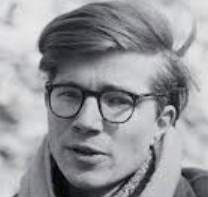
You', the ego, live in your left brain. When we say that man is the only creature who spends 99 per cent of his time inside his own head, we mean, in fact, inside his left cerebral hemisphere. And in the basement of the left hemisphere is the library full of filing cabinets -- the stuffy room that we mistake for reality.
▼
Source
source
p. 9
7 months 1 week ago
It is in literature that the concrete outlook of humanity receives its expression.
▼
Source
source
Ch. 5: "The Romantic Reaction", p. 106
8 months 2 weeks ago
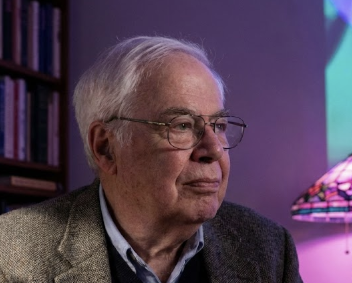
Contemporary intellectuals have given up the Enlightenment assumption that religion, myth, and tradition can be opposed to something ahistorical, something common to all human beings qua human.

7 months 2 weeks ago
Hear, and understand: Not that which goeth into the mouth defileth a man; but that which cometh out of the mouth, this defileth a man.
▼
Source
source
15:10-11 (KJV)



7 months 2 weeks ago
Compared to the refined culture of sclerotic forms and frames, which mask everything, the lyrical mode is utterly barbarian in its expression. Its value resides precisely in its savage quality: it is only blood, sincerity, and fire.
6 months 3 days ago
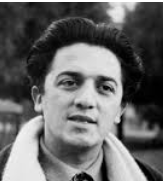
The public has lost the habit of movie-going because the cinema no longer possesses the charm, the hypnotic charisma, the authority it once commanded. The image it once held for us all - that of a dream we dreamt with our eyes open - has disappeared. Is it still possible that one thousand people might group together in the dark and experience the dream that a single individual has directed?
▼
Source
source
"Decline of Cinema"

8 months 3 weeks ago
Communism... is the genuine resolution of the antagonism between man and nature and between man and man; it is the true resolution of the conflict between existence and essence, objectification and self-affirmation, freedom and necessity, individual and species. It is the riddle of history solved and knows itself as the solution.
▼
Source
source
Private Property and Communism, p. 43.

5 months 1 week ago
Show me that the good in life does not depend upon life's length, but upon the use we make of it; also, that it is possible, or rather usual, for a man who has lived long to have lived too little. Say to me when I lie down to sleep: "You may not wake again!" And when I have waked: "You may not go to sleep again!" Say to me when I go forth from my house: "You may not return!" And when I return: "You may never go forth again!"
8 months 4 weeks ago
TO LOVE is to find pleasure in the happiness of others. Thus the habit of loving someone is nothing other than BENEVOLENCE by which we want the good of others, not for the profit that we gain from it, but because it is agreeable to us in itself. CHARITY is a general benevolence. And JUSTICE is charity in accordance with wisdom. ... so that one does not do harm to someone without necessity, and that one does as much good as one can, but especially where it is best employed.
▼
Source
source
"A Dialogue" (after 1695), as quoted in The Shorter Leibniz Texts (2006) edited by Lloyd H. Strickland, p. 170
8 months 3 weeks ago
But if the labourers could live on air they could not be bought at any price.
▼
Source
source
Vol. I, Ch. 24, Section 4, pg. 657.
8 months 3 weeks ago
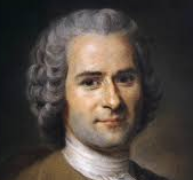
There as here, passions are the motive of all action, but they are livelier, more ardent, or merely simpler and purer, thereby assuming a totally different character. All the first movements of nature are good and right.
▼
Source
source
First Dialogue; translated by Judith R. Bush, Christopher Kelly, Roger D. Masters

8 months 3 weeks ago
So nigh is grandeur to our dust, So near is God to man, When Duty whispers low, Thou must, The youth replies, I can.
▼
Source
source
Voluntaries, st. 3
4 months 3 weeks ago
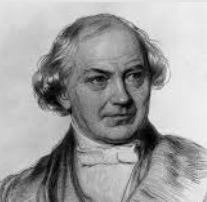
The resolution of complex Facts into precise and measured partial Facts, we call the 'Decomposition of Facts'. This process is requisite for the progress of science, but does not necessarily lead to progress. The Conceptions by which Facts are bound together, are suggested by the sagacity of discoverers. But a supply of appropriate hypotheses cannot be constructed by rule, nor without inventive talent. The truth of tentative hypotheses must be tested by their application to facts. The discoverer must be ready, carefully to try his hypotheses in this manner, and to reject them if they will not bear the test, in spite of indolence and vanity.

8 months 3 weeks ago
I have no faith in precision: ...simplicity and clarity are values in themselves, but not... [of] precision or exactness...
7 months 2 weeks ago
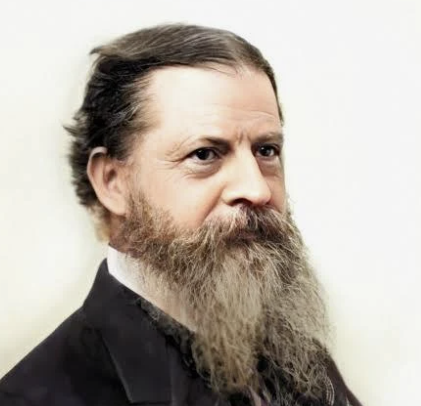
One of the most marked features about the law of mind is that it makes time to have a definite direction of flow from past to future. ...This makes one of the great contrasts between the law of mind and the law of physical force, where there is no more distinction between the two opposite directions in time than between moving northward and moving southward.
4 months 3 weeks ago
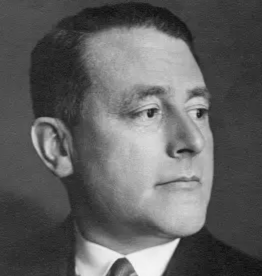
Political thought and political instinct prove themselves theoretically and practically in the ability to distinguish friend and enemy. The high points of politics are simultaneously the moments in which the enemy is, in concrete clarity, recognized as the enemy.

9 months 2 days ago
A man of understanding has lost nothing, if he has himself.
▼
Source
source
Ch. 39
5 months 2 weeks ago
If you find many people who are hard and indifferent to you in a world that you consider to be unhospitable and cruel-as often, indeed, happens to a tender-hearted, stirring young creature-you will also find there are noble hearts who will look kindly on you, and their help will be precious to you beyond price.

9 months 3 weeks ago
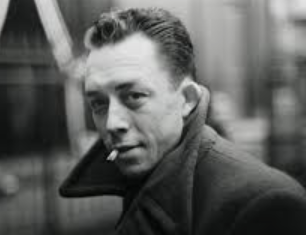
A man is more a man through the things he keeps to himself than through those he says.
9 months 3 weeks ago
Metaphysical rebellion is a claim, motivated by the concept of a complete unity, against the suffering of life and death and a protest against the human condition both for its incompleteness, thanks to death, and its wastefulness, thanks to evil.
9 months 3 weeks ago
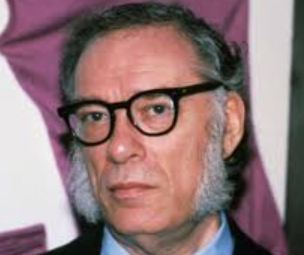
The job of science will never be done, it will just sink deeper and deeper into never-ending complexity.
8 months 3 weeks ago
I don't like the spirit of socialism - I think freedom is the basis of everything.
▼
Source
source
Letter to Constance Malleson (Colette), September 29, 1916
7 months 2 weeks ago
To win the guilty kiss of a saint, I'd welcome the plague as a blessing
7 months 1 week ago
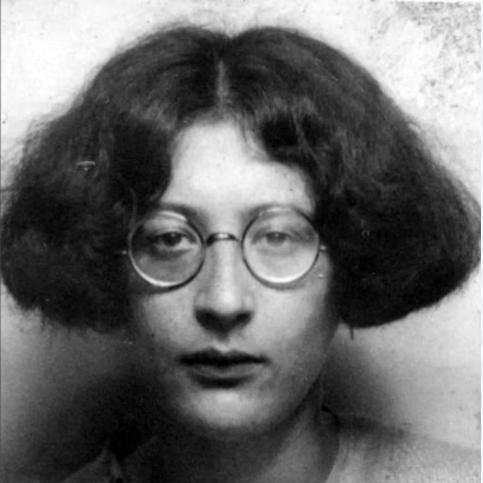
Moreover, nothing is so rare as to see misfortune fairly portrayed; the tendency is either to treat the unfortunate person as though catastrophe were his natural vocation, or to ignore the effects of misfortune on the soul, to assume, that is, that the soul can suffer and remain unmarked by it, can fail, in fact, to be recast in misfortune's image.
▼
Source
source
p. 193
9 months 3 weeks ago
Man is the only creature who refuses to be what he is.
7 months 2 weeks ago
People will become faint out of fear and expectation of the things coming upon the inhabited earth, for the powers of the heavens will be shaken. And then they will see the Son of man coming in a cloud with power and great glory.
▼
Source
source
21:26-27, NWT
6 months 3 days ago
Philosophy is an everlasting fire, sometimes damped down by setting itself limits, then flaring into new life as it consumes them. Every field of inquiry is limited, but philosophy has an essential relation to the question of limits, to its own limits.
▼
Source
source
Introduction, p. xiii
8 months 3 weeks ago
Our chief want in life, is somebody who shall make us do what we can.
▼
Source
source
Considerations by the Way
4 months 3 weeks ago
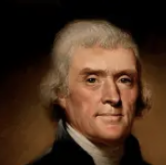
Only lay down true principles, and adhere to them inflexibly. Do not be frightened into their surrender by the alarms of the timid, or the croakings of wealth against the ascendency of the people.

8 months 2 weeks ago
My aim is: to teach you to pass from a piece of disguised nonsense to something that is patent nonsense.
▼
Source
source
§ 464
CivilSimian.com created by AxiomaticPanic, CivilSimian, Kalokagathia