


2 months 2 weeks ago
Did ye never read in the scriptures, The stone which the builders rejected, the same is become the head of the corner: this is the Lord's doing, and it is marvellous in our eyes? Therefore say I unto you, The kingdom of God shall be taken from you, and given to a nation bringing forth the fruits thereof. And whosoever shall fall on this stone shall be broken: but on whomsoever it shall fall, it will grind him to powder.
▼
Source
source
21:27-42 and 44 (KJV)
3 months 3 weeks ago
I have tried to set forth a theory that enables us to understand and to assess these feelings about the primacy of justice. Justice as fairness is the outcome: it articulates these opinions and supports their general tendency.
▼
Source
source
Chapter IX, Section 87, p. 586

4 months 1 day ago
Nothing but the most exemplary morals can give dignity to a man of small fortune.
▼
Source
source
Chapter I, Part III, Article III, p. 874.

4 months 3 weeks ago
If the very essence of knowledge changes, at the moment of the change to another essence of knowledge there would be no knowledge, and if it is always changing, there will always be no knowledge, and by this reasoning there will be neither anyone to know nor anything to be known. But if there is always that which knows and that which is known if the beautiful, the good, and all the other verities exist I do not see how there is any likeness between these conditions of which I am now speaking and flux or motion.

3 months 4 weeks ago
There are two motives for reading a book: one, that you enjoy it; the other, that you can boast about it.
2 months 2 weeks ago
My path was not the normal one of professors of philosophy. I did not intend to become a doctor of philosophy by studying philosophy (I am in fact a doctor of medicine) nor did I by any means, intend originally to qualify for a professorship by a dissertation on philosophy. To decide to become a philosopher seemed as foolish to me as to decide to become a poet. Since my schooldays, however, I was guided by philosophical questions. Philosophy seemed to me the supreme, even the sole, concern of man. Yet a certain awe kept me from making it my profession.

3 months 4 weeks ago
Thus our duties to animals are indirectly duties to humanity.
▼
Source
source
Part II, p. 213

4 months 4 days ago
Those that will combat use and custom by the strict rules of grammar do but jest.
1 week ago
Existing social conditions favour the production of an infinite number of acts of violence and there has been no hesitation in urging the workers not to refrain from brutality when this might do them service.
▼
Source
source
p. 183
1 month 3 weeks ago
No one knows what he can do till he tries.
▼
Source
source
Maxim 786

2 months 3 weeks ago
There is only this swarm of dying creatures stricken with longevity, all the more hateful in that they are so good at organizing their agony. p. 120, first American edition
▼
Source
source
1970

4 months 6 days ago
It is not the pleasure of curiosity, nor the quiet of resolution, nor the raising of the spirit, nor victory of wit, nor faculty of speech that are the true ends of knowledge, but it is a restitution and reinvesting, in great part, of man to the sovereignty and power, for whensoever he shall be able to call the creatures by their true names, he shall again command them.
▼
Source
source
Valerius Terminus: Of the Interpretation of Nature (ca. 1603), in Works, Vol. I, p. 83; The Works of Francis Bacon (1819), Vol. 2, p. 133

2 months 3 weeks ago
Surely if a single cell may, when subjected to certain influences, become a man in the space of twenty years; there is nothing absurd in the hypothesis that under certain other influences, a cell may, in the course of millions of years, give origin to the human race.
2 months 2 weeks ago
Therefore whoever hears these sayings of Mine, and does them, I will liken him to a wise man who built his house on the rock: and the rain descended, the floods came, and the winds blew and beat on that house; and it did not fall, for it was founded on the rock.
2 months 3 weeks ago
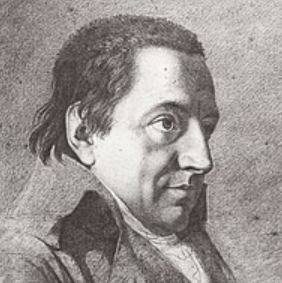
The representation of the self-sufficiency of the I can certainly co-exist with a representation of the self-sufficiency of the thing, though the self-sufficiency of the I itself cannot co-exist with that of the thing. Only one of these two can come first, only one can be the starting point; only one can be independent. The one that comes second, just because it comes second, necessarily becomes dependent upon the one that comes first, with which it is supposed to be connected. Which of these two should come first?
▼
Source
source
p. 17-18.
2 months 3 weeks ago
By capitulating to life, this world has betrayed nothingness. . . . I resign from movement, and from my dreams. Absence! You shall be my sole glory. . . . Let "desire" be forever stricken from the dictionary, and from the soul! I retreat before the dizzying farce of tomorrows. And if I still cling to a few hopes, I have lost forever the faculty of hoping.

2 weeks 4 days ago
Our "Theories of Taste," as they are called, wherein the deep, infinite, unspeakable Love of Wisdom and Beauty, which dwells in all men, is "explained," made mechanically visible, from "Association" and the like, ...

1 month 3 weeks ago
The only absolute knowledge attainable by man is that life is meaningless.
▼
Source
source
Ch. 5, translated by David Patterson, 1983
3 months 4 weeks ago
I resolved from the beginning of my quest that I would not be misled by sentiment and desire into beliefs for which there was no good evidence.
▼
Source
source
Fact and Fiction (1961), Part I, Ch. 6: "The Pursuit of Truth", p. 37
2 months 3 weeks ago
When we have no further desire to show ourselves, we take refuge in music, the Providence of the abulic.
1 month 3 weeks ago
When I started life Hegelianism was the basis of everything: it was in the air, found expression in magazine and newspaper articles, in novels and essays, in art, in histories, in sermons, and in conversation. A man unacquainted with Hegel had no right to speak: he who wished to know the truth studied Hegel. Everything rested on him; and suddenly forty years have gone by and there is nothing left of him, he is not even mentioned - as though he had never existed. And what is most remarkable is that, like pseudo-Christianity, Hegelianism fell not because anyone refuted it, but because it suddenly became evident that neither the one nor the other was needed by our learned, educated world.
▼
Source
source
Chapter XXIX

1 week 4 days ago
It is a rough road that leads to the heights of greatness.
▼
Source
source
Line 13

2 months 1 week ago
What is necessary at this stage in our evolution is not a 'return' to the psychic powers of our ancestors, but an expansion of our own potential powers, based upon the certain knowledge that such powers exist.
▼
Source
source
p. 290
2 months 3 weeks ago
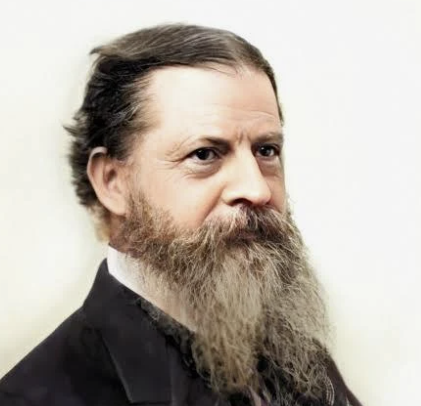
The ordinary logic has a great deal to say about genera and species, or in our nineteeth century dialect, about classes. Now a class is a set of objects comprising all that stand to one another in a special relation of similarity. But where ordinary logic talks of classes the logic of relatives talks of systems. A system is a set of objects comprising all that stands to one another in a group of connected relations. Induction according to ordinary logic rises from the contemplation of a sample of a class to that of a whole class; but according to the logic of relatives it rises from the comtemplation of a fragment of a system to the envisagement of the complete system.
▼
Source
source
Vol. IV, par. 5

4 months 2 weeks ago
The superior man honors his virtuous nature, and maintains constant inquiry and study, seeking to carry it out to its breadth and greatness, so as to omit none of the more exquisite and minute points which it embraces, and to raise it to its greatest height and brilliancy, so as to pursue the course of the Mean. He cherishes his old knowledge, and is continually acquiring new. He exerts an honest, generous earnestness, in the esteem and practice of all propriety. Thus, when occupying a high situation he is not proud, and in a low situation he is not insubordinate. When the kingdom is well governed, he is sure by his words to rise; and when it is ill governed, he is sure by his silence to command forbearance to himself.

3 months 3 weeks ago
Everything intercepts us from ourselves.
▼
Source
source
1833
2 months 1 week ago
The great and inspiring aims of the Revolution became so clouded with and obscured by the methods used by the ruling political power that it was hard to distinguish what was temporary means and what final purpose. Psychologically and socially the means necessarily influence and alter the aims. The whole history of man is continuous proof of the maxim that to divest one's methods of ethical concepts means to sink into the depths of utter demoralization. In that lies the real tragedy of the Bolshevik philosophy as applied to the Russian Revolution. May this lesson not be in vain.


1 month 2 weeks ago
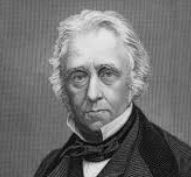
It seems that the creative faculty, and the critical faculty, cannot exist together in their highest perfection.
▼
Source
source
p. 186
3 months 4 weeks ago
I don't care for the applause one gets by saying what others are thinking; I want actually to change people's thoughts. Power over people's minds is the main personal desire of my life; and this sort of power is not acquired by saying popular things.
▼
Source
source
Letter to Lucy Martin Donnelly, February 10, 1916
1 week 4 days ago
Have the courage to be ignorant of a great number of things, in order to avoid the calamity of being ignorant of everything.
▼
Source
source
Lecture IX : On the Conduct of the Understanding
1 month 3 weeks ago
One feature of our own society that seems decidedly anomalous is the matter of sexual advertisement. As we have seen, it is strongly to be expected on evolutionary grounds that, where the sexes differ, it should be the males that advertise and the females that are drab. Modern western man is undoubtedly exceptional in this respect. It is of course true that some men dress flamboyantly and some women dress drably but, on average, there can be no doubt that in our society the equivalent of the peacock's tail is exhibited by the female, not by the male. Women paint their faces and glue on false eyelashes. Apart from special cases, like actors, men do not. Ch. 9. Battle of the Sexes

4 months 3 weeks ago
Nonsense. You are a military man and should know better. If there is one science into which man has probed continuously and successfully, it is that of military technology. No potential weapon would remain unrealized for ten thousand years.
2 months 3 weeks ago
The true object of moral and political disquisition is pleasure or happiness.The primary, or earliest, class of human pleasure is the pleasures of external senses.In addition to these, man is susceptible of certain secondary pleasures, as the pleasures of intellectual feeling, the pleasures of sympathy, and the pleasures of self-approbation. The secondary pleasures are probably more exquisite than the primary; Or, at least,The most desirable state of man is that in which he has access to all these sources of pleasure, and is in possession of a happiness the most varied and uninterrupted. This state is a state of high civilization.
▼
Source
source
Summary of Principles 1.1
2 months 3 weeks ago
An aphorism? Fire without flames. Understandable that no one tries to warm himself at it.

3 months 4 weeks ago
As to riots and tumults, let those answer for them, who, by willful misrepresentations, endeavor to excite and promote them; or who seek to stun the sense of the nation, and to lose the great cause of public good in the outrages of a misinformed mob. We take our ground on principles that require no such riotous aid. We have nothing to apprehend from the poor; for we are pleading their cause. And we fear not proud oppression, for we have truth on our side.
▼
Source
source
Address and Declaration at a Select Meeting of the Friends of Universal Peace and Liberty (August 20, 1791) p. 6

4 months 3 weeks ago
It's better to bet on this life than on the next.
1 week 4 days ago
The mind must be indulged, and leisure must be given from time to time, which is the place of food and strength.

4 months 4 weeks ago
Against that positivism which stops before phenomena, saying "there are only facts," I should say: no, it is precisely facts that do not exist, only interpretations...

4 months 2 weeks ago
With regard to the abuse of authority, this also may come about in two ways. First, when what is ordered by an authority is opposed to the object for which that authority was constituted (if, for example, some sinful action is commanded or one which is contrary to virtue, when it is precisely for the protection and fostering of virtue that authority is instituted). In such a case, not only is there no obligation to obey the authority, but one is obliged to disobey it, as did the holy martyrs who suffered death rather than obey the impious commands of tyrants. Secondly, when those who bear such authority command things which exceed the competence of such authority; as, for example, when a master demands payment from a servant which the latter is not bound to make, and other similar cases. In this instance the subject is free to obey or disobey.
▼
Source
source
in Aquinas: Selected Political Writings (Basil Blackwell: 1974), p. 183
2 months 3 weeks ago
Time: That which man is always trying to kill, but which ends in killing him.
▼
Source
source
Definitions, as quoted in The Dictionary of Essential Quotations (1983) by Kevin Goldstein-Jackson, p. 154

3 months 3 weeks ago
What is called politics is comparatively something so superficial and inhuman, that, practically, I have never fairly recognized that it concerns me at all. The newspapers, I perceive, devote some of their columns specially to politics or government without charge; and this, one would say, is all that saves it; but, as I love literature, and, to some extent, the truth also, I never read those columns at any rate. I do not wish to blunt my sense of right so much.
▼
Source
source
p. 494

3 months 3 weeks ago
A difference which makes no difference is no difference at all.
▼
Source
source
As quoted in William James: The Essential Writings (1971), edited by Bruce W. Wilshire, p. xiii
4 months 3 weeks ago
Earth is a ball that is over 12,000 kilometres in diameter, and if it were modelled into an object the size of a billiard ball, with all its surface unevenness reproduced exactly to scale, the model would be smoother than an ordinary billiard ball and the ocean would be an all but unnoticeable mist of dampness over 70 percent of its surface.
1 month 1 week ago
Rollers on the beach, wind in the pines, the slow flapping of herons across sand dunes, drown out the hectic rhythms of city and suburb, time tables and schedules. One falls under their spell, relaxes, stretches out prone. One becomes, in fact, like the element on which one lies, flattened by the sea; bare, open, empty as the beach, erased by today's tides of all yesterday's scribblings.
2 months 1 week ago
Every daring attempt to make a great change in existing conditions, every lofty vision of new possibilities for the human race, has been labelled Utopian.
▼
Source
source
"Socialism: Caught in the Political Trap", a lecture (c. 1912), published in Red Emma Speaks, Part 1 (1972) edited by Alix Kates Shulman

3 months 4 weeks ago
As for the Soothsayer, although I am certain no one feels the true beauties of that work better than I, I am far from finding these beauties in the same places as the infatuated public does. They are not the products of study and knowledge, but rather are inspired by taste and sensitivity.
▼
Source
source
First Dialogue; translated by Judith R. Bush, Christopher Kelly, Roger D. Masters
3 months 3 weeks ago
Characters and talents are complemental and suppletory. The world stands by balanced antagonisms. The more the peculiarities are pressed the better the result. The air would rot without lightning; and without the violence of direction that men have, without bigots, without men of the fixed idea, no excitement, no efficiency. The novelist should not make any character act absurdly, but only absurdly as seen by others. For it is so in life. Nonsense will not keep its unreason if you come into the humorist's point of view, but unhappily we find it is fast becoming sense, and we must flee again into the distance if we would laugh.
▼
Source
source
"The Natural History of Intellect", p. 45

4 months 2 weeks ago
Corpses are more fit to be cast out than dung.
4 months 1 day ago
Mercy to the guilty is cruelty to the innocent.
▼
Source
source
Section II, Chap. III.
CivilSimian.com created by AxiomaticPanic, CivilSimian, Kalokagathia