

4 months 4 weeks ago
Faith ever says, "If Thou wilt," not "If Thou canst."
▼
Source
source
p. 241
3 months 2 weeks ago
Ah! why do women condescend to receive a degree of attention and respect from strangers different from that reciprocation of civility which the dictates of humanity and the politeness of civilization authorize between man and man? And why do they not discover, when, "in the noon of beauty's power", that they are treated like queens only to be deluded by hollow respect. Confined, then, in cages like the feathered race, they have nothing to do but to plume themselves, and stalk with mock majesty from perch to perch.
▼
Source
source
Ch. 4

4 months 3 weeks ago
Hath God obliged himself not to exceed the bounds of our knowledge?
▼
Source
source
Book II, Ch. 12
1 month 3 weeks ago
Human rights are not just cultural or legal constructions, as fashionable western relativists are fond of claiming. They are universal values. To deny the benefits of the new regime of rights to other cultures is to patronise them in a way that is reminiscent of the colonial era. If the new regime on torture is good enough for the US, who can say that it is not good for everyone?
3 months 1 week ago
For Appetite with an opinion of attaining, is called HOPE.
1 month 5 days ago
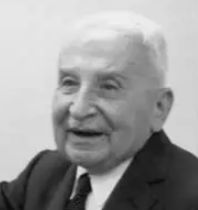
No social co-operation under the division of labour is possible when some people or unions of people are granted the right to prevent by violence and the threat of violence other people from working. When enforced by violence, a strike in vital branches of production or a general strike are tantamount to a revolutionary destruction of society.

3 months 2 weeks ago
Paradise was unendurable, otherwise the first man would have adapted to it; this world is no less so, since here we regret paradise or anticipate another one. What to do? Where to go? Do nothing and go nowhere, easy enough.
3 months 2 weeks ago
Impossible to accede to truth by opinions, for each opinion is only a mad perspective of reality.
1 month 4 weeks ago
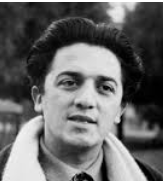
What is an artist? A provincial who finds himself somewhere between a physical reality and a metaphysical one... It's this in-between that I'm calling a province, this frontier country between the tangible world and the intangible one - which is really the realm of the artist.
▼
Source
source
Every Time We Say Goodbye in Sight and Sound [London]

2 months 2 weeks ago
Feelings, the most diverse, very strong and very weak, very significant and very worthless, very bad and very good, if only they infect the reader, the spectator, the listener, constitute the subject of art.

3 months 3 days ago
I found Randi likable and plausible; the only thing that bothered me was the sweeping and intense nature of his skepticism. He was obviously working from the premise that all paranormal phenomena, without exception, are fakes or delusions. He seemed to take to take it for granted that all of us - there were also two women present - shared his opinions, and he made jovial, disparaging remarks about psychics and other such weirdos. I began to get the uncomfortable feeling of a Jew who has accidentally walked into a Nazi meeting, or a Jehovah's Witness at a convention of militant atheists. As a supposedly scientific psychic investigator, Randi struck me as being oddly fixed in his opinions.
▼
Source
source
pp. 39-40

3 months 2 weeks ago
You have theories enough concerning the Rights of Men. It may not be amiss to add a small degree of attention to their Nature and disposition.
▼
Source
source
Letter to Charles-Jean-François Depont (November 1789), quoted in Alfred Cobban and Robert A. Smith (eds.), The Correspondence of Edmund Burke, Volume VI: July 1789-December 1791 (1967), p. 46

1 month 5 days ago
It is generally agreed that no activity can be successfully pursued by an individual who is preoccupied - not rhetoric or liberal studies - since the mind when distracted absorbs nothing deeply, but rejects everything which is, so to speak, crammed into it.
▼
Source
source
De Brevitate Vitae ("On the Shortness of Life", trans. C. D. N. Costa), Ch. 7

4 months 3 weeks ago
If you think that your belief is based upon reason, you will support it by argument, rather than by persecution, and will abandon it if the argument goes against you. But if your belief is based on faith, you will realize that argument is useless, and will therefore resort to force either in the form of persecution or by stunting and distorting the minds of the young in what is called "education". This last is particularly dastardly, since it takes advantage of the defencelessness of immature minds. Unfortunately it is practiced in greater or less degree in the schools of every civilised country.
▼
Source
source
p. 220
3 months 2 weeks ago
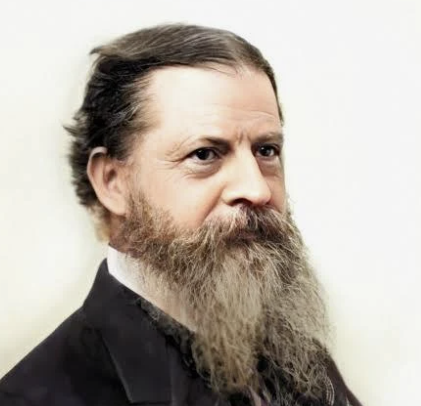
A finite interval of time generally contains an innumerable series of feelings; and when these become welded together in association the result is a general idea.
3 months 2 weeks ago
Irons and the unbreathable air of this world strip us of everything, except the freedom to kill ourselves; and this freedom grants us a strength and pride to triumph over the loads which overwhelm us.
5 months 1 week ago
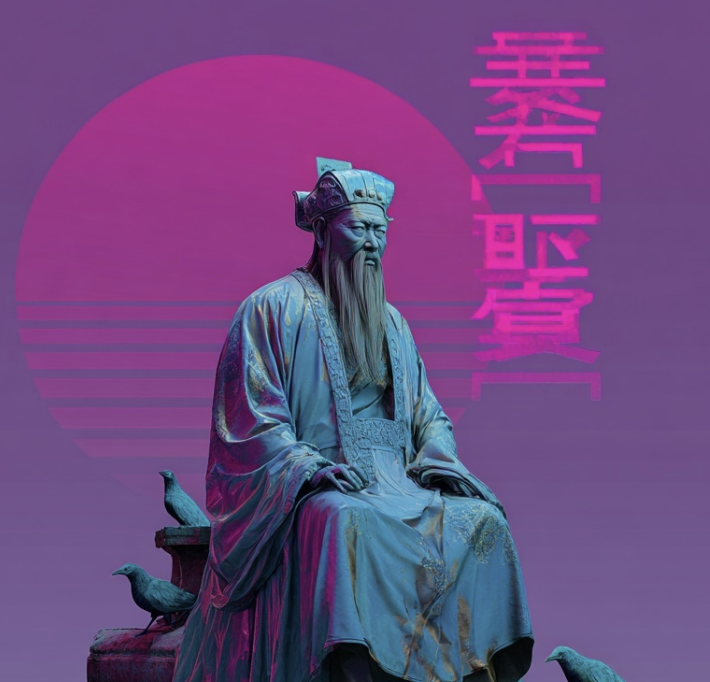
The superior man, extensively studying all learning, and keeping himself under the restraint of the rules of propriety, may thus likewise not overstep what is right.
3 months 3 days ago
We have all experienced the moments that William James calls melting moods, when it suddenly becomes perfectly obvious that life is infinitely fascinating. And the insight seems to apply retrospectively. Periods of my life that seemed confusing and dull at the time now seem complex and rather charming. It is almost as if some other person a more powerful and mature individual has taken over my brain. This higher self views my problems and anxieties with kindly detachment, but entirely without pity. Looking at problems through his eyes, I can see I was a fool to worry about them.
▼
Source
source
pp. 2-3
3 months 1 week ago
All metaphysical theories are inconclusively vulnerable to positivist attack.
▼
Source
source
Ch. 9, p. 127
3 months 2 weeks ago
That higher and "complete" man is begotten by the "unknown" father and born from Wisdom, and it is he who, in the figure of the puer aeternus-"vultu mutabilis albus et ater"-represents our totality, which transcends consciousness. It was this boy into whom Faust had to change, abandoning his inflated onesidedness which saw the devil only outside. Christ's "Except ye become as little children" is a prefiguration of this, for in them the opposites lie close together; but what is meant is the boy who is born from the maturity of the adult man, and not the unconscious child we would like to remain.
▼
Source
source
Answer to Job, R. Hull, trans. (1984), pp. 157-158
3 months 2 weeks ago
In this choice of inheritance we have given to our frame of polity the image of a relation in blood, binding up the constitution of our country with our dearest domestic ties, adopting our fundamental laws into the bosom of our family affections, keeping inseparable and cherishing with the warmth of all their combined and mutually reflected charities our state, our hearths, our sepulchres, and our altars.

2 months 1 week ago
The measure of a man is a man. Justice, morality, ethics, fairness, goodness all based on the preservation of life. You can do other things, but you'd be Good by coincidence.
3 months 2 weeks ago
Every man is fully satisfied that there is such a thing as truth, or he would not ask any question.
▼
Source
source
Vol. V, par. 211

4 months 3 weeks ago
Eloquence, when at its highest pitch, leaves little room for reason or reflection; but addressing itself entirely to the fancy or the affections, captivates the willing hearers, and subdues their understanding. Happily, this pitch it seldom attains. But what a Tully or a Demosthenes could scarcely effect over a Roman or Athenian audience, every Capuchin, every itinerant or stationary teacher can perform over the generality of mankind, and in a higher degree, by touching such gross and vulgar passions.
▼
Source
source
Section 10 : Of Miracles Pt. 2
2 weeks 3 days ago
Consider all that you've gone through, all that you've survived. And that the story of your life is done, your assignment complete. How many good things have you seen? How much pain and pleasure have you resisted? How many honors have you declined? How many unkind people have you been kind to?
▼
Source
source
(Hays translation) V, 31
2 months 2 weeks ago
Pain will force even the truthful to speak falsely.
▼
Source
source
Maxim 232
3 months 2 weeks ago
We must make a very precise distinction between the official and consequently dictatorial prerogatives of society organized as a state, and of the natural influence and action of the members of a non-official, non-artificial society.
3 months 2 weeks ago
To get to know a truth properly, one must polemicize it.
▼
Source
source
Quoted in The Viking Book of Aphorisms by Wystan Hugh Auden (1962) p. 323
3 months 2 weeks ago
As soon as one returns to Doubt (if it could be said that one has ever left it), undertaking anything at all seems not so much useless as extravagant. Doubt works deep within you like a disease, or even more effectively, like a faith.
3 months 2 weeks ago
So long as it is not possible to produce so much that there is enough for all, with more left over for expanding the social capital and extending the forces of production - so long as this is not possible, there must always be a ruling class directing the use of society's productive forces, and a poor, oppressed class. How these classes are constituted depends on the stage of development.
5 months 1 week ago
Corpses are more fit to be cast out than dung.
3 months 4 days ago
The consequences of a plethora of half-digested theoretical knowledge are deplorable.
4 months 4 weeks ago
Confidence in another man's virtue is no light evidence of a man's own, and God willingly favors such a confidence.
▼
Source
source
Book I, Ch. 14
4 months 1 week ago
Usually, when we are told that X is Y we know how it is supposed to be true, but that depends on a conceptual or theoretical background and is not conveyed by the 'is' alone. ... But when the two terms of the identification are very disparate it may not be so clear how it could be true ... and a theoretical framework may have to be supplied to enable us to understand this. Without the framework, an air of mysticism surrounds the identification.This explains the magical flavor of popular presentations of fundamental scientific discoveries, given out as propositions to which one must subscribe without really understanding them. For example, people are now told at an early age that all matter is really energy. But despite the fact that they know what 'is' means, most of them never form a conception of what makes this claim true, because they lack the theoretical background.
▼
Source
source
pp. 176-177.
3 months 2 weeks ago
It is the man of science, eager to have his every opinion regenerated, his every idea rationalized, by drinking at the fountain of fact, and devoting all the energies of his life to the cult of truth, not as he understands it, but as he does not yet understand it, that ought properly to be called a philosopher. To an earlier age knowledge was power - merely that and nothing more; to us it is life and the summum bonum. Emancipation from the bonds of self, of one's own prepossessions, importunately sought at the hands of that rational power before which all must ultimately bow, - this is the characteristic that distinguishes all the great figures of nineteenth-century science from those of former periods.
▼
Source
source
"The Century's Great Men in Science" in The 19th Century : A Review of Progress During the Past One Hundred Years in the Chief Departments of Human Activity (1901), published by G. P. Putnam's Sons.
4 months 4 days ago
Every body is in place; but nothing essentially incorporeal, or any thing of this kind, has any locality.
5 months 4 days ago
Why, what is weeping and sighing? A judgement. What is misfortune? A judgement. What are strife, disagreement, fault-finding, accusing, impiety, foolishness? They are all judgements.
▼
Source
source
Book III, ch. 3, 18, 19.
2 months 3 weeks ago
I have only one real message in this lecture, and that is: consciousness is a biological phenomenon, like photosynthesis, digestion, mitosis-you know all the biological phenomena-and once you accept that, most, if not all about the hard problems of consciousness simply evaporate.
4 weeks 1 day ago
The entire heaven, making its parts everywhere harmonize with him, is filled with spirits emanating out of the Sun. For this god is ruler of five orbits in the heavens, and whilst traversing three out of these orbits, he produces in three the Graces, themselves three in number, the remaining circles form the Scales to the Balance of supreme Necessity.
4 months 3 weeks ago
Here am I who have written on all sorts of subjects calculated to excite hostility, moral, political, and religious, and yet I have no enemies - except, indeed, all the Whigs, all the Tories, and all the Christians.
▼
Source
source
Statement to a friend shortly before his death, as recounted in Men of Letters by Lord Henry Brougham

3 months 6 days ago
The needs of the soul can for the most part be listed in pairs of opposites which balance and complete one another. The human soul has need of equality and of hierarchy. Equality is the public recognition, effectively expressed in institutions and manners, of the principle that an equal degree of attention is due to the needs of all human beings. Hierarchy is the scale of responsibilities. Since attention is inclined to direct itself upwards and remain fixed, special provisions are necessary to ensure the effective compatibility of equality and hierarchy.
2 months 4 weeks ago
Definition of design = Everyone designs who devise courses of action aimed at changing existing situations into preferred ones. The intellectual activity that produces material artifacts is no different fundamentally from the one that prescribes remedies for a sick patient or the one that devises a new sales plan for a company or a social welfare policy for a state.
▼
Source
source
p. 130.
3 months 1 week ago
Every moment celebrates obsequies over the virtues of its predecessor.
▼
Source
source
Ch. XIV
4 months 1 week ago
Being asked what learning is the most necessary, he replied, "How to get rid of having anything to unlearn.
▼
Source
source
" § 7

4 months 4 weeks ago
Further, it will not be amiss to distinguish the three kinds and, as it were, grades of ambition in mankind. The first is of those who desire to extend their own power in their native country, a vulgar and degenerate kind. The second is of those who labor to extend the power and dominion of their country among men. This certainly has more dignity, though not less covetousness. But if a man endeavor to establish and extend the power and dominion of the human race itself over the universe, his ambition (if ambition it can be called) is without doubt both a more wholesome and a more noble thing than the other two. Now the empire of man over things depends wholly on the arts and sciences. For we cannot command nature except by obeying her.
▼
Source
source
Aphorism 129
3 months 1 week ago
Without a strategic retreat into the self, without vigilant thought, human life is impossible. Call to mind all that mankind owes to certain great withdrawals into the self! It is no chance that all the great founders of religions preceded their apostolates by famous retreats. Buddha withdraws to the forest; Mahomet withdraws to his tent, and even there he withdraws from his tent by wrapping his head in his cloak; above all, Jesus goes apart into the desert for forty days.
▼
Source
source
p. 35

5 months 2 weeks ago
I was assailed by memories of a life that wasn't mine anymore, but one in which I'd found the simplest and most lasting joys.

2 months 2 weeks ago
The most human thing about us is our technology.
▼
Source
source
Man and the future of organizations, Volume 5, School of Business Administration, Georgia State University, 1974, p. 19
3 months 6 days ago
Just as a vagrant accused of stealing a carrot from a field stands before a comfortably seated judge who keeps up an elegant flow of queries, comments and witticisms while the accused is unable to stammer a word, so truth stands before an intelligence which is concerned with the elegant manipulation of opinions.
▼
Source
source
p. 68
CivilSimian.com created by AxiomaticPanic, CivilSimian, Kalokagathia