

1 month 2 weeks ago
The possibility of associating two or three hundred families in agricultural and manufacturing industry depends upon a system so entirely different from what now exists, that it will open to the reader a new social world. He must consequently, in the study which opens before him, follow the guide with confidence, bearing constantly in min the gigantic results which will flow from association. Such results are well worth the sacrifice of a few prejudices. Every sensible reader will be of this opinion, and will concur to follow the advice which I shall constantly give, namely, to neglect the form and style of presentation, and occupy himself solely with the substance of the theory, seeking to determine whether the process of association is really discovered or not.
▼
Source
source
The Theory of Social Organization. Harmonian Man: Selected Writings of Charles Fourier, p. 5.

3 months 2 weeks ago
In the fact of being born there is such an absence of necessity that when you think about it a little more than usual, you are left...with a foolish grin.

3 months 2 weeks ago
I have never yet seen any plan which has not been mended by the observation of those who were much inferior in understanding to the person who took the lead in the business.

4 months 2 weeks ago
It seems to me now that mathematics is capable of an artistic excellence as great as that of any music, perhaps greater; not because the pleasure it gives (although very pure) is comparable, either in intensity or in the number of people who feel it, to that of music, but because it gives in absolute perfection that combination, characteristic of great art, of godlike freedom, with the sense of inevitable destiny; because, in fact, it constructs an ideal world where everything is perfect and yet true.
▼
Source
source
Letter to Gilbert Murray, April 3, 1902
4 months 2 weeks ago
Justice does not require that men must stand idly by while others destroy the basis of their existence.
▼
Source
source
Chapter IV, Section 35, p. 218
3 months 1 week ago
The idea that an aim can be reasonable for its own sake-on the basis of virtues that insight reveals it to have in itself-without reference to some kind of subjective gain or advantage, is utterly alien to subjective reason, even where it rises above the consideration of immediate utilitarian values and devotes itself to reflection about the social order as a whole.
▼
Source
source
p. 4.

2 weeks 2 days ago
It's silly to try to escape other people's faults. They are inescapable. Just try to escape your own.
▼
Source
source
(Hays translation) VII, 71

4 weeks 1 day ago
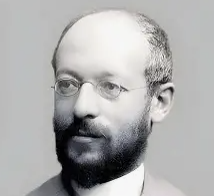
The individual who is subordinate to an objective law feels himself determined by it, while he, in turn, in no way determines the law, and has no possibility of reacting to it in a manner which could influence it-quite in contrast to even the most miserable slave, who, in some fashion at last, can still in this sense react to his master.
▼
Source
source
"Domination" (1908), in On Individuality and Social Forms (1971), pp. 113-114

2 months 2 weeks ago
Armies are necessary, before all things, for the defense of governments from their own oppressed and enslaved subjects.
▼
Source
source
Chapter VII, Significance of Compulsory Service
2 weeks 2 days ago
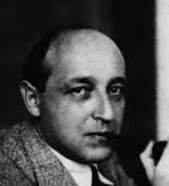
In our contemporary social and intellectual plight, it is nothing less than shocking to discover that those persons who claim to have discovered an absolute are usually the same people who also pretend to be superior to the rest. To find people in our day attempting to pass off to the world and recommending to others some nostrum of the absolute which they claim to have discovered is merely a sign of the loss of and the need for intellectual and moral certainty, felt by broad sections of the population who are unable to look life in the face.
4 months 1 week ago
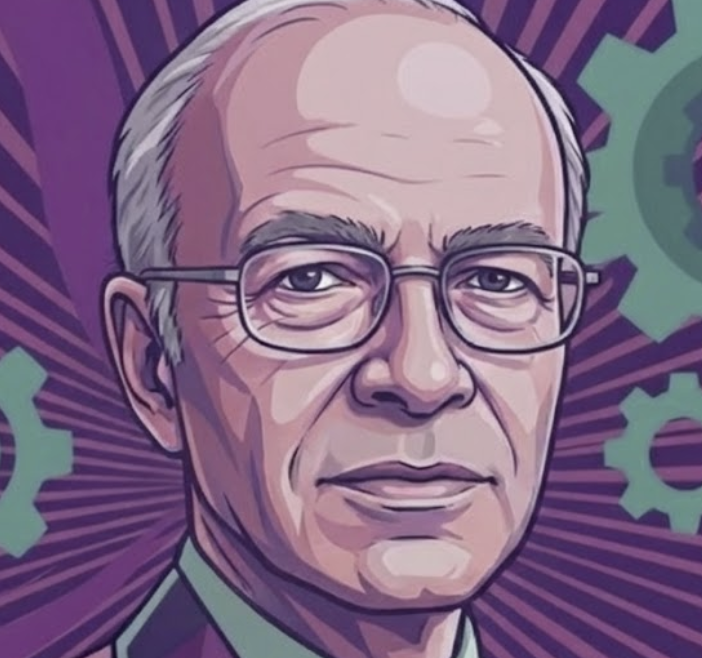
At one level, this movement on behalf of oppressed farm animals is emotional...Yet the movement is also the product of a deep intellectual ferment pioneered by the Princeton scholar Peter Singer...This idea popularized by Professor Singer - that we have ethical obligations that transcend our species - is one whose time appears to have come...What we're seeing now is an interesting moral moment: a grass-roots effort by members of one species to promote the welfare of others...animal rights are now firmly on the mainstream ethical agenda.
▼
Source
source
Nicholas Kristof, "Humanity Even for Nonhumans," in The New York Times (8 April 2009).
4 months 3 weeks ago
The first method for estimating the intelligence of a ruler is to look at the men he has around him.
▼
Source
source
The Prince (1513), Ch. 22
3 months 1 week ago
To regiment artists, to make them servants of some particular cause does violence to the very springs of artistic creation. But it does more than that. It betrays the very cause of a better future it would serve, for in its subjugation of the individuality of the artist it annihilates the source of that which is genuinely new. Where the regimentation is successful, it would cause the future to be but a rearrangement of the past.

4 months 2 weeks ago
I had always heard it maintained by my father, and was myself convinced, that the object of education should be to form the strongest possible associations of the salutary class; associations of pleasure with all things beneficial to the great whole, and of pain with all things hurtful to it.
▼
Source
source
(p. 136)
3 weeks 6 days ago
I do not think that any civilization can be called complete until it has progressed from sophistication to unsophistication, and made a conscious return to simplicity of thinking and living, and I call no man wise until he has made the progress from the wisdom of knowledge to the wisdom of foolishness, and become a laughing philosopher, feeling first life's tragedy and then life's comedy. For we must weep before we can laugh. Out of sadness comes the awakening, and out of the awakening comes the laughter of the philosopher, with kindliness and tolerance to boot.
▼
Source
source
Ch. I : The Awakening, p. 13

5 months 2 weeks ago
Every human being is tried this way in the active service of expectancy. Now comes the fulfillment and relieves him, but soon he is again placed on reconnaissance for expectancy; then he is again relieved, but as long as there is any future for him, he has not yet finished his service. And while human life goes on this way in very diverse expectancy, expecting very different things according to different times and occasions and in different frames of mind, all life is again one nightwatch of expectancy.

5 months 1 week ago
Now what has been said about the Jews is also to be understood about Cahorsins, and anyone else depending upon the depravity of usury.
▼
Source
source
art. 4

3 months 1 week ago
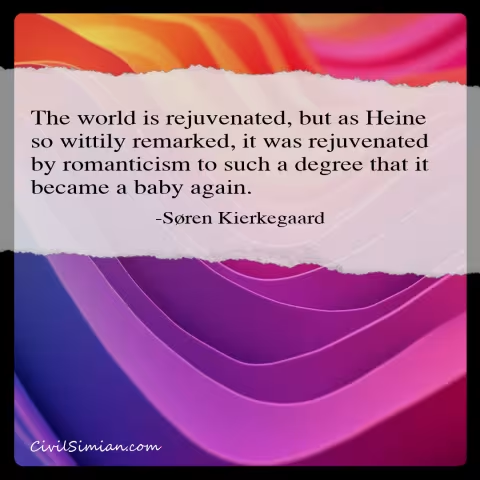
Kierkegaard's individualistic interpretation of 'the negation of philosophy' inevitably developed a fierce opposition to Western rationalism. .... According to Kierkegaard, the individual is not the knowing but only the 'ethically existing subjectivity.' The sole reality that matters to him is his own 'ethical existence'.
▼
Source
source
P. 263-264
2 months 2 weeks ago
It seems as if marriage were the royal road through life, and realised, on the instant, what we have all dreamed on summer Sundays when the bells ring, or at night when we cannot sleep for the desire of living. They think it will sober and change them. Like those who join a brotherhood, they fancy it needs but an act to be out of the coil and clamour for ever. But this is a wile of the devil's. To the end, spring winds will sow disquietude, passing faces leave a regret behind them, and the whole world keep calling and calling in their ears. For marriage is like life in this - that it is a field of battle, and not a bed of roses.
▼
Source
source
Virginibus Puerisque, Ch. 1.
3 months 2 weeks ago
When we cannot be delivered from ourselves, we delight in devouring ourselves.

4 months 2 weeks ago
Since property here exists in the form of stock, its movement and transfer become purely a result of gambling on the stock exchange, where the little fish are swallowed by the sharks and the lambs by the stock exchange wolves.
▼
Source
source
Vol. III, Ch. XXVII, The Role of Credit, p. 440.

2 weeks 5 days ago
I have always said, and always will say, that the studious perusal of the sacred volume will make better citizens, better fathers, and better husbands.
▼
Source
source
Attributed to Jefferson by Daniel Webster in a letter of 15 June 1852 addressed to Professor Pease, recalling a Sunday spent with Jefferson more than a quarter of a century before.
4 months 2 weeks ago
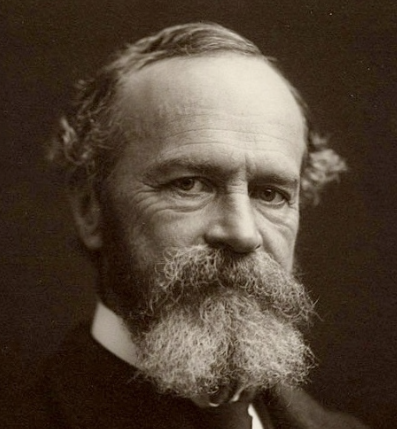
The last peculiarity of consciousness to which attention is to be drawn in this first rough description of its stream is that it is always interested more in one part of its object than in another, and welcomes and rejects, or chooses, all the while it thinks.
▼
Source
source
Ch. 9
4 months 2 weeks ago
It is the character of the British people, or at least of the higher and middle classes who pass muster for the British people, that to induce them to approve of any change, it is necessary that they should look upon it as a middle course: they think every proposal extreme and violent unless they hear of some other proposal going still farther, upon which their antipathy to extreme views may discharge itself. So it proved in the present instance; my proposal was condemned, but any scheme for Irish Land reform, short of mine, came to be thought moderate by comparison.
▼
Source
source
(pp. 294-295)
1 month 5 days ago
A man who chooses between drinking a glass of milk and a glass of a solution of potassium cyanide does not choose between two beverages; he chooses between life and death. A society that chooses between capitalism and socialism does not choose between two social systems; it chooses between social cooperation and the disintegration of society. Socialism is not an alternative to capitalism; it is an alternative to any system under which men can live as human beings.
▼
Source
source
1963 edition, p. 680

2 months 2 weeks ago
The bias of each medium of communication is far more distorting than the deliberate lie.
▼
Source
source
JQ. Journalism quarterly, Volume 50, Association for Education in Journalism, 1973, p. 145
4 months 2 weeks ago
Last words are for fools who haven't said enough.
▼
Source
source
Various attributions,

1 month 4 days ago
Do you ask me whom I have conquered? Neither the Persians, nor the far-off Medes, nor any warlike race that lies beyond the Dahae; not these, but greed, ambition, and the fear of death that has conquered the conquerors of the world.

4 months 3 weeks ago
Despotic government supports itself by abject civilization, in which debasement of the human mind, and wretchedness in the mass of the people, are the chief criterions. Such governments consider man merely as an animal; that the exercise of intellectual faculty is not his privilege; that he has nothing to do with the laws but to obey them; and they politically depend more upon breaking the spirit of the people by poverty, than they fear enraging it by desperation.
▼
Source
source
Means by Which the Fund Is to Be Created

1 month 1 week ago
Our true Deity is Mechanism. It has subdued external Nature for us, and we think it will do all other things. We are Giants in physical power: in a deeper than metaphorical sense, we are Titans, that strive, by heaping mountain on mountain, to conquer Heaven also.

4 months 2 weeks ago
The soul of wit may become the very body of untruth.
▼
Source
source
Foreward (p. vii)
3 months 1 week ago
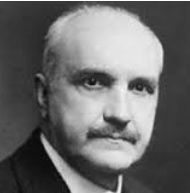
Experience has repeatedly confirmed that well-known maxim of Bacon's that "a little philosophy inclineth a man's mind to atheism, but depth in philosophy bringeth men's minds about to religion." At the same time, when Bacon penned that sage epigram... he forgot to add that the God to whom depth in philosophy brings back men's minds is far from being the same from whom a little philosophy estranges them.
▼
Source
source
Ch. I
2 weeks 4 days ago
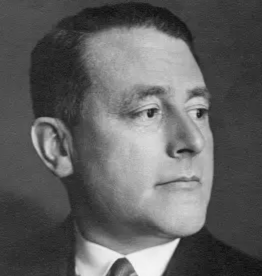
The metaphysical image that a definite epoch forges of the world has the same structure as what the world immediately understands to be appropriate as a form of its political organization.

3 months 2 days ago
It cannot be sufficiently emphasized that revolution is in vain unless inspired by its ultimate ideal. Revolutionary methods must be in tune with revolutionary aims. The means used to further the revolution must harmonize with its purposes. In short, the ethical values which the revolution is to establish in the new society must be initiated with the revolutionary activities of the so-called transitional period. The latter can serve as a real and dependable bridge to the better life only if built of the same material as the life to be achieved.
2 months 2 weeks ago
The civilized pagan recognizes life not in himself alone, but in societies of men-in the tribe, the clan, the family, the kingdom -and sacrifices his personal good for these societies. The motive power of his life is glory. His religion consists in the exaltation of the glory of those who are allied to him-the founders of his family, his ancestors, his rulers-and in worshiping gods who are exclusively protectors of his clan, his family, his nation, his government.
▼
Source
source
Chapter IV, Christianity Misunderstood by Men of Science

4 months 1 week ago
How far down the evolutionary scale shall we go? Shall we eat fish? What about shrimps? Oysters? To answer these questions we must bear in mind the central principle on which our concern for other beings is based. As I said ... the only legitimate boundary to our concern for the interests of other beings is the point at which it is no longer accurate to say that the other being has interests. To have interests, in a strict, nonmetaphorical sense, a being must be capable of suffering or experiencing pleasure. If a being suffers, there can be no moral justification for disregarding that suffering, or for refusing to count it equally with the like suffering of any other being. But the converse of this is also true. If a being is not capable of suffering, or of enjoyment, there is nothing to take into account.
▼
Source
source
Ch. 4: Becoming a Vegetarian

1 month 1 week ago
For the whole Past, as I keep repeating, is the possession of the Present; the Past had always something true, and is a precious possession. In a different time, in a different place, it is always some other side of our common Human Nature that has been developing itself. The actual True is the sum of all these; not any one of them by itself constitutes what of Human Nature is hitherto developed. Better to know them all than misknow them. "To which of these Three Religions do you specially adhere?" inquires Meister of his Teacher. "To all the Three!" answers the other: "To all the Three; for they by their union first constitute the True Religion."

4 months 2 weeks ago
Some men are born committed to action: they do not have a choice, they have been thrown on a path, at the end of that path, an act awaits them, their act.
▼
Source
source
Act 1

3 months 5 days ago
Attention consists of suspending our thought, leaving it detached, empty, and ready to be penetrated by the object; it means holding in our minds, within reach of this thought, but on a lower level and not in contact with it, the diverse knowledge we have acquired which we are forced to make use of.

3 months 3 weeks ago
Art is the perfection of nature.
▼
Source
source
Section 16

4 months 2 weeks ago
Keep cool: it will be all one a hundred years hence.
▼
Source
source
Montaigne; or, The Skeptic

3 months 6 days ago
The very same reason which one man may regard as a motive for taking care to prolong his life may be regarded by another man as a motive for shooting himself.
4 months 2 weeks ago
I conceive that the description so often given of a Benthamite, as a mere reasoning machine, though extremely inapplicable to most of those who have been designated by that title, was during two or three years of my life not altogether untrue of me. ...There is nothing very extraordinary in this fact: no youth of the age I then was, can be expected to be more than one thing, and this was the thing I happened to be. Ambition and desire of distinction, I had in abundance; and zeal for what I thought the good of mankind was my strongest sentiment, mixing with and colouring all others. But my zeal was as yet little else, at that period of my life, than zeal for speculative opinions. It had not its root in genuine benevolence, or sympathy with mankind; though these qualities held their due place in my ethical standard. Nor was it connected with any high enthusiasm for ideal nobleness.
▼
Source
source
(pp. 109-110)

4 months 3 weeks ago
Marriage is like a cage; one sees the birds outside desperate to get in, and those inside equally desperate to get out.
▼
Source
source
Book III, Ch. 5

4 months 2 weeks ago
Meaning created links so numerous, so rich and involved that only esoteric knowledge could possibly have the necessary key. Objects became so weighed down with attributes, connections and associations that they lost their own original face. Meaning was no longer read in an immediate perception, and accordingly objects ceased to speak directly: between the knowledge that animated the figures of objects and the forms they were transformed into, a divide began to appear, opening the way for a symbolism more often associated with the world of dreams.
▼
Source
source
Part One: 1. Stultifera Navis
2 months 2 weeks ago
We don't need fossils - the case for evolution is watertight without them; so it is paradoxical to use gaps in the fossil record as though they were evidence against evolution.
▼
Source
source
The Greatest Show on Earth: The Evidence for Evolution (2009) (p. 164)
CivilSimian.com created by AxiomaticPanic, CivilSimian, Kalokagathia