


3 months 1 week ago
The tangible source of exploitation disappears behind the façade of objective rationality.
▼
Source
source
p. 32

3 months 2 weeks ago
It may be confidently asserted that no man chooses evil because it is evil; he only mistakes it for happiness, the good he seeks. And the desire of rectifying these mistakes, is the noble ambition of an enlightened understanding, the impulse of feelings that Philosophy invigorates.
▼
Source
source
A Vindication of the Rights of Men
1 month 4 days ago
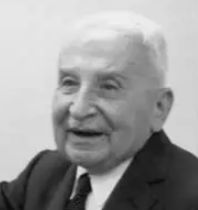
The state is God, deifies arms and prisons. The worship of the state is the worship of force. There is no more dangerous menace to civilization than a government of incompetent, corrupt, or vile men. The worst evils which mankind ever had to endure were inflicted by bad governments. The state can be and has often been in the course of history the main source of mischief and disaster.
▼
Source
source
Chapter III: Etatism

5 months 2 weeks ago
Anything could be found in figures if the search were long enough and hard enough and if the proper pieces of information were ignored or overlooked.

4 months 2 weeks ago
If the ability to tell right from wrong should turn out to have anything to do with the ability to think, then we must be able to "demand" its exercise from every sane person, no matter how erudite or ignorant, intelligent or stupid, he may happen to be. Kant-in this respect almost alone among the philosophers-was much bothered by the common opinion that philosophy is only for the few, precisely because of its moral implications.
▼
Source
source
p. 13
1 month 3 days ago
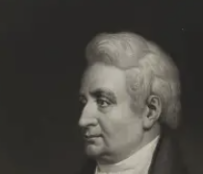
Did you ever hear my definition of marriage? It is, that it resembles a pair of shears, so joined that they can not be separated; often moving in opposite directions, yet always punishing anyone who comes between them.
▼
Source
source
Vol. I, ch. 11, p. 415; paraphrased variant: "Marriage resembles a pair of shears, so joined that they can not be separated; often moving in opposite directions, yet always punishing anyone who comes between them."

4 months 2 weeks ago
"Then those people are right who say that Heaven and Hell are only states of mind?" "Hush," he said sternly. "Do not blaspheme. Hell is a state of mind - ye never said a truer word. And every state of mind, left to itself, every shutting up of the creature within the dungeon of its own mind - is, in the end, Hell. But Heaven is not a state of mind. Heaven is reality itself. All that is fully real is Heavenly."
▼
Source
source
Ch. 9

4 months 2 weeks ago
Since the state must necessarily provide subsistence for the criminal poor while undergoing punishment, not to do the same for the poor who have not offended is to give a premium on crime.
▼
Source
source
Book V, Chapter XI, §13

3 months 3 weeks ago
The public, therefore, among a democratic people, has a singular power, which aristocratic nations cannot conceive; for it does not persuade others to its beliefs, but it imposes them and makes them permeate the thinking of everyone by a sort of enormous pressure of the mind of all upon the individual intelligence.
▼
Source
source
Book One, Chapter II.

3 months 2 weeks ago
What is that one crucifixion compared to the daily kind any insomniac endures?

2 weeks 5 days ago
I never will, by any word or act, bow to the shrine of intolerance, or admit a right of inquiry into the religious opinions of others.
▼
Source
source
Letter to Edward Dowse

3 months 2 days ago
An army and navy represents the people's toys.

1 month 1 week ago
Before a man can do things there must be things he will not do.
▼
Source
source
Eugene H. Peterson, A Long Obedience in the Same Direction (IVP, 1980), Ch 2

2 weeks 2 days ago
Marcus Aurelius wrote the following about Severus (a person who is not clearly identifiable according to the footnote): Through him I became acquainted with the conception of a community based on equality and freedom of speech for all, and of a monarchy concerned primarily to uphold the liberty of the subject.
▼
Source
source
I. 14, trans. Maxwell Staniforth
2 weeks 4 days ago
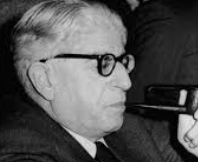
Evil does not approach us as pride any more, but on the contrary as slumber, lassitude, concealment of the "I." ... It may make us so quickly contented, that any definitive fire will die down. The venomous, breathtaking frigid mist seems able ... to harden hearts and fill them with envy, obduracy and resentment, with bloody scorn for the divine image and light, with all the causes of the only true original sin, which is not wanting to be like God.
▼
Source
source
p. 62

2 months 2 weeks ago
Now about your family. Do you know that since your daughter came out everyone has been enraptured by her? They say she is amazingly beautiful.
▼
Source
source
Bk. I, Ch. I

4 months 2 weeks ago
...this Jewish doctrine of the primacy of economic values has found the widest acceptance and been most whole-heartedly acted upon. From America it has begun to infect the rest of the world. We may be pardoned for wishing that the Jews had remained not forty, but four thousand years in their repulsive wilderness.
▼
Source
source
"One and Many," pp. 18

4 months ago
In anger we should refrain both from speech and action.
▼
Source
source
As quoted in Lives and Opinions of Eminent Philosophers, "Pythagoras", Sect. 23-24, as translated in Dictionary of Quotations (1906) by Thomas Benfield Harbottle, p. 370

5 months 3 weeks ago
Socialism itself can hope to exist only for brief periods here and there, and then only through the exercise of the extremest terrorism. For this reason it is secretly preparing itself for rule through fear and is driving the word 'justice' into the heads of the half-educated masses like a nail so as to rob them of their reason... and to create in them a good conscience for the evil game they are to play.

4 months 2 weeks ago
Capital is dead labor, that vampire-like, only lives by sucking living labor, and lives the more, the more labor it sucks.
▼
Source
source
Vol. I, Ch. 10, Section 1, p. 257.

1 month 3 weeks ago
There is no more consensus on what justice means than there is on the character of the good. If anything, there is less. Among the virtues, justice is one of the most shaped by convention. For that reason it is among the most changeable.
▼
Source
source
'Modus Vivendi' (p.34)
5 months 6 days ago
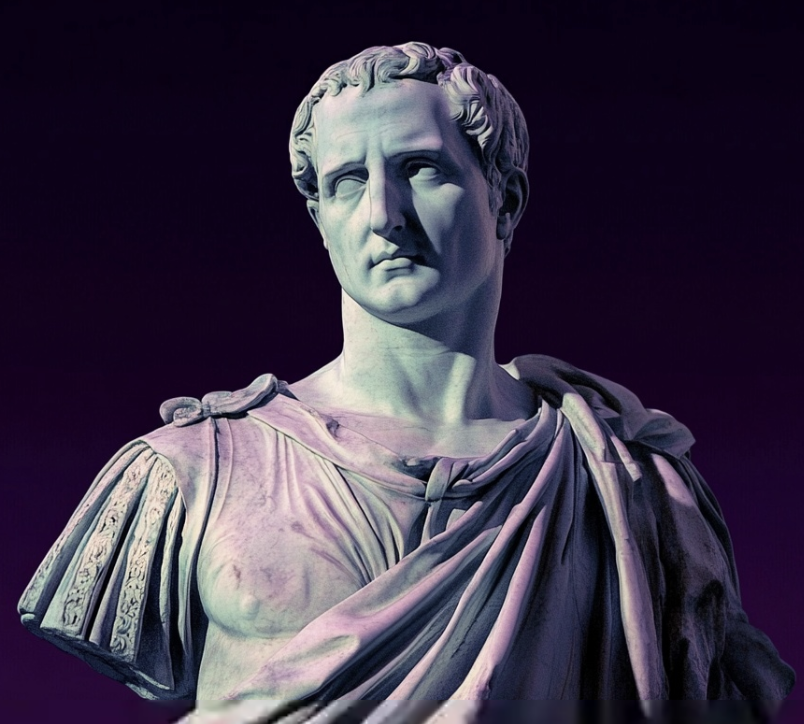
O immortal gods! Men do not realize how great a revenue parsimony can be!
▼
Source
source
Paradoxa Stoicorum; Paradox VI, 49

3 months 5 days ago
One of the most exquisite pleasures of human love - to serve the loved one without his knowing it - is only possible, as regards the love of God, through atheism.
▼
Source
source
Last Notebook (1942) p. 84

4 months 2 weeks ago
What is new in our time is the increased power of the authorities to enforce their prejudices.
▼
Source
source
Quoted on Who Said That?, BBC TV, 8/8/1958
2 weeks 2 days ago
Remember that man lives only in the present, in this fleeting instant; all the rest of his life is either past and gone, or not yet revealed. Short, therefore, is man's life, and narrow is the corner of the earth wherein he dwells.
▼
Source
source
III, 10
2 weeks 2 days ago
As long as one does not call his own position into question but regards it as absolute, while interpreting his opponents' ideas as a mere function of the social positions they occupy, the decisive step forward has not yet been taken.

3 months 2 weeks ago
When any work seems to have required immense force and labor to affect it, the idea is grand. Stonehenge, neither for disposition nor ornament, has anything admirable; but those huge rude masses of stone, set on end, and piled each on other, turn the mind on the immense force necessary for such a work. Nay, the rudeness of the work increases this cause of grandeur, as it excludes the idea of art and contrivance; for dexterity produces another sort of effect, which is different enough from this.
▼
Source
source
Part II Section XII

4 months 1 week ago
A reflective, contented mind is the best possession.
▼
Source
source
Ushtavaiti Gatha; Yasna 43, 15.
4 months 2 weeks ago
This is precisely what is decisive in Nietzsche's conception of art, that he sees it in its essential entirety in terms of the artist; this he does consciously and in explicit opposition to that conception of art which represents it in terms of those who "enjoy" and "experience" it.That is a guiding principle of Nietzsche's teaching on art: art must be grasped in terms of creators and producers, not recipients. Nietzsche expresses it unequivocally in the following words (WM, 811): "Our aesthetics heretofore has been a woman's aesthetics, inasmuch as only the recipients of art have formulated their experiences of 'what is beautiful.' In all philosophy to date the artist is missing." Philosophy of art means "aesthetics" for Nietzsche too-but masculine aesthetics, not feminine aesthetics. The question of art is the question of the artist as the productive, creative one; his experiences of what is beautiful must provide the standard.
▼
Source
source
p. 70

1 month 1 week ago
I care little about the sword: I will allow a thing to struggle for itself in this world, with any sword or tongue or implement it has, or can lay hold of. We will let it preach, and pamphleteer, and fight, and to the uttermost bestir itself, and do, beak and claws, whatsoever is in it; very sure that it will, in the long-run, conquer nothing which does not deserve to be conquered. What is better than itself, it cannot put away, but only what is worse. In this great Duel, Nature herself is umpire, and can do no wrong: the thing which is deepest-rooted in Nature, what we call truest, that thing and not the other will be found growing at last.
1 month 1 week ago
Nature admits no lie.
▼
Source
source
Latter Day Pamphlet, No. 5.
4 months 2 weeks ago
Men are by nature merely indifferent to one another; but women are by nature enemies.
▼
Source
source
Vol. 2 "On Women" as translated in Essays and Aphorisms (1970), as translated by R. J. Hollingdale
3 months 2 weeks ago
To be is to be cornered.
5 months 2 weeks ago
There is more to a science fiction story than the science it contains.

4 months 4 weeks ago
Sacred and inspired divinity, the sabaoth and port of all men's labours and peregrinations.
▼
Source
source
Book II

4 months 2 weeks ago
It is so characteristic, that just when the mechanics of reproduction are so vastly improved, there are fewer and fewer people who know how the music should be played.
▼
Source
source
p. 96
1 month 4 days ago
Now, on the contrary, when every one is to cultivate himself into man, condemning a man to machine-like labor amounts to the same thing as slavery. If a factory-worker must tire himself to death twelve hours and more, he is cut off from becoming man. Every labor is to have the intent that the man be satisfied. His labor is nothing taken by itself, has no object in itself, is nothing complete in itself; he labors only into another's hands, and is used (exploited) by this other.
▼
Source
source
Cambridge 1995, p. 108

4 months 1 week ago
Good breeding in cattle depends on physical health, but in men on a well-formed character.
▼
Source
source
Freeman (1948), p. 151
4 months 4 weeks ago
If thou shalt aspire after the glorious acts of men, thy working shall be accompanied with compunction and strife, and thy remembrance followed with distaste and upbraidings; and justly doth it come to pass towards thee, O man, that since thou, which art God's work, doest him no reason in yielding him well-pleasing service, even thine own works also should reward thee with the like fruit of bitterness.
▼
Source
source
Of The Works Of God and Man

4 months 2 weeks ago
It is often asserted that discussion is only possible between people who have a common language and accept common basic assumptions. I think that this is a mistake. All that is needed is a readiness to learn from one's partner in the discussion, which includes a genuine wish to understand what he intends to say. If this readiness is there, the discussion will be the more fruitful the more the partner's backgrounds differ.
▼
Source
source
p. 352
3 months 1 week ago
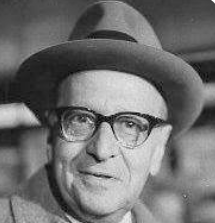
Thought must be judged by something that is not thought, by its effect on production or its impact on social conduct, as art today is being ultimately gauged in every detail by something that is not art, be it box-office or propaganda value.
▼
Source
source
describing the pragmatist view, p. 51.
1 month ago
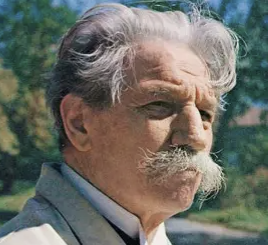
Not less strong than the will to truth must be the will to sincerity. Only an age, which can show the courage of sincerity, can possess truth, which works as a spiritual force within it.
3 months 2 weeks ago
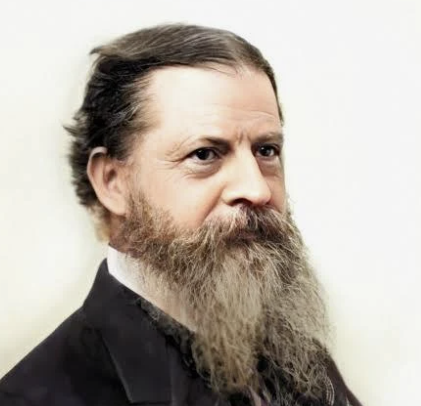
The next simplest feature that is common to all that comes before the mind, and consequently, the second category, is the element of Struggle.
▼
Source
source
Lecture II : The Universal Categories, § 2 : Struggle, CP 5.45

2 months 2 weeks ago
Moral philosophers say things like, 'What is actually wrong with cannibalism?' There are two ways of responding to that: one is to shrink back in horror and say, 'Cannibalism! Cannibalism! We can't talk about cannibalism!' The other is to say, 'Well, actually, what is wrong with cannibalism?' Then you work it out and you tease it out and you decide yes, actually, cannibalism is wrong, but for the following reasons. So I'd like to think that my moral values at least partly come from reasoning. Trying to suppress the gut reaction as much as possible.
▼
Source
source
Interview with Sophie Elmhirst (2015),
3 months 1 week ago
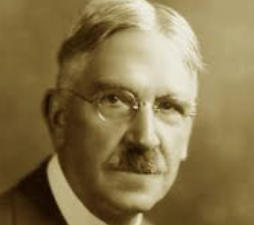
It is a familiar and significant saying that a problem well-put is half-solved.
▼
Source
source
"The Pattern of Inquiry"
3 months 2 weeks ago
In relation to any act of life, the mind acts as a killjoy.
1 month 1 week ago
It is now almost my sole rule of life to clear myself of cants and formulas, as of poisonous Nessus shirts.
▼
Source
source
Letter to His Wife (1835).

5 months 6 days ago
I prefer a short life with width to a narrow one with length.

3 months 5 days ago
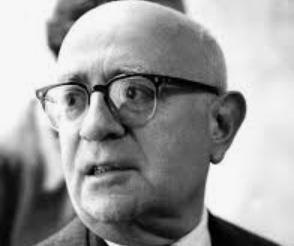
Hegel ... destroyed the illusion of the subject's being-in-itself and showed that the subject is itself an aspect of social objectivity. ... However, ... we must ask this question: is this objectivity which we have shown to be a necessary condition and which subsumes abstract subjectivity in fact the higher factor? Does it not rather remain precisely what Hegel reproached it with being in his youth, namely pure externality, the coercive collective? Does not the retreat to this supposedly higher authority signify the regression of the subject, which had earlier won its freedom only with the greatest efforts, with infinite pains?
▼
Source
source
p. 16
CivilSimian.com created by AxiomaticPanic, CivilSimian, Kalokagathia