


4 months 2 weeks ago
If life becomes hard to bear we think of improvements. But the most important and effective improvement, in our own attitude, hardly occurs to us, and we can decide on this only with the utmost difficulty.
▼
Source
source
p. 60e
1 month 3 weeks ago
A created thing is never invented and it is never true: it is always and ever itself.
▼
Source
source
Creation
3 months 1 week ago
The assurance that we have no means of answering final questions is no valid excuse for callousness towards them. The more deeply should we feel, down to the roots of our being, their pressure and their sting. Whose hunger has ever been sated with the knowledge that he could not eat?
▼
Source
source
p. 15

4 months 2 weeks ago
It is not altogether true that persuasion is one thing and force is another. Many forms of persuasion - even many of which everybody approves - are really a kind of force. Consider what we do to our children. We do not say to them: "Some people think the earth is round, and others think it is flat; when you grow up, you can, if you like, examine the evidence and form your own conclusion." Instead of this we say: "The earth is round." By the time our children are old enough to examine the evidence, our propaganda has closed their minds.
▼
Source
source
Ch. 17: The Ethics of Power



3 months 2 weeks ago
What to think of other people? I ask myself this question each time I make a new acquaintance. So strange does it seem to me that we exist, and that we consent to exist.
2 weeks 4 days ago
To imply by the word "terrorism" that this sort of terror is the work exclusively of "terrorists" is misleading. The "legitimate" warfare of technologically advanced nations likewise is premeditated, politically motivated violence perpetrated against innocents. The distinction between the intention to perpetrate violence against innocents, as in "terrorism," and the willingness to do so, as in "war," is not a source of comfort.

3 months 1 week ago
Verily, verily, I say unto you, Except ye eat the flesh of the Son of man, and drink his blood, ye have no life in you. Whoso eateth my flesh, and drinketh my blood, hath eternal life; and I will raise him up at the last day. For my flesh is meat indeed, and my blood is drink indeed. He that eateth my flesh, and drinketh my blood, dwelleth in me, and I in him.
▼
Source
source
6:53-56
1 month 4 days ago
If one takes pleasure in calling the gold standard a "barbarous relic," one cannot object to the application of the same term to every historically determined institution. Then the fact that the British speak English - and not Danish, German, or French - is a barbarous relic too, and every Briton who opposes the substitution of Esperanto for English is no less dogmatic and orthodox than those who do not wax rapturous about the plans for a managed currency.
▼
Source
source
The Gold Standard - LvMI, excerpt from chapter 17 of Human Action

4 months 2 weeks ago
Jehovah, Allah, the Trinity, Jesus, Buddha, are names for a great variety of human virtues, human mystical experiences, human remorses, human compensatory fantasies, human terrors, human cruelties. If all men were alike, all the world would worship the same God.
▼
Source
source
"One and Many," p. 3
2 months 2 weeks ago
Every man is his own doctor of divinity, in the last resort.
▼
Source
source
An Inland Voyage (1878).
4 months 3 weeks ago
The force of the word World, as commonly used, of itself falls in with us. For no one will attribute accidents to the World as parts, but as determinations, states; hence the so-called world of the ego, unrestrained by the single substance and its accidents, is not very appositely called a World, unless, perhaps, an imaginary one.

4 months 2 weeks ago
I trust a good deal to common fame, as we all must. If a man has good corn, or wood, or boards, or pigs, to sell, or can make better chairs or knives, crucibles or church organs, than anybody else, you will find a broad hard-beaten road to his house, though it be in the woods.
▼
Source
source
February 1855
4 months 3 weeks ago
Want keeps pace with dignity. Destitute of the lawful means of supporting his rank, his dignity presents a motive for malversation, and his power furnishes the means.
▼
Source
source
The Rationale of Reward, 1811
2 months 2 weeks ago
Man is a creature who lives not upon bread alone, but principally by catchwords; and the little rift between the sexes is astonishingly widened by simply teaching one set of catchwords to the girls and another to the boys.
▼
Source
source
Virginibus Puerisque, Ch. 2.

4 months 2 weeks ago
Under no pretext should arms and ammunition be surrendered; any attempt to disarm the workers must be frustrated, by force if necessary.
▼
Source
source
Address of the Central Committee to the Communist League in London, March 1850
3 months 2 weeks ago
The power of the people and the power of reason are one.
▼
Source
source
Act III.

4 months 2 weeks ago
Creatures extremely low in the intellectual scale may have conception. All that is required is that they should recognize the same experience again. A polyp would be a conceptual thinker if a feeling of 'Hello! thingumbob again!' ever flitted through its mind.
▼
Source
source
Ch. 12

2 weeks 2 days ago
If we do not return to the old maxims, if education is not restored into the hands of priests, and if science is not every where placed in the second rank, the evils which await us are incalculable: we shall become brutalized by science, and this is the lowest degree of brutality.
▼
Source
source
XXXIX, p. 112

5 months 2 weeks ago
I was once being interviewed by Barbara Walters [...] In between two of the segments she asked me [...] "But what would you do if the doctor gave you only six months to live?" I said, "Type faster." This was widely quoted, but the "six months" was changed to "six minutes," which bothered me. It's "six months."
4 months 2 weeks ago
Never read any book that is not a year old.
▼
Source
source
Books

4 months ago
Choose always the way that seems the best, however rough it may be; custom will soon render it easy and agreeable.
▼
Source
source
As quoted in A Dictionary of Thoughts: Being a Cyclopedia of Laconic Quotations from the Best Authors of the World, both Ancient and Modern (1908) by Tyron Edwards, p. 101

2 weeks 1 day ago
Among animals, some learn to speak and sing; they remember tunes, and strike the notes as exactly as a musician. Others, for instance the ape, show more intelligence... would it be absolutely impossible to teach the ape a language? I do not think so.
3 months 2 weeks ago
Second, in the presence of this continuity of feeling, nominalistic maxims appear futile. There is no doubt about one idea affecting another, when we can directly perceive the one generally modified and shaping itself into the other. Nor can there any longer be any difficulty about one idea resembling another, when we can pass along the continuous field of quality from one to the other and back again to the point which we had marked.
3 months 1 week ago
Works of art express space as opportunity for movement and action.
▼
Source
source
p. 217
4 months 6 days ago
After the battle in Pharsalia, when Pompey was fled, one Nonius said they had seven eagles left still, and advised to try what they would do. "Your advice," said Cicero, "were good if we were to fight jackdaws."
▼
Source
source
Cicero
3 months 2 weeks ago
Irons and the unbreathable air of this world strip us of everything, except the freedom to kill ourselves; and this freedom grants us a strength and pride to triumph over the loads which overwhelm us.
3 months 1 week ago
Without a strategic retreat into the self, without vigilant thought, human life is impossible. Call to mind all that mankind owes to certain great withdrawals into the self! It is no chance that all the great founders of religions preceded their apostolates by famous retreats. Buddha withdraws to the forest; Mahomet withdraws to his tent, and even there he withdraws from his tent by wrapping his head in his cloak; above all, Jesus goes apart into the desert for forty days.
▼
Source
source
p. 35
4 months 2 weeks ago
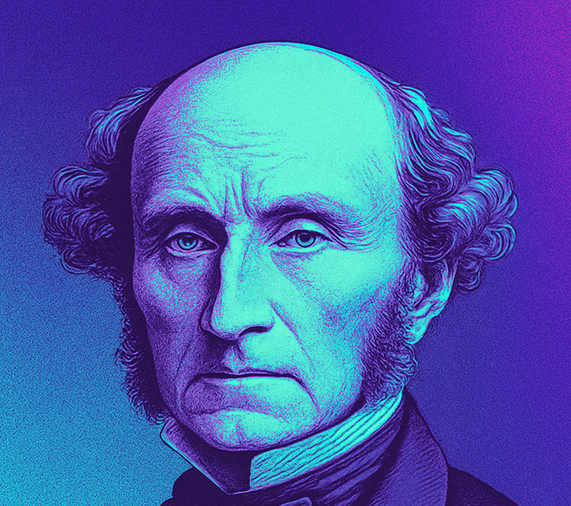
To think that because those who wield power in society wield in the end that of government, therefore it is of no use to attempt to influence the constitution of the government by acting on opinion, is to forget that opinion is itself one of the greatest active social forces. One person with a belief is a social power equal to ninety-nine who have only interests.
▼
Source
source
Ch. I: To What Extent Forms of Government Are a Matter of Choice (p. 155)
2 months 2 weeks ago
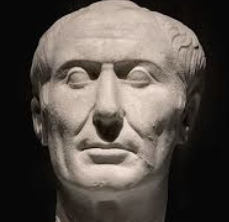
The fear of death is more to be dreaded than death itself.
▼
Source
source
Maxim 511

4 months 2 weeks ago
His business is here, it is here that he is despised and vilified, it is here that he must carry out his undertaking.
▼
Source
source
p. 67
4 months 1 week ago
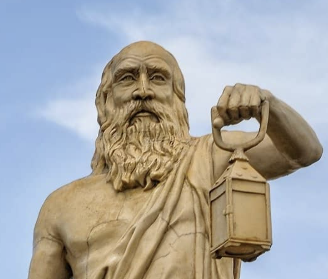
When the slave auctioneer asked in what he was proficient, he replied, "In ruling people."
▼
Source
source
Diogenes Laërtius, vi. 74
3 months 2 weeks ago
Never to have occasion to take a position, to make up one's mind, or to define oneself - there is no wish I make more often.
2 weeks 1 day ago
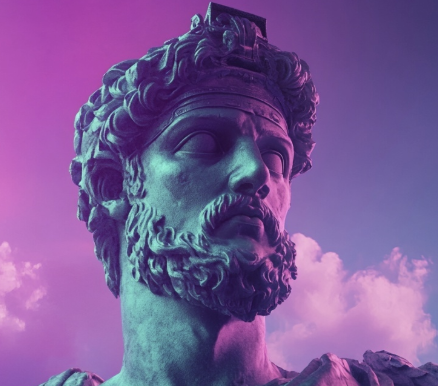
One man prays thus: How shall I be able to lie with that woman? Do thou pray thus: How shall I not desire to lie with her? Another prays: How shall I be released from this? Another prays: How shall I not desire to be released? Another thus: How shall I not lose my little son? Thou thus: How shall I not be afraid to lose him? In fine, turn thy prayers this way, and see what comes.
▼
Source
source
IX, 40
1 week 1 day ago
But to return to the Jewish question. Other groups and nations cultivate their individual traditions. There is no reason why we should sacrifice ours. Standardization robs life of its spice. To deprive every ethnic group of its special traditions is to convert the world into a huge Ford plant. I believe in standardizing automobiles. I do not believe in standardizing human beings. Standardization is a great peril which threatens American culture.
5 months 3 days ago
Look now, this is the starting point of philosophy: the recognition that different people have conflicting opinions, the rejection of mere opinion so that it comes to be viewed with mistrust, an investigation of opinion to determine whether it is rightly held, and the discovery of a standard of judgement, comparable to the balance that we have devised for the determining of weights, or the carpenter's rule for determining whether things are straight or crooked.
▼
Source
source
Book II, ch. 11, 13.
4 months 2 weeks ago
France has done more for even English history than England has.
▼
Source
source
John Stuart Mill. Michelet.On the writing of English history. Complete Works Vol 20. Page 221.

1 month 3 weeks ago
There is no more consensus on what justice means than there is on the character of the good. If anything, there is less. Among the virtues, justice is one of the most shaped by convention. For that reason it is among the most changeable.
▼
Source
source
'Modus Vivendi' (p.34)

4 months 3 weeks ago
By Natura naturans we must understand what is in itself and is conceived through itself, or such attributes of substance as express an eternal and infinite essence, that is ... God, insofar as he is considered as a free cause. But by Natura naturata I understand whatever follows from the necessity of God's nature, or from God's attributes, that is, all the modes of God's attributes insofar as they are considered as things which are in God, and can neither be nor be conceived without God.
▼
Source
source
Part I, Prop. XXIX, Scholium, trans: Edwin Curley, London: Penguin, 1996

4 months 2 weeks ago
It is easy to see that the existing generation are conspiring with a beneficence, which, in its working for coming generations, sacrifices the passing one, which infatuates the most selfish men to act against their private interest for the public welfare. We build railroads, we know not for what or for whom; but one thing is certain, that we who build will receive the very smallest share of benefit. Benefit will accrue; they are essential to the country, but that will be felt not until we are no longer countrymen. We do the like in all matters: - 'Man's heart the Almighty to the Future setBy secret and inviolable springs.'
4 months 2 weeks ago
Our aim is precisely to establish the human kingdom as a pattern of values in distinction from the material world. But the subjectivity which we thus postulate as the standard of truth is no narrowly individual subjectivism, for as we have demonstrated, it is not only one's own self that one discovers in the cogito, but those of others too. Contrary to the philosophy of Descartes, contrary to that of Kant, when we say "I think" we are attaining to ourselves in the presence of the other, and we are just as certain of the other as we are of ourselves. Thus the man who discovers himself directly in the cogito also discovers all the others, and discovers them as the condition of his own existence. He realizes that he can't be anything unless others recognize him as such. I cannot obtain any truth whatsoever about myself, except through the mediation of another. The other is indispensable to my existence, and equally so to any knowledge I can have of myself.
▼
Source
source
p. 45

1 month 1 week ago
Clever men are good, but they are not the best.
▼
Source
source
Goethe.
3 months 1 week ago
Whenever a nation is converted to Christianity, its Christianity, in practice, must be largely converted to paganism.
▼
Source
source
p. 35
4 weeks 1 day ago
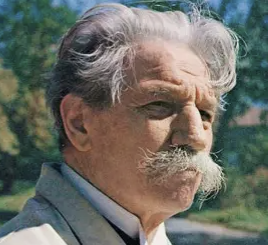
One thing that specially saddened me was that the unfortunate animals had to suffer so much pain and misery. The sight of an old limping horse, tugged forward by one man while another kept beating it with a stick to get it to the knacker's yard at Colmar, haunted me for weeks. It was quite incomprehensible to me - this was before I began going to school - why in my evening prayers I should pray for human beings only. So when my mother had prayed with me and had kissed me good-night, I used to add silently a prayer that I had composed myself for all living creatures. It ran thus: "O, heavenly Father, protect and bless all things that have breath; guard them from all evil, and let them sleep in peace."
2 weeks 1 day ago
What is not good for the swarm is not good for the bee.
▼
Source
source
VI, 54
3 weeks 6 days ago
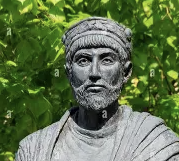
The one absolutely, the Intelligible, the ever Preexisting, comprehending all the universe together within the One - nay, more, is not the whole world One living thing - all and everywhere full of life and soul, perfect and made up out of parts likewise perfect? Now of this double unity the most perfect part (I mean of the Unity in the Intelligible World that comprehends all things in One, and of the Unity encompassing the Sensible World, that brings together all things into a single and perfect nature) is the perfection of the sovereign Sun, which is central and single, and placed in the middle of the intermediate Powers.

4 months ago
Place is the greatest thing, as it contains all things.
▼
Source
source
As quoted in Diogenes Laërtius, The Lives and Opinions of Eminent Philosophers, I, 35
CivilSimian.com created by AxiomaticPanic, CivilSimian, Kalokagathia