

6 months 3 weeks ago
Since the narrower or wider community of the peoples of the earth has developed so far that a violation of rights in one place is felt throughout the world, the idea of a cosmopolitan right is not fantastical, high-flown or exaggerated notion. It is a complement to the unwritten code of the civil and international law, necessary for the public rights of mankind in general and thus for the realization of perpetual peace.
▼
Source
source
Perpetual Peace: A Philosophical Sketch, 1795
6 months 1 week ago
Bear no improper envy, so that thy life may not become tasteless.

5 months 1 week ago
The world is a perpetual caricature of itself; at every moment it is the mockery and the contradiction of what it is pretending to be.
▼
Source
source
"Dickens"
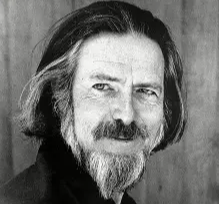
2 months 4 weeks ago
This is the real secret of life-to be completely engaged with what you are doing in the here and now. And instead of calling it work, realize it is play.
▼
Source
source
The Essence of Alan Watts

3 months 1 week ago
Who is there that can recognize real intellect, and do reverence to it; and discriminate it well from sham intellect, which is so much more abundant, and deserves the reverse of reverence? He that himself has it!-One really human Intellect, invested with command, and charged to reform Downing Street for us, would continually attract real intellect to those regions, and with a divine magnetism search it out from the modest corners where it lies hid. And every new accession of intellect to Downing Street would bring to it benefit only, and would increase such divine attraction in it, the parent of all benefit there and elsewhere!
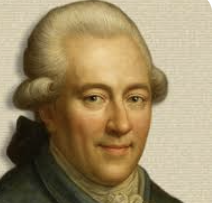
4 months 4 weeks ago
A book is a mirror: if an ape looks into it an apostle is hardly likely to look out. We have no words for speaking of wisdom to the stupid. He who understands the wise is wise already.
▼
Source
source
E 49
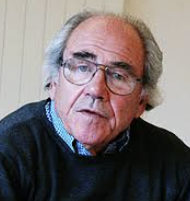
4 months 3 weeks ago
The Jesuits founded their politics on the virtual disappearance of God and on the worldly and spectacular manipulation of consciences-the evanescence of God in the epiphany of power-the end of transcendence, which now only serves as an alibi for a strategy altogether free of influences and signs. Behind the baroqueness of images hides the éminence grise of politics.
▼
Source
source
"The Precession of Simulacra," p. 5

5 months 5 days ago
And he arrives at the cogito ergo sum, which St. Augustine had already anticipated... "I think therefore I am," can only mean "I think, therefore I am a thinker"; this being of "I am," which is deduced from "I think," is merely a knowing; this being is a knowledge, but not life. And the primary reality is not that I think, but that I live, for those also live who do not think. Although this living may not be a real living. God! what contradictions when we seek to join in wedlock life and reason!

6 months 2 weeks ago
The tendency has always been strong to believe that whatever received a name must be an entity or thing, having an independent existence of its own; and if no real entity answering to the name could be found, men did not for that reason suppose that none existed, but imagined that it was something peculiarly abstruse and mysterious, too high to be an object of sense. The meaning of all general, and especially of all abstract terms, became in this way enveloped in a mystical base...
▼
Source
source
Note to Analysis of the Phenomena of the Human Mind (1829) by James Mill, edited with additional notes by John Stuart Mill, 1869
5 months 2 weeks ago
In England ... everything becomes professional ... even the rogues of that island are pedants.
▼
Source
source
"Selected Aphorisms from the Lyceum (1797)"
6 months 2 weeks ago
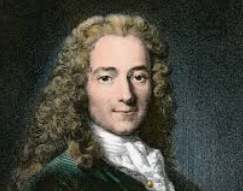
The man, who in a fit of melancholy, kills himself today, would have wished to live had he waited a week.
▼
Source
source
"Cato", 1764
3 months 4 weeks ago
We should always speak what would please the man of whom we expect a favour, like the hunter who sings sweetly when he desires to shoot a deer.
5 months 2 weeks ago
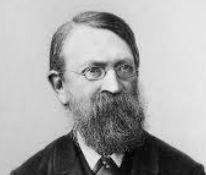
Nature consists of the elements given by the senses. Primitive man first takes out of them certain complexes of these elements that present themselves with a certain stability and are most important to him. The first and oldest words are names for "things". ... The sensations are no "symbols of things". On the contrary the "thing" is a mental symbol for a sensation-complex of relative stability. Not the things, the bodies, but colours, sounds, pressures, times (what we usually call sensations) are the true elements of the world.
▼
Source
source
p. 23, as quoted in Lenin as Philosopher: A Critical Examination of the Philosophical Basis of Leninism (1948) by Anton Pannekoek, p. 454

6 months 2 weeks ago
Everything in the universe goes by indirection. There are no straight lines.
▼
Source
source
Works and Days

5 months 3 days ago
The essence of education is that it be religious. Pray, what is religious education? A religious education is an education which inculcates duty and reverence. Duty arises from our potential control over the course of events. Where attainable knowledge could have changed the issue, ignorance has the guilt of vice. And the foundation of reverence is this perception, that the present holds within itself the complete sum of existence, backwards and forwards, that whole amplitude of time, which is eternity.
7 months 1 week ago
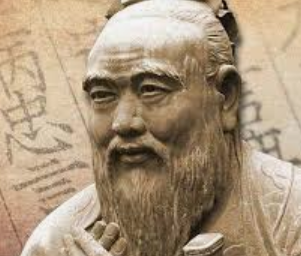
Among the appliances to transform the people, sound and appearances are but trivial influences.
6 months 3 weeks ago
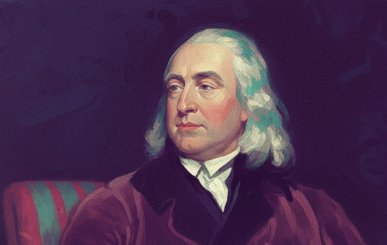
Judges of elegance and taste consider themselves as benefactors to the human race, whilst they are really only the interrupters of their pleasure ... There is no taste which deserves the epithet good, unless it be the taste for such employments which, to the pleasure actually produced by them, conjoin some contingent or future utility: there is no taste which deserves to be characterized as bad, unless it be a taste for some occupation which has mischievous tendency.
▼
Source
source
Théorie des peines et des récompenses (1811); translation by Richard Smith, The Rationale of Reward, J. & H. L. Hunt, London, 1825, Bk. 3, Ch. 1

4 months 2 weeks ago
Prose is private drama; poetry is corporate drama.
▼
Source
source
(p. 275)
6 months 2 weeks ago
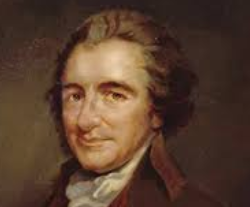
Where knowledge is a duty, ignorance is a crime.
▼
Source
source
Public Good, Philadelphia: John Dunlap, 1780

6 months 2 weeks ago
I believe that the abolition of private ownership of land and capital is a necessary step toward any world in which the nations are to live at peace with one another.
▼
Source
source
Ch. VI: International relations, p. 99
2 months 3 weeks ago
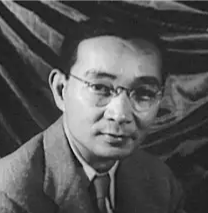
The secret of contentment is knowing how to enjoy what you have, and to be able to lose all desire for things beyond your reach.
▼
Source
source
As quoted in Remarks of Famous People (1965) by Jacob Morton Braude, p. 23
5 months 1 week ago
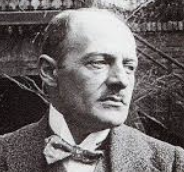
At one time in his life the apostate radically changes his political, religious or philosophical convictions by taking up all possible means of argumentation against that which he formerly held to be true, and lives now for the sake of its negation. His new ideas and opinions consist in continuous acts of revenge on his spiritual past.
▼
Source
source
Manfred Frings, Max Scheler (1996), p. 60
5 months 2 weeks ago
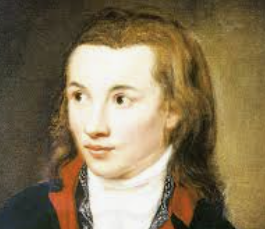
The art of writing books is not yet invented. But it is at the point of being invented. Fragments of this nature are literary seeds. There may be many an infertile grain among them: nevertheless, if only some come up!
▼
Source
source
Fragment No. 114
5 months ago
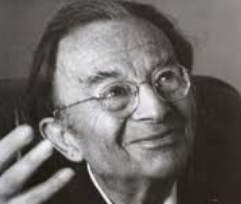
Psychoanalysis, which interprets the human being as a socialized being, and the psychic apparatus as essentially developed and determined through the relationship of the individual to society, must consider it a duty to participate in the investigation of sociological problems to the extent the human being or his/her psyche plays any part at all.
▼
Source
source
"Psychoanalyse und Soziologie" (1929); published as "Psychoanalysis and Sociology" as translated by Mark Ritter, in Critical Theory and Society : A Reader (1989) edited by S. E. Bronner and D. M. Kellner
7 months 3 weeks ago
...and woe betide fateful curiosity should it ever succeed in peering through a crack in the chamber of consciousness, out and down into the depths, and thus gain an intimation of the fact that humanity, in the indifference of its ignorance, rests on the pitiless, the greedy, the insatiable, the murderous clinging in dreams, as it were, to the back of a tiger.
2 months 2 weeks ago
The name philosopher, which meant originally 'lover of wisdom,' has come in some strange way to mean a man who thinks it is his business to explain everything in a certain number of large books. It will be found, I think, that in proportion to his colossal ignorance is the perfection and symmetry of the system which he sets up; because it is so much easier to put an empty room tidy than a full one.
▼
Source
source
As quoted by A. D'Abro, The Evolution of Scientific Thought from Newton to Einstein

6 months 2 weeks ago
For what is modesty but hypocritical humility, by means of which, in a world swelling with vile envy, a man seeks to beg pardon for his excellences and merits from those who have none? For whoever attributes no merit to himself because he really has none is not modest, but merely honest.
▼
Source
source
Vol. I, Ch. III, The World As Representation: Second Aspect
3 months 1 week ago
We must now ask how changes of this sort can come about, considering first discoveries, or novelties of fact, and then inventions, or novelties of theory. That distinction between discovery and invention or between fact and theory will, however, immediately prove to be exceedingly artificial.
▼
Source
source
p. 52
6 months 2 weeks ago
We are speaking on this occasion, not as members of this or that nation, continent, or creed, but as human beings, members of the species Man, whose continued existence is in doubt.

2 months 2 weeks ago
The socialist system of society should only be, and can only be, an historical product, born out of the school of its own experiences, born in the course of its realization, as a result of the developments of living history, which - just like organic nature of which, in the last analysis, it forms a part - has the fine habit of always producing along with any real social need the means to its satisfaction, along with the task simultaneously the solution. However, if such is the case, then it is clear that socialism by its very nature cannot be decreed or introduced by ukase. It has as its prerequisite a number of measures of force - against property, etc. The negative, the tearing down, can be decreed; the building up, the positive, cannot. New Territory. A thousand problems. Only experience is capable of correcting and opening new ways.
▼
Source
source
Chapter Six, "The Problem of Dictatorship"
6 months 3 weeks ago
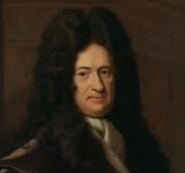
My philosophical views approach somewhat closely those of the late Countess of Conway, and hold a middle position between Plato and Democritus, because I hold that all things take place mechanically as Democritus and Descartes contend against the views of Henry More and his followers, and hold too, nevertheless, that everything takes place according to a living principle and according to final causes - all things are full of life and consciousness, contrary to the views of the Atomists.
▼
Source
source
Letter to Thomas Burnet (1697), as quoted in Platonism, Aristotelianism and Cabalism in the Philosophy of Leibniz (1938) by Joseph Politella, p. 18

6 months 6 days ago
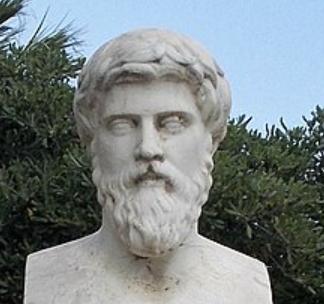
Being summoned by the Athenians out of Sicily to plead for his life, Alcibiades absconded, saying that that criminal was a fool who studied a defence when he might fly for it.
▼
Source
source
51 Alcibiades
5 months 1 week ago
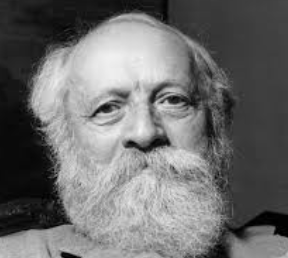
The real struggle is not between East and West, or capitalism and communism, but between education and propaganda.
▼
Source
source
As quoted in Encounter with Martin Buber (1972) by Aubrey Hodes, p. 135
6 months 1 week ago
By Thy perfect Intelligence, O MazdaThou didst first create us having bodies and spiritual consciences,And by Thy Thought gave our selves the power of thought, word, and deed.Thus leaving us free to choose our faith at our own will.
▼
Source
source
Ahunuvaiti Gatha; Yasna 31, 11.

5 months 1 day ago
Catastrophic fatality abruptly switches over into salvation.
2 months 2 weeks ago
Politics, like religion, hold up the torches of martyrdom to the reformers of error.
▼
Source
source
Letter to James Ogilvie

2 months 2 weeks ago
There are three relations [between thee and other things]: the one to the body which surrounds thee; the second to the divine cause from which all things come to all; and the third to those who live with thee.
▼
Source
source
VIII, 27
3 months 1 week ago
My father's education was altogether of the worst and most limited. I believe he was never more than three months at any school. What he learned there showed what he might have learned. A solid knowledge of arithmetic, a fine antique handwriting - these, with other limited practical etceteras, were all the things he ever heard mentioned as excellent. He had no room to strive for more.

6 months 2 weeks ago
If children were brought into the world by an act of pure reason alone, would the human race continue to exist? Would not a man rather have so much sympathy with the coming generation as to spare it the burden of existence?
▼
Source
source
"On the Sufferings of the World"

6 months 2 weeks ago
Reading the Socratic dialogues one has the feeling: what a frightful waste of time! What's the point of these arguments that prove nothing and clarify nothing?
▼
Source
source
p. 14e

6 months 2 weeks ago
I can be twenty women, one hundred, if that's what you want, all women. Ride with me behind you, I weigh nothing, your horse will not feel me. I want to be your whorehouse!
▼
Source
source
Act 3, sc. 4
5 months 1 week ago
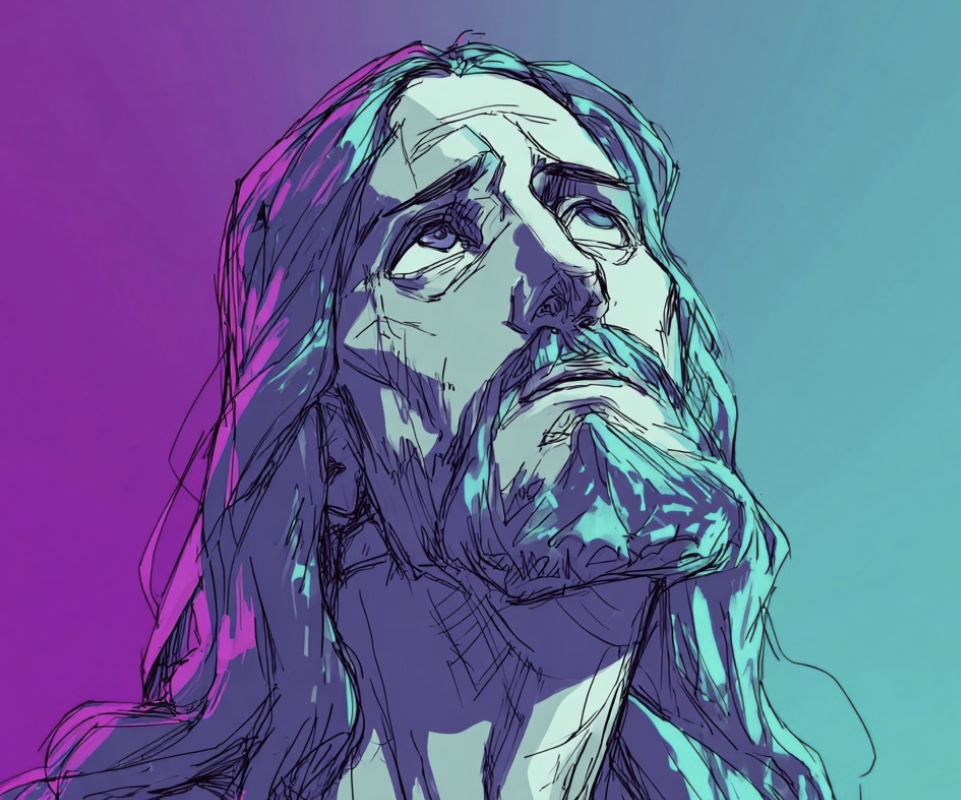
Thou shalt love the Lord thy God with all thy heart, and with all thy soul, and with all thy mind. This is the first and great commandment. And the second is like unto it, Thou shalt love thy neighbour as thyself. On these two commandments hang all the law and the prophets.
▼
Source
source
22:37-40 (KJV)
5 months 3 days ago
A philosopher of imposing stature doesn't think in a vacuum. Even his most abstract ideas are, to some extent, conditioned by what is or is not known in the time when he lives.
▼
Source
source
Ch. 29, June 10, 1943.
4 months 2 weeks ago
The telegraph press mosaic is acoustic space as much as an electric circus.
2 months 2 weeks ago
One loves to possess arms, though they hope never to have occasion for them.
▼
Source
source
Letter to George Washington (1796); published in The Writings of Thomas Jefferson, 20 Vols., Washington, D.C., (1903-04), 9:341
CivilSimian.com created by AxiomaticPanic, CivilSimian, Kalokagathia