


4 months 1 week ago
We ought to regard the interests of the state as of far greater moment than all else, in order that they may be administered well; and we ought not to engage in eager rivalry in despite of equity, nor arrogate to ourselves any power contrary to the common welfare. For a state well administered is our greatest safeguard. In this all is summed up: When the state is in a healthy condition all things prosper; when it is corrupt, all things go to ruin.

5 months 2 weeks ago
The infinite... happens to subsist in a way contrary to what is asserted by others: for the infinite is not that beyond which there is nothing, but it is that of which there is always something beyond. ...But that pertaining to which there is nothing beyond is perfect and whole. ...that of which nothing is absent pertaining to the parts ...the whole is that pertaining to which there is nothing beyond. But that pertaining to which something external is absent, that is not all ...But nothing is perfect which has not an end; and the end is a bound. On this account... Parmenides spoke better than Melissus: for the latter says that the infinite is a whole; but the former, that the whole is finite, and equally balanced from the middle: for to conjoin the infinite with the universe and the whole, is not to connect line with line.

1 month 3 days ago
He who does not wish to die cannot have wished to live.
4 months 2 weeks ago
A sound mind in a sound body, is a short but full description of a happy state in this world.
▼
Source
source
Sec. 1

4 months ago
Patience cometh by the grace of the Soul.
2 weeks 1 day ago
Imagination is the soul, since it plays all the roles of the soul.

2 months 1 day ago
I don't believe a committee can write a book. ... It can, oh, govern a country, perhaps. But I don't believe it can write a book.
▼
Source
source
Interviewed by Christopher Wright (1955). Printed in James Nelson (ed.) Wisdom: Conversations with the Elder Wise Men of Our Day (New York: Norton, 1958) p. 208

4 months 2 weeks ago
A pupil from whom nothing is ever demanded which he cannot do never does all he can.
▼
Source
source
(p. 32)
3 months ago
What most people in our culture mean by being lovable is essentially a mixture between being popular and having sex appeal.
▼
Source
source
Ch. 1

4 months 2 weeks ago
Advocates of capitalism are very apt to appeal to the sacred principles of liberty, which are embodied in one maxim: The fortunate must not be restrained in the exercise of tyranny over the unfortunate.
▼
Source
source
Ch. 13: Freedom in Society
1 week 1 day ago
Sometimes one pays most for the things one gets for nothing.
4 months 2 weeks ago
Organic life, we are told, has developed gradually from the protozoon to the philosopher, and this development, we are assured, is indubitably an advance. Unfortunately it is the philosopher, not the protozoon, who gives us this assurance.
▼
Source
source
Ch. 6: On the Scientific Method in Philosophy

5 months 2 weeks ago
If you're going to write a story, avoid contemporary references. They date a story and they have no staying power.

2 months 2 weeks ago
Cultural dominance by either the left or the right hemisphere is largely dependent upon environmental factors.
▼
Source
source
p. 72
2 weeks 3 days ago
But there is another form of monopoly, far more general and far more insidious. The accumulation of large amounts of capital under consolidated control creates a new kind of power-essentially different from the power of increase. Increase is constructive in its nature. Power from accumulation is destructive. It is often exercised with reckless disregard, not only to industry but to the personal rights of individuals. A railroad approaches a small town as a highwayman approaches his victim. "Agree to our terms or we will bypass your town" is as effective a threat as "your money or your life." As robbers unite to plunder and divide the spoils, the trunk lines of railroads unite to raise rates and pool their earnings. The public is then forced to pay the cost of the whole maneuver, as the vanquished are forced to pay the cost of their own enslavement by a conquering army.
4 weeks 1 day ago
A person who thinks all the time has nothing to think about except thoughts. So he loses touch with reality, and lives in a world of illusion.

2 months 4 weeks ago
The American who first discovered Columbus made a bad discovery.
▼
Source
source
G 42

4 months 3 weeks ago
Death, they say, acquits us of all obligations.
▼
Source
source
Book I, Ch. 7
2 weeks 4 days ago
It is useless to try to adjudicate a long-standing animosity by asking who started it or who is the most wrong. The only sufficient answer is to give up the animosity and try forgiveness, to try to love our enemies and to talk to them and (if we pray) to pray for them. If we can't do any of that, then we must begin again by trying to imagine our enemies' children who, like our children, are in mortal danger because of enmity that they did not cause.

3 months 1 day ago
The individual begins that long effort as an Outsider; he may finish it as a saint.
▼
Source
source
Chapter Nine, Breaking the Circuit, final sentence
4 months 3 weeks ago
A wise man never loses anything, if he has himself.
▼
Source
source
Ch. 38. Of Solitude, tr. Cotton, rev. W. Hazlitt, 1842

3 months 1 week ago
The guiding question of Marx's analysis was, How does capitalist society supply its members with the necessary use-values? And the answer disclosed a process of blind necessity, chance, anarchy and frustration. The introduction of the category of use-value was the introduction of a forgotten factor, forgotten, that is, by the classical political economy which was occupied only with the phenomenon of exchange value. In the Marxian theory, this factor becomes an instrument that cuts through the mystifying reification of the commodity world.
▼
Source
source
P. 304
4 weeks ago
Every relationship between two individuals or two groups will be characterized by the ratio of secrecy that is involved in it. Even when one of the parties does not notice the secret factor, yet the attitude of the concealer, and consequently the whole relationship, will be modified by it.
▼
Source
source
p. 462
4 months 2 weeks ago
Wherever Law ends, Tyranny begins.
▼
Source
source
Second Treatise of Government, Sec. 202

4 months 2 weeks ago
The hardness of God is kinder than the softness of men, and His compulsion is our liberation.
5 months 2 weeks ago
Between God and man there is and remains an eternal, essential, qualitative difference. The paradoxical relationship (which, quite rightly, cannot be thought, but only believed) appears when God appoints a particular man to divine authority, in relation, be it carefully noted, to that which has entrusted to him.
3 months 1 week ago
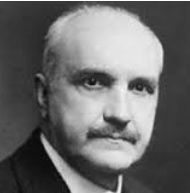
Culture is on the horns of this dilemma: if profound and noble, it must remain rare, if common, it must become mean.
▼
Source
source
Ch. IV: The Aristocratic Ideal
2 weeks ago
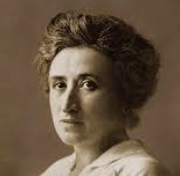
The leadership has failed. Even so, the leadership can and must be recreated from the masses and out of the masses. The masses are the decisive element, they are the rock on which the final victory of the revolution will be built. The masses were on the heights; they have developed this 'defeat' into one of the historical defeats which are the pride and strength of international socialism. And that is why the future victory will bloom from this 'defeat'. 'Order reigns in Berlin!' You stupid henchmen! Your 'order' is built on sand. Tomorrow the revolution will already 'raise itself with a rattle' and announce with fanfare, to your terror: I was, I am, I will be!
▼
Source
source
"Order reigns in Berlin", Last written words. Collected Works 4
4 months 2 weeks ago
The application of algebra to geometry... far more than any of his metaphysical speculations, has immortalized the name of Descartes, and constitutes the greatest single step ever made in the progress of the exact sciences.
▼
Source
source
An Examination of Sir William Hamilton's Philosophy (1865) as quoted in 5th ed. (1878) p. 617.
2 weeks 5 days ago
I strive to discover how to signal my companions before I die, how to give them a hand, how to spell out for them in time one complete word at least, to tell them what I think this procession is, and toward what we go. And how necessary it is for all of us together to put our steps and hearts in harmony. To say in time a simple word to my companions, a password, like conspirators. Yes, the purpose of Earth is not life, it is not man. Earth has existed without these, and it will live on without them. They are but the ephemeral sparks of its violent whirling. Let us unite, let us hold each other tightly, let us merge our hearts, let us create - so long as the warmth of this earth endures, so long as no earthquakes, cataclysms, icebergs or comets come to destroy us - let us create for Earth a brain and a heart, let us give a human meaning to the superhuman struggle. This anguish is our second duty.
3 months 2 weeks ago
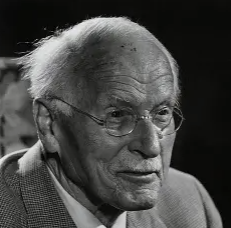
We must now turn to the question of how the existence of archetypes can be proved. Since archetypes are supposed to produce certain psychic forms, we must discuss how and where one can get hold of the material demonstrating these forms. The main source, then, is dreams, which have the advantage of being involuntary, spontaneous products of nature not falsified by any conscious purpose. By questioning the individual one can ascertain which of the motifs appearing in the dream are known to him... Consequently, we must look for motifs which could not possibly be known to the dreamer and yet behave functionally of the archetype known from historical sources.
▼
Source
source
p. 48
3 months 2 weeks ago
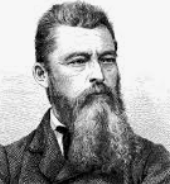
If therefore my work is negative, irreligious, atheistic, let it be remembered that atheism - at least in the sense of this work - is the secret of religion itself; that religion itself, not indeed on the surface, but fundamentally, not in intention or according to its own supposition, but in its heart, in its essence, believes in nothing else than the truth and divinity of human nature. Preface
3 months 2 weeks ago
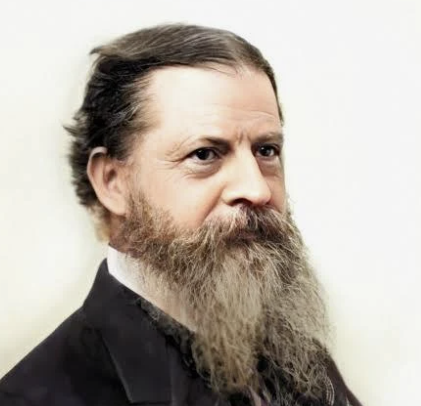
Suppose a surface to be part red and part blue; so that every point on it is either red or blue, and of course, no part can be both red and blue. What then, is the color of the surface in the immediate neighborhood of the point. ...it follows that the boundary is half red and half blue. In like manner, we find it necessary to hold that consciousness essentially occupies time... Thus, the present is half past and half time to come. ...Take another case: the velocity of a particle at any instant of time is its mean velocity during an infinitesimal instant in which that time is consumed. Just so, my immediate feeling is my feeling through an infinitesimal duration containing the present instant.
4 months 2 weeks ago
Try to exclude the possibility of suffering which the order of nature and the existence of free-wills involve, and you find that you have excluded life itself.

3 months 5 days ago
Conduct, practice, is the proof of doctrine, theory. "If any man will do His will - the will of Him that sent me," said Jesus, "he shall know of the doctrine, whether it be of God or whether I speak of myself" (John vii. 17); and there is a well known saying of Pascal: "Begin by taking holy water and you will end by becoming a believer." And pursuing a similar train of thought, Johann Jakob Moser, the pietist, was of the opinion that no atheist or naturalist had the right to regard the Christian religion as void of truth so long as he had not put it to the proof by keeping its precepts and commandments.
▼
Source
source
(Ritschl, Geschichte des Pietismus, book viii., 43)
4 months 2 weeks ago
I soon perceived that she possessed in combination, the qualities which in all other persons whom I had known I had been only too happy to find singly. In her, complete emancipation from every kind of superstition (including that which attributes a pretended perfection to the order of nature and the universe), and an earnest protest against many things which are still part of the established constitution of society, resulted not from the hard intellect, but from strength of noble and elevated feeling, and co-existed with a highly reverential nature.
▼
Source
source
(p. 186)
1 month 3 days ago
That most knowing of persons - gossip.
▼
Source
source
Line 1.
2 weeks 3 days ago
Trade has ever been the extinguisher of war, the eradicator of prejudice, the diffuser of knowledge.
▼
Source
source
Ch. 6
4 months 1 week ago
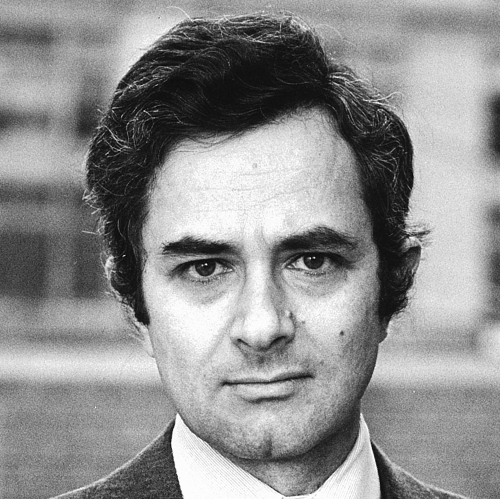
A person may be greedy, envious, cowardly, cold, ungenerous, unkind, vain, or conceited, but behave perfectly by a monumental effort of will.
▼
Source
source
"Moral Luck" (1976), p. 32.
2 months 1 week ago
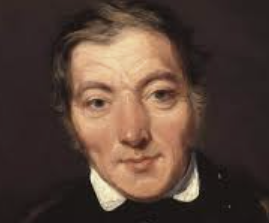
The end of government is to make the governed and the governors happy. That government then is thebest, which in practice produces the greatest happiness to the greatest number; including those who govern, and those who obey.
▼
Source
source
Essay Fourth, The Principles of the Former Essays Applied to Government
2 weeks 1 day ago
The healthy eye ought to see all visible things and not to say, I wish for green things; for this is the condition of the diseased eye. And the healthy hearing and smelling ought to be ready to perceive all that can be heard and smelled. And the healthy stomach ought to be with respect to all food just as the mill with respect to all things which it is formed to grind. And accordingly the healthy understanding ought to be prepared for everything which happens; but that which says, Let my dear children live, and let all men praise whatever I may do, is an eye which seeks for green things, or teeth which seek for soft things.
▼
Source
source
X, 35

4 months 3 weeks ago
Love in animals, has not for its only object animals of the same species, but extends itself farther, and comprehends almost every sensible and thinking being. A dog naturally loves a man above his own species, and very commonly meets with a return of affection.
▼
Source
source
Part 2, Section 12
1 month 1 week ago
We have not a direct intuition of the equality of two intervals of time.
3 weeks 6 days ago
Inasmuch as it is my wish only to compose a hymn of thanksgiving in honour of the god, I have deemed it quite sufficient to discourse to the best of my ability concerning his nature. I do not think I have wasted words to no purpose: the maxim, "Sacrifice to the immortal gods according to thy means," I accept as applying not merely to burnt-offerings, but also to our praises addressed unto the gods. I pray for the third time, in return for this my good intention, the Sun lord of the universe to be propitious to me, and to bestow on me a virtuous life, a more perfect understanding, and a superhuman intellect, and a very easy release from the trammels of life at the time appointed: and after that release, an ascension up to himself, and an abiding place with him, if possible, for all time to come; or if that be too great a recompense for my past life, many and long-continued revolutions around his presence!
3 months 2 weeks ago
Thus far, gentlemen, I have been insisting very strenuously upon what the most vulgar common sense has every disposition to assent to and only ingenious philosophers have been able to deceive themselves about. But now I come to a category which only a more refined form of common sense is prepared willingly to allow, the category which of the three is the chief burden of Hegel's song, a category toward which the studies of the new logico-mathematicians, Georg Cantor and the like, are steadily pointing, but to which no modern writer of any stripe, unless it be some obscure student like myself, has ever done anything approaching to justice.
▼
Source
source
Lecture II : The Universal Categories, §3. Laws: Nominalism, CP 5.59

4 months 1 week ago
Without some redistribution of wealth and power, downward mobility and debilitating poverty will continue to drive people into desperate channels. And without principled opposition to xenophobias from above and below, these desperate channels will produce a cold-hearted and mean-spirited America no longer worth fighting for or living in.
▼
Source
source
(p79)

3 months 2 weeks ago
Neither a person nor a nation can exist without some higher idea. And there is only one higher idea on earth, and it is the idea of the immortality of the human soul, for all other "higher" ideas of life by which humans might live derive from that idea alone.
▼
Source
source
A Writer's Diary, Vol. 1: 1873-1876, ed. Kenneth Lantz (1994), p. 734
3 months 1 week ago
When an active individual of sound common sense perceives the sordid state of the world, desire to change it becomes the guiding principle by which he organizes given facts and shapes them into a theory. The methods and categories as well as the transformation of the theory can be understood only in connection with his taking of sides. This, in turn, discloses both his sound common sense and the character of the world. Right thinking depends as much on right willing as right willing on right thinking.
▼
Source
source
p. 162.
CivilSimian.com created by AxiomaticPanic, CivilSimian, Kalokagathia